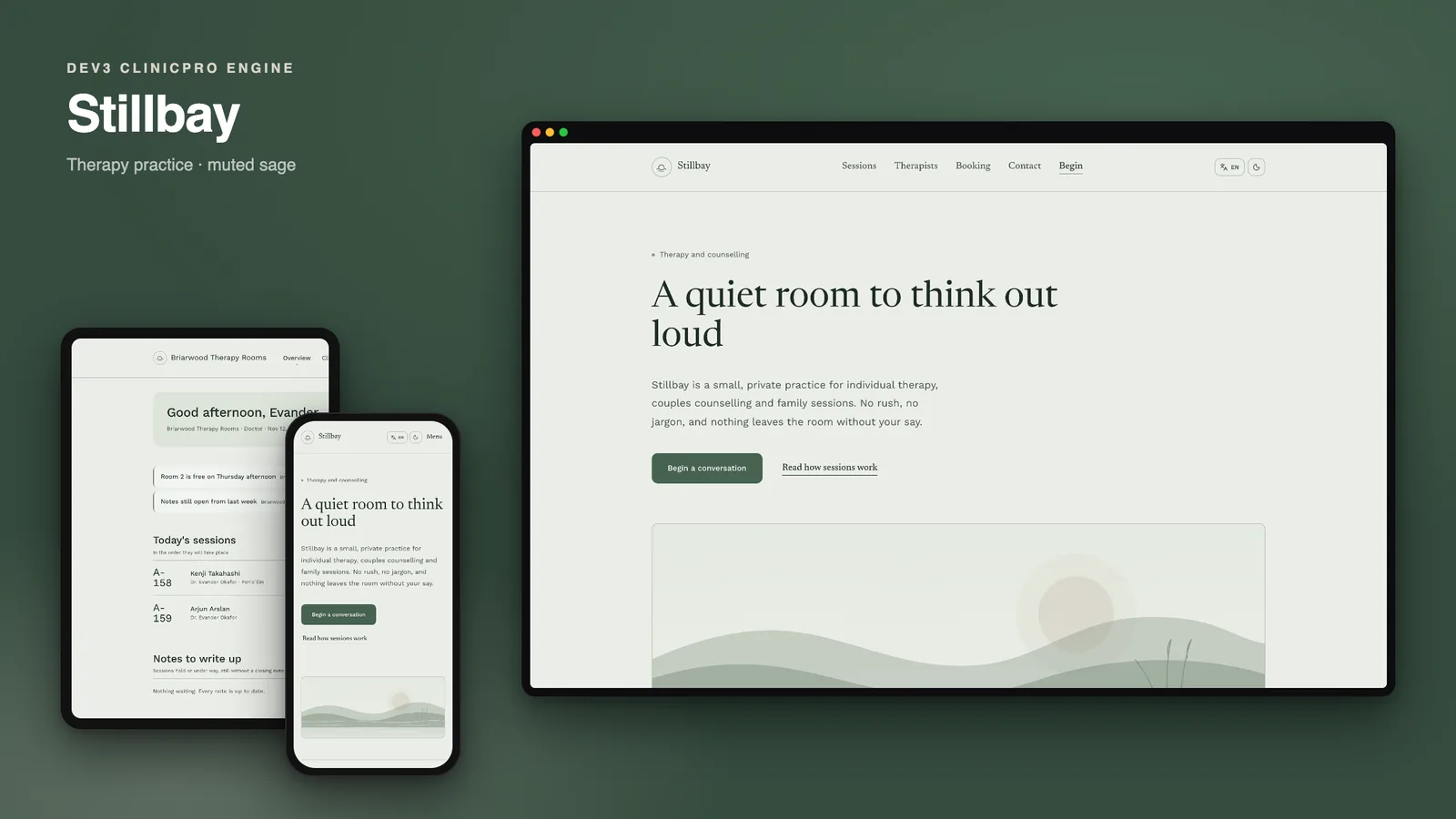
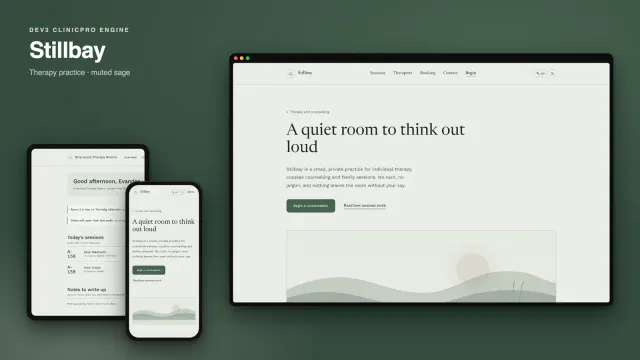
Stillbay is a therapy and counselling practice system that you host yourself, built by DEV3 Technologies on Next.js 15 (App Router and Server Actions) and MongoDB. Built on the DEV3 ClinicPro engine: the same features, a different design. Think of it as a paper diary for a quiet room: warm off-white pages, muted sage ink, one serif line where other systems put a banner, and not one carousel, photograph or moving part on the public site.
The design in a paragraph
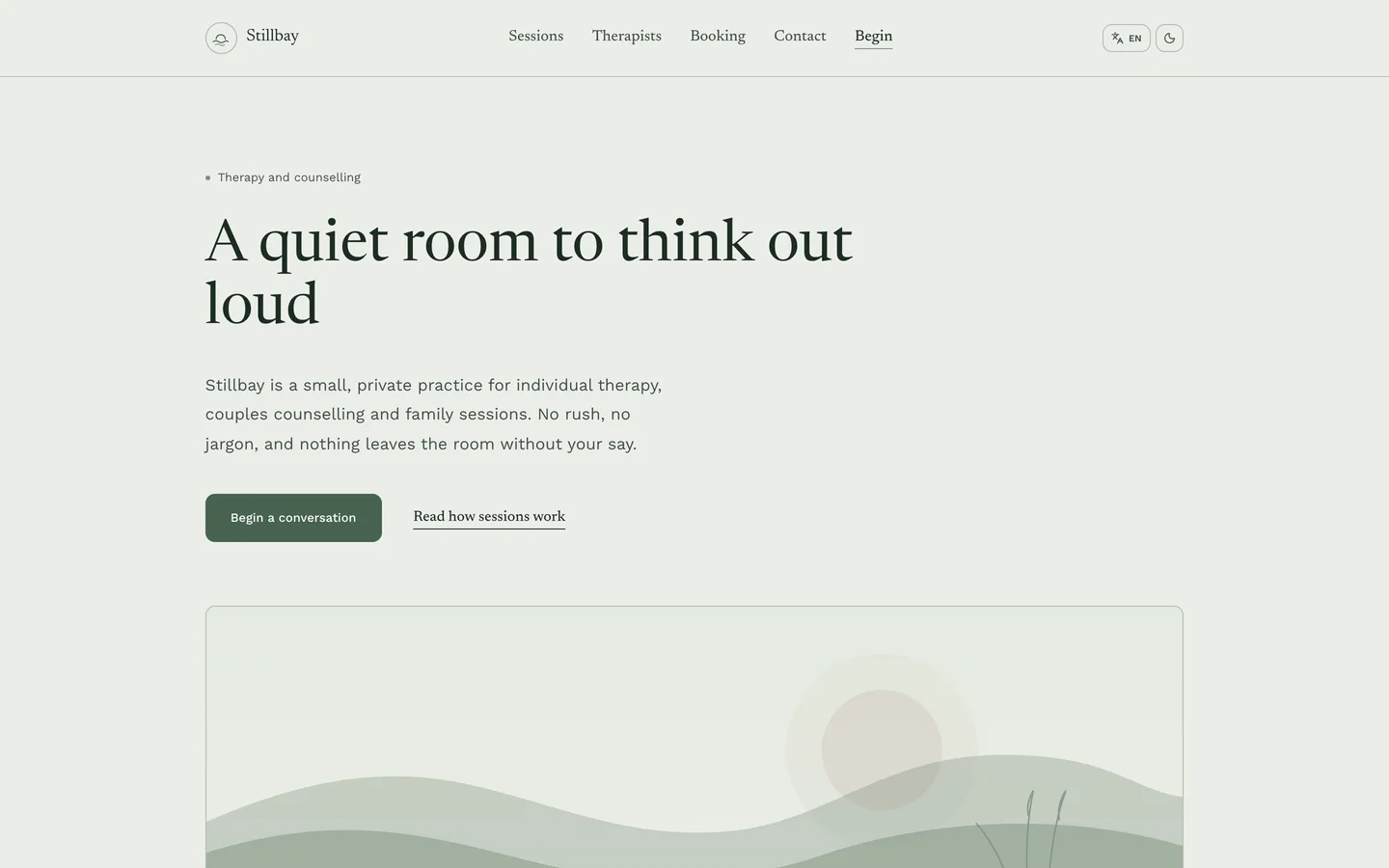
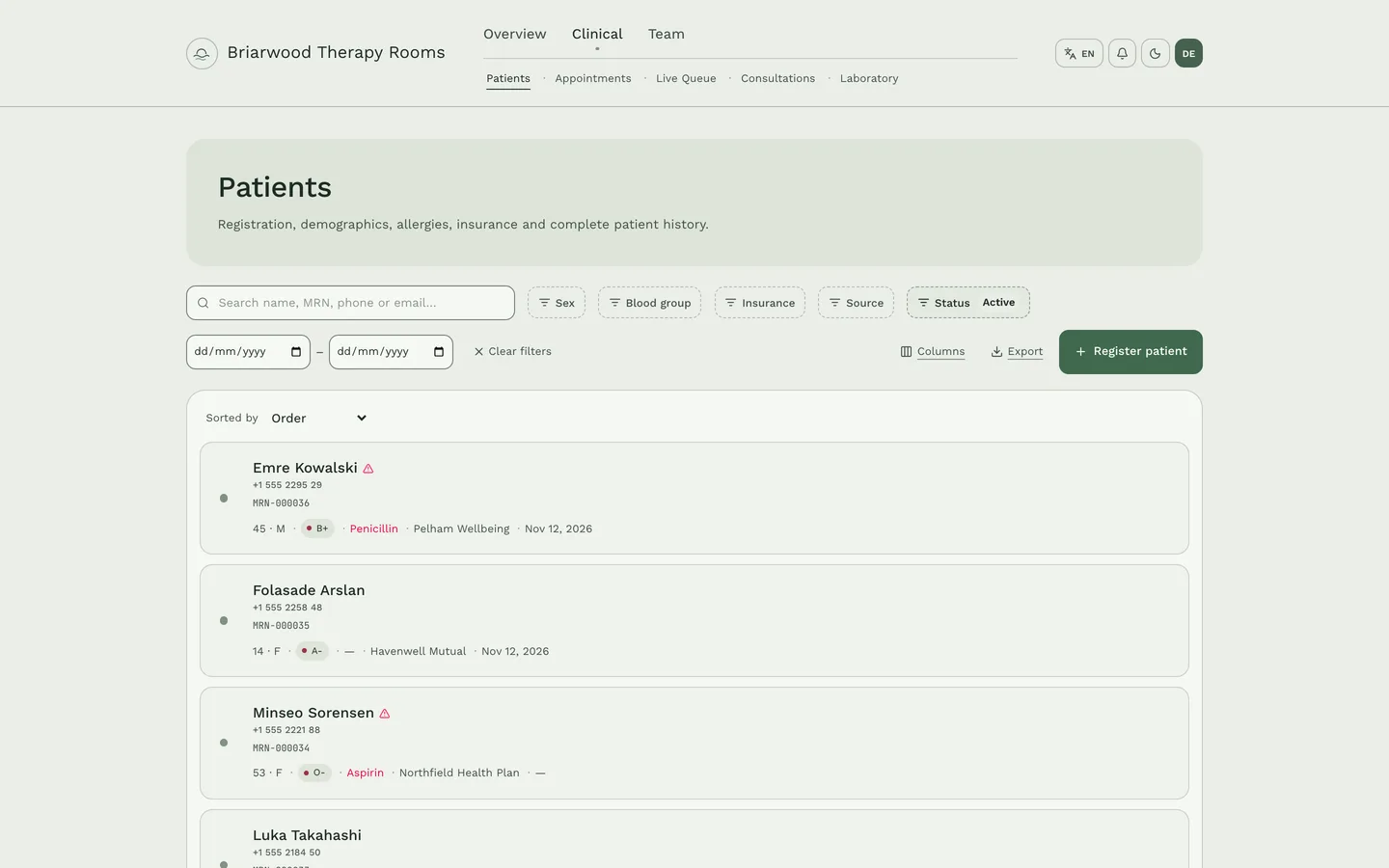
Headings are set in Newsreader (a text serif) and everything functional in Work Sans. Corners are generous (24 px) and nothing casts a shadow: structure comes from thin stone rules and a single sage dot beside each entry. The only motion is a soft opacity fade that switches off when the visitor asks for reduced motion. The landscape behind the home page headline is drawn in code, so it ships with the product and never needs a licence.
Pages you get
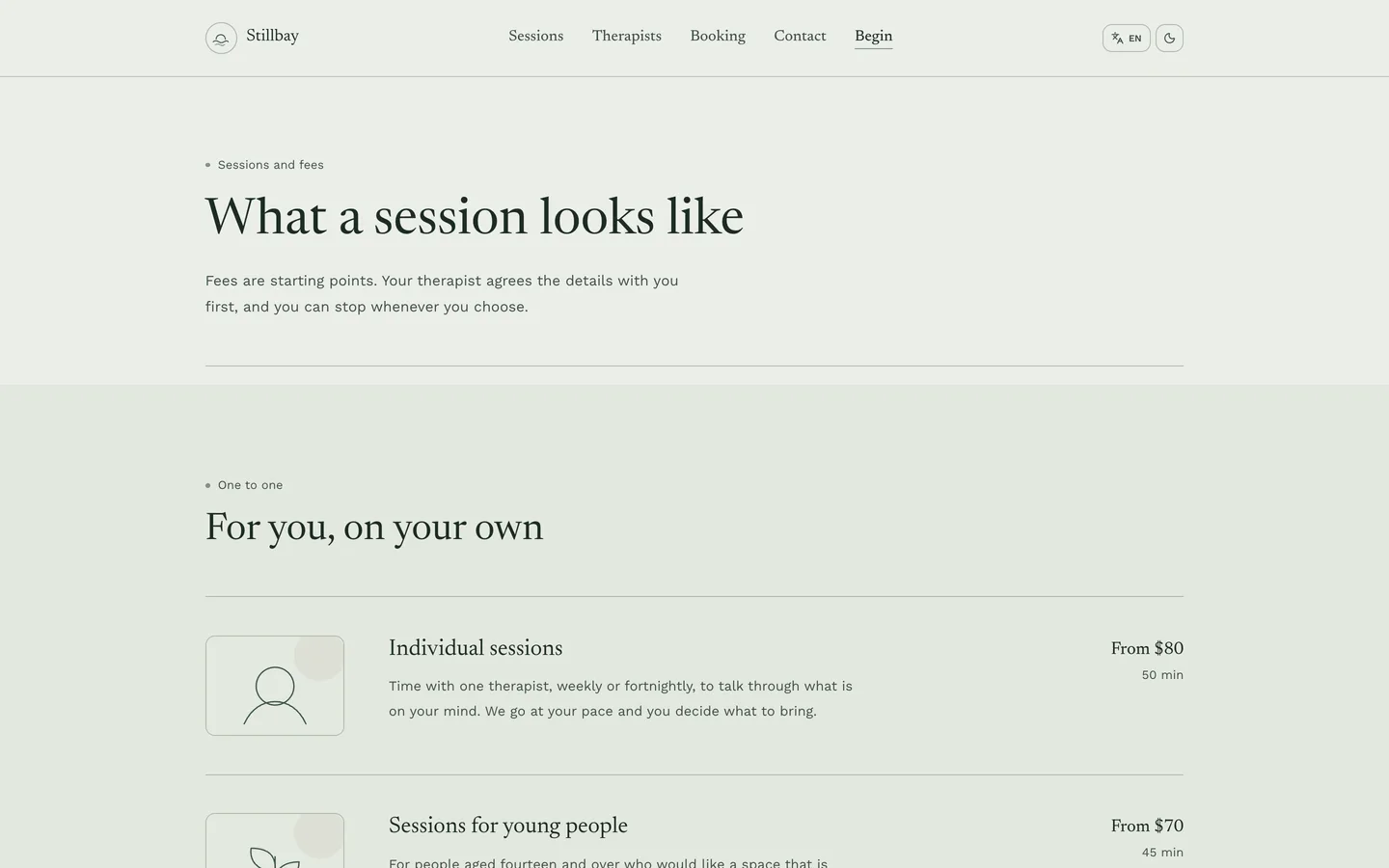
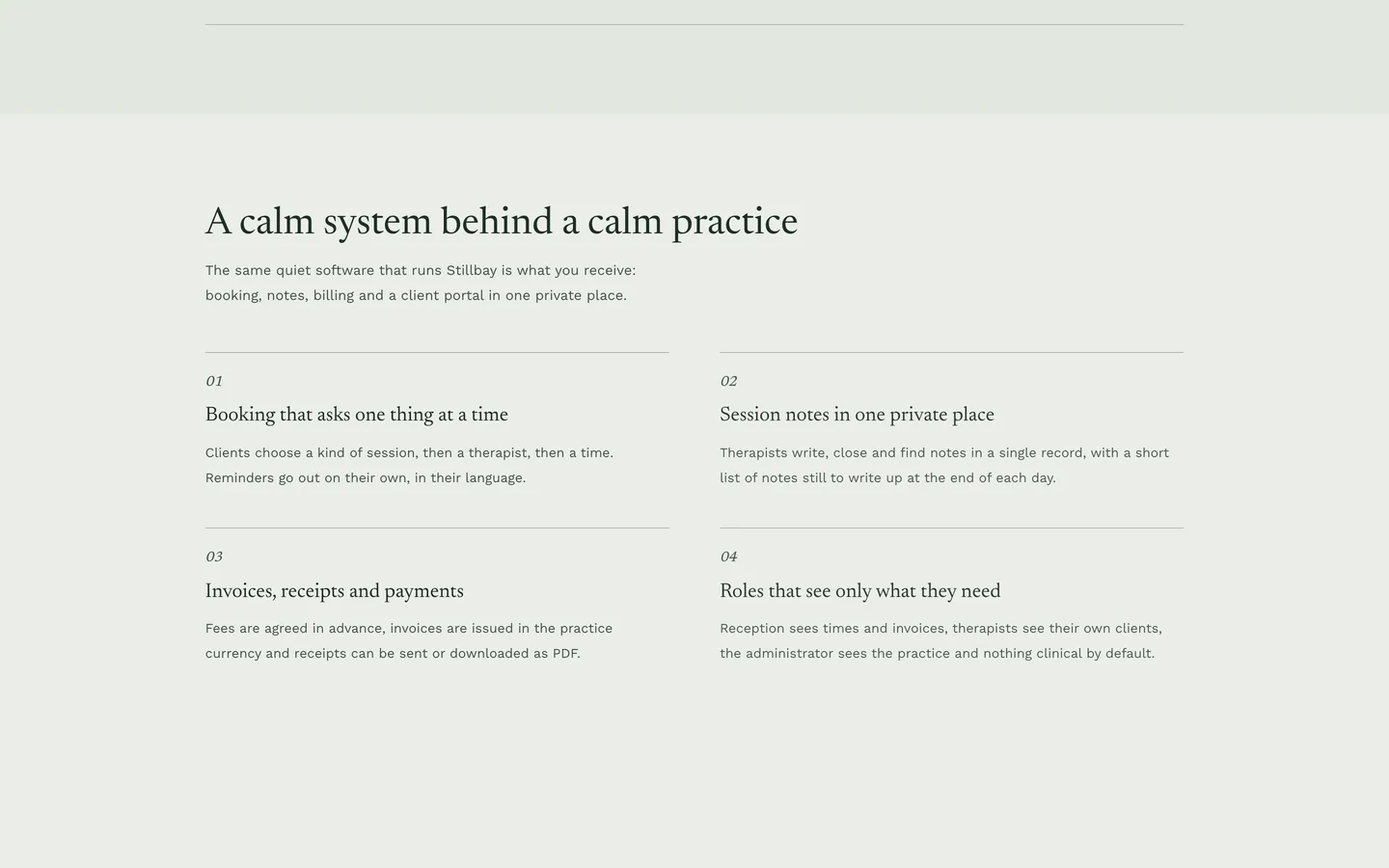
- Home. One serif line over the landscape, four plain paragraphs, a section called "What is said here stays here", four kinds of conversation with a starting fee and length, a vertical "How sessions work" sequence of three steps, and an FAQ that includes the honest answer to "Is this a crisis or emergency service?".
- Sessions, Therapists, Book, Contact. Sessions are written as prose in two groups, "For you, on your own" and "For two, or for several". Therapists appear as short essays with a serif monogram in place of a photo. Booking is three small choices on one page, open at any hour.
- Sign-in. A single narrow column on paper with one serif sentence. No side panel, no benefits list, no picture.
- Client portal. The home page shows the next session in plain words and a private session-notes journal that asks one question at a time (add, read, edit, delete) and keeps entries on the client's own device. Booking, sessions and invoices sit under a short text menu.
The admin console
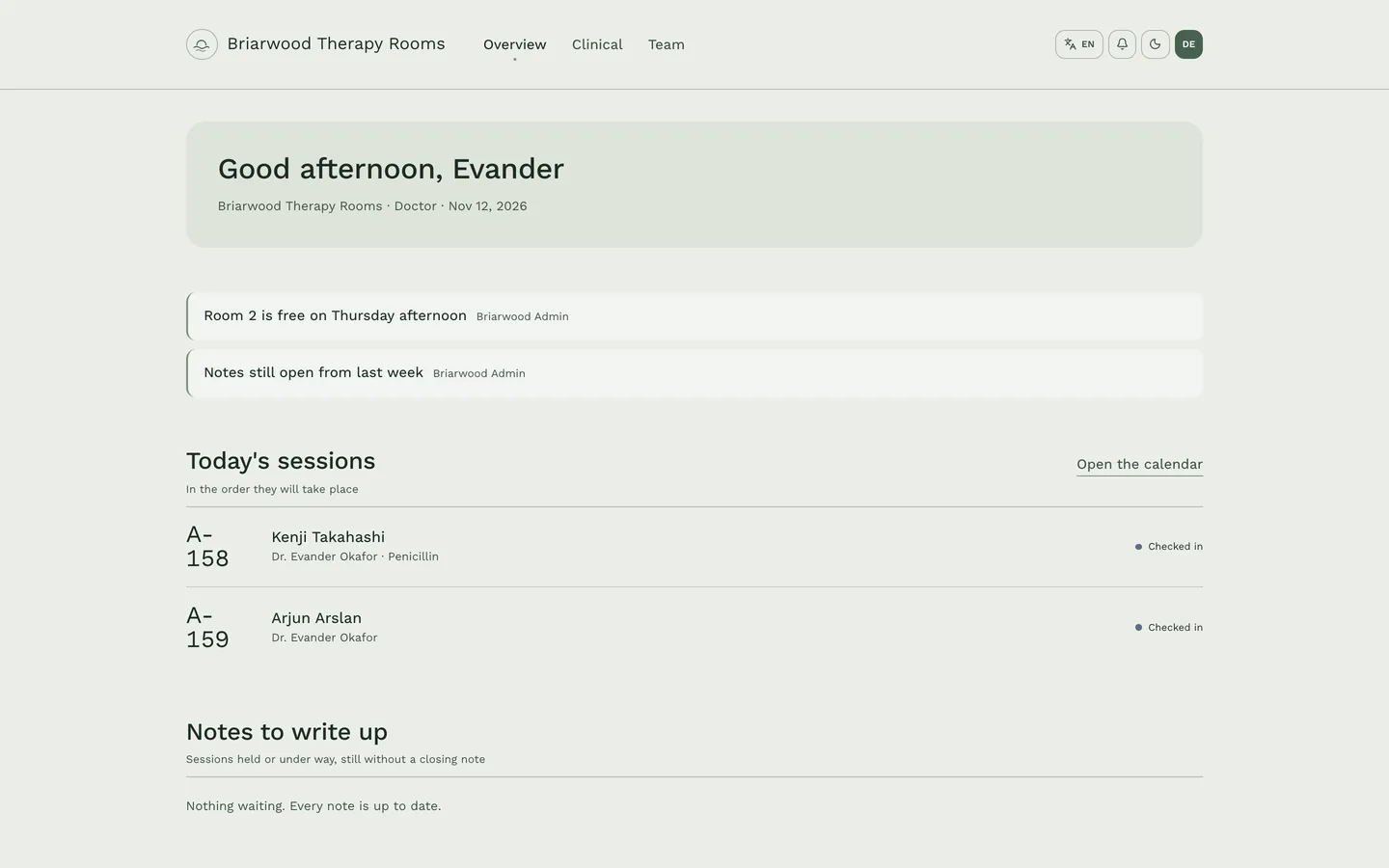
A two-tier text bar replaces the sidebar: practice areas on the first line, the pages of the current area on the second, and one word, Menu, on phones. The page header is a pale sage band with the title set in Work Sans. Lists are soft rounded diary rows rather than tables, each with a status dot and one small sort menu. Create and edit forms open as full quiet pages with a large serif title. The therapist dashboard puts today's sessions in time order first, then "notes still to write up", then the figures as plain numerals. The calendar, waiting room (check-in tokens), session notes (EMR), invoices and part-payments, supplies and the session catalogue all use the same rows.
Demo content
Three fictional practices load from the installer: Briarwood Therapy Rooms (Lyon, euros), Fernlow Counselling House (Abu Dhabi, dirhams, Arabic first) and Gildmere Wellbeing Practice (Austin, dollars, 14-day trial). Therapists work in Room 1 and Room 2 at 80 and 110 per session. Client names are drawn from sex-matched pools of fictional names, a client you can sign in as already has an upcoming session booked, and the pinned notes on the dashboard are written in the voice of a therapy desk: room availability, reminder wording, unsigned notes. Dark mode is a deep sage night theme, and English, Arabic, Hebrew and Spanish all lay out right to left where needed.
What you can change
Every design value is a token: the sage and stone colours, the two fonts, the radius, the landscape and monogram art in one file, and the website copy in a plain JSON file. A buyer can recolour the whole product by editing a handful of values.
Good to know
- Practice software, not a clinical or crisis service. Nothing in the product or the demo promises emergency support, and the sample copy says so.
- Sample clinical text is general. Diagnoses, vitals and prescriptions come from the shared engine and read as general medicine, not therapy. Ages run 13 to 70, mostly adults.
- Same engine as the original ClinicPro. Features, database schema and APIs are identical across the design family; pick Stillbay for how it feels.
- Email, card payments and file uploads need your own providers (SMTP, Stripe, an image host). Without them the app runs and logs outgoing mail.
- Needs Node.js 20.9 or newer and MongoDB 5 or newer.
Optional iOS app
The download also contains an iOS-App folder: a SwiftUI client themed in the same sage, Newsreader and Work Sans, with the OFL font licences beside the fonts. It was built and checked in the iPhone simulator only. Publishing under your own Apple Developer account, signing and store review are your steps and are not included or promised.
Included
Source code, a web installer that can load the demo practices, the iOS source, a Docker setup, cron configuration and six months of support.
 Four plain paragraphs — what the practice system does, without boxes or icons.