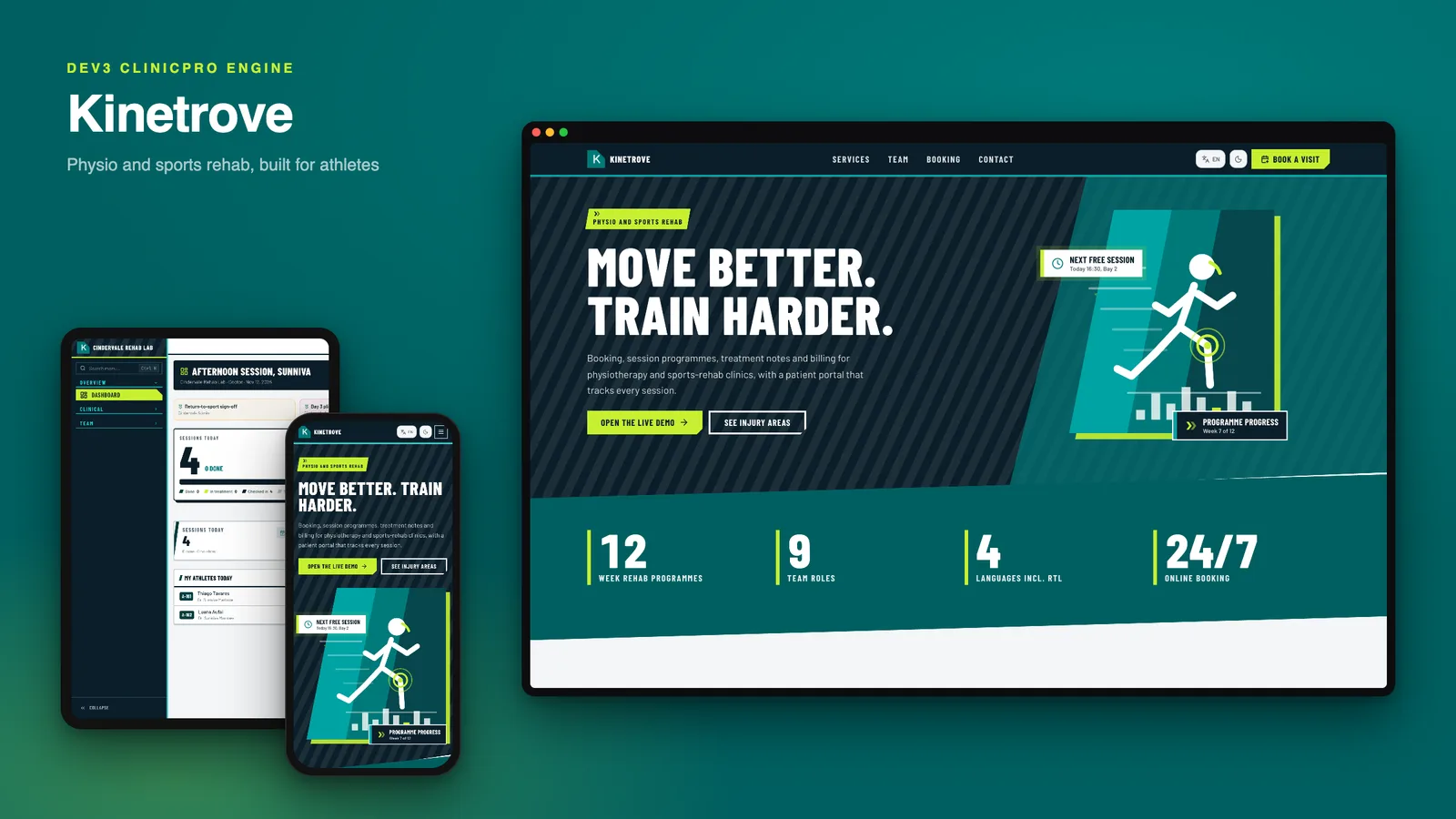
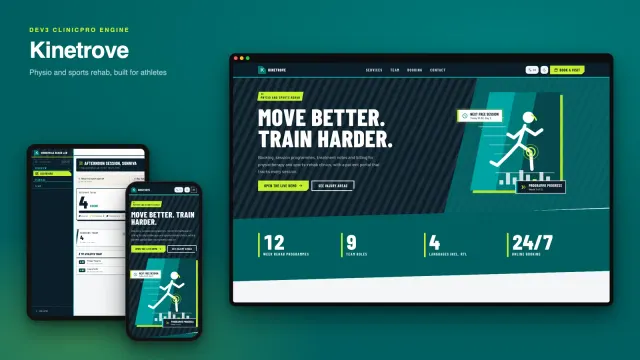
Kinetrove is a physiotherapy and sports-rehab management suite that you host yourself, built by DEV3 Technologies on Next.js 15 (App Router and Server Actions) and MongoDB. Built on the DEV3 ClinicPro engine: the same features, a different design. Where the other designs are soft or clinical, this one is a training-ground scoreboard: ink navy and athletic teal with a single lime highlight, Barlow Condensed in heavy caps, a diagonal cut across page headers and hard offset shadows on cards and buttons.
The look, page by page
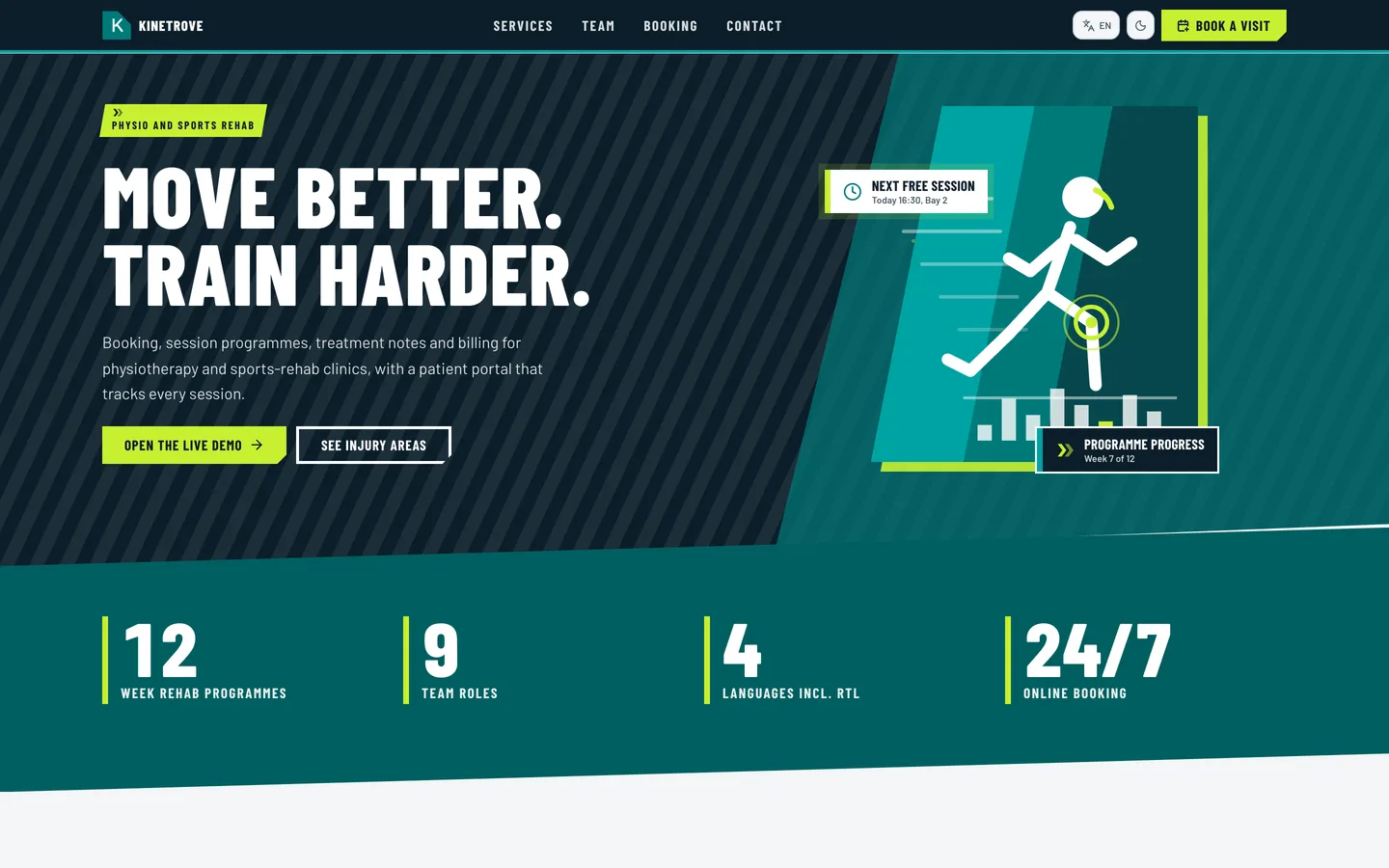
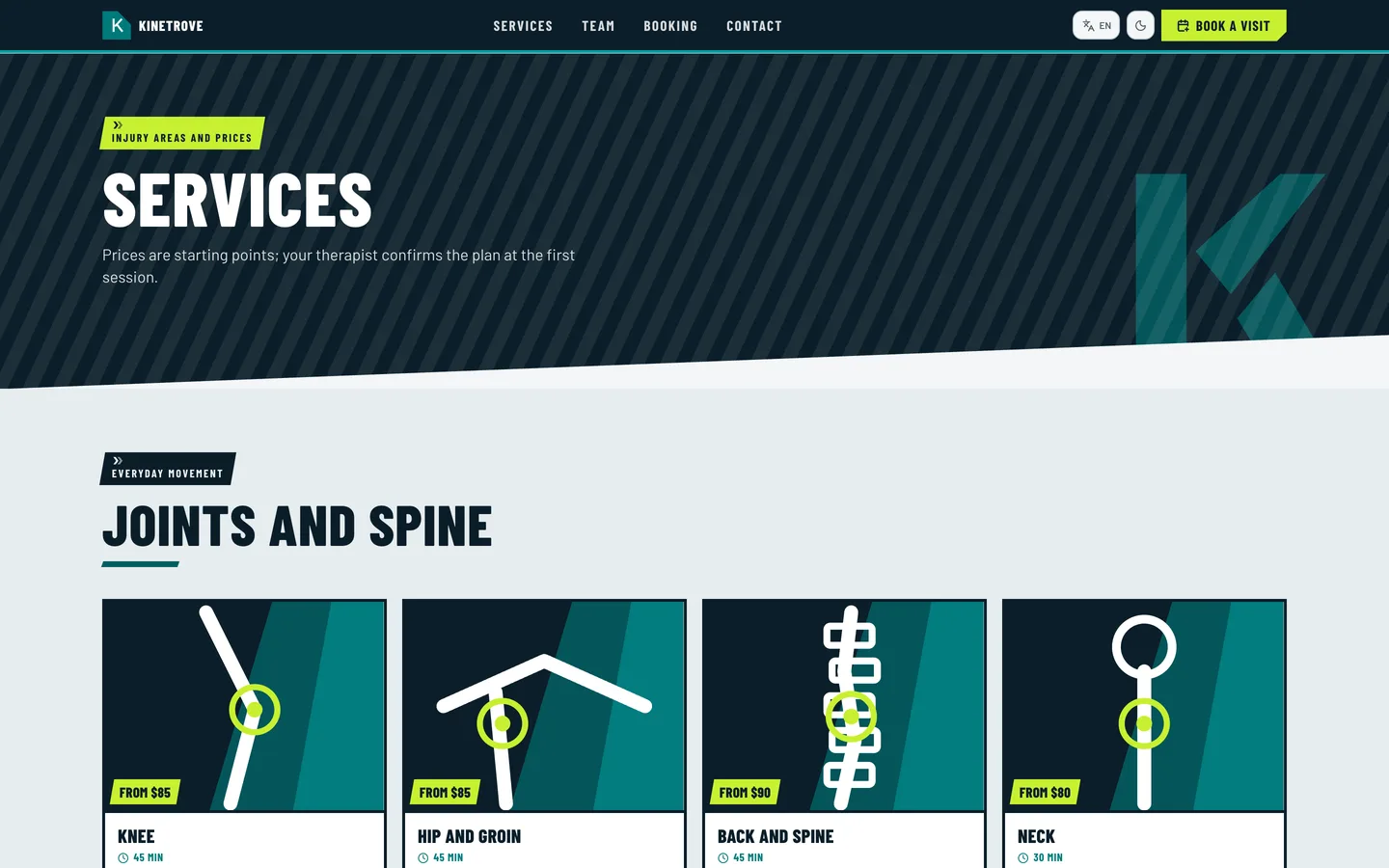
- Website. The home page opens on "Move better. Train harder." over a diagonal ink hero with the next free session slot, then a numbered "Built for the clinic floor" training-kit grid (session booking, programmes and notes, progress tracking, packages and billing, strapping and stock, athlete portal). A "Bay board" strip previews the day, "Pick your area" lists knee, shoulder, back and spine and ankle and foot, and "The 12-week programme" runs Assess, Rebuild, Strengthen, Return. Services lists eight injury areas with a starting fee and session length; Team is a numbered roster; Booking is "Book a session in three taps".
- Sign-in. A steep diagonal split. The ink half carries the headline "Every session counts" and four giant numerals 01 to 04 (white and lime outline, alternating) beside the four benefit lines; the form sits on the light half with one-click demo buttons. The patient portal sign-in uses the same panel. The copy comes from the pack, in English and Arabic, and you can reword it in one messages file.
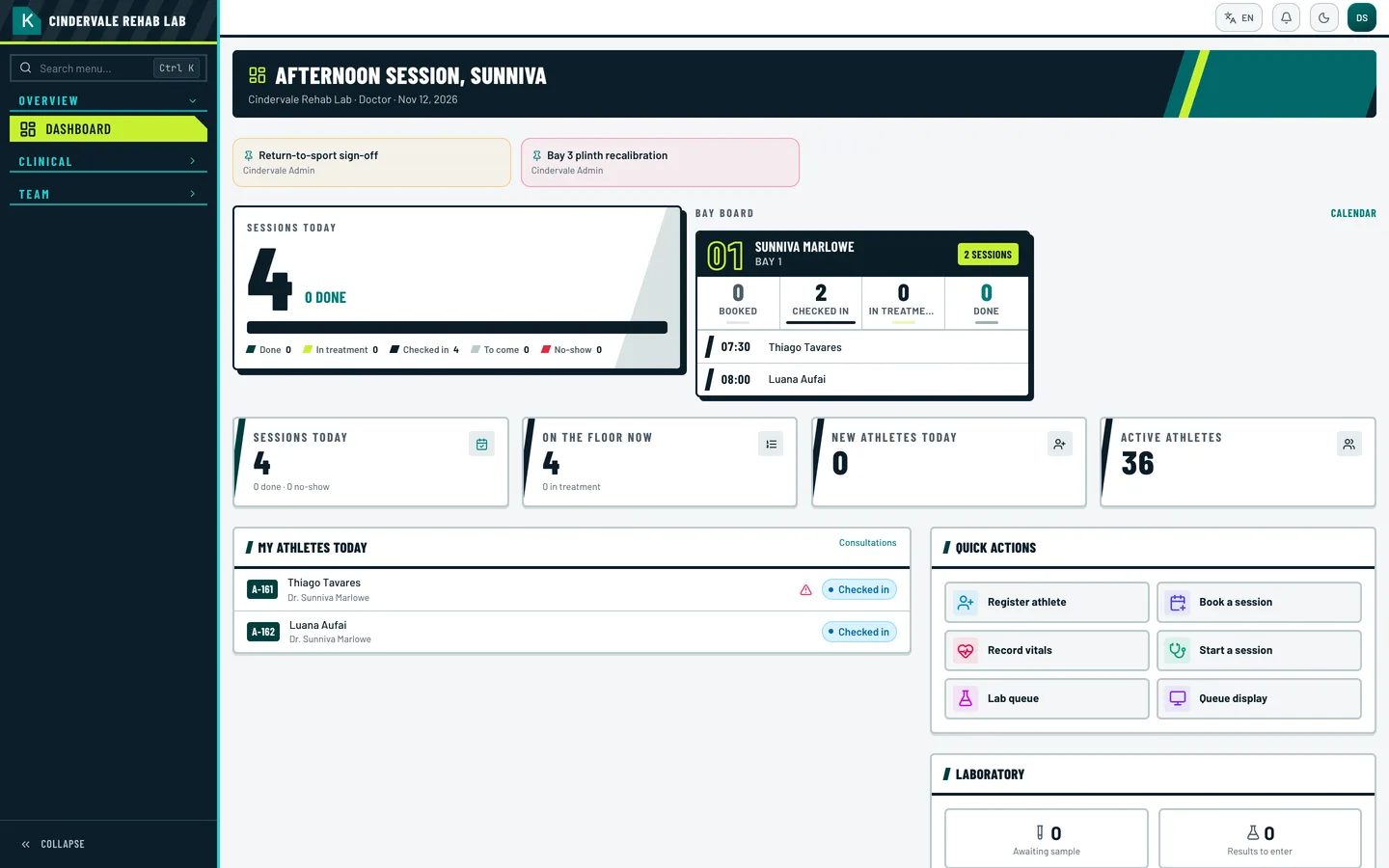
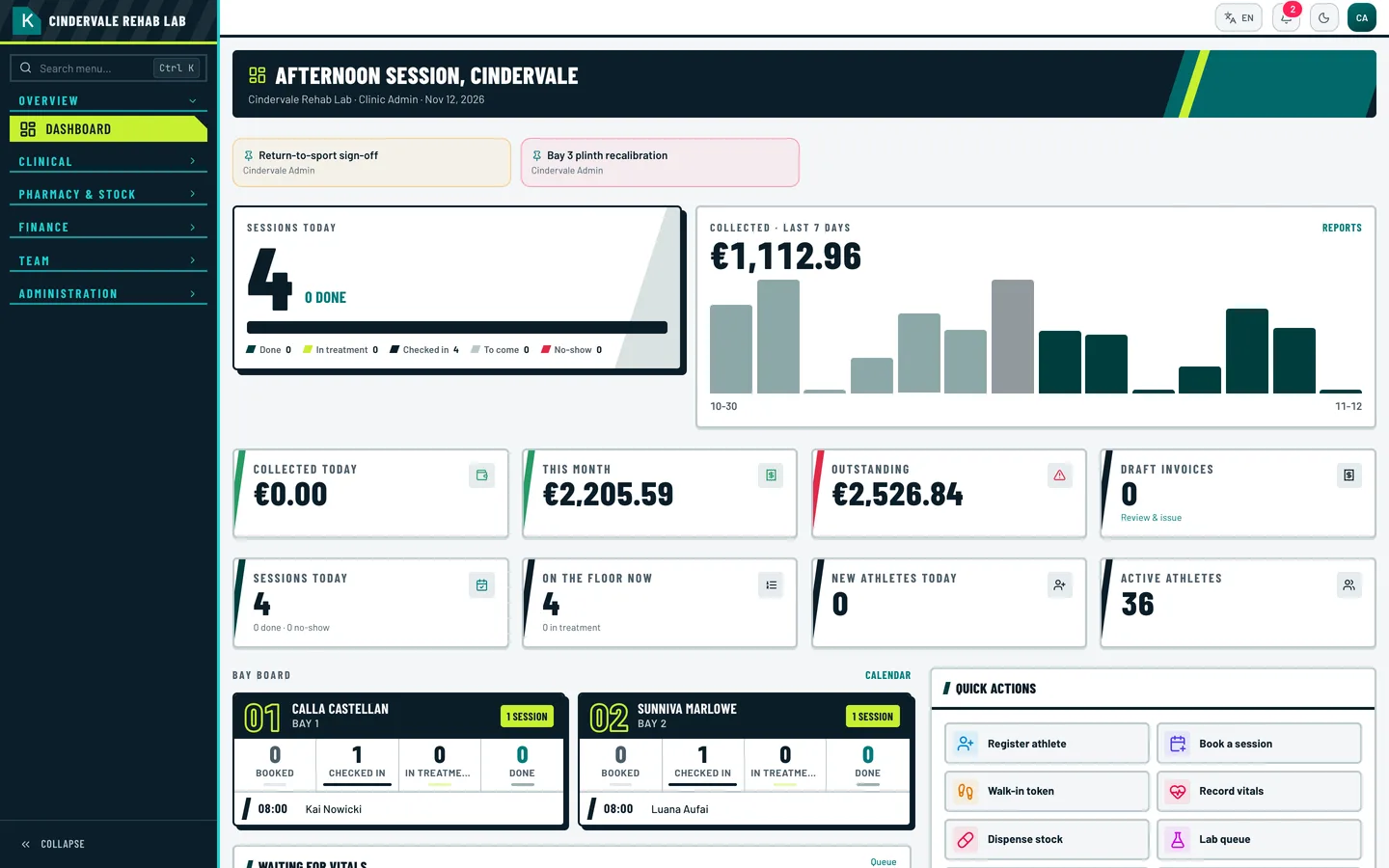
- Dashboards. Therapist and manager dashboards open on a giant "sessions today" number over a segmented status bar (done, in treatment, checked in, to come, no-show), then a bay board: one card per treatment bay with a session counter, four status lanes and the day's sessions as rows. It replaces the timeline view and reads on a phone.
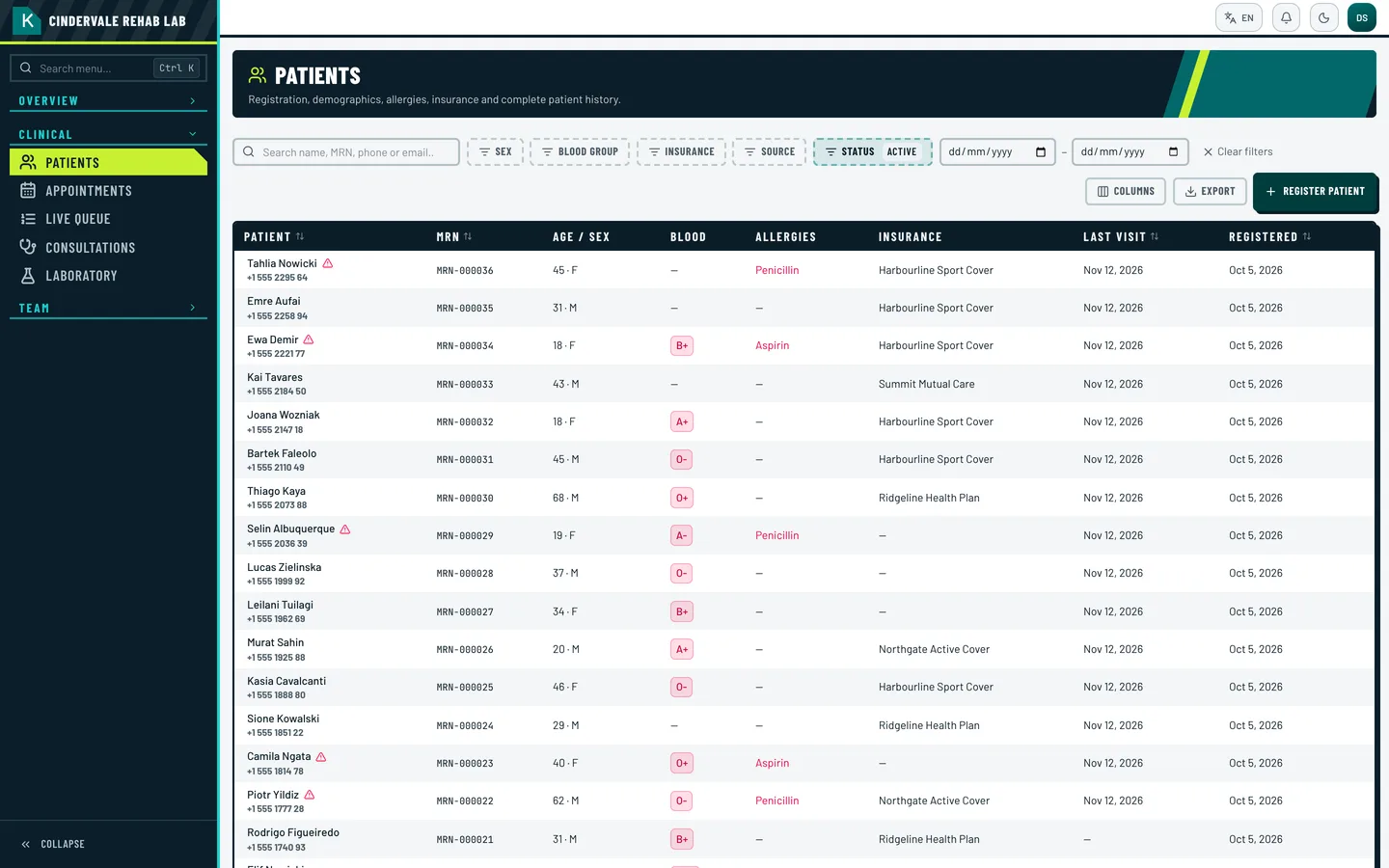
- Admin layout. A dark ink sidebar with a lime marker on the active item, bold roster-style dense tables, split-pane forms, and a settings menu with its own lime marker. The platform console is the engine's own.
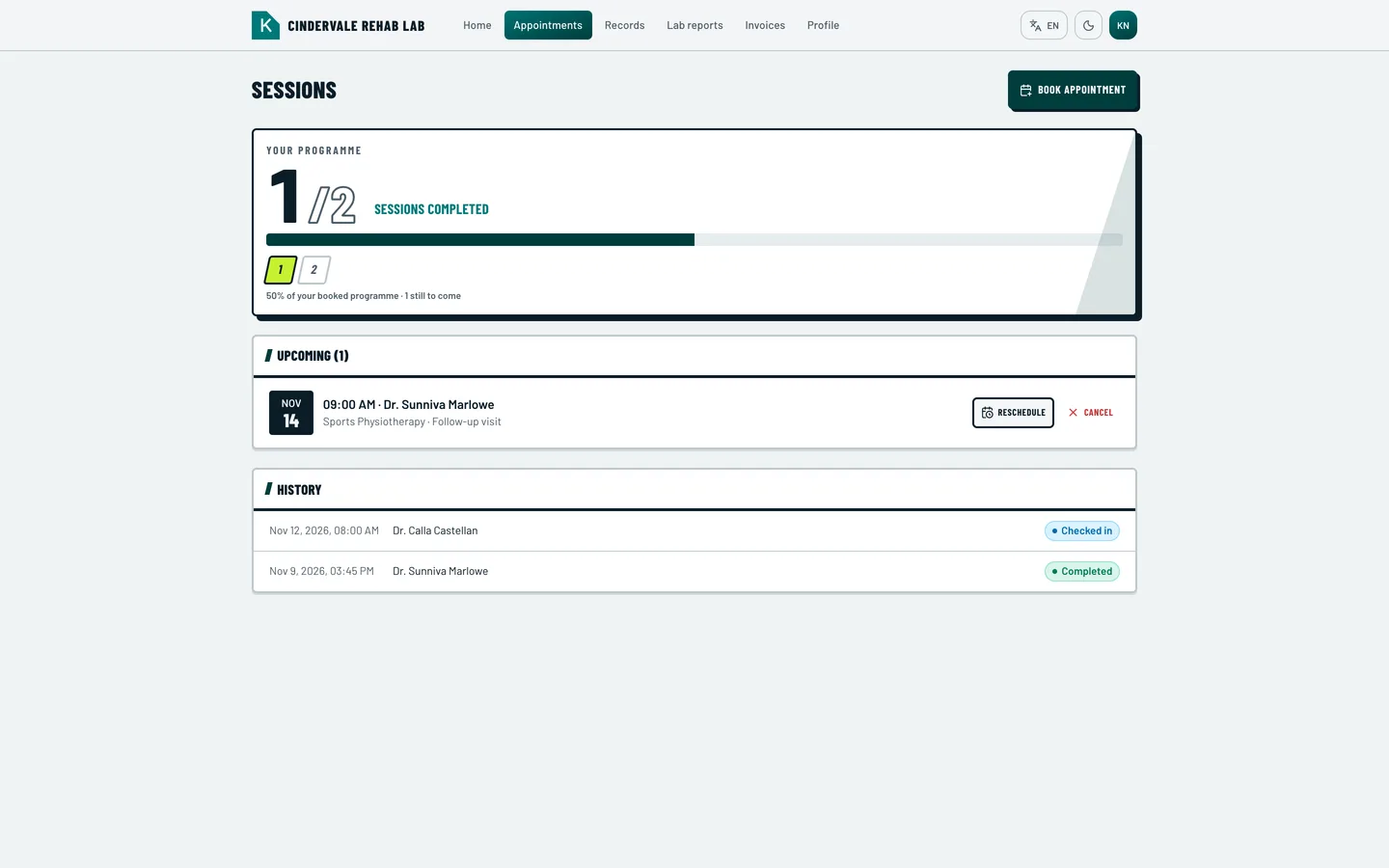
- Athlete portal. The home page is a week plan: a seven-day strip with the booked session marked and a home-exercise streak the athlete ticks (kept on the device). The sessions page counts every session of the programme as done out of planned, in big numerals, from the appointment history. The demo athlete always has an upcoming booking.
Demo content
Three fictional rehab labs: Cindervale (Turin, EUR), Copperfield (Abu Dhabi, AED, Arabic) and Alderbrook (Austin, USD, trial). Sports physiotherapist Dr. Sunniva Marlowe and rehabilitation doctor Dr. Calla Castellan work in Bay 1 and Bay 2. Dashboard memos are written for the floor: return-to-sport sign-off, tape and ice stock, the Bay 3 plinth service and missed-session follow-up calls.
What it does
- Booking and reminders. Athletes pick an injury area and a slot from the website or the portal; reminders go through your own mail settings.
- Treatment notes, stock and billing. Notes and printable plans, tapes and consumables with batch alerts, invoices with split payments and a USD ledger shown in each clinic's currency.
- Many clinics, four languages. One installation serves many rehab labs, each with its own team, branding, currency and language (English, Arabic, Hebrew, Spanish, with right-to-left layouts) and a dark mode.
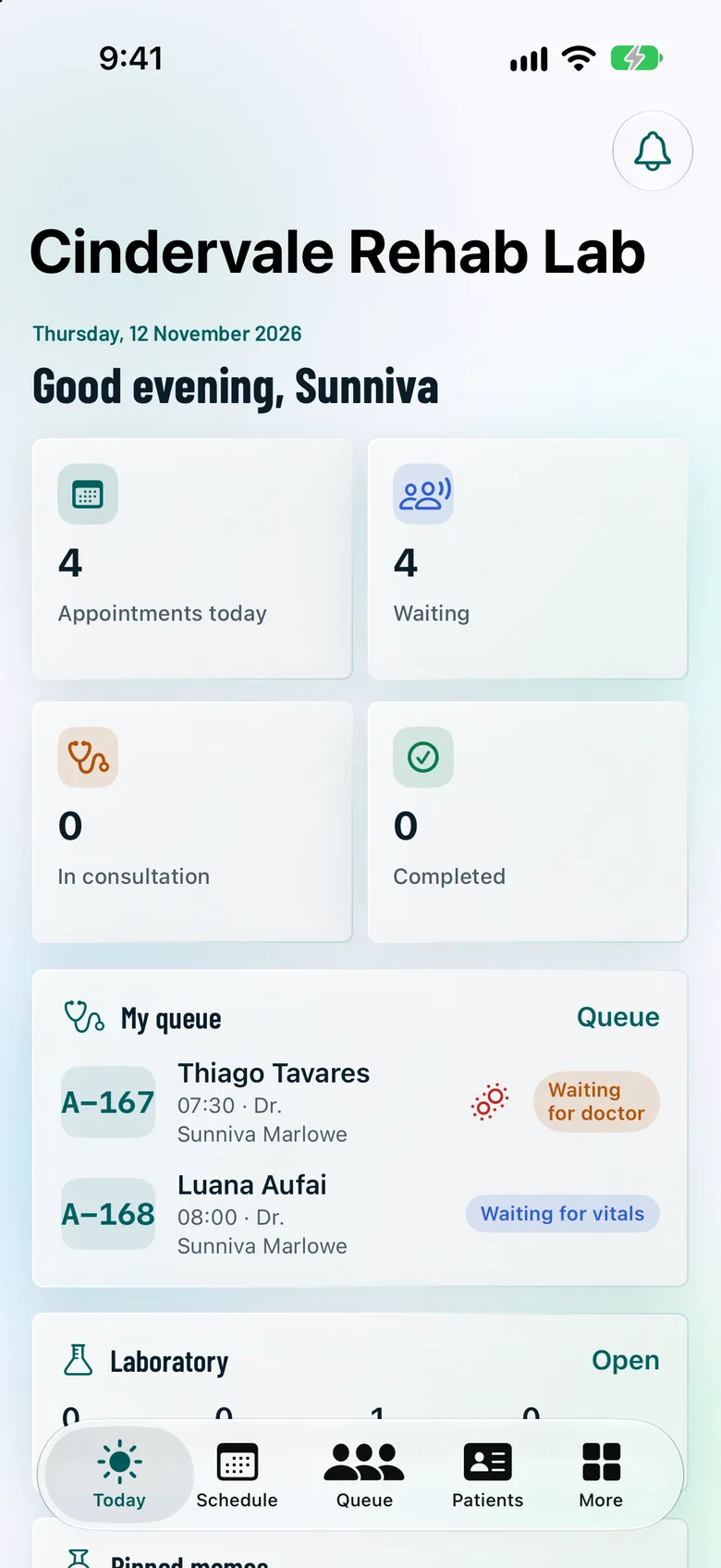
- Native iOS app (source included). A SwiftUI app in the Kinetrove palette and Barlow type, in the
iOS-App/ folder of the download.
Quality
The release passed typecheck, lint, the right-to-left, route-segment and server-action checks, the automated tests, colour-contrast and accessibility checks and a production build. The packaged archive was unpacked and installed from scratch through the web installer, and a headless browser captured every screen in the gallery.
What you should know before buying
- Same engine as the original ClinicPro. Features, database schema and APIs are identical across the design family. Choose Kinetrove for its look and its sports-rehab sample content, not for different functionality.
- Demo patients are active adults aged 18 to 70 (mostly 18 to 54), with a near-even gender mix and names from Brazilian, Polish, Pacific and Turkish pools.
- The home-exercise streak on the athlete portal is stored in the browser, not the database.
- Diagnoses and prescriptions in the demo data are general medicine, not sports-specific; edit demo content in the admin.
- Service and lab catalogues are generic. The service cards on the website are editable sample content.
- Email, card payments and file uploads need your own providers (SMTP, Stripe and an image host).
- The iOS app is verified in the Xcode simulator only. You build and sign it yourself with your own Apple developer account; no App Store approval is promised or included.
- Needs Node.js 20.9 or newer and MongoDB 5 or newer.
Included
Source code, a web installer that can load demo clinics, the iOS-App/ source with the Kinetrove theme and its font licences, a buyer guide, a Docker setup, cron configuration and six months of support.
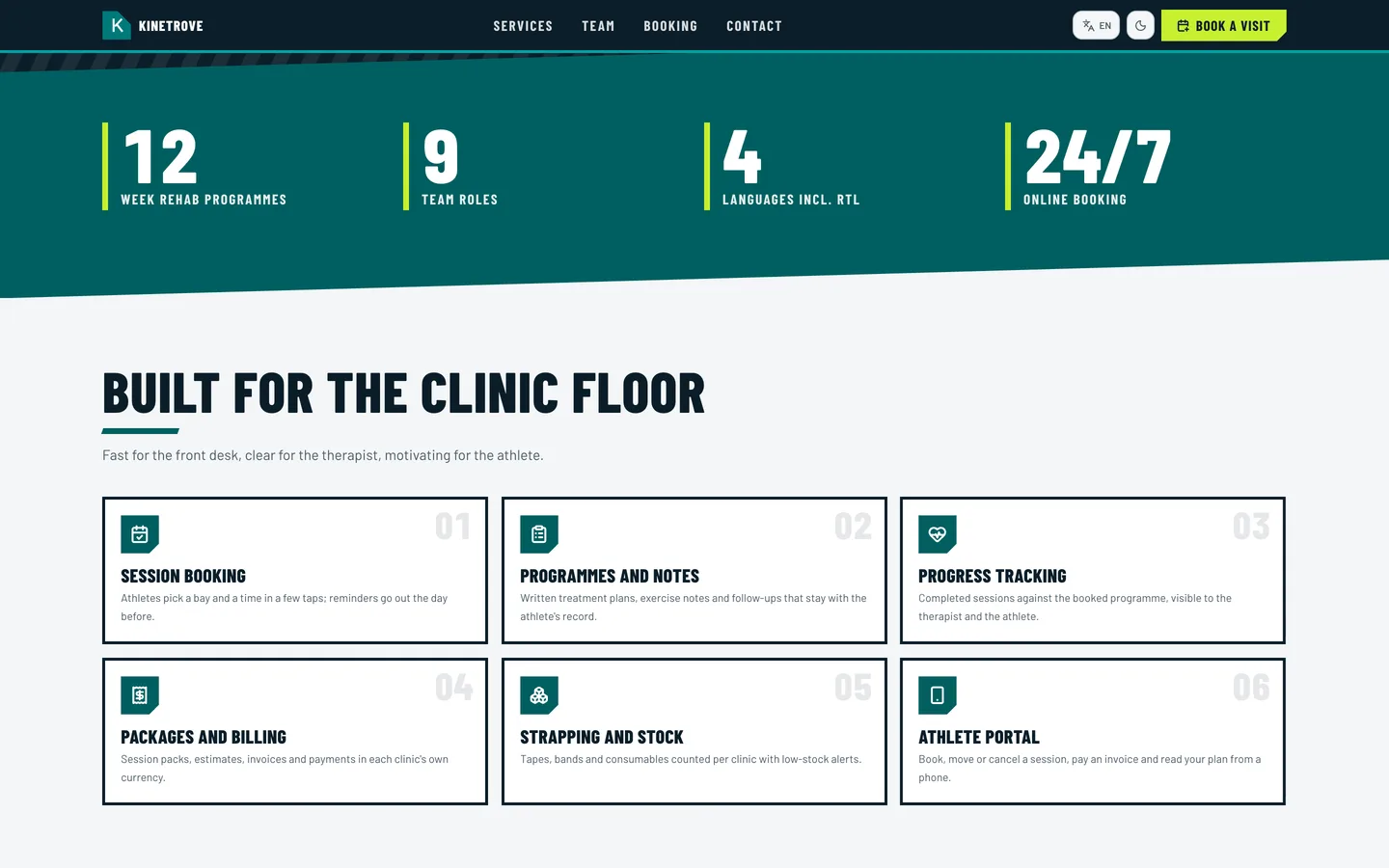 Training kit — every module as a numbered block.