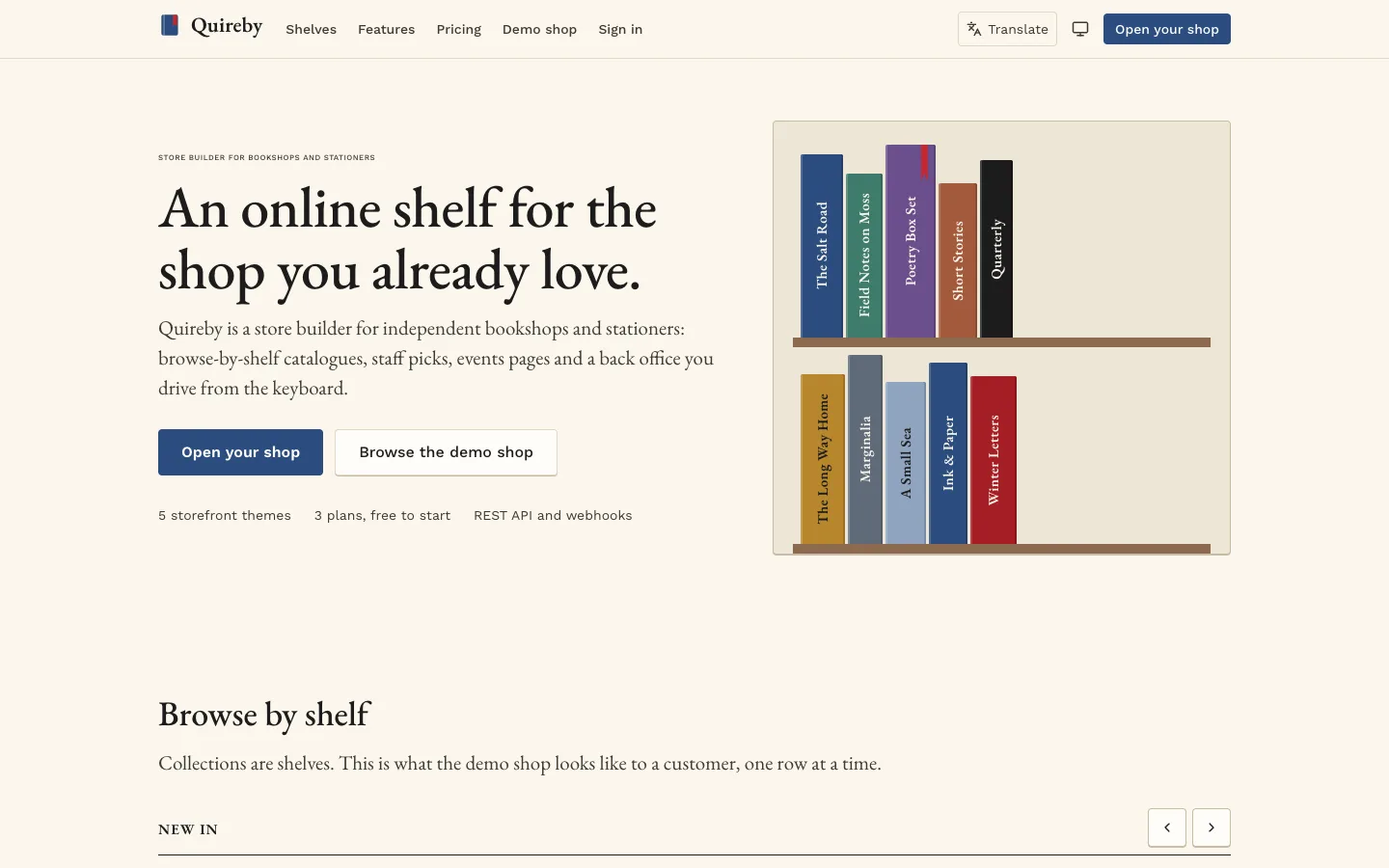
Quireby is a multi-store e-commerce platform for independent bookshops and stationers, built by DEV3 Technologies on Next.js 16, React 19, TypeScript, Tailwind 4 and MongoDB. You host it yourself. Each shop signs up, picks a plan, builds a storefront from sections and one of five storefront themes, sells on a free subdomain or its own domain, and pays you a per-shop plan plus a small transaction fee. It is a web product: a public site, a shop back office, the storefronts and a super-admin console. There are no native mobile apps.
A back office you drive from the keyboard
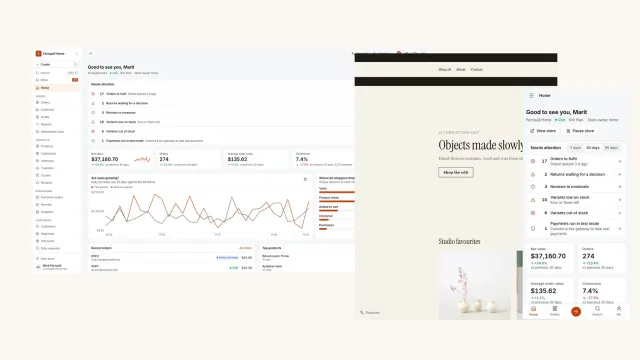
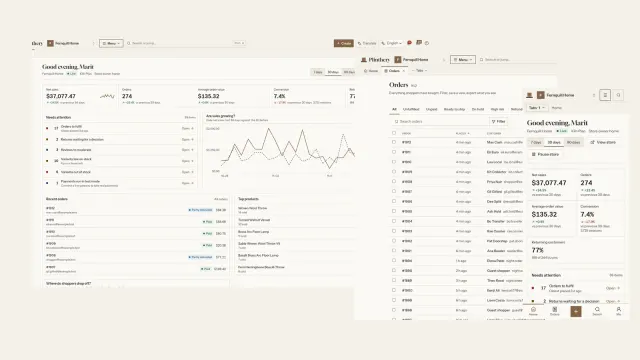
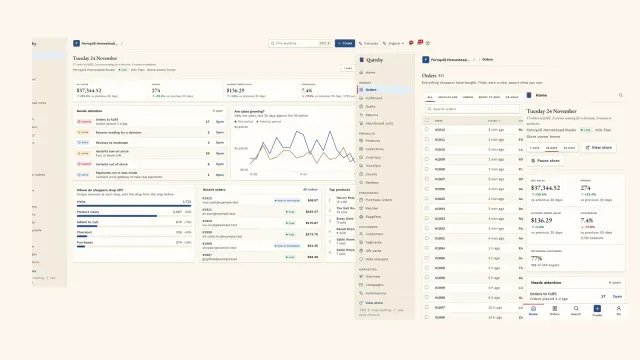
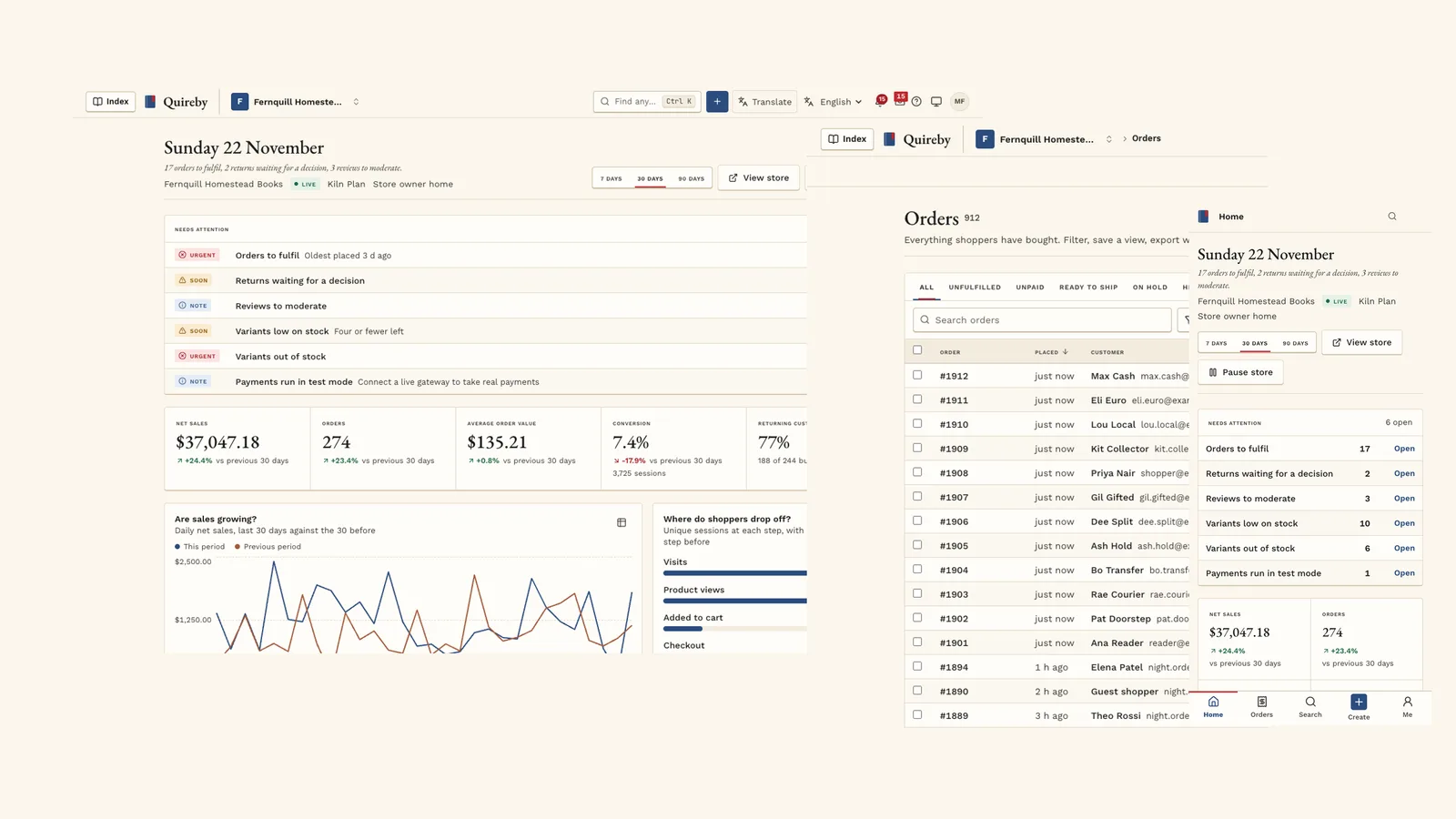
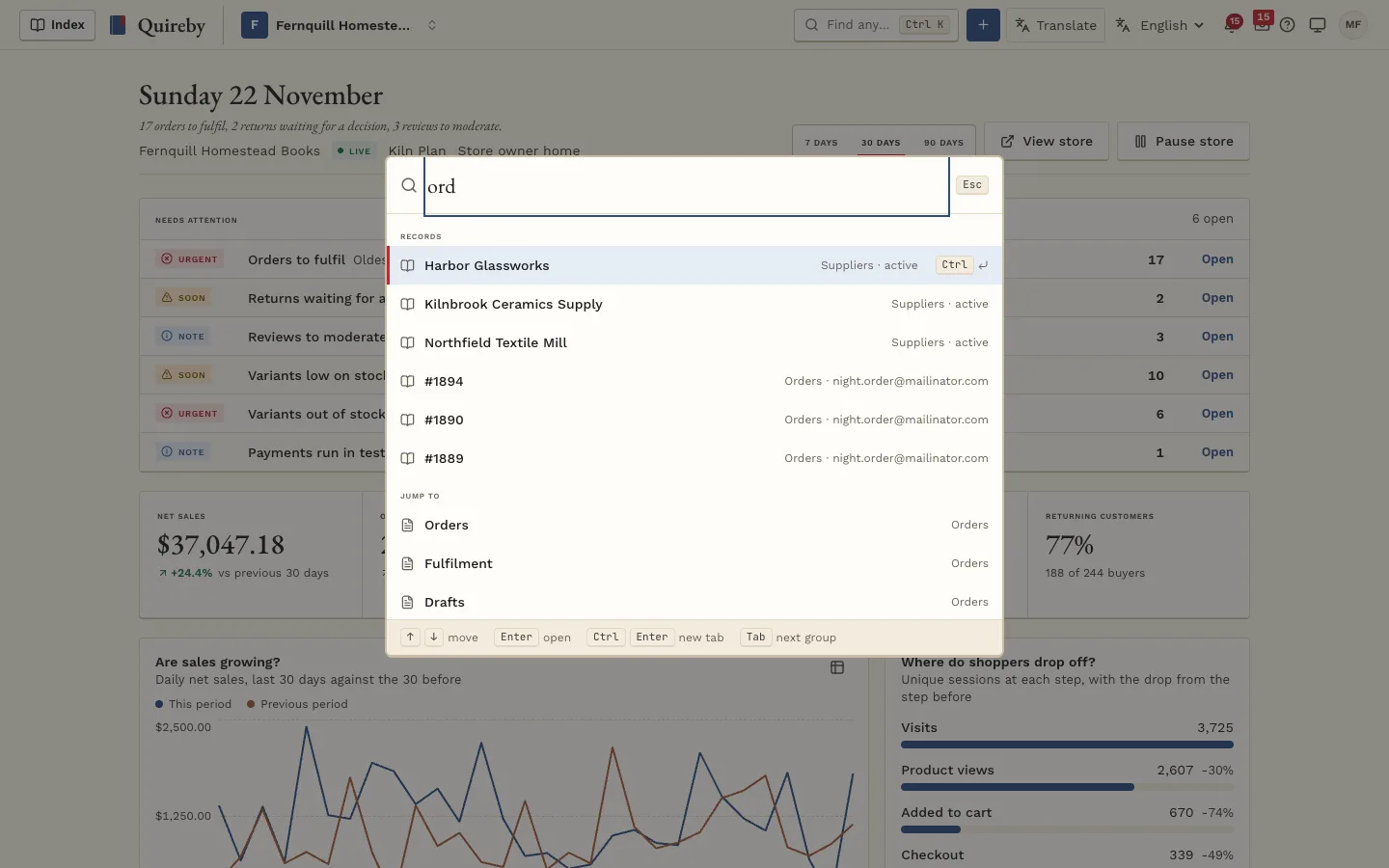
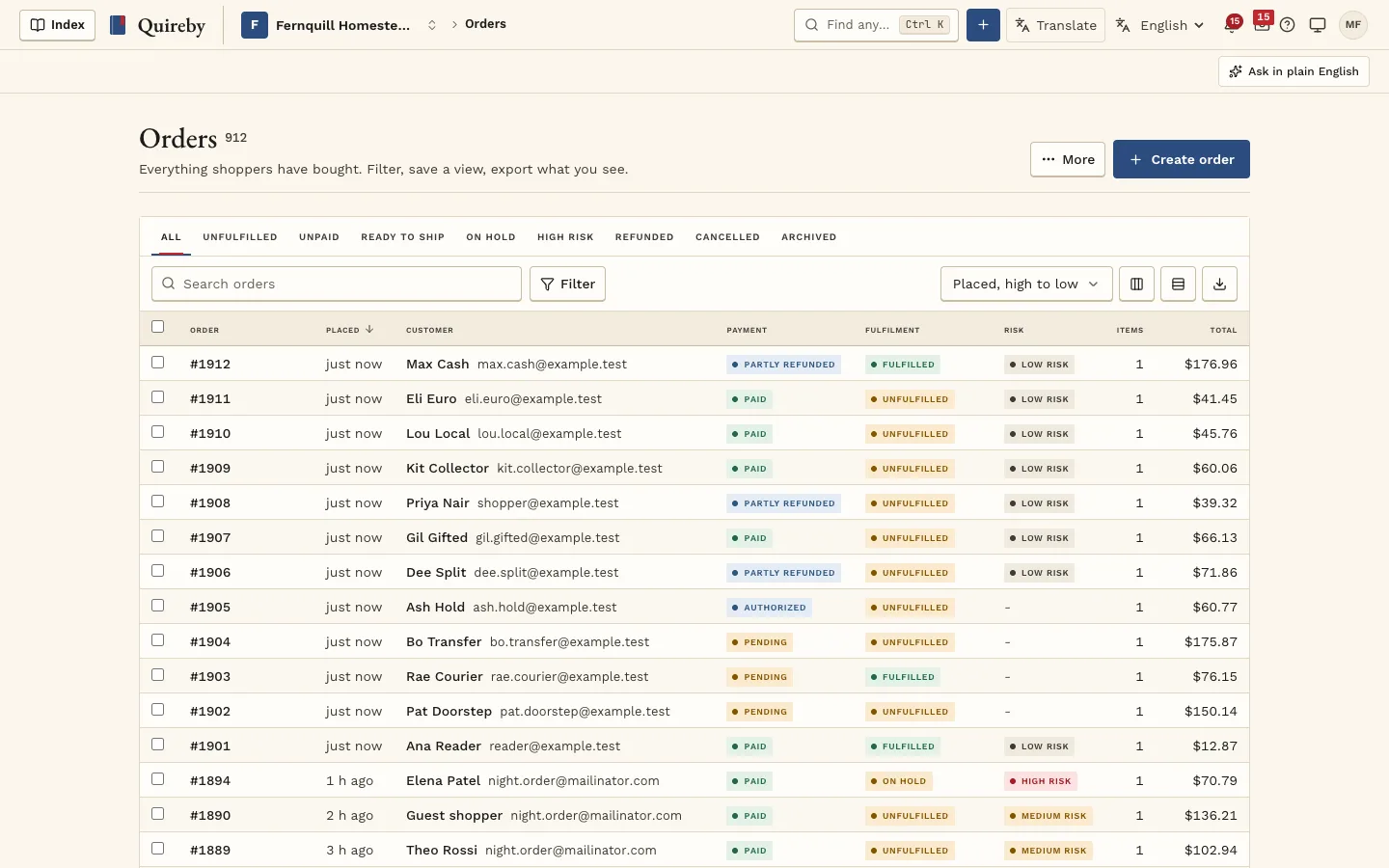
The back office is set like a well-made book: Garamond titles, paper-coloured cards with crisp borders, ink-blue actions and a bookmark-red ribbon that marks where you are. On screens 1280 px and wider the Index is pinned as a slim side index; on smaller screens it opens as a sheet. Press Ctrl K and type: orders, titles, customers and every page are one search away, with recent pages and create actions in the same palette. An Index sheet lists the whole permission-filtered menu as a table of contents, and go-chords (G then O for orders, C then P to create a product) move you around without the mouse. The dashboard is a day book: today's date, a one-line summary, an attention ledger, a row of figures and ranked best sellers. It works in light and dark and on a phone.
The public site and storefronts
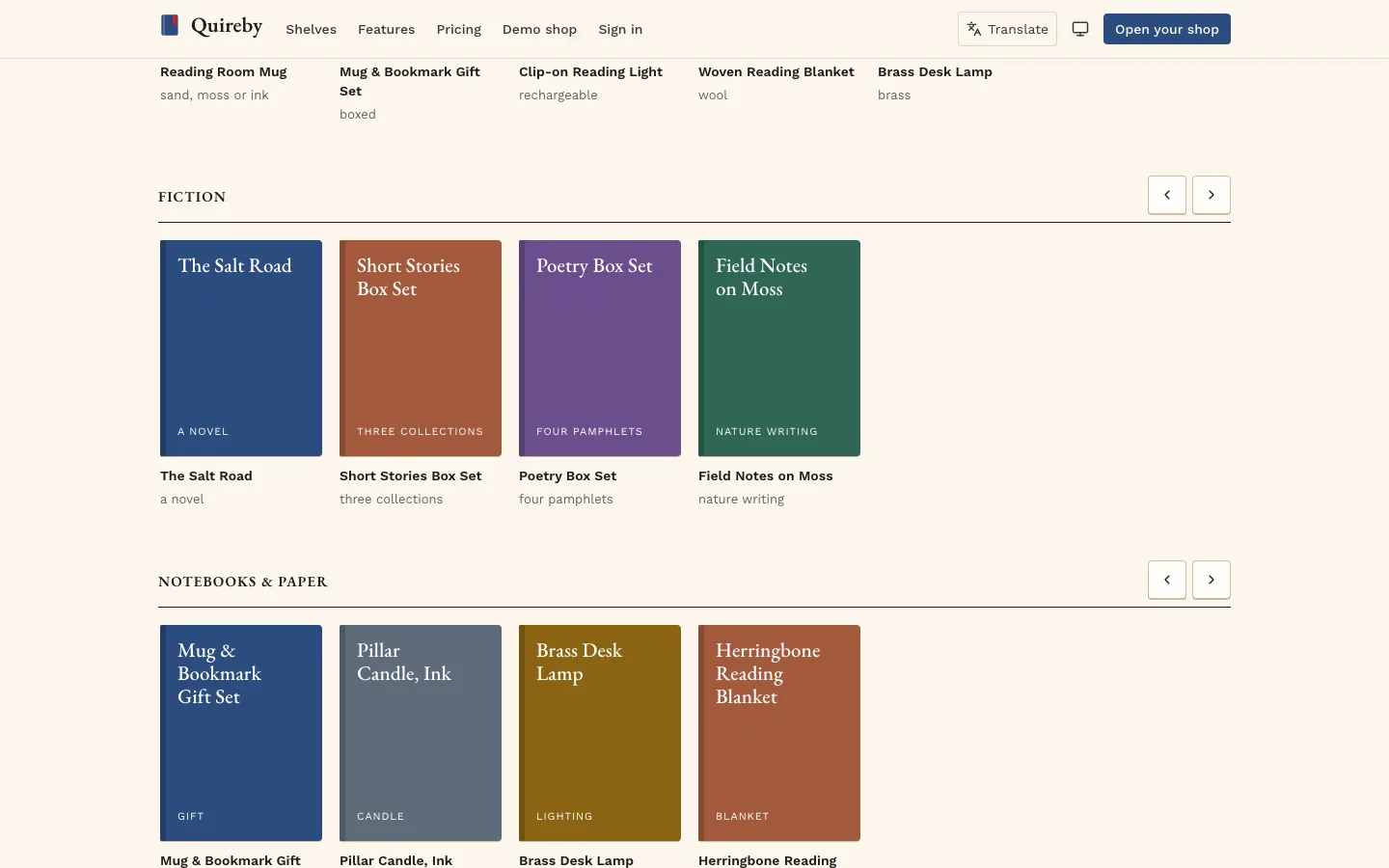
The public site is warm and literate: browse-by-shelf rows, staff picks, an events list, a pricing page set as catalogue cards and a features page set like a table of contents. Five storefront themes (Shelfmark for the bookshop, Quarto, Pantryfolio, Colophon and Endpaper) come with their own type, colour and mood. The bookshop theme has a shoppable front-table image and binding and finish swatches on the buy box. Events are ordinary pages and blog posts; where seats are limited the ticket is a product the customer adds to the cart. There is no dedicated events or ticketing feature.
Try it with demo data: run npm run seed for 12 fictional shops, then use the 17 one-click demo logins on the sign-in page when DEMO_MODE=true (password demo-pass-2026). Payments, carriers, DNS and email are simulated until you add keys.
Everything a shop and a platform need
- Orders and fulfilment: fulfilment by location, pick batches, a pack screen, simulated carrier labels and tracking, holds, risk rules, returns with restocking fees and exchanges, abandoned checkouts.
- Catalogue and purchasing: product types (digital, gift card, service, bundle), custom fields, suppliers, purchase orders, receiving with landed cost, reorder suggestions, stock counts, transfers, barcode labels, Google and Meta product feeds.
- Customers: segments with a rule builder, gift cards, store credit with split tender, consent, merge, erase and data requests.
- Marketing: email campaigns with a block editor, automations (abandoned cart, win-back, review requests), editable email and document templates, wishlist and back-in-stock alerts, UTM attribution.
- Online store: theme editor with a contrast checker, blog, policies, contact inbox, cookie consent, SEO toolkit, faceted filters and predictive search, multi-language storefronts including Arabic right-to-left.
- Checkout and money: one-page checkout, cash on delivery and bank transfer, authorise then capture, payouts, fee statements and reconciliation, multi-currency prices, local pickup through shipping zones, tax classes.
- Analytics: 30 reports with compare, drill-down and export, live view, cohorts, lifetime value, scheduled reports and a custom report builder.
- Team and data: custom roles, location limits, a two-factor policy, approvals for refunds, discounts, purchase orders, stock and store credit, a notification centre, import and export with undo, a webhook log with replay, audit diffs, store transfer and closing with a ZIP export.
- Super admin: tenant health, plan overrides, coupons, trial extensions, a cancel flow, support tickets with time-boxed support access, announcements, feature flags, maintenance mode, revenue cohorts, a status page and editable landing blocks.
- REST API and webhooks on the top plan, signed and logged.
- Gemini AI admin tools: optional helpers for product copy, SEO, segment rules and replies. They use a built-in offline driver until you add your own Gemini key, and nothing is saved or sent without you.
What is in the box
The full source, a setup wizard, demo seed, buyer documentation (install, demo logins, roles, theming, deployment, scheduled jobs), font licences and photo credits. Self-hosted, multi-tenant, super-admin console, simulated payments in demo mode.