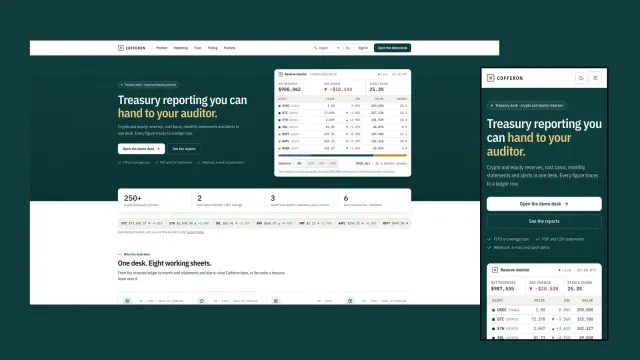
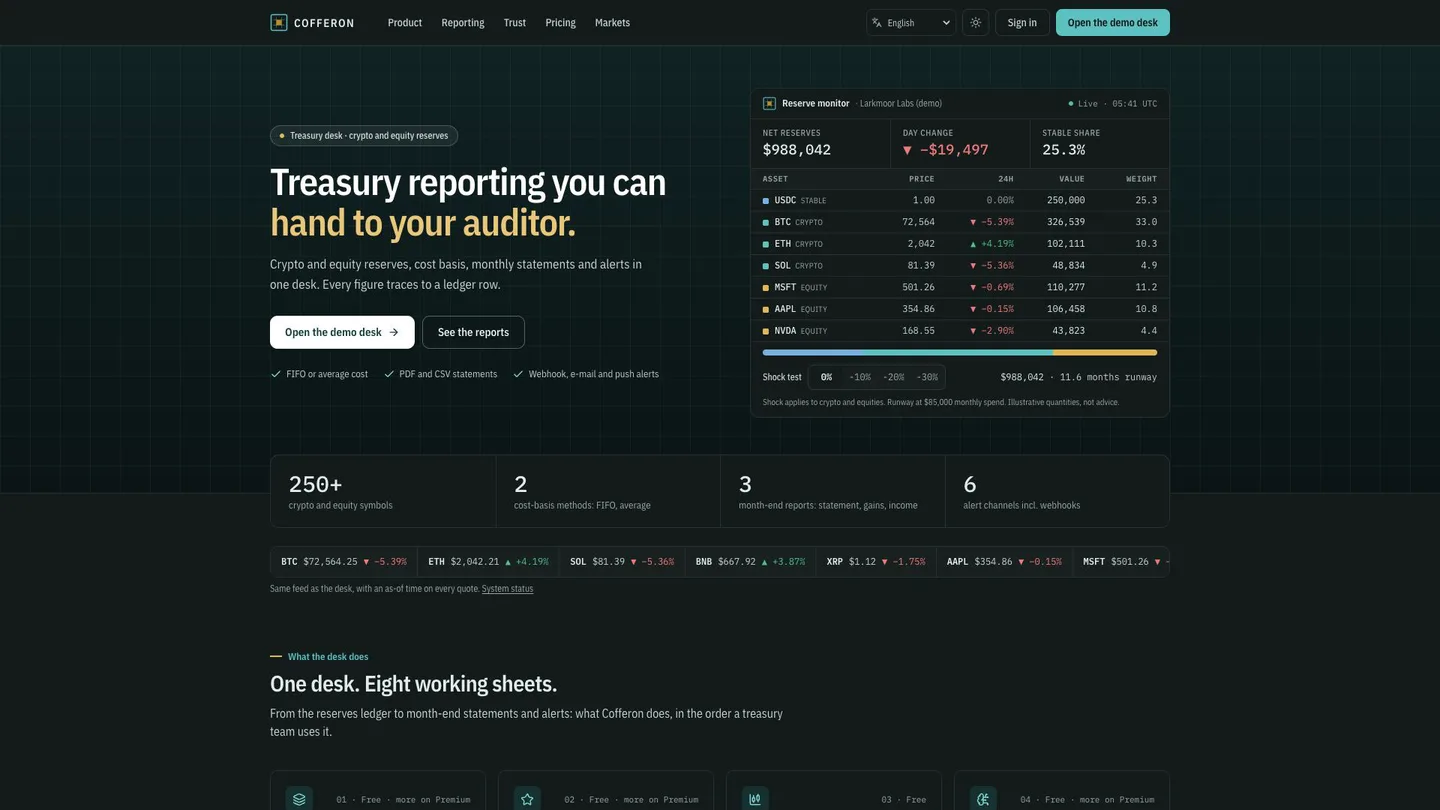
 Home in dark mode — the same reserve monitor, headline and figures strip on a deep ink background.
Crypto treasury reporting software for companies and DAOs: 6 things to check
Last updated
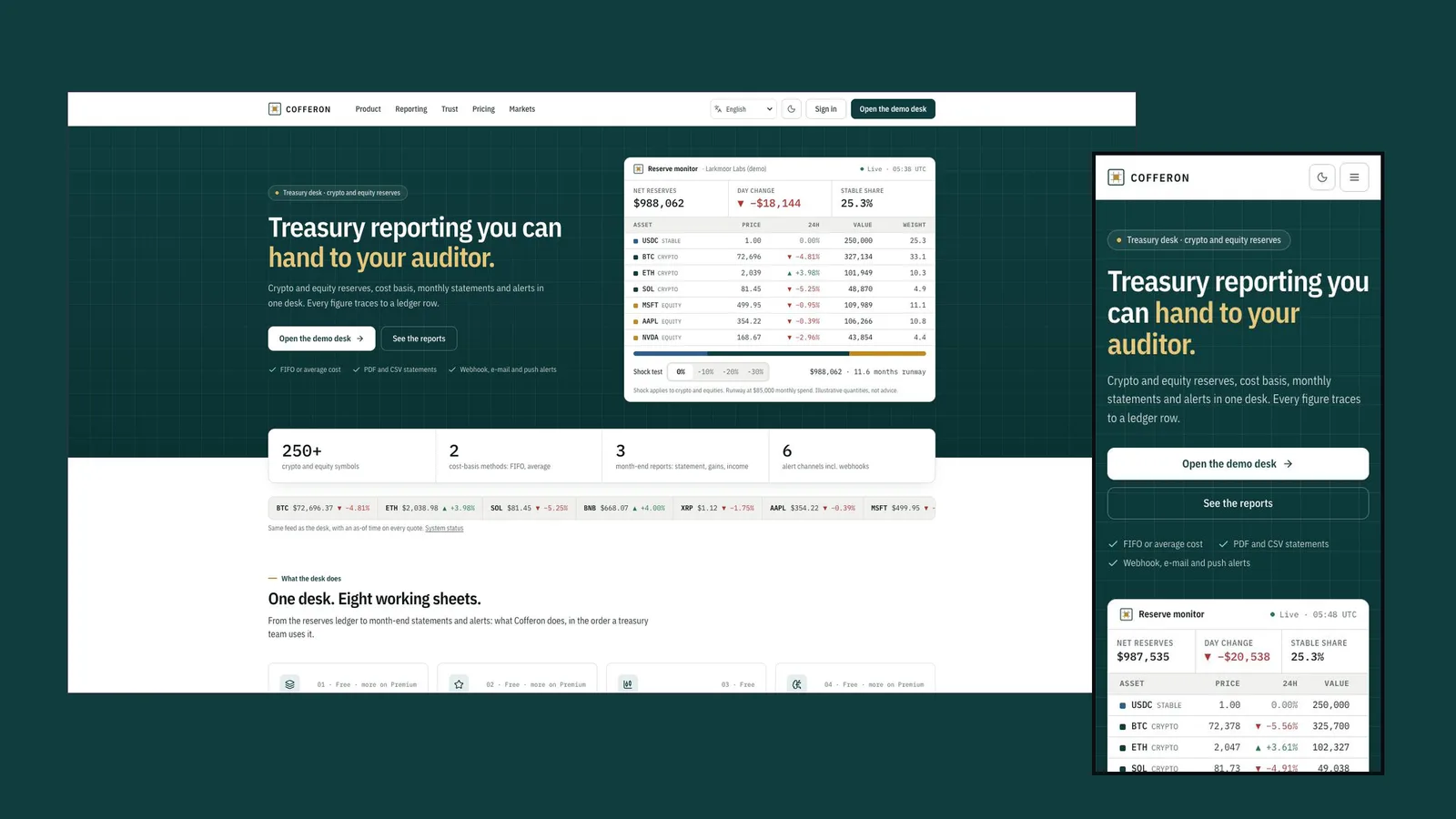
Company and DAO finance teams have to explain what they hold, what it cost and what it earned, every month. This checklist covers six things to check before you pick self-hosted treasury reporting software for crypto and equity reserves, with DEV3 Cofferon as the worked example.
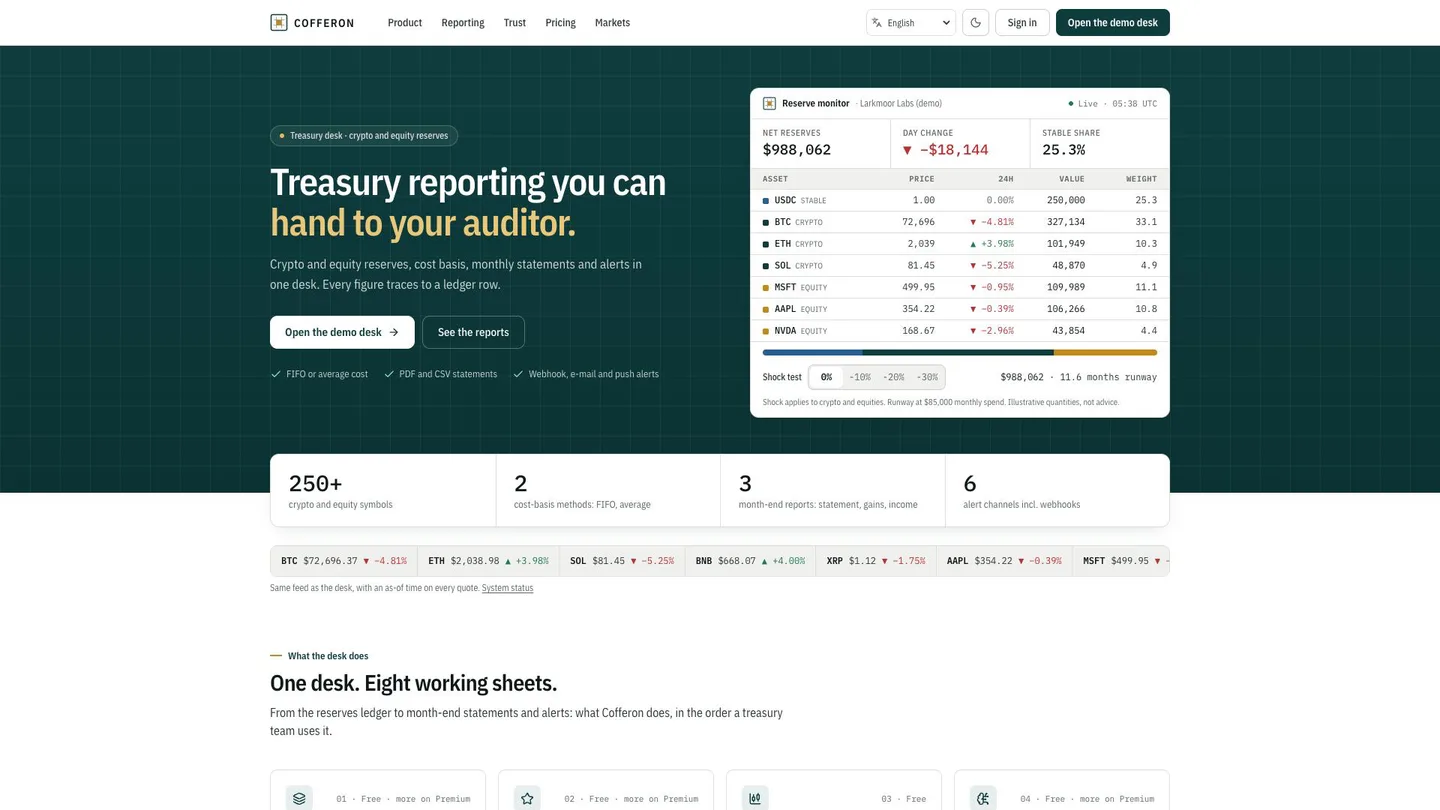
A ledger with a stated cost basis. Every position should trace to ledger rows, with FIFO or average cost and CSV imports.
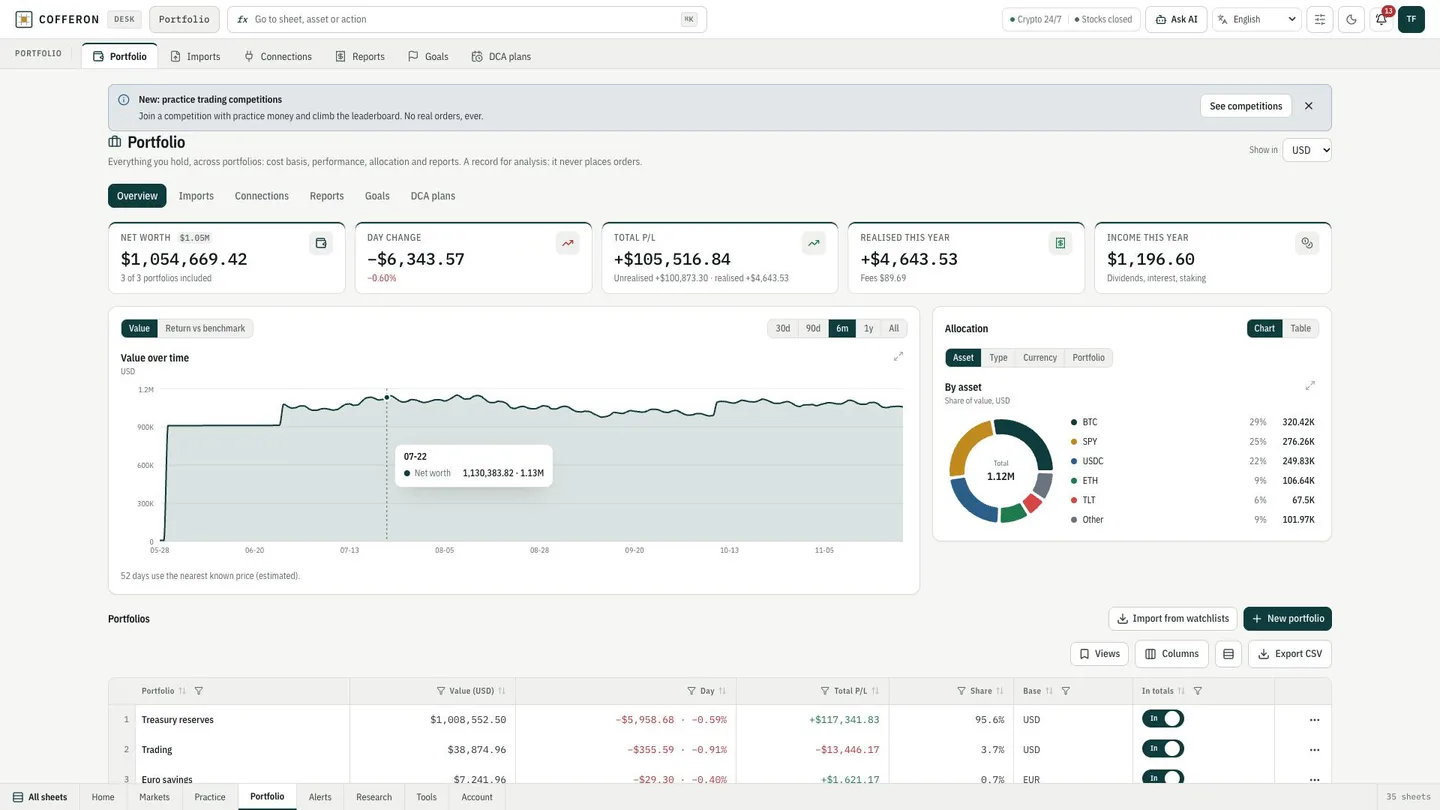
Month-end reports your reviewer can follow. A monthly statement, realised gains and income, exportable as PDF or CSV.
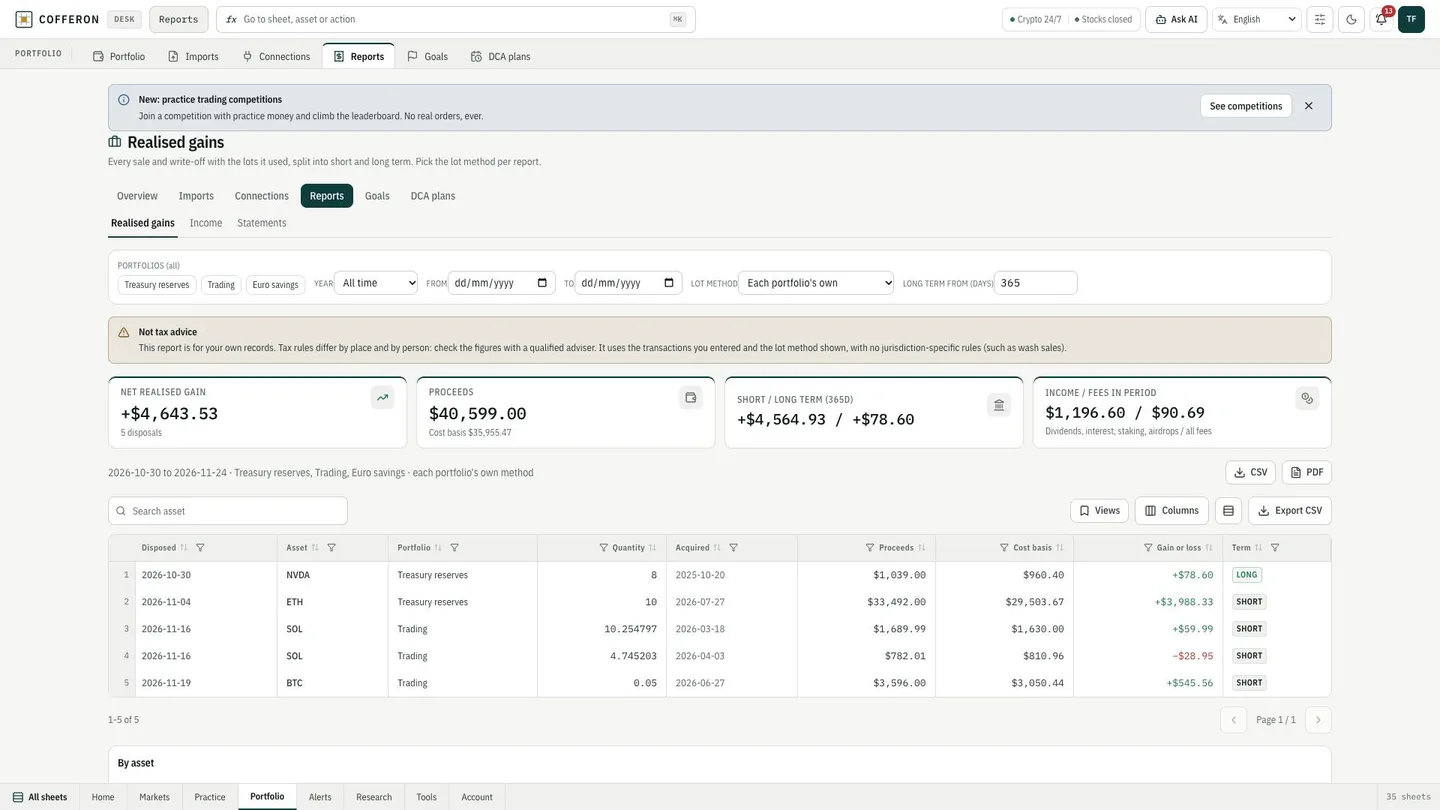
A desk that is fast to read. Dense grids, a sticky first column and totals rows beat a pile of cards.
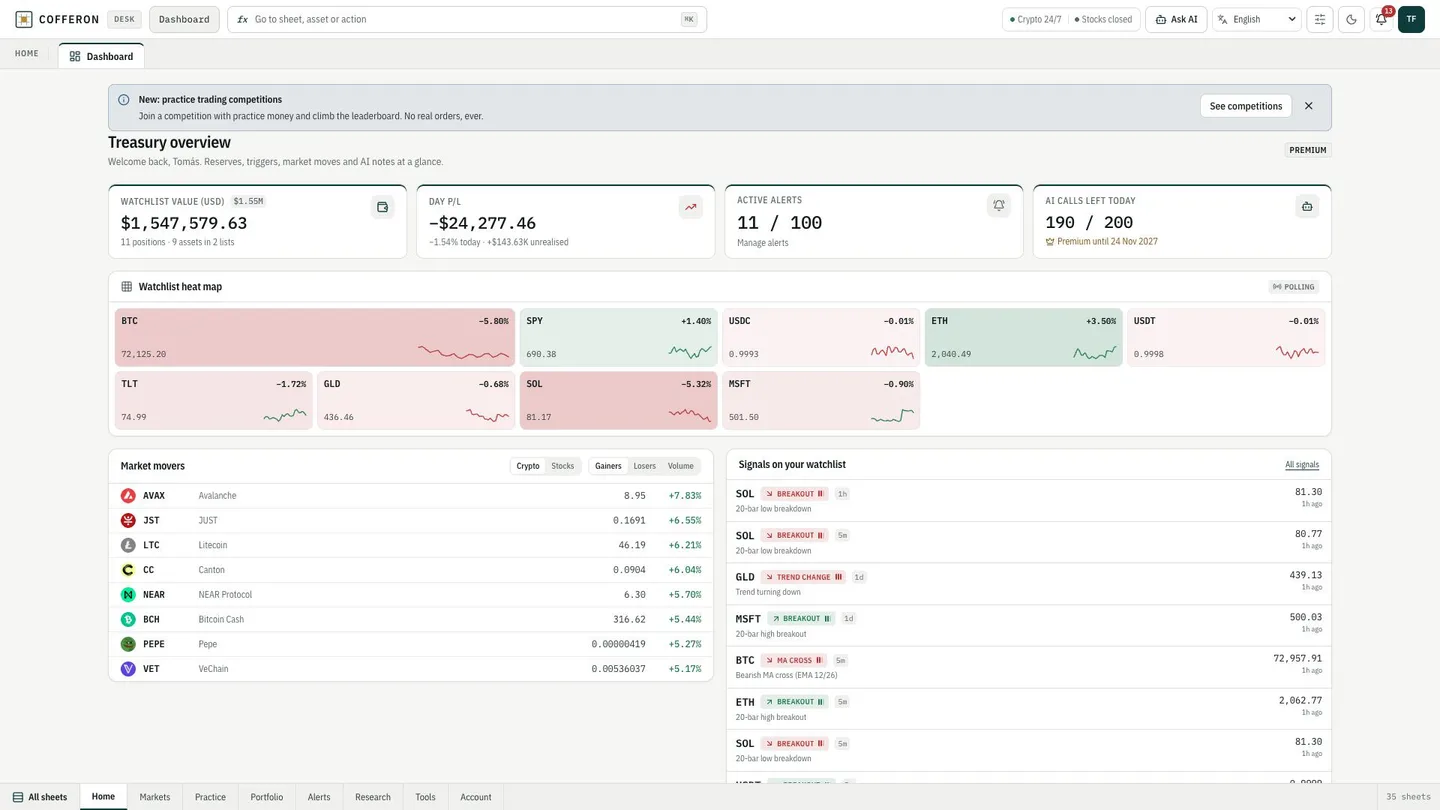
Alerts that reach your tools. Price and percentage rules delivered to e-mail, push, webhook, Telegram or Discord.
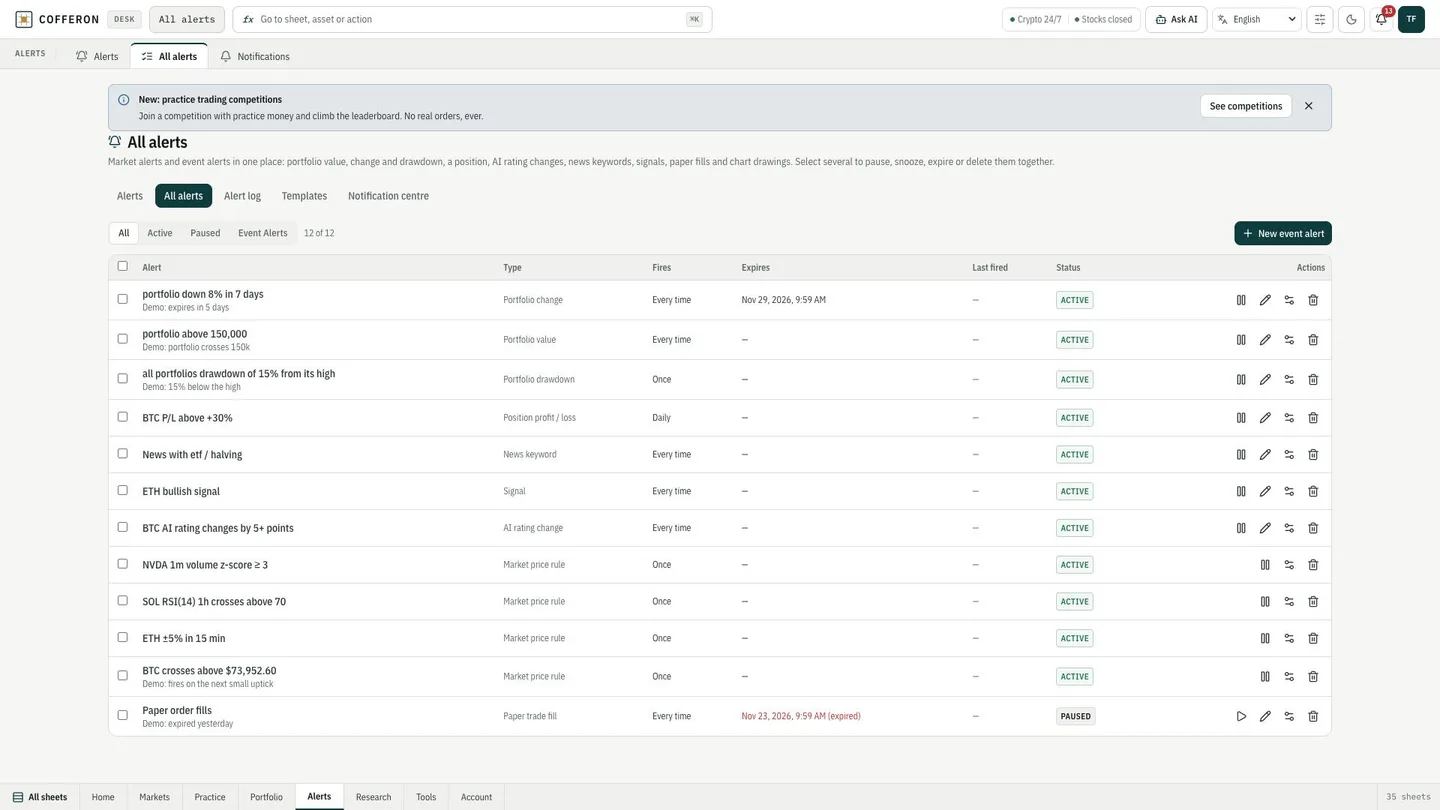
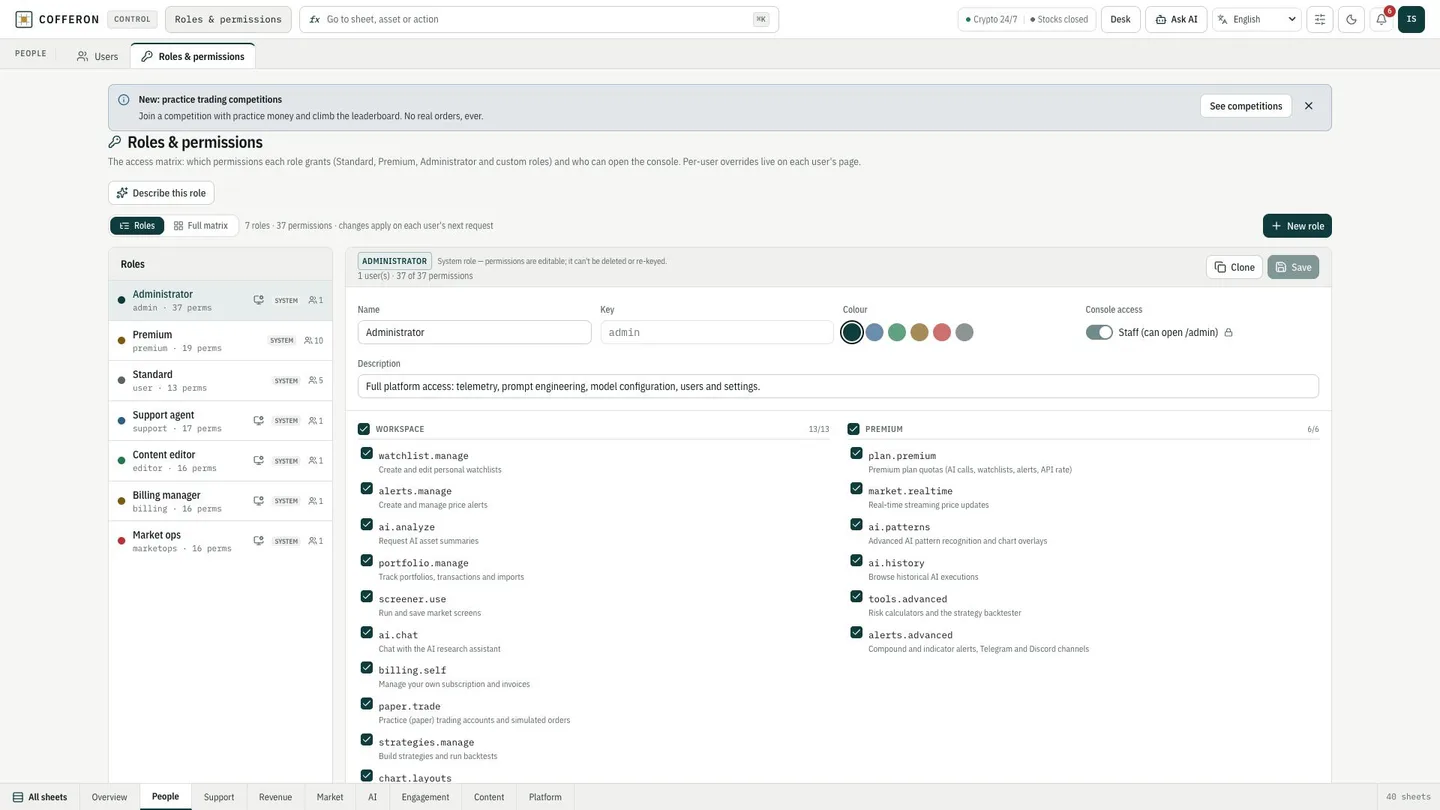
Roles and an audit log. Separate who can see, edit and administer, and keep a record of sensitive actions.
An honest scope. Look for software that says what it does not do. Cofferon tracks and reports only: it does not hold funds, run wallets, sign transactions or approve payments.
Cofferon is a Next.js and MongoDB web app that covers all six, with dark and light modes, right-to-left layouts and 390 px phone layouts.