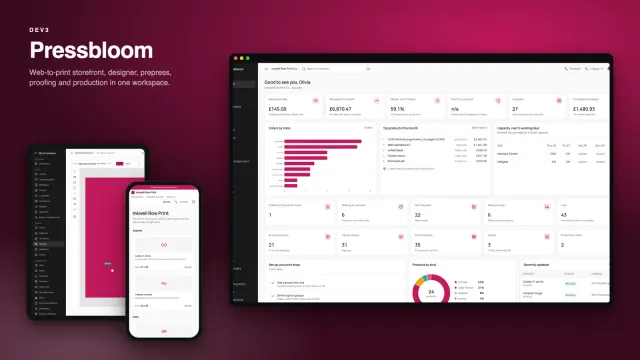
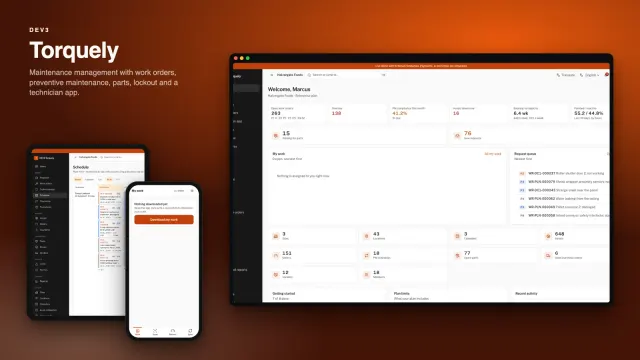
 Landing — Team goals, reviews and engagement surveys in one calm workspace.
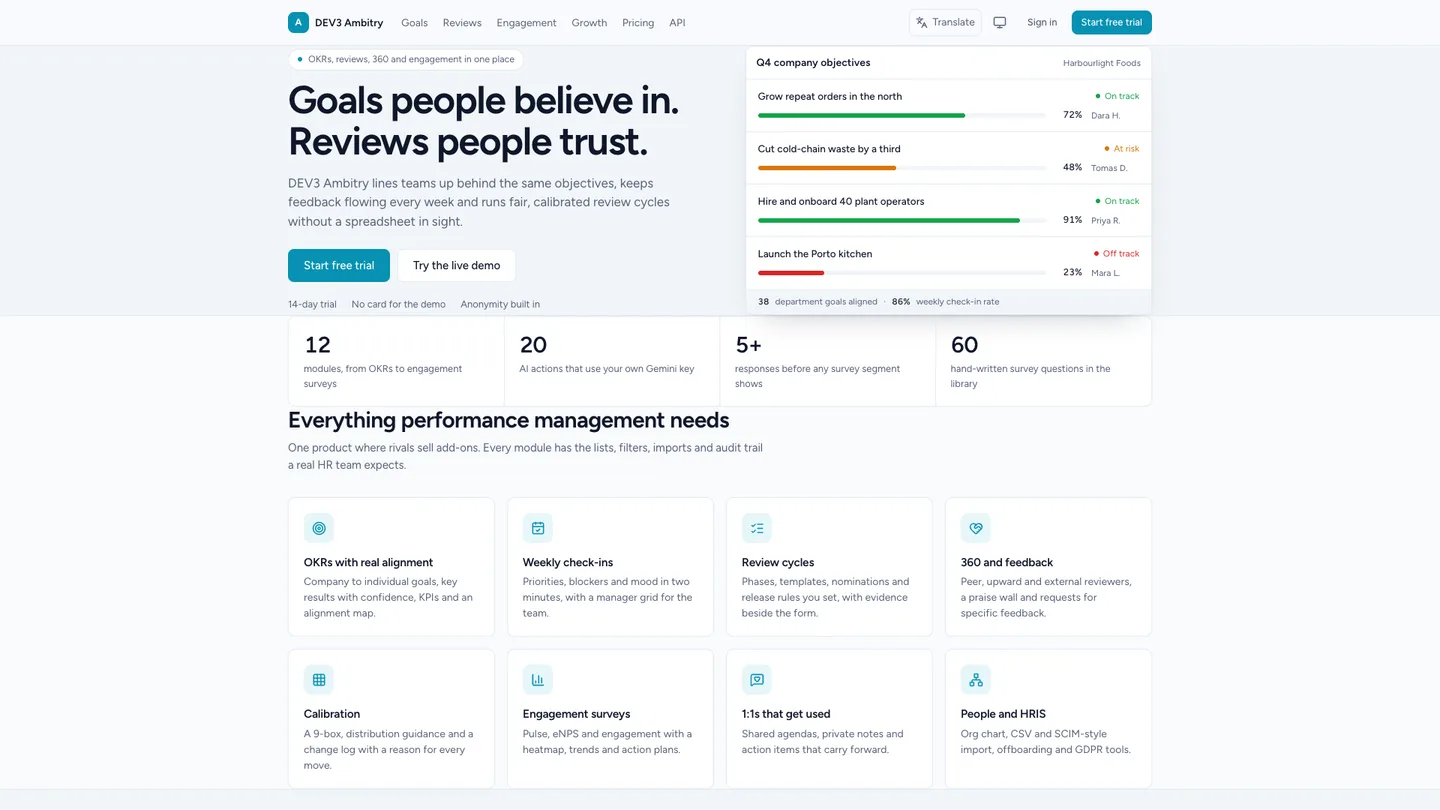
 Features — Goals, check-ins, reviews, 360, calibration, surveys and growth plans.
Performance management software: 6 things to check before you pick one
Last updated
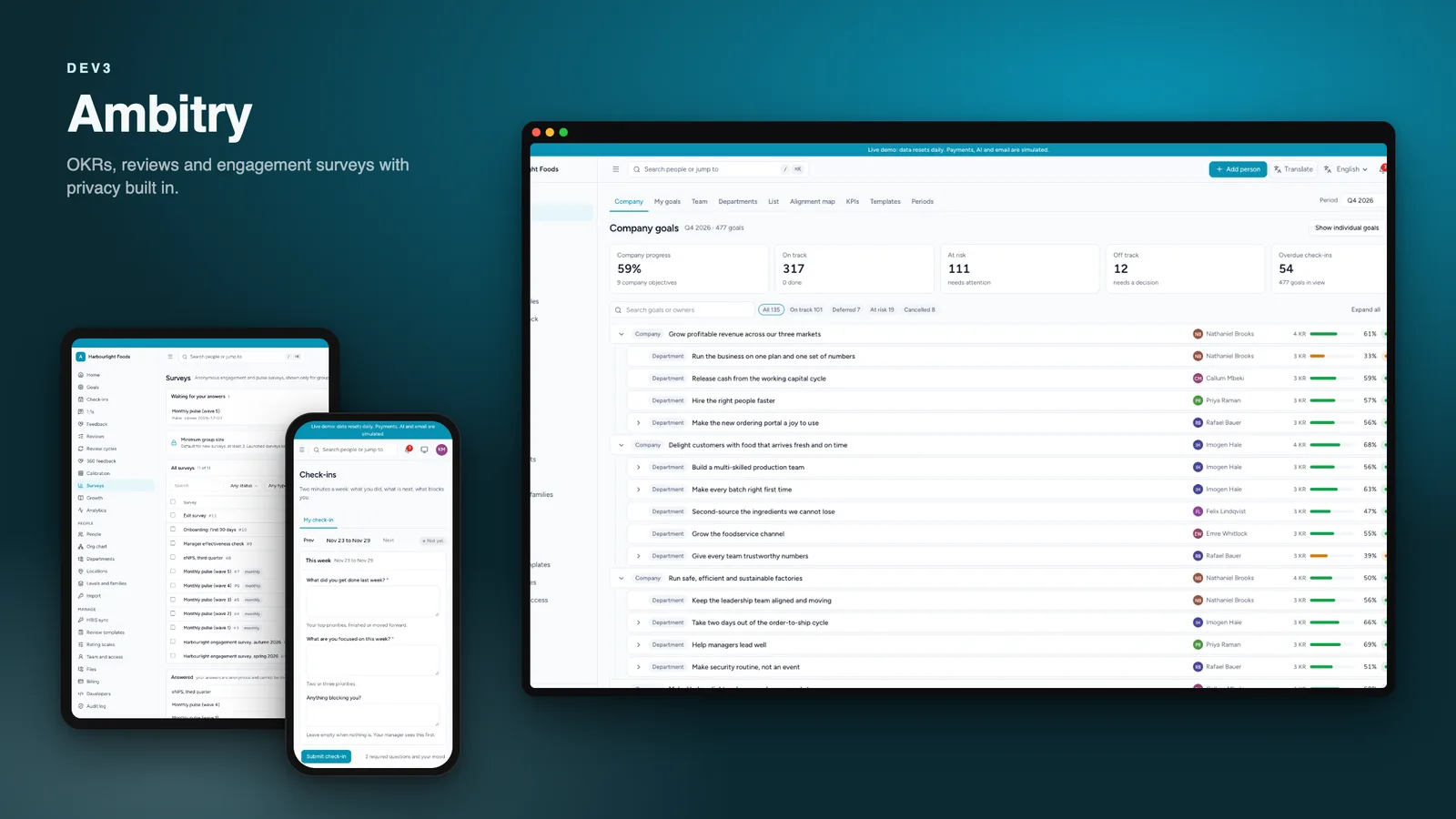
Performance tools look alike in a feature list until you ask the awkward questions: what stops an anonymous survey naming someone when two views are subtracted, what happens to a review after it is released, and who can read a private 1:1 note. Here are six things to check, with DEV3 Ambitry as the worked example.
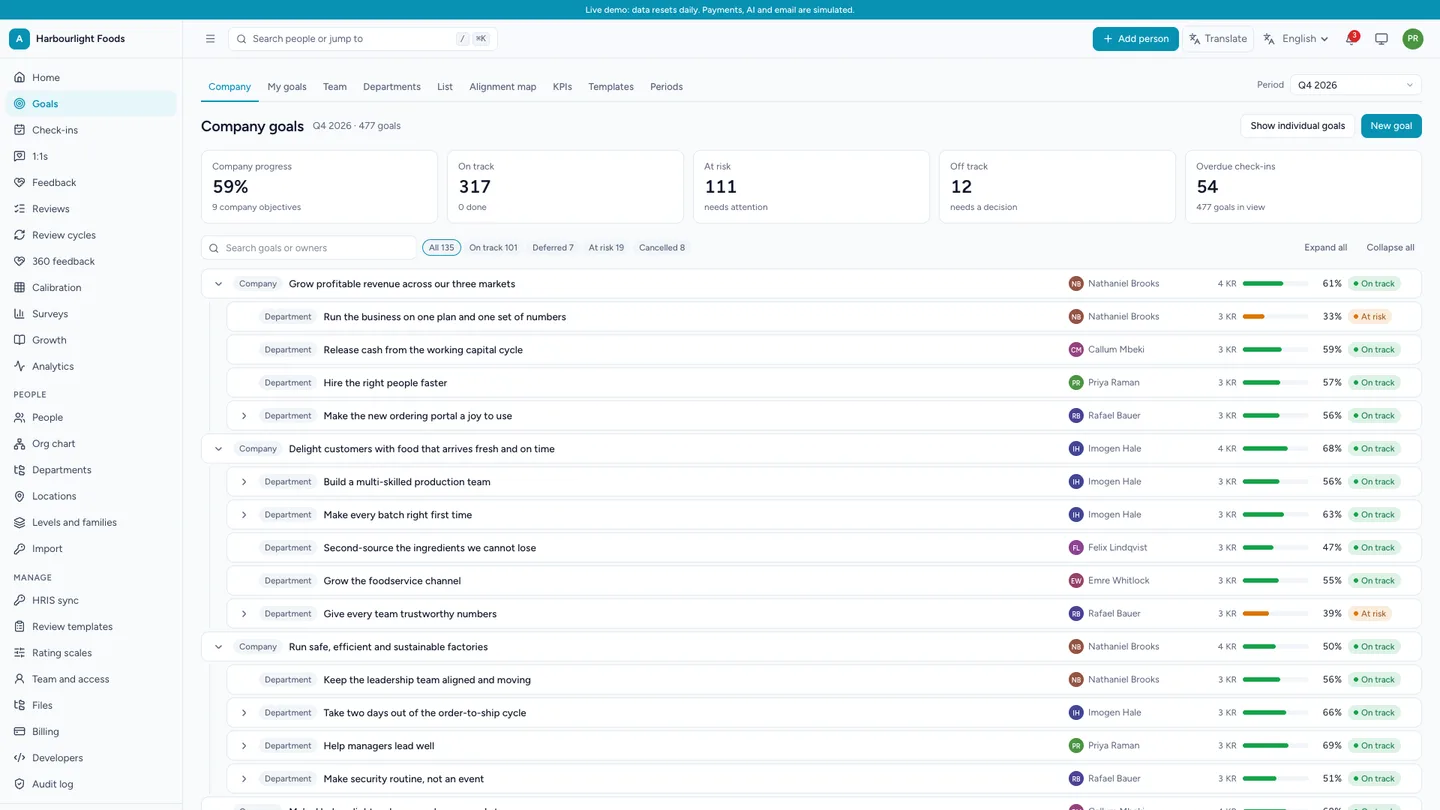
1. Do goals roll up the way people expect?
Weights, decrease targets and cancelled work all change a percentage. Ambitry rolls key results into goals with weights, excludes cancelled and deferred goals and cuts link cycles, and closing a period freezes the numbers.
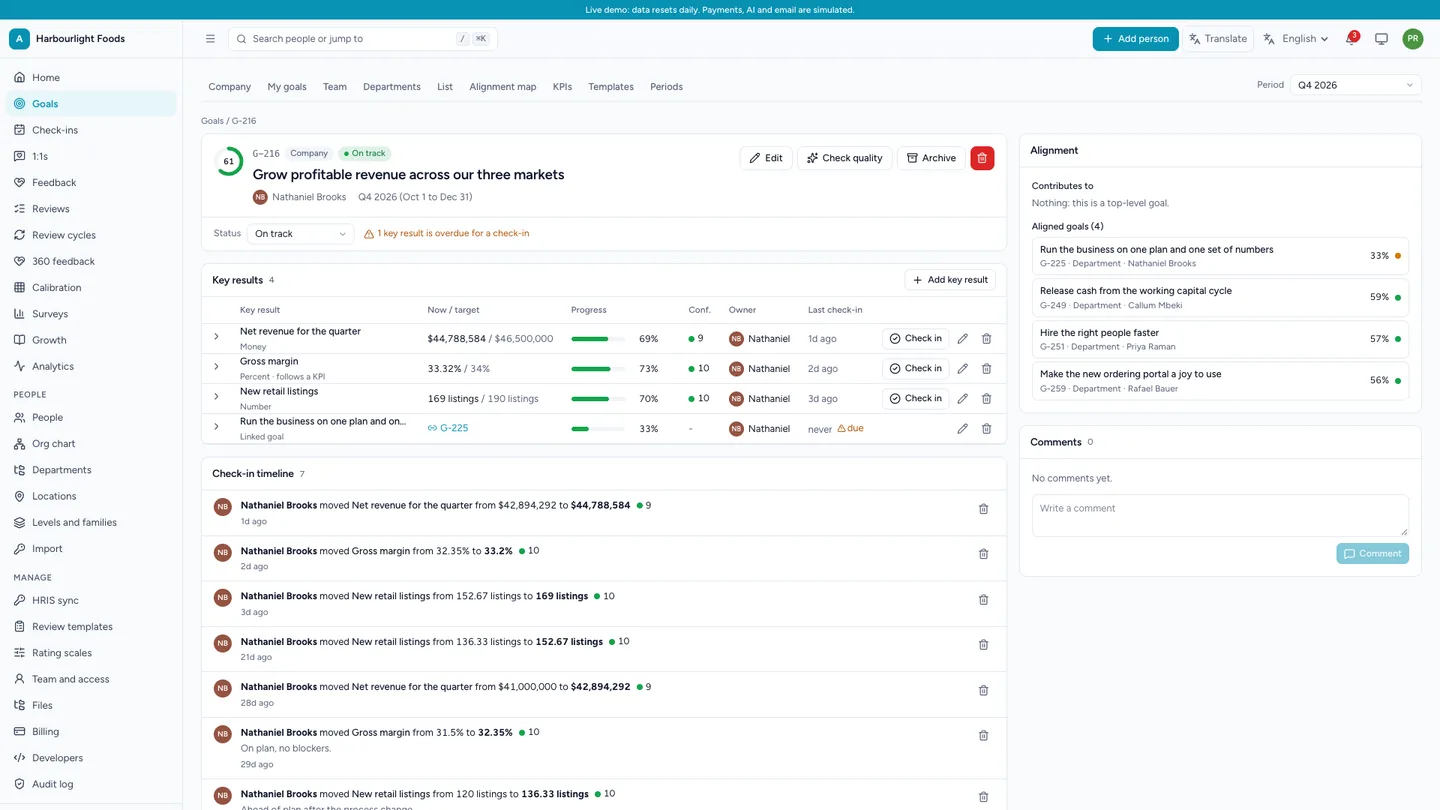
2. Is a review fair and final?
A cycle should snapshot who is eligible, open and close phases by date and freeze a packet when it is released. Ambitry adds nominations with manager approval and a bias and tone check on the wording.
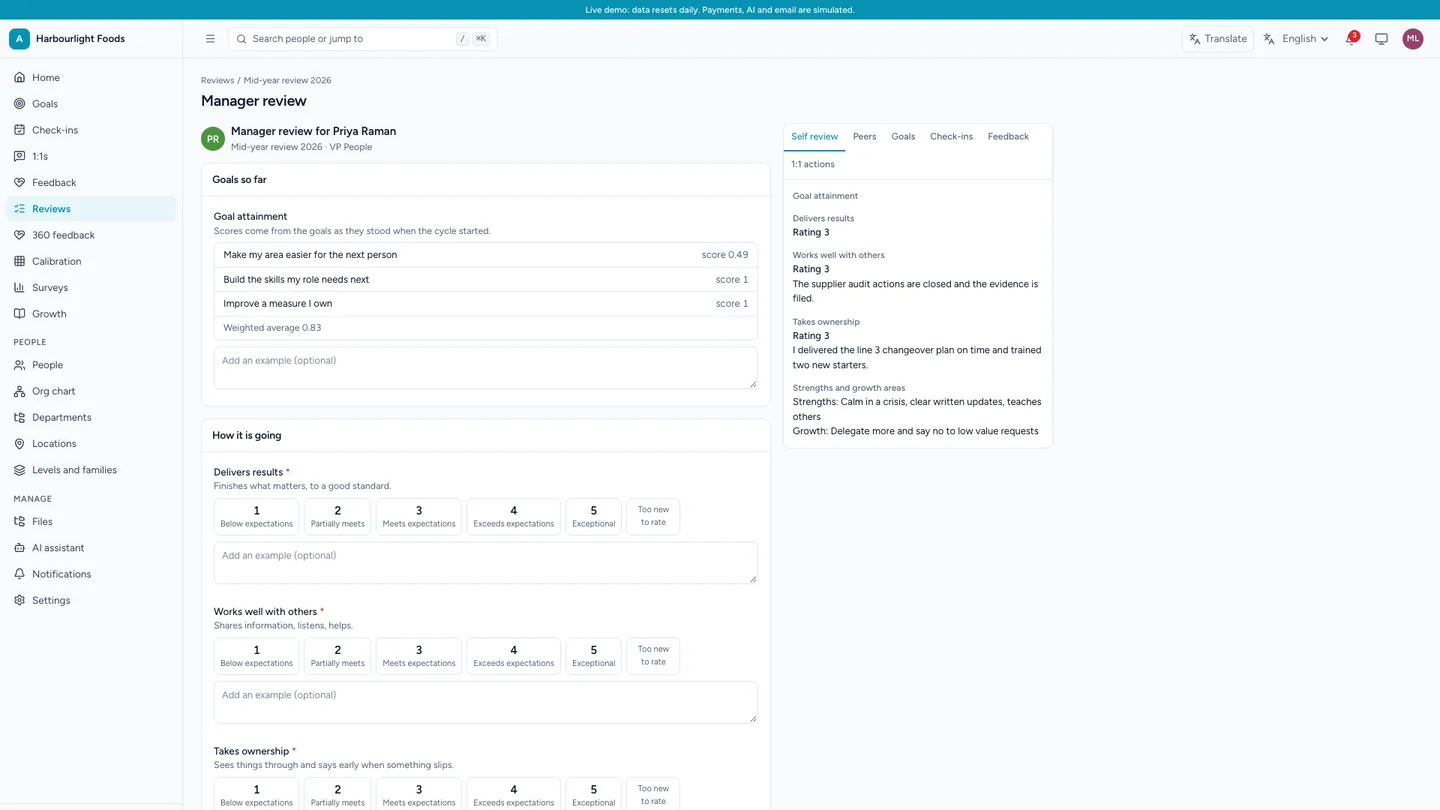
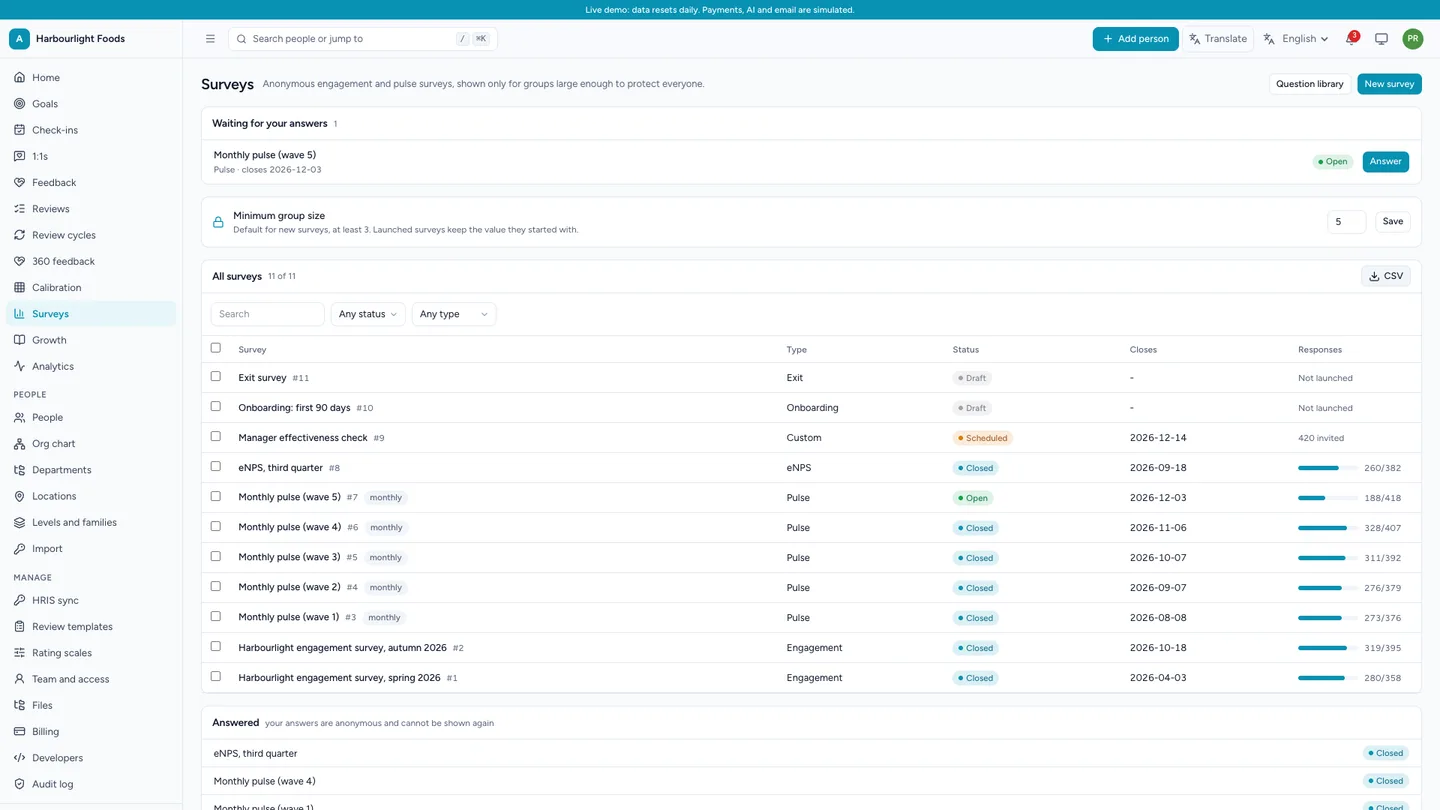
3. Can survey anonymity survive subtraction?
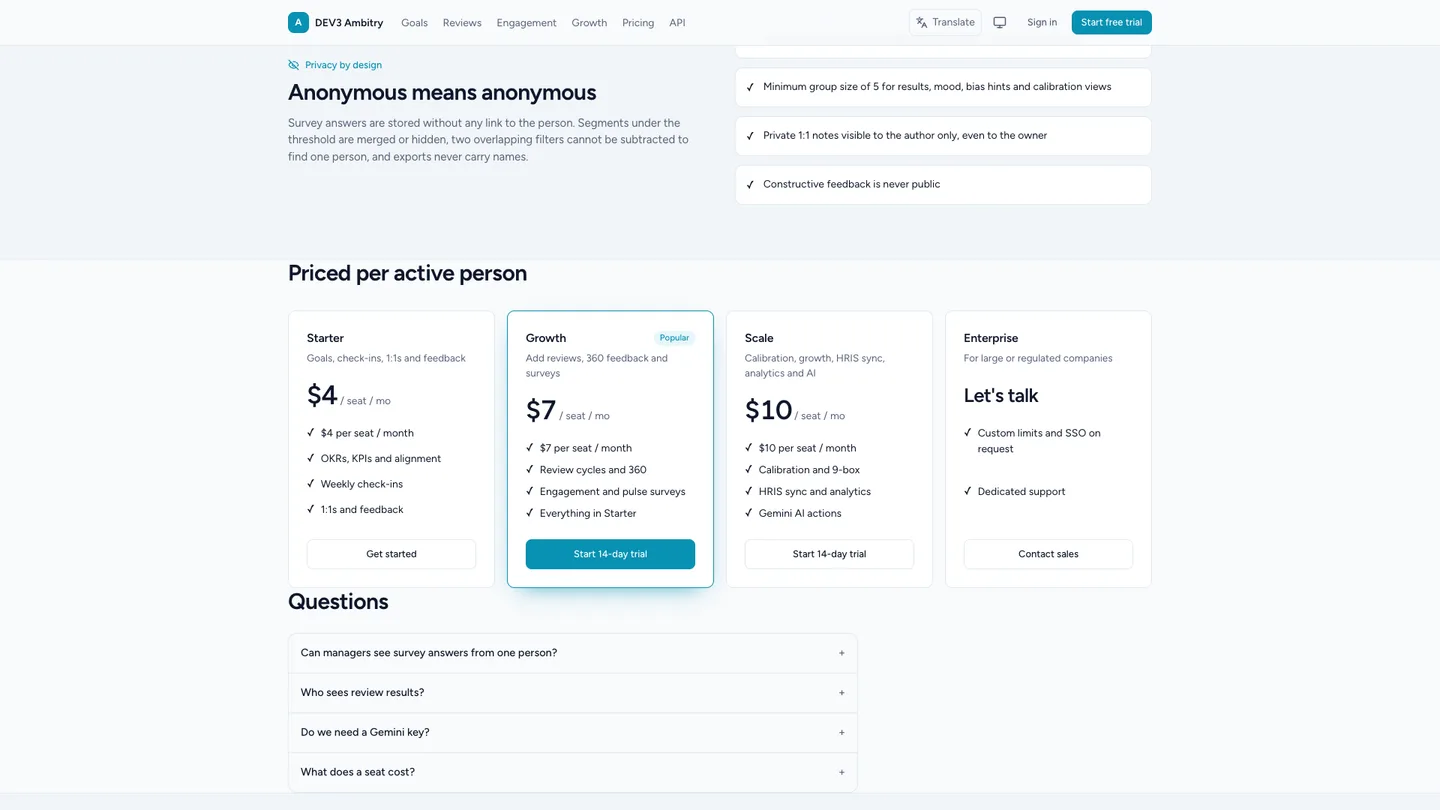
Show a department of six and a tenure group of two and the overlap is one person. Ambitry shows a view only when it and its complement reach the minimum, refuses overlapping filters and gives comments an opaque handle.
4. Is calibration auditable?
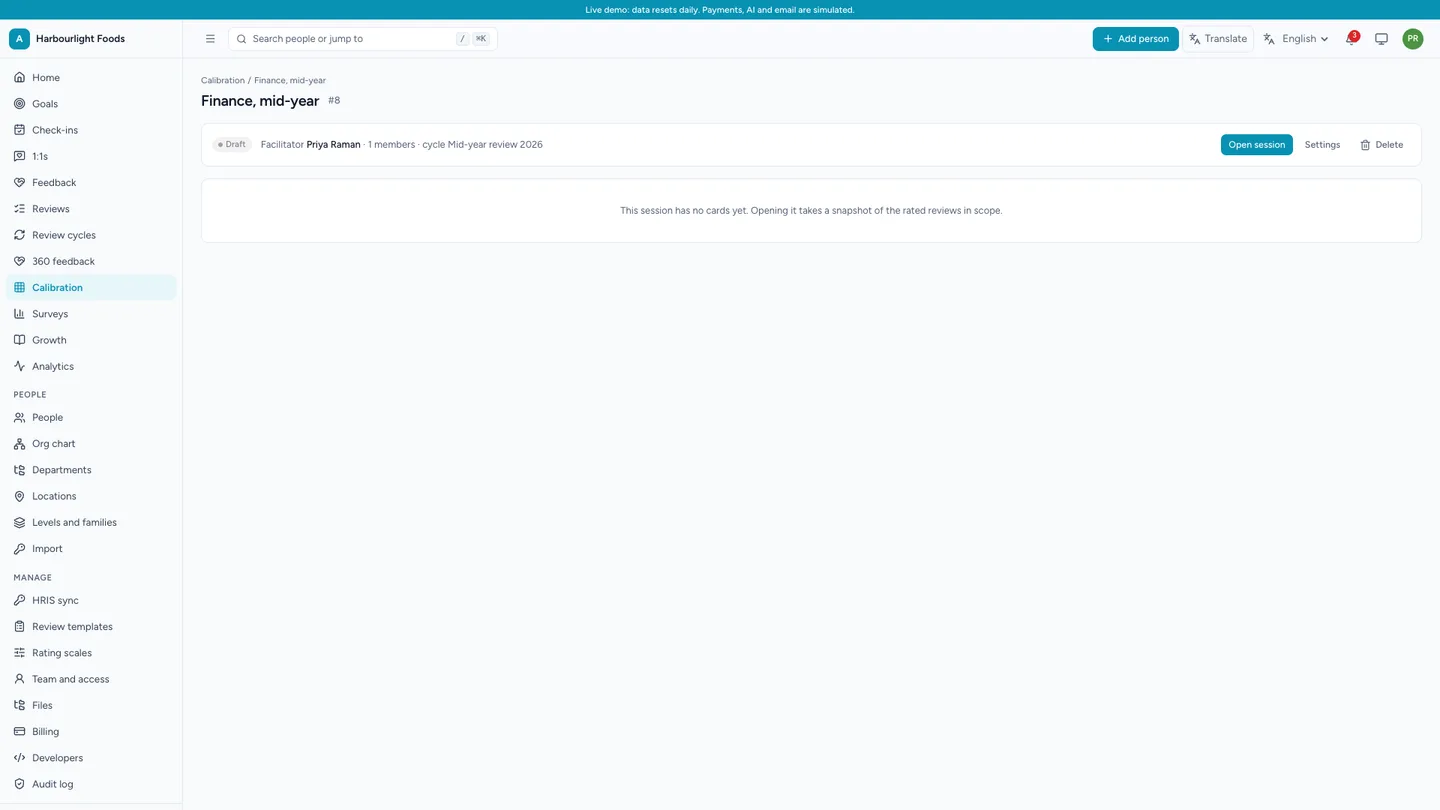
Moves need a reason, two facilitators cannot both win and every change lands in a log.
5. Who can read what?
Access should follow the relation: a manager sees their tree, an HR partner their departments. Private 1:1 notes should be unreadable even to the owner. Ambitry encrypts them and returns 404 to anyone but the author.
6. What are the honest limits?
HRIS connectors, mail and AI are simulated until you add keys, and the email digest is stored as a preference but not yet sent. Ambitry says so in the listing.
If you want to try it, the live demo has a one-click login for every role.