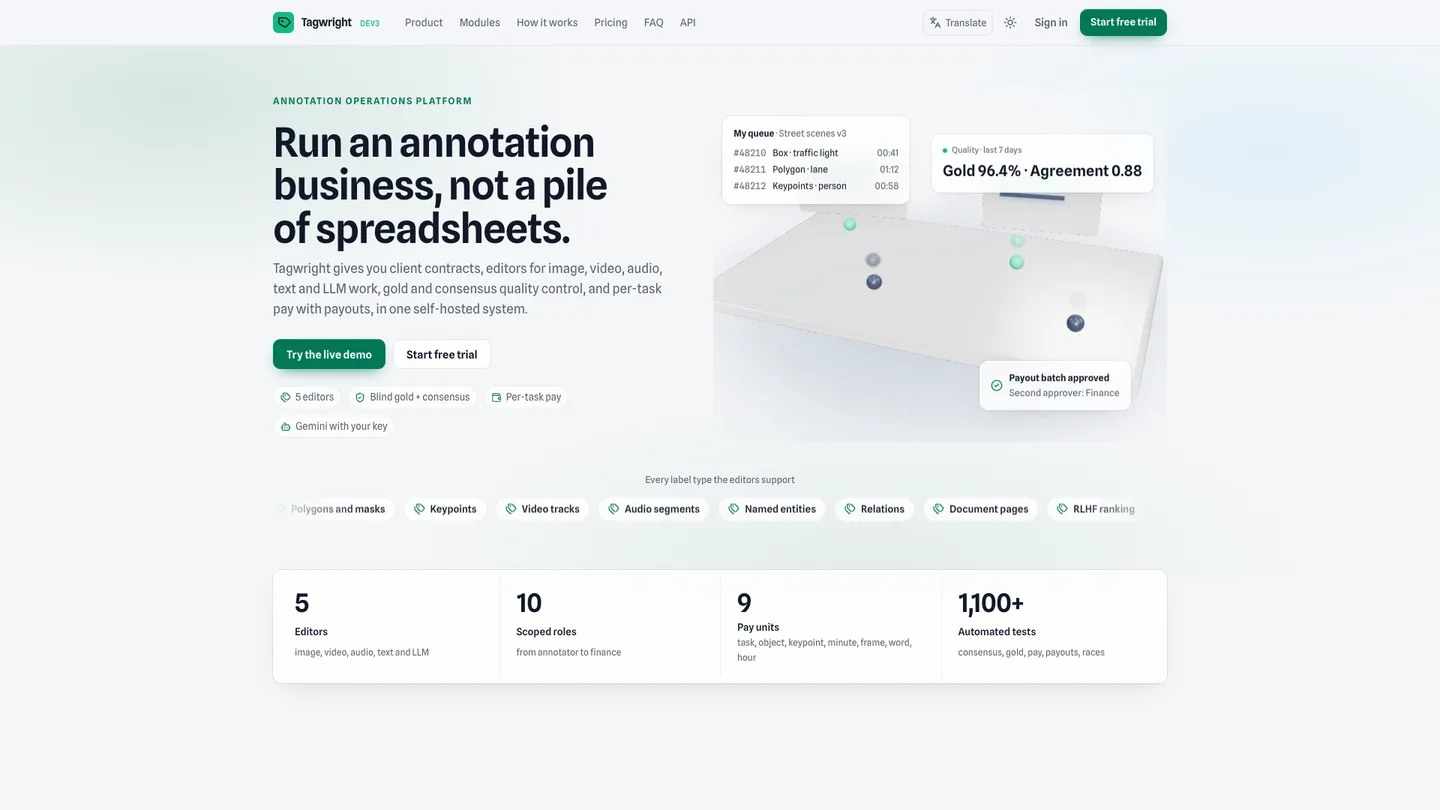
 Landing — The operating system for an annotation business, with a light studio hero.
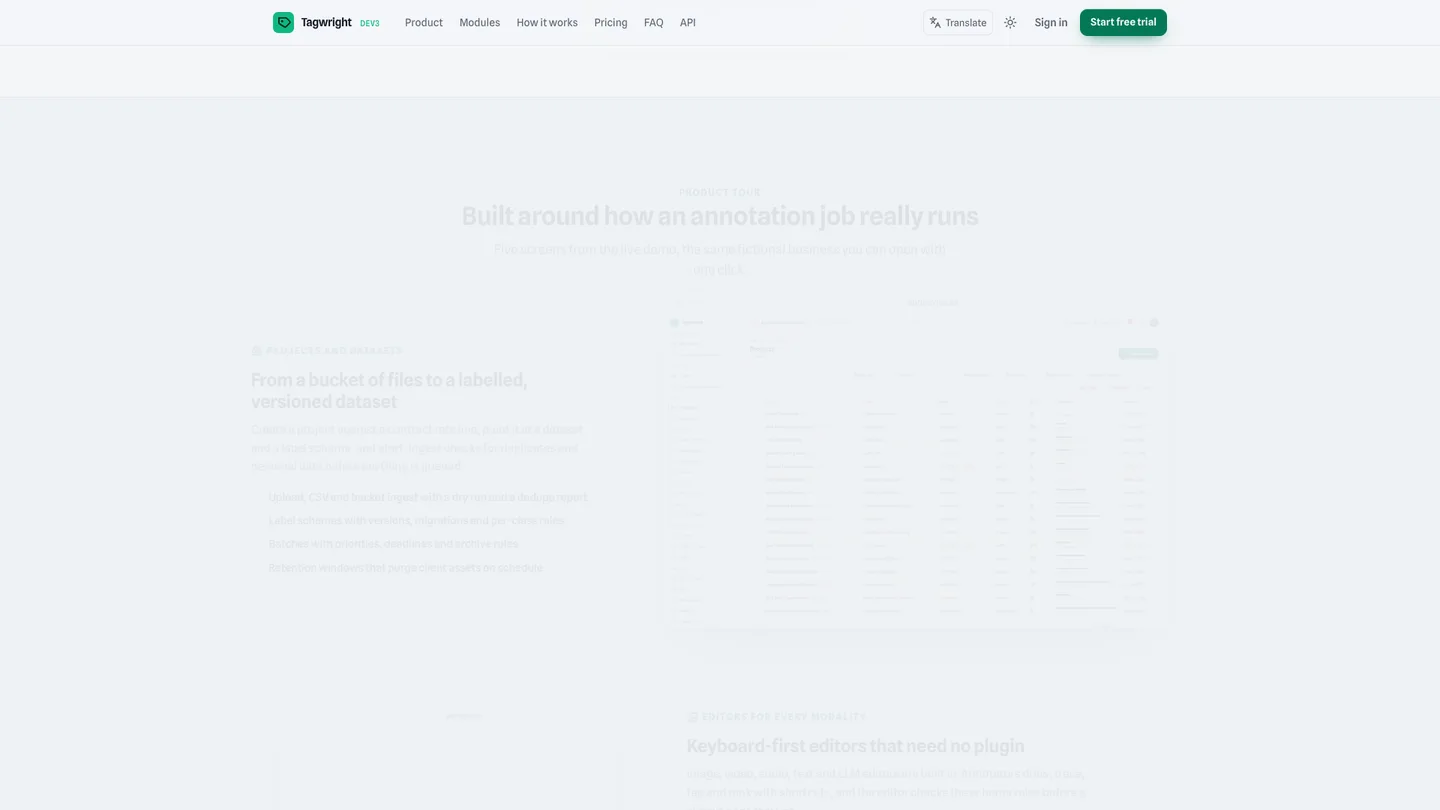 Platform story — Workflow, quality, workforce and pay on one page.
Data annotation platform: 6 things to check before you run one
Last updated
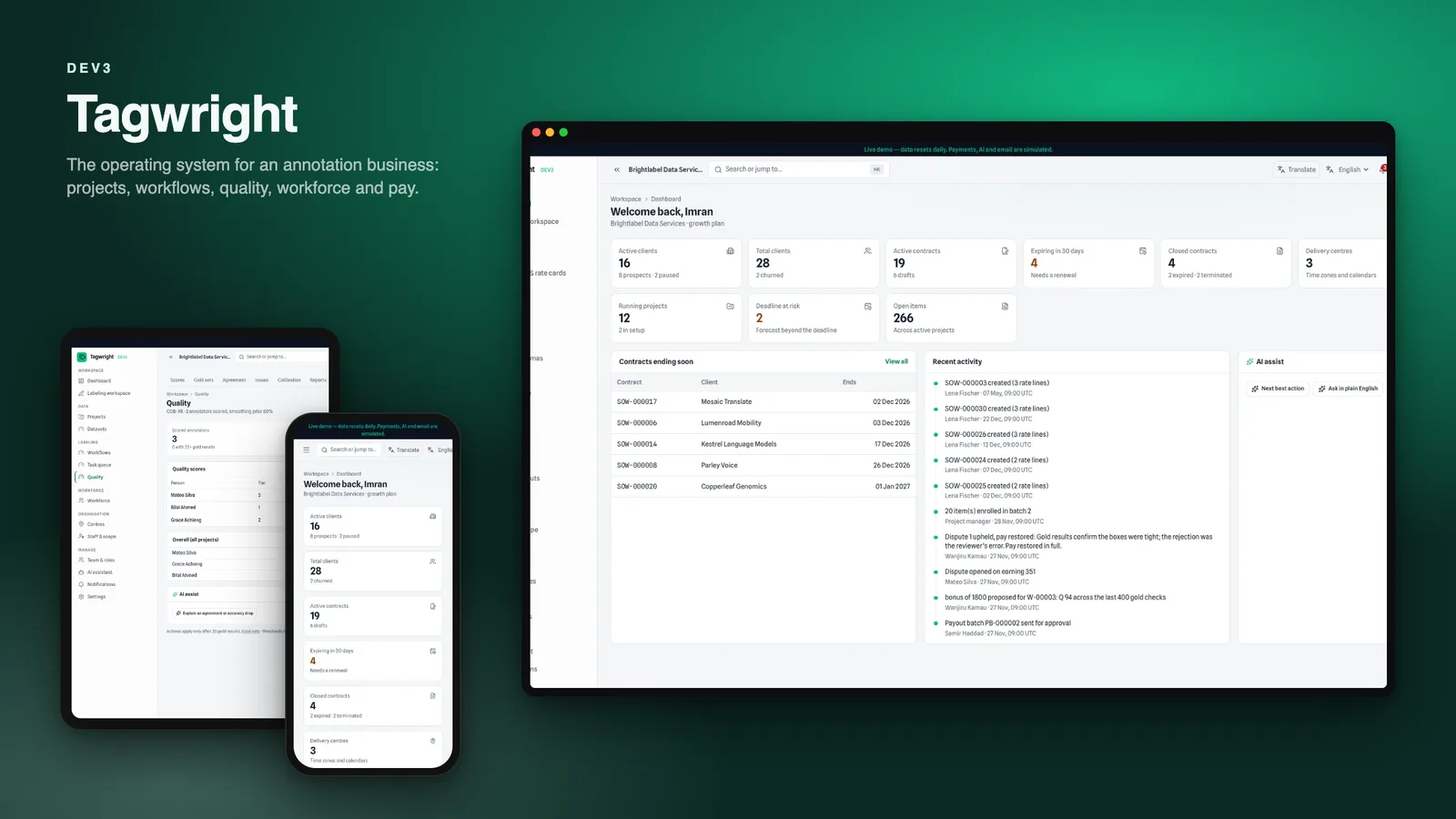
Annotation tools look alike in a demo until you ask the awkward questions: what stops one person labeling the same item twice, how do you measure quality without telling people which tasks are tests, and how do you pay a thousand task lines exactly once. Here are six things to check, with DEV3 Tagwright as the worked example.
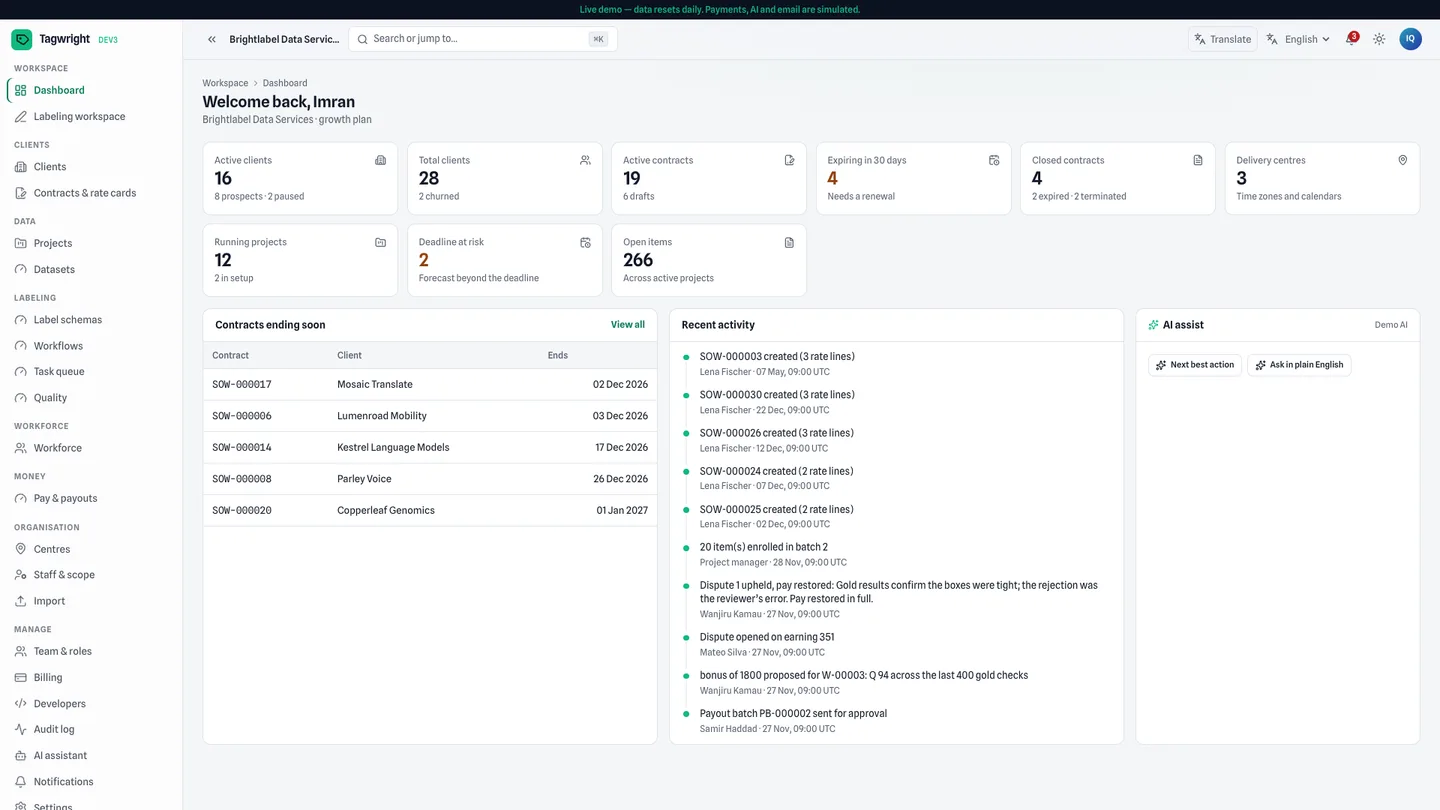
1. Is the workflow a graph you can validate?
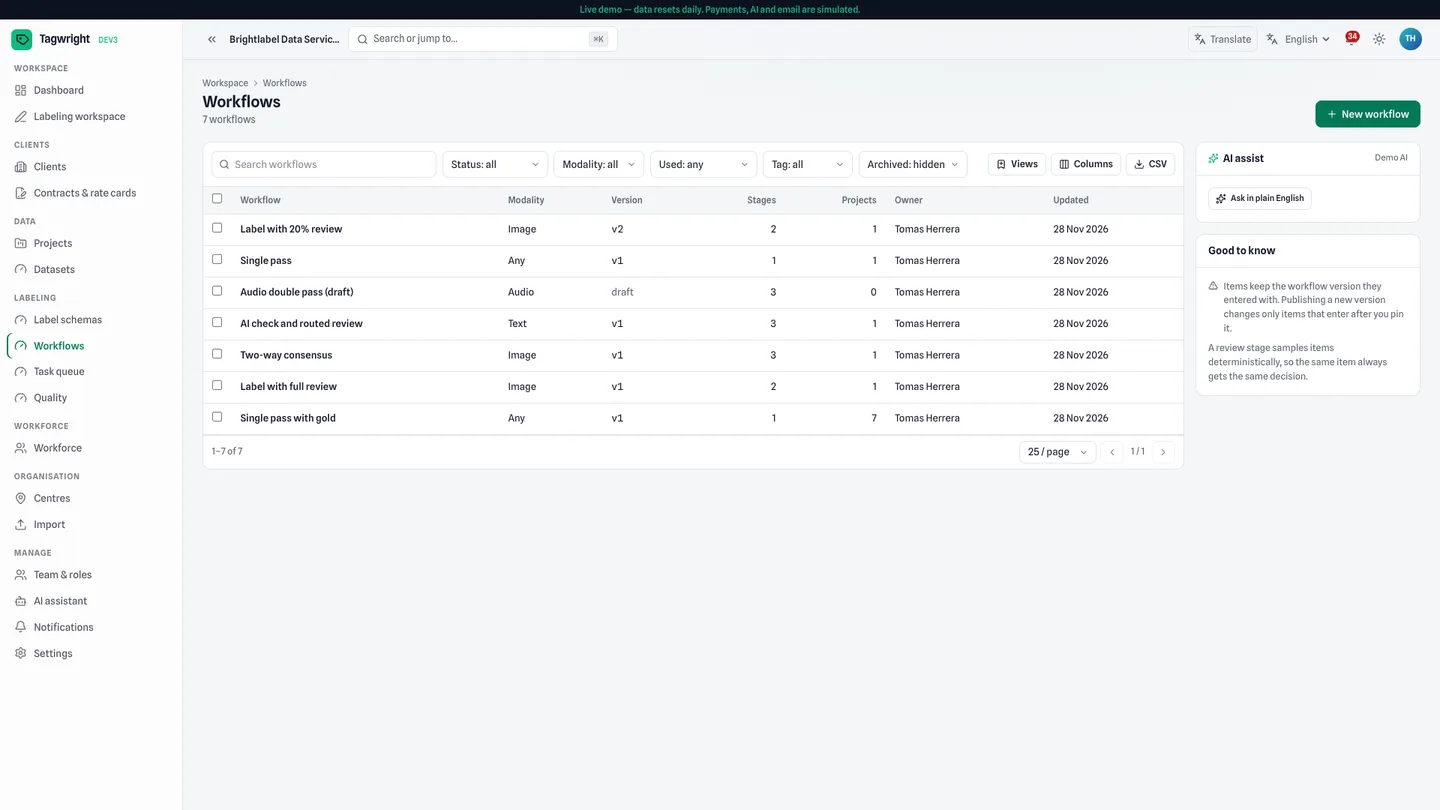
Look for review, consensus and escalation as steps you can draw and check before publishing. Tagwright validates that every path reaches Done and versions every change.
2. Is gold hidden?
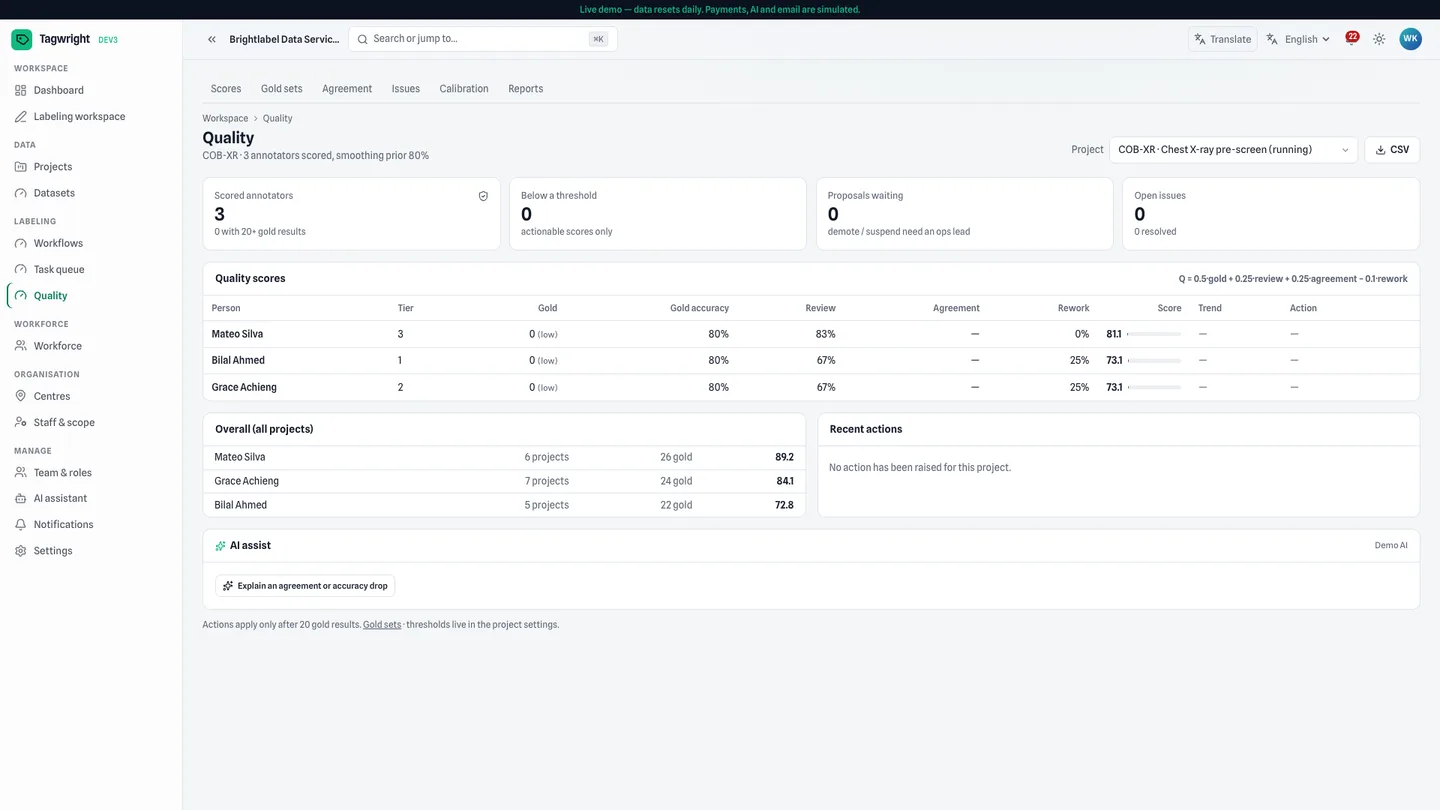
Quality tests only work when annotators cannot tell them from real work. Tagwright serves hidden gold, applies the minimum time to it and never serves the same gold twice to one person.
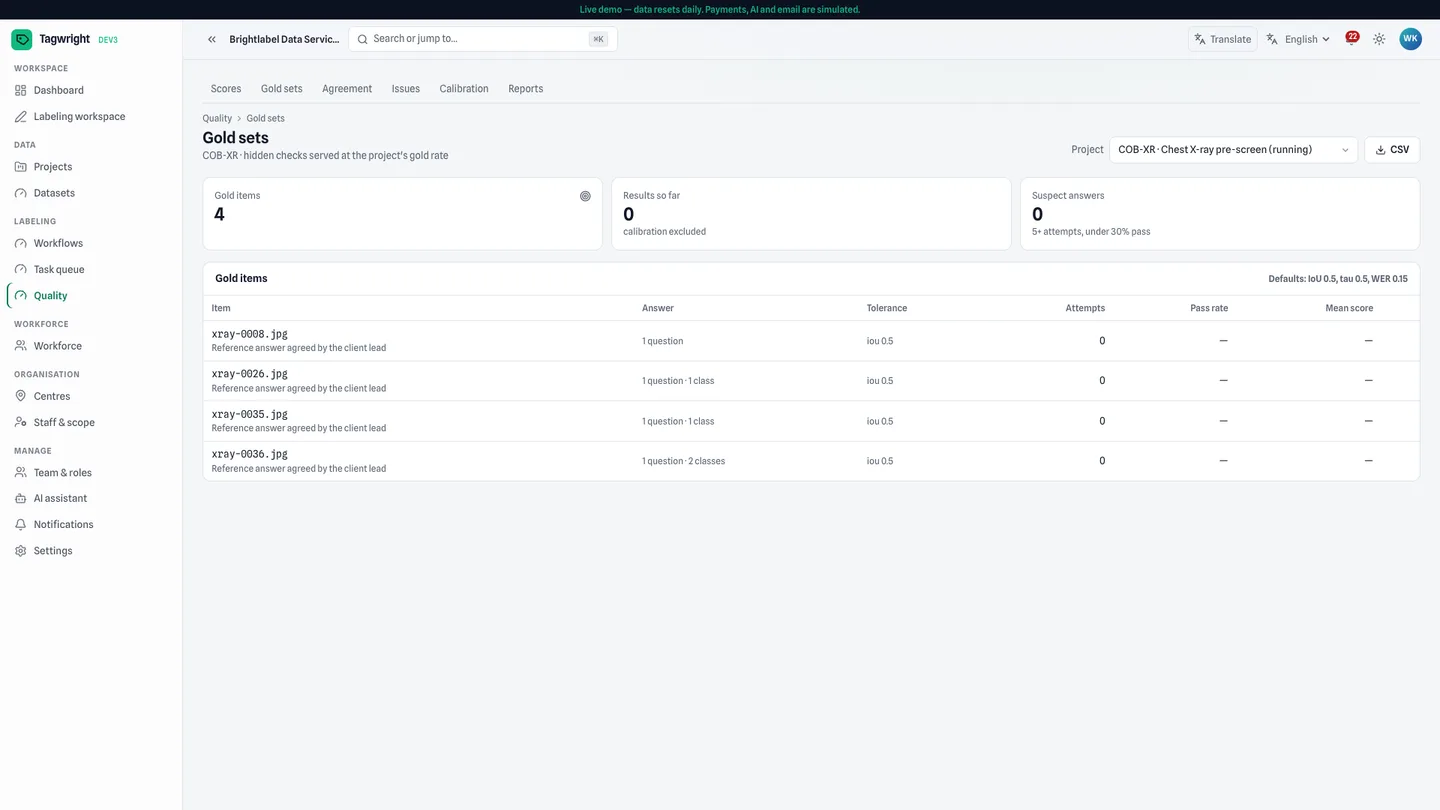
3. Are quality metrics shape-aware?
Boxes, polygons with holes, masks, spans and segments each need their own overlap measure, and agreement by class and pair.
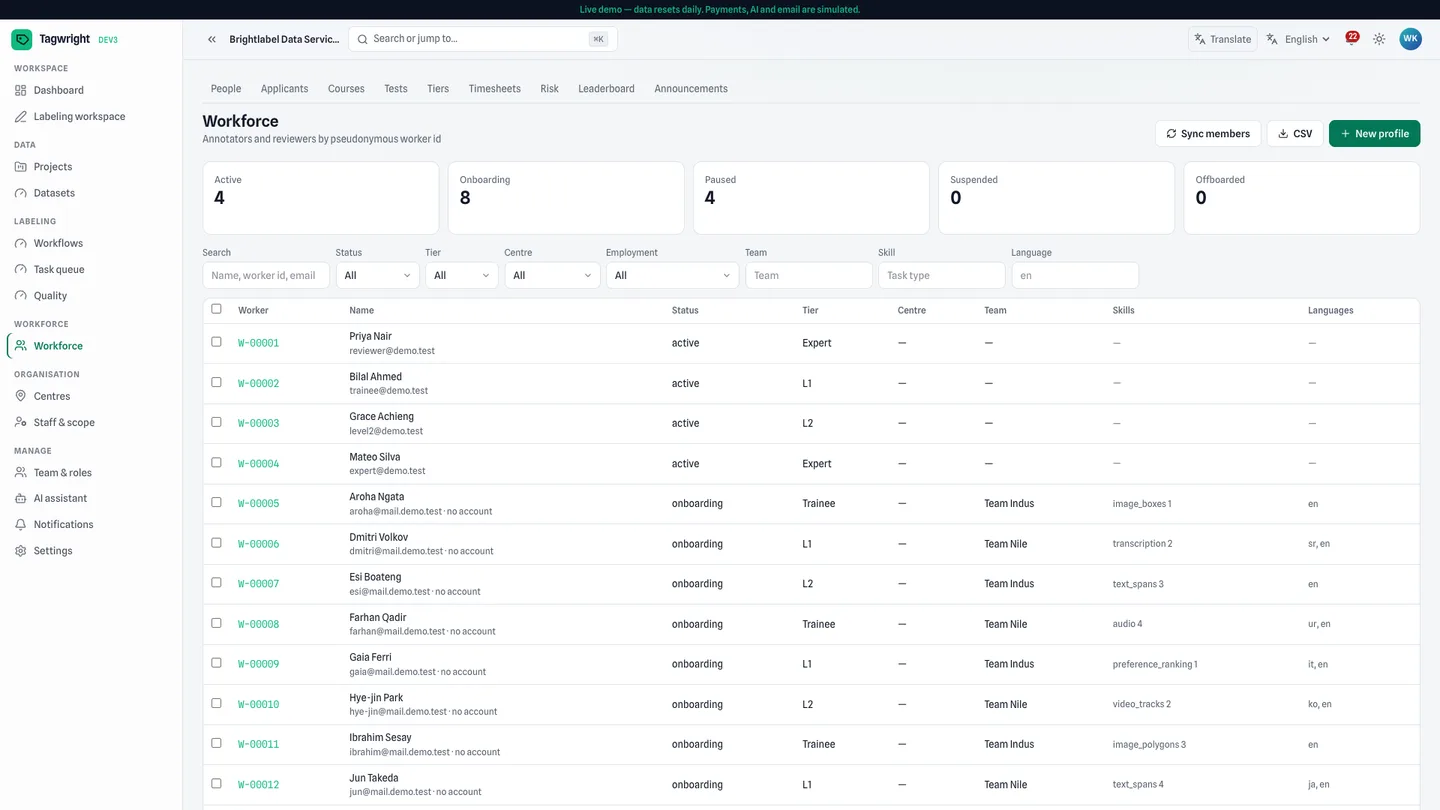
4. Can you run a workforce, not just a queue?
Applicants, tiers, qualifications, time and risk signals belong next to the work.
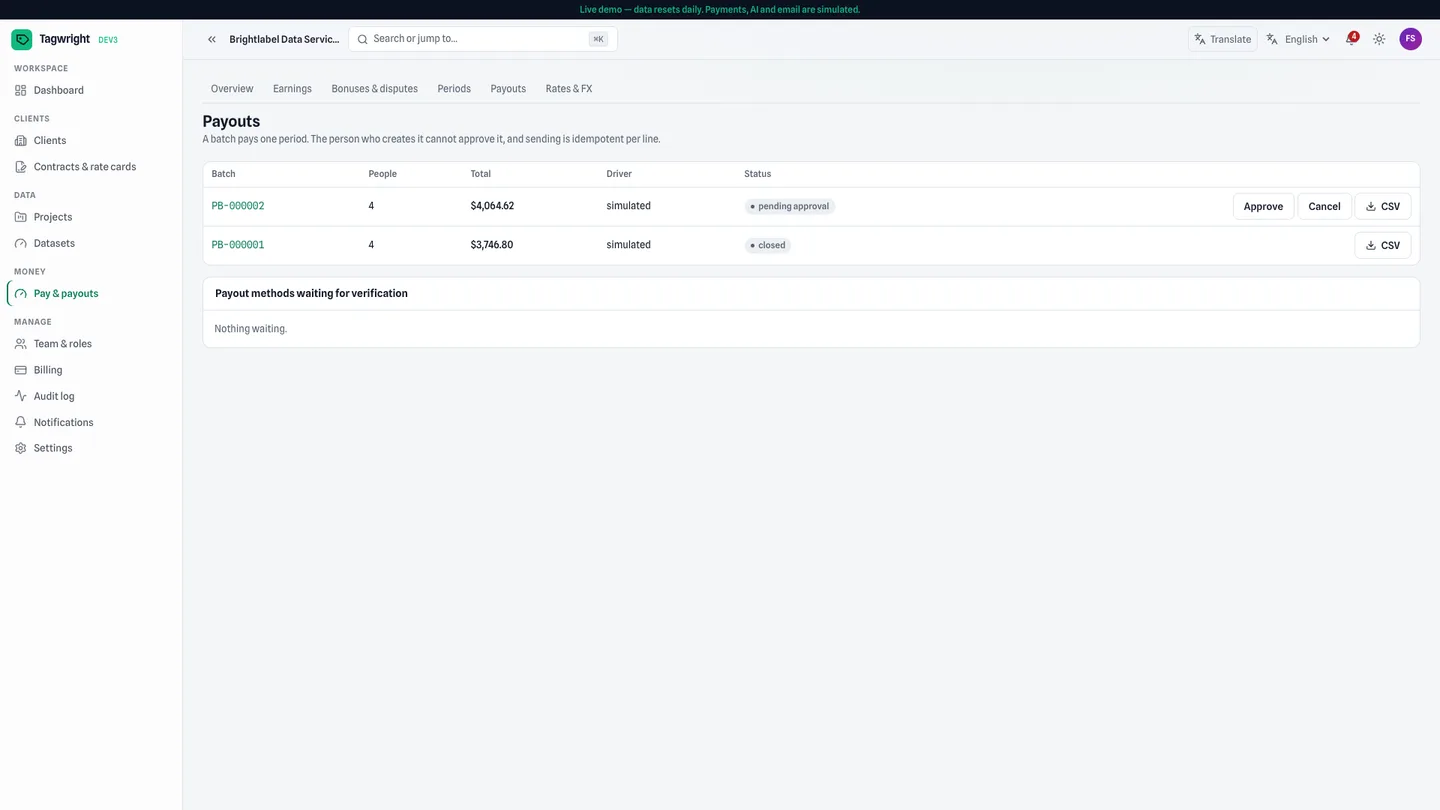
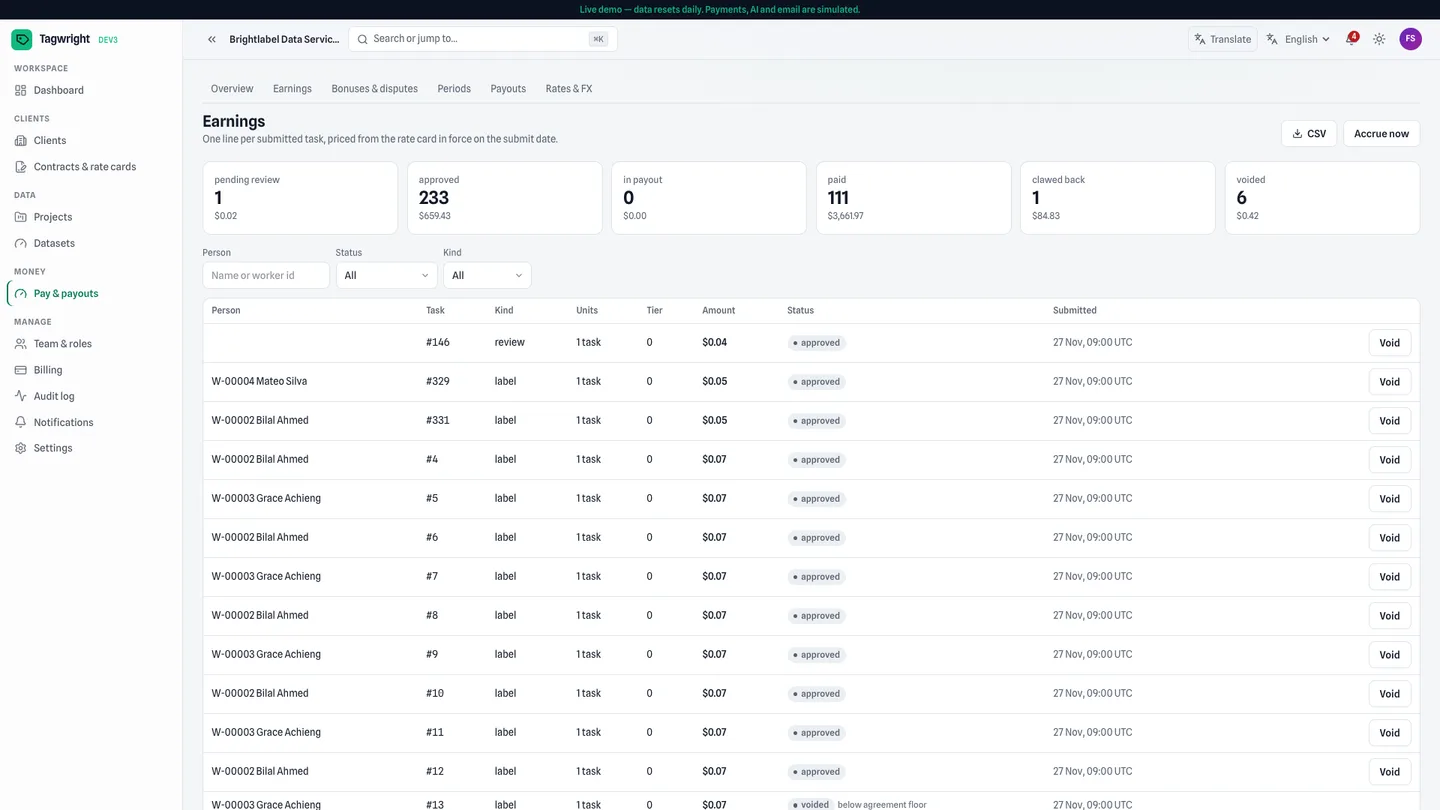
5. Does pay come from a ledger?
Rates by version, a second approver, earning lines priced on the submit date and payout batches that pay each line once.
6. What are the honest limits?
Tagwright pays through a simulated driver and bank files, ships a skeleton client portal and needs your own key for AI. They are listed on the item page so you can plan around them.