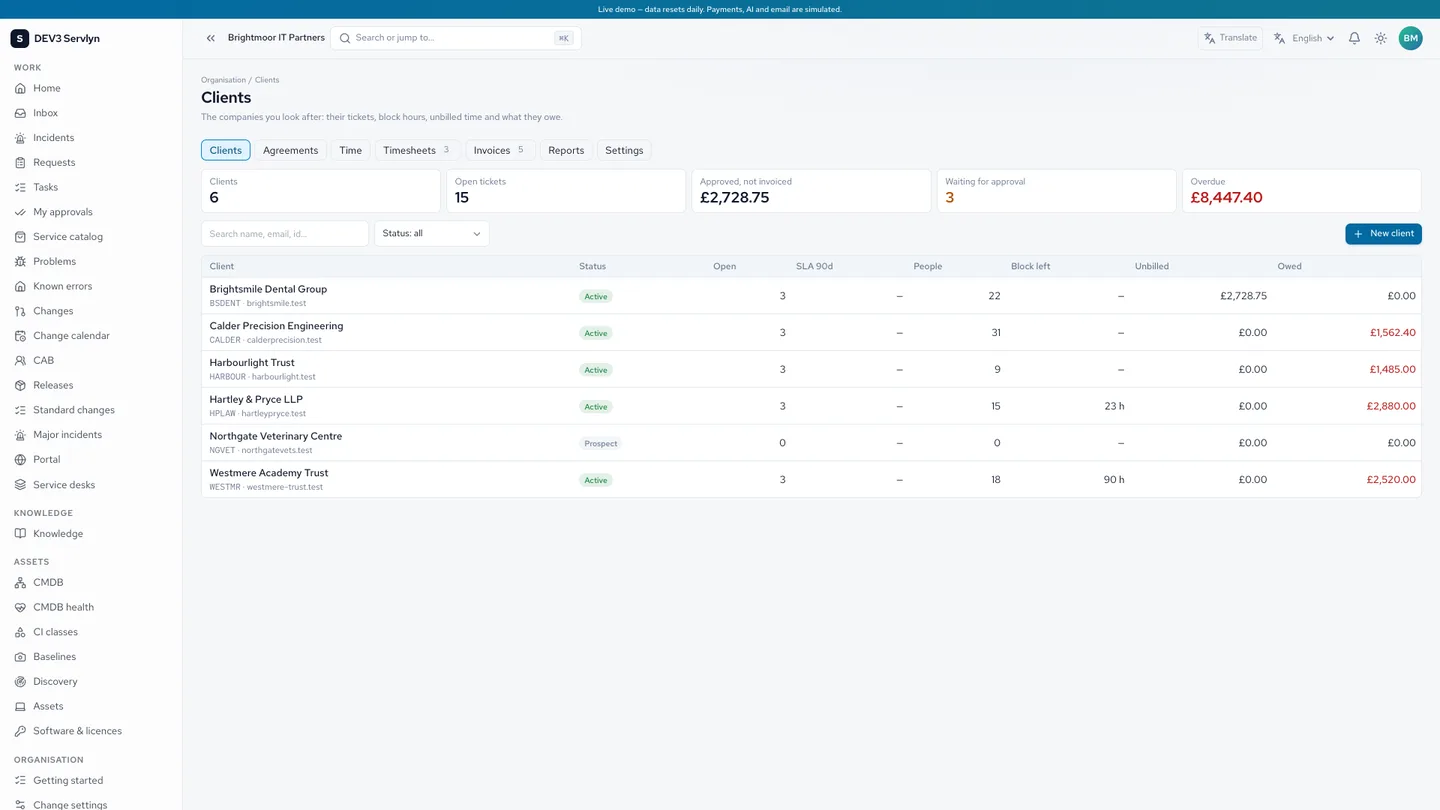
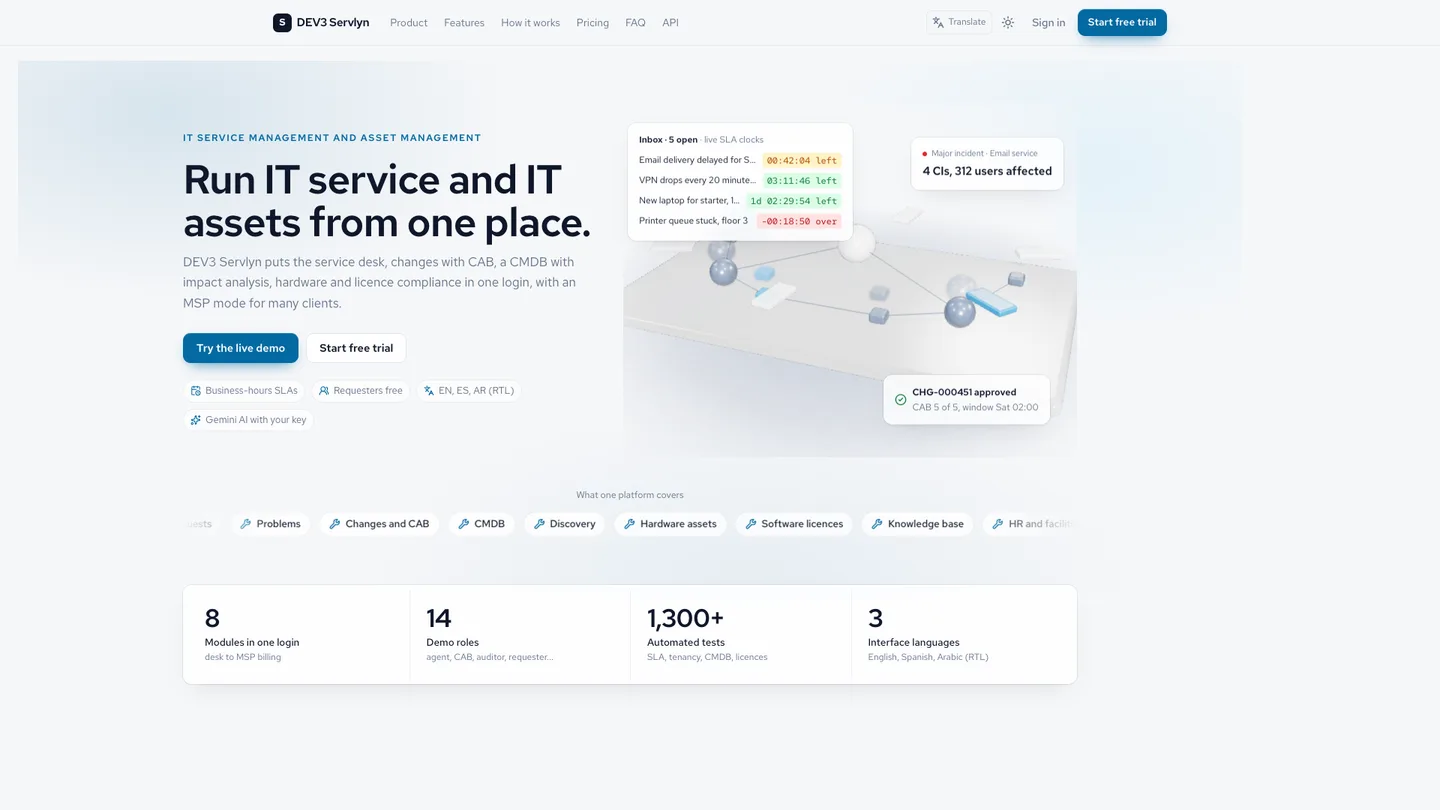
 Landing — A live ticket list with SLA chips and a relationship map, ticking in real time.
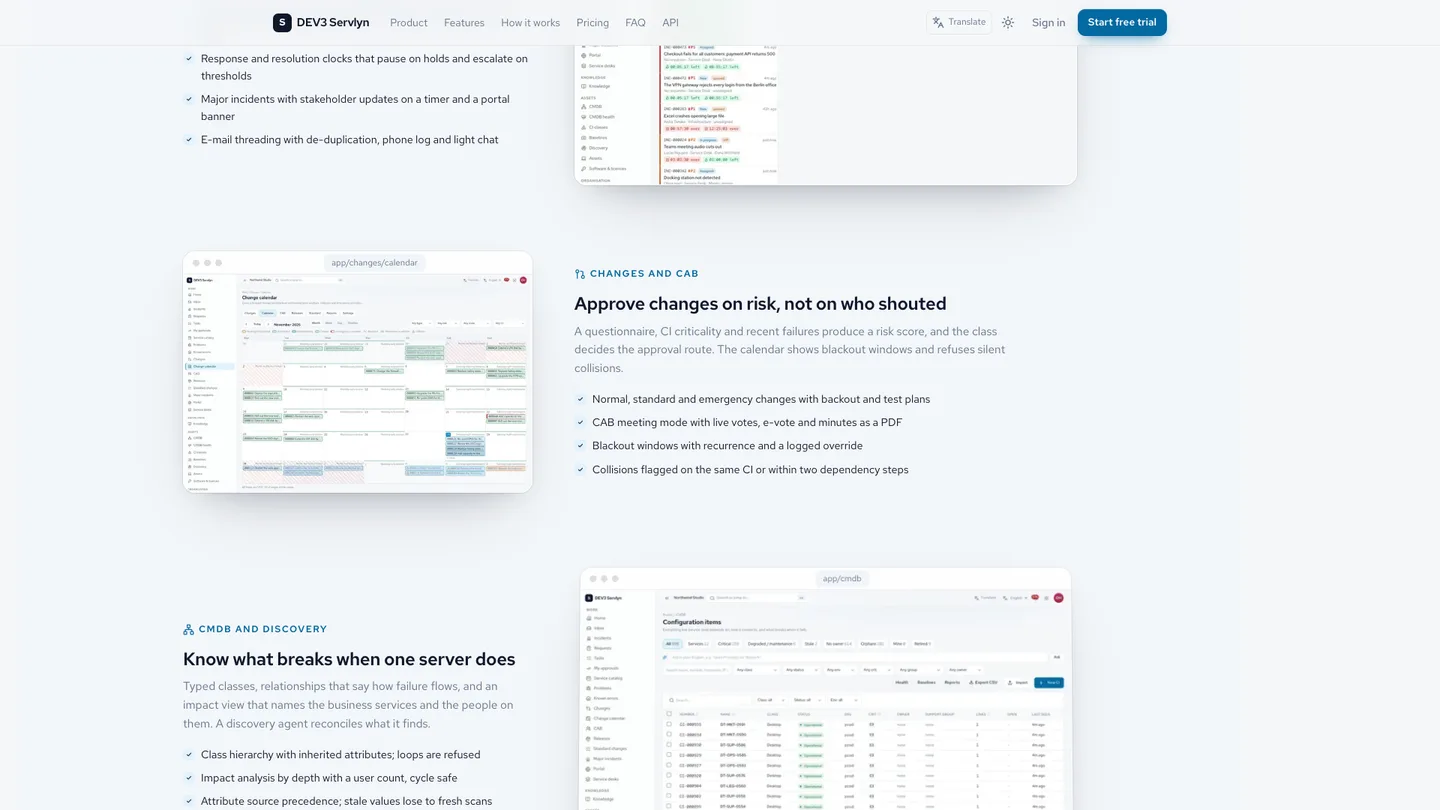 Modules — Service desk, catalog, changes, CMDB, discovery and asset management in one product.
ITSM service desk software: 6 things to check before you pick one
Last updated
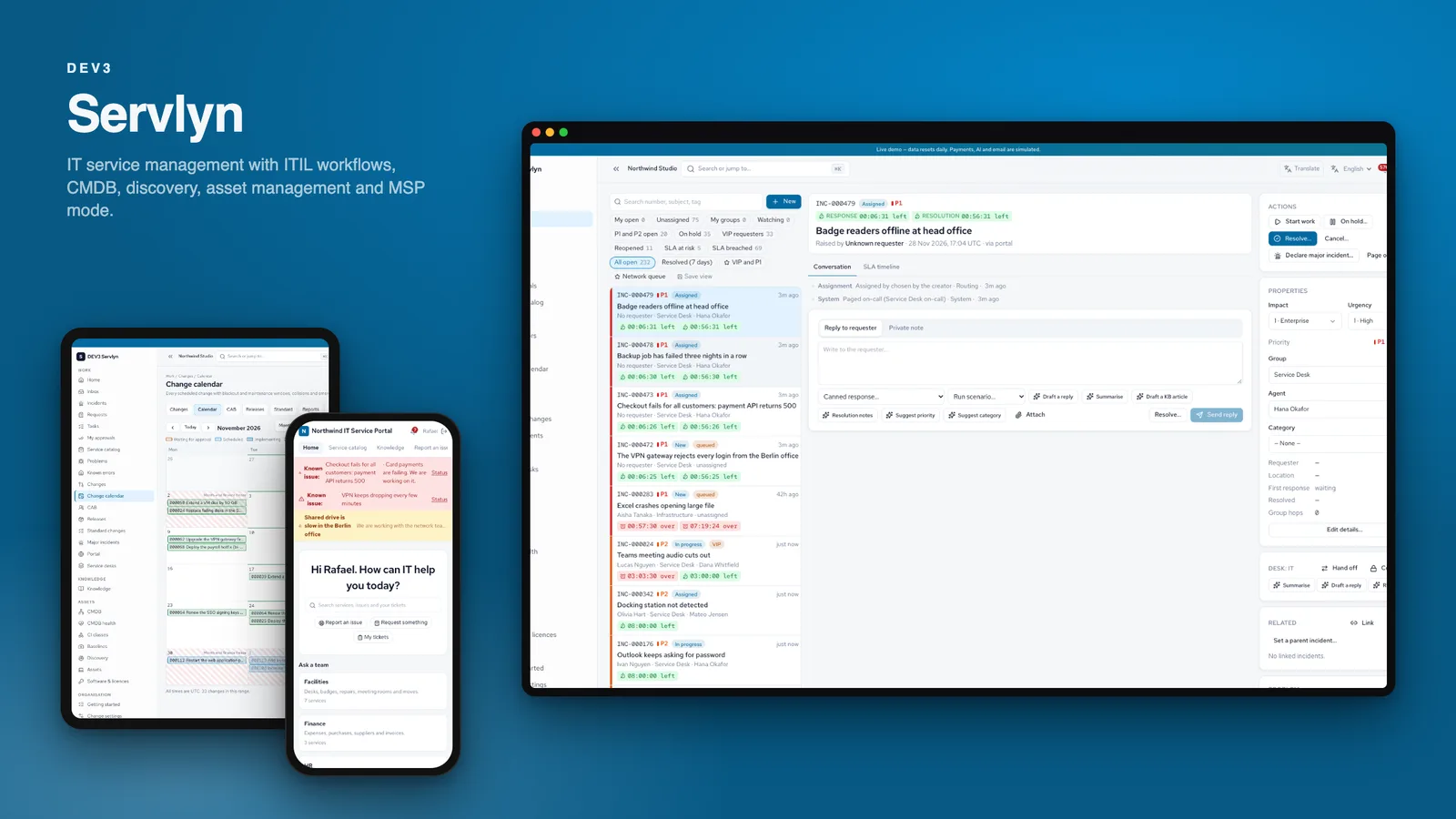
ITSM tools look alike in a feature list until you ask the awkward questions: what happens to an SLA clock across a daylight-saving change, who can see a confidential HR case, and what stops a support block being spent twice. Here are six things to check, with DEV3 Servlyn as the worked example.
1. Do SLA clocks survive real calendars?
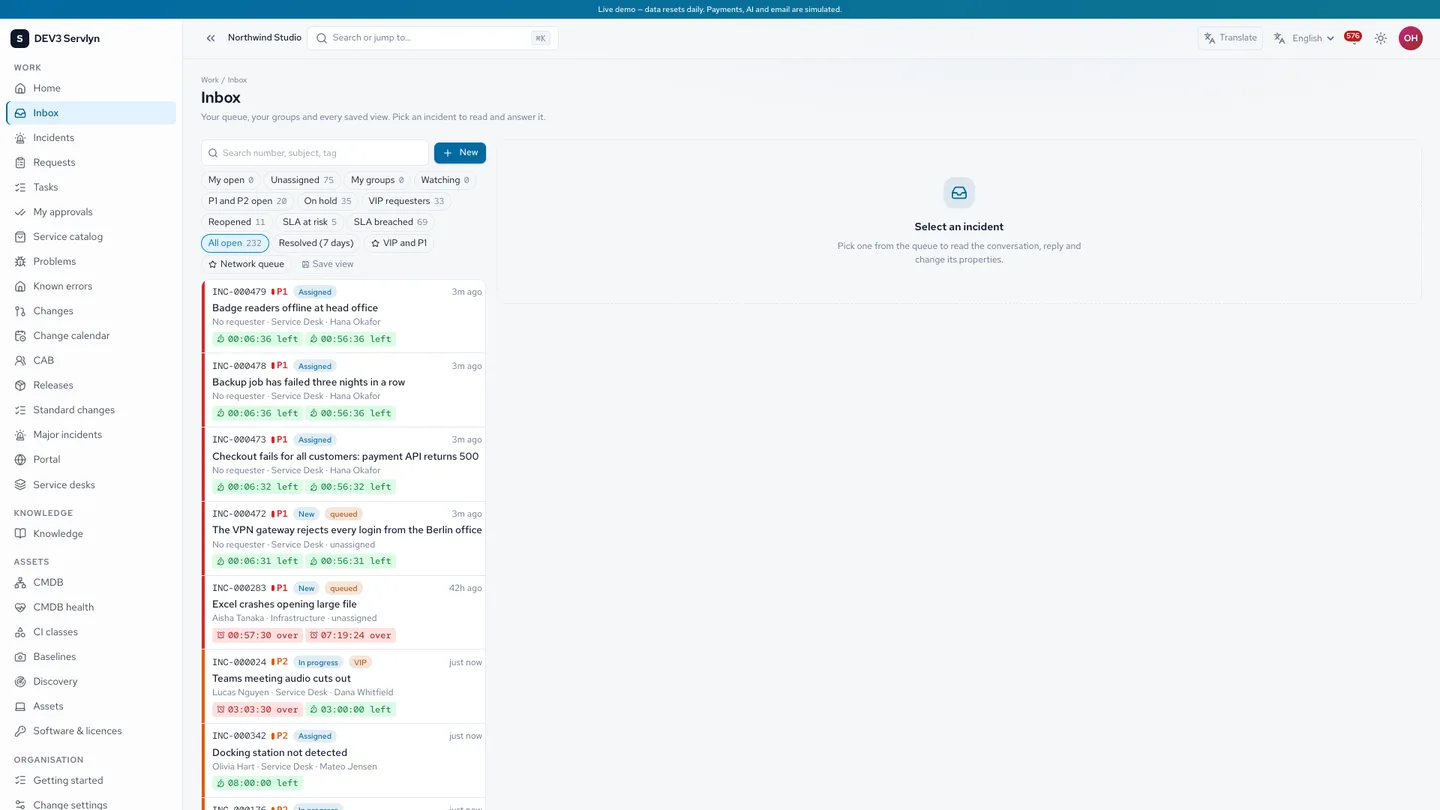
Check that clocks follow business hours per time zone, pause on the right states, and escalate exactly once even if several workers run. Servlyn keeps a clock per ticket and per hop, with DST-safe calendars, and claims each breach with a conditional update.
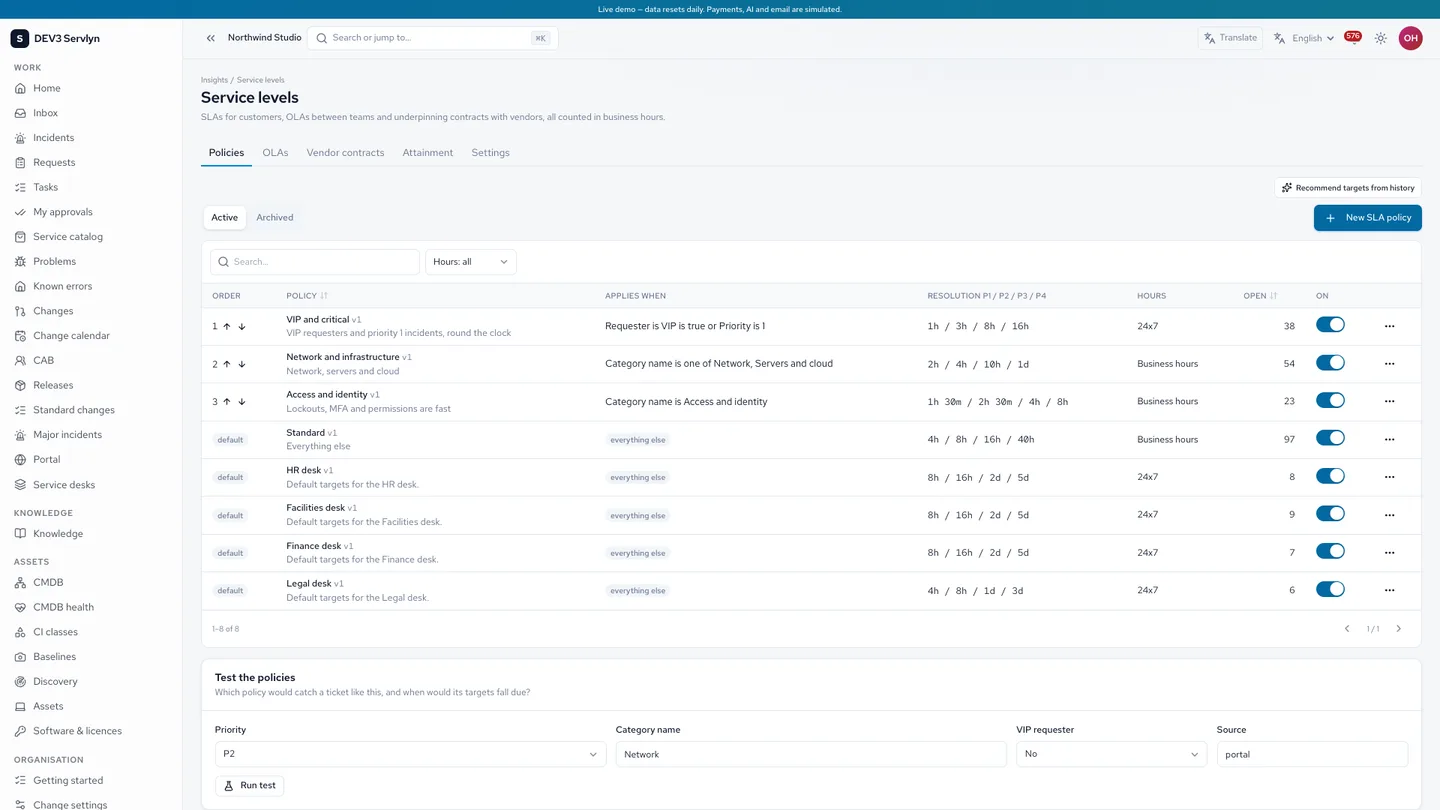
2. Are approvals more than a checkbox?
Look for multi-stage chains, delegation, e-mail approval links and timeouts, and a request that waits for its tasks. Servlyn's catalog shows approvers and estimated delivery before the requester submits.
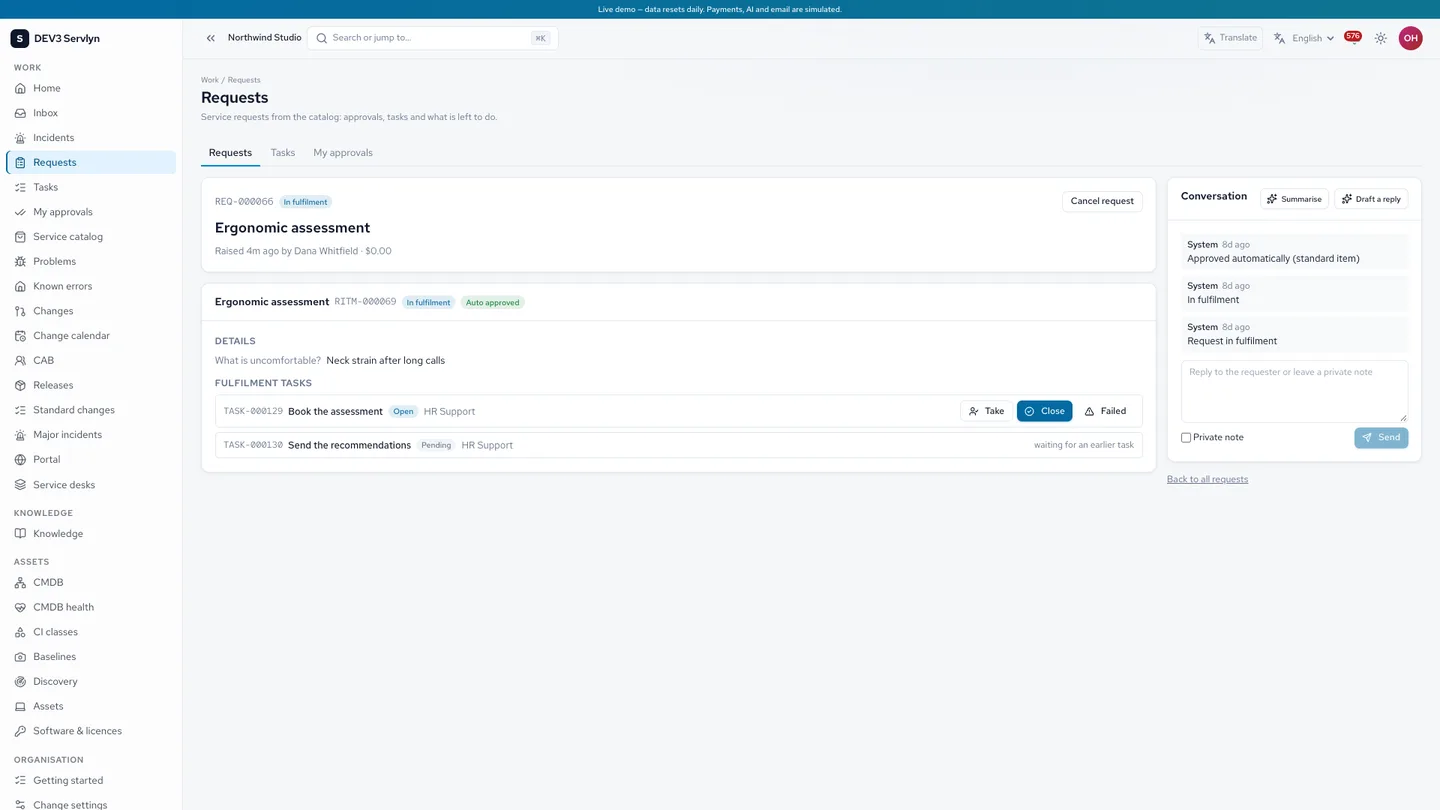
3. Can you run changes the ITIL way?
A risk score, a calendar with blackout windows and collision detection, and a CAB meeting mode with votes and minutes separate a change module from a ticket type with a different label.
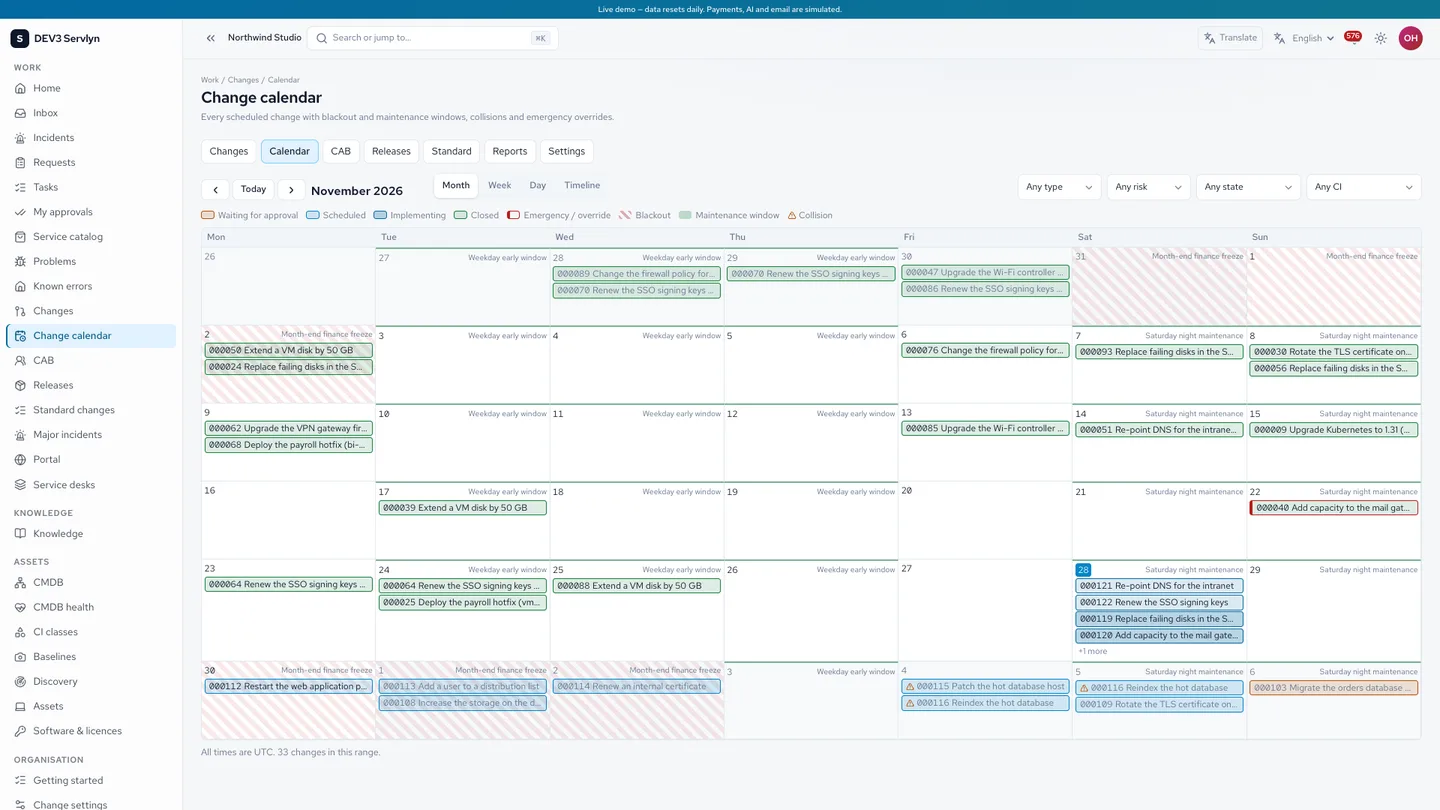
4. Is the CMDB trustworthy?
Ask how items are identified when two sources disagree, how stale data is flagged and how impact is calculated. Servlyn uses identification rules, source precedence, a staging queue for ambiguous matches, and a data-quality page.
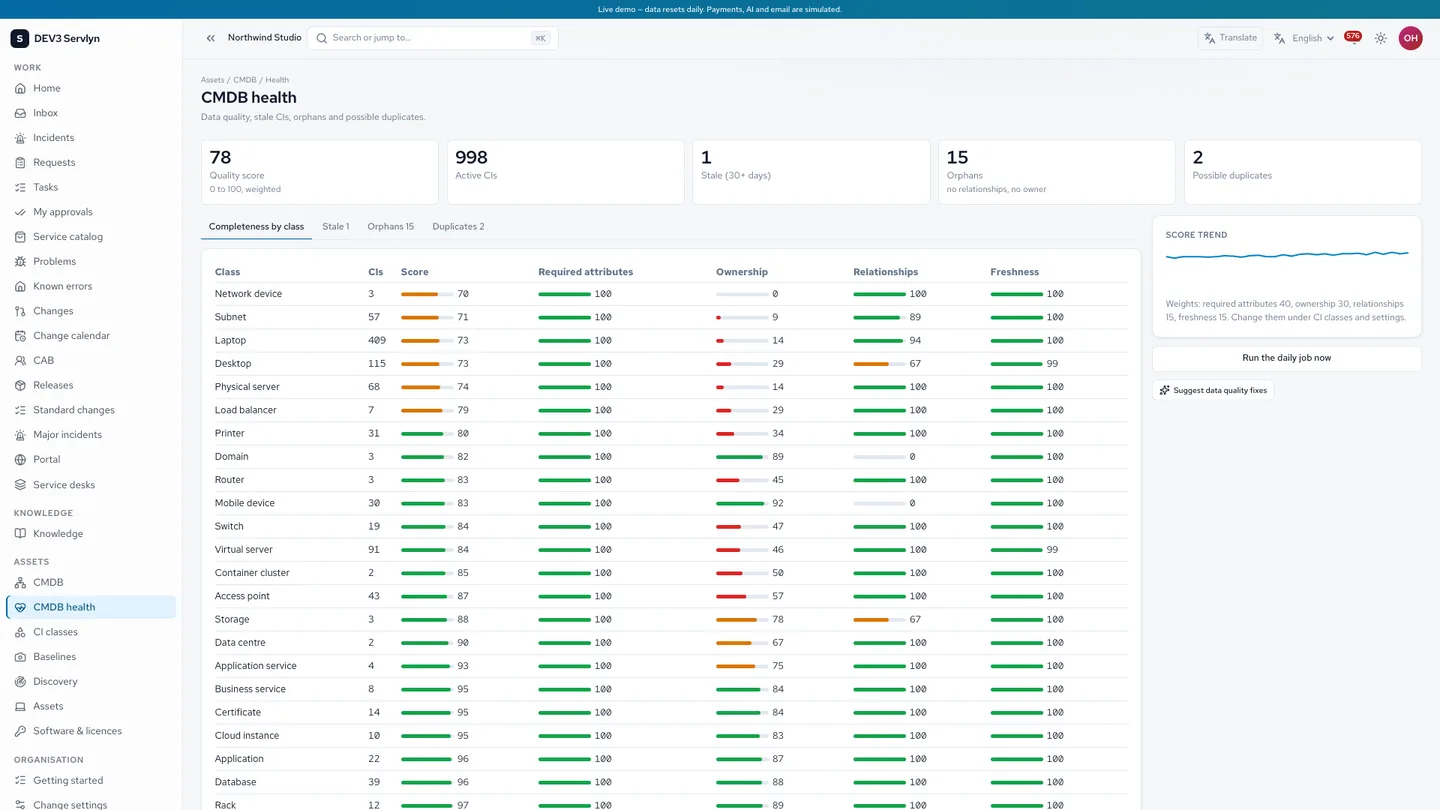
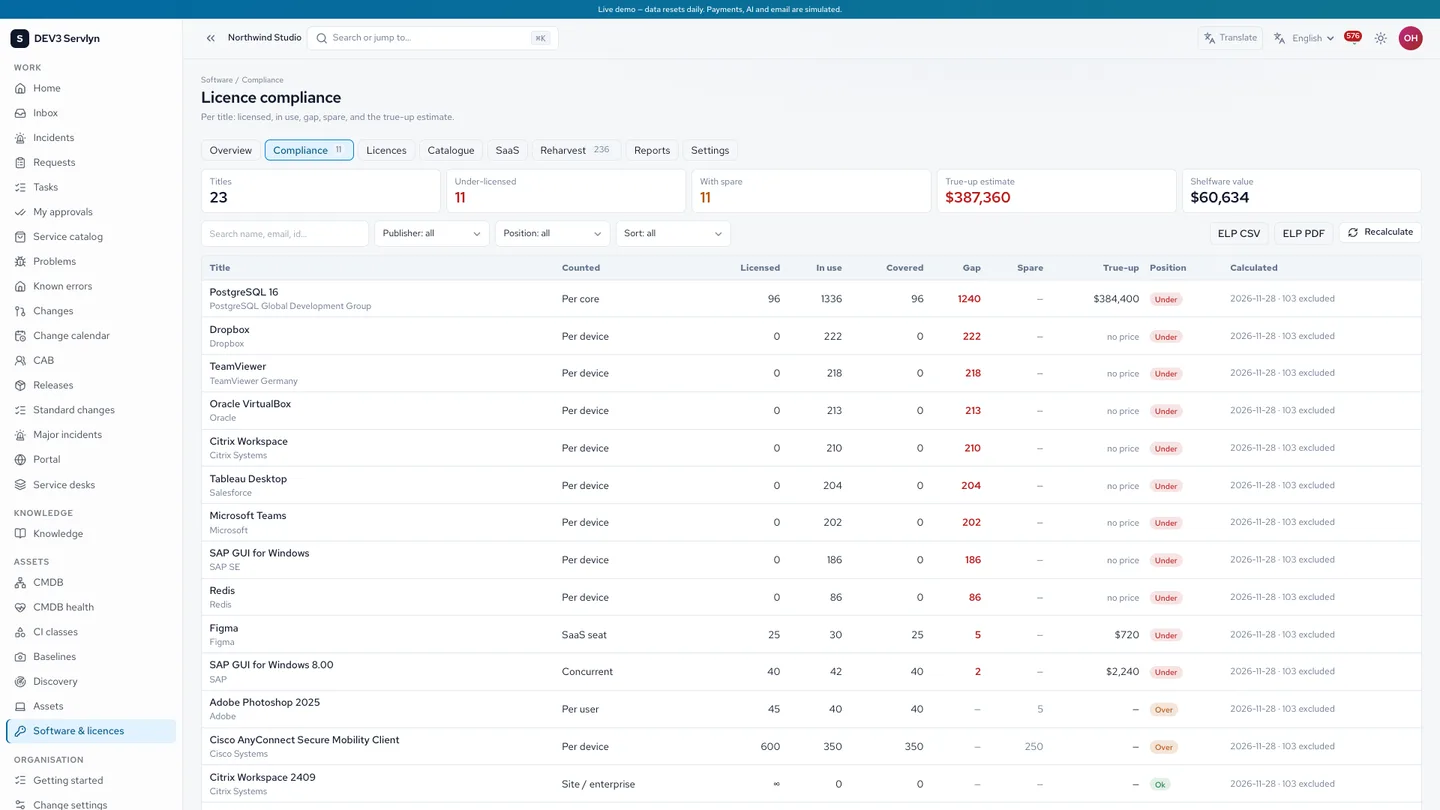
5. Do licence numbers hold up in an audit?
Entitlements in every metric, downgrade rights, suites and a compliance position that can be explained line by line are the difference between a spreadsheet and a tool. Servlyn proposes reharvest of unused licences and exports an effective licence position.
6. What are the honest limits?
Servlyn records payments but does not move money, discovery scans are simulated in the demo, there is no LDAP or Entra sync (CSV and SCIM instead), and AI needs your own key. They are listed on the item page so you can plan around them.