 Everything a link needs — Rules, A/B tests, QR codes, analytics and an API, each explained in a short block.
URL shortener software: 7 things to check before you pick one
Last updated
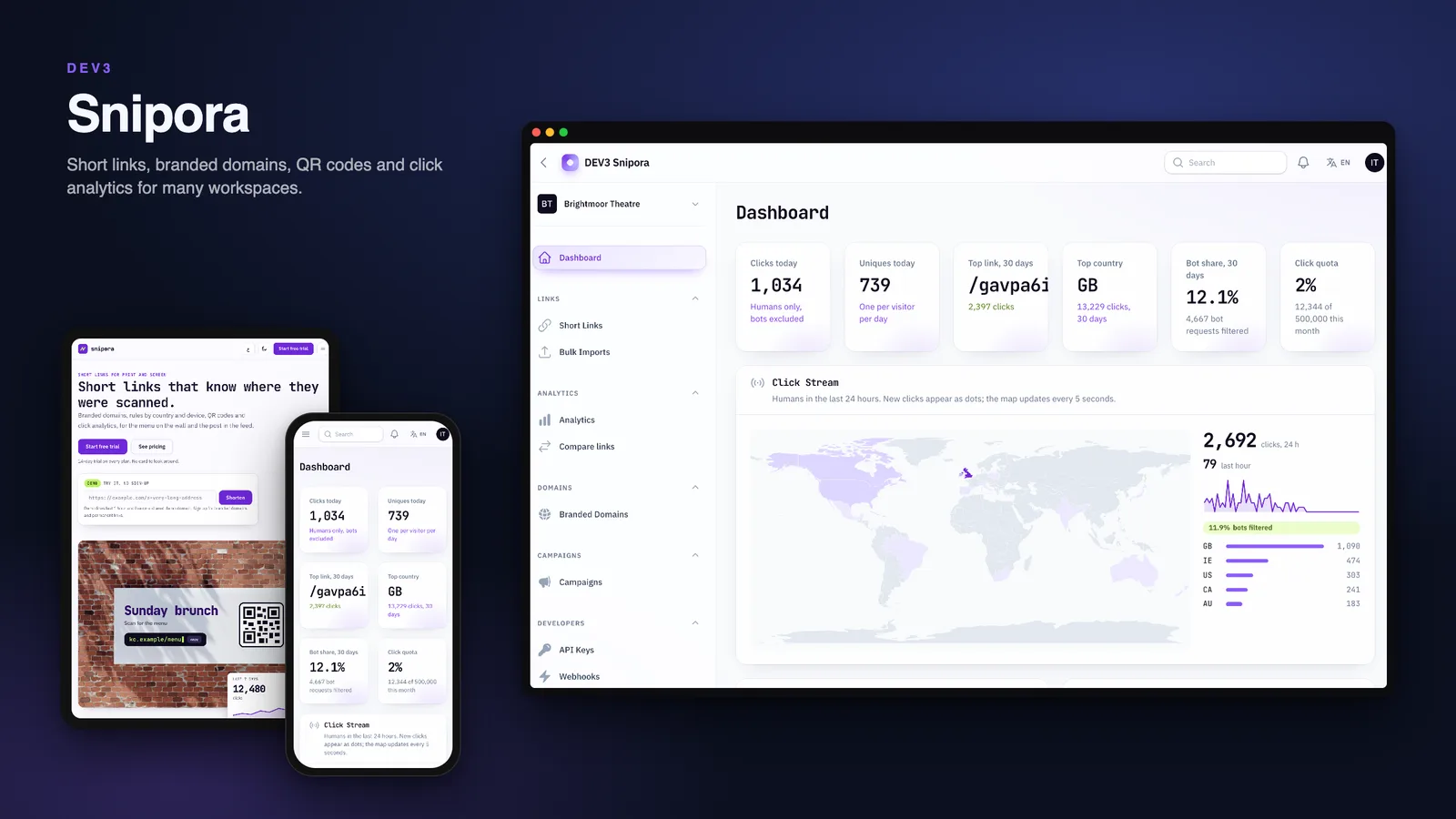
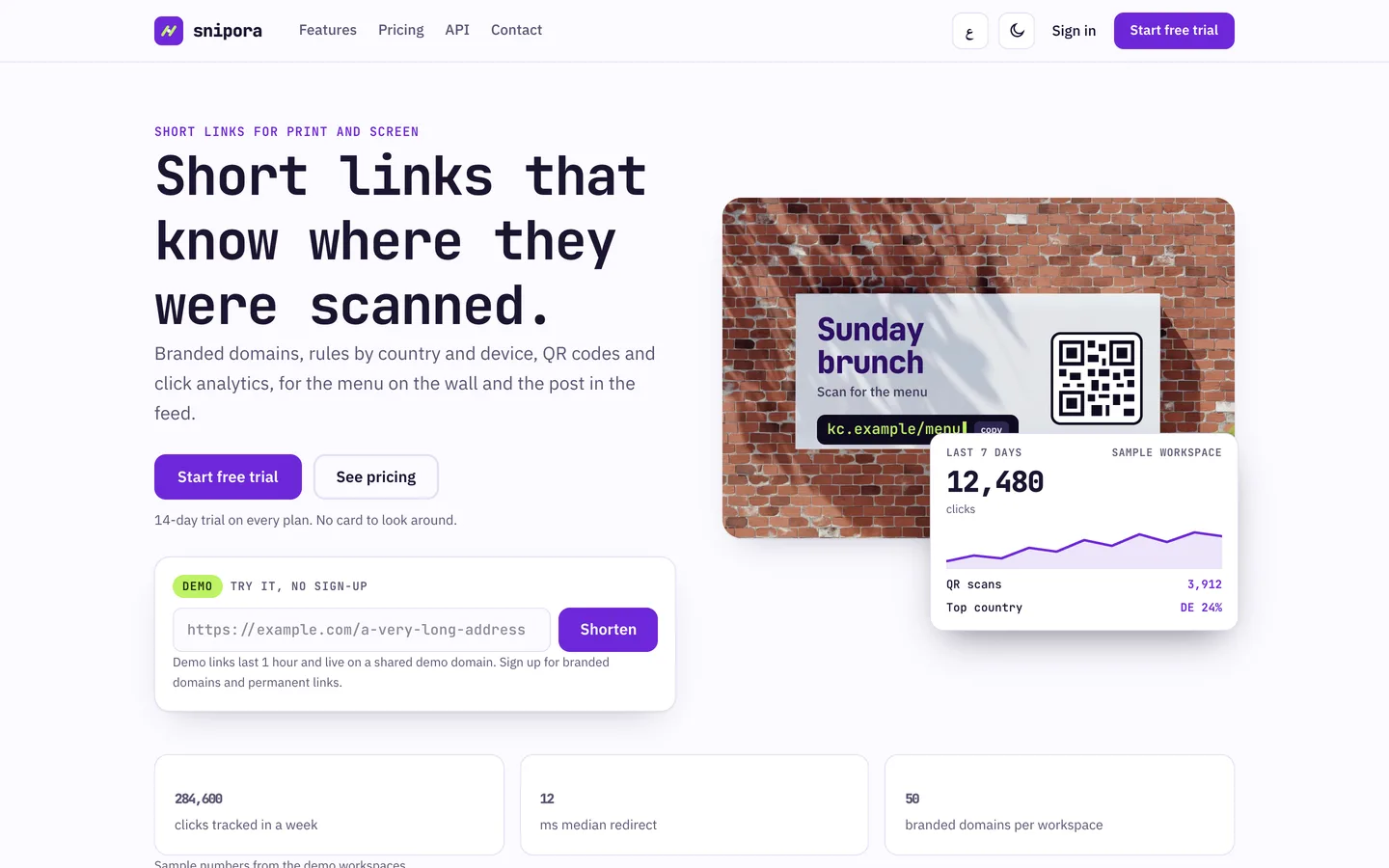
A short link looks simple until two people claim the same ending, a campaign link goes viral and the dashboard shows twice the clicks it should. Here are seven things to check before you pick a URL shortener, with DEV3 Snipora as the worked example.
1. Can links wear your own domain?
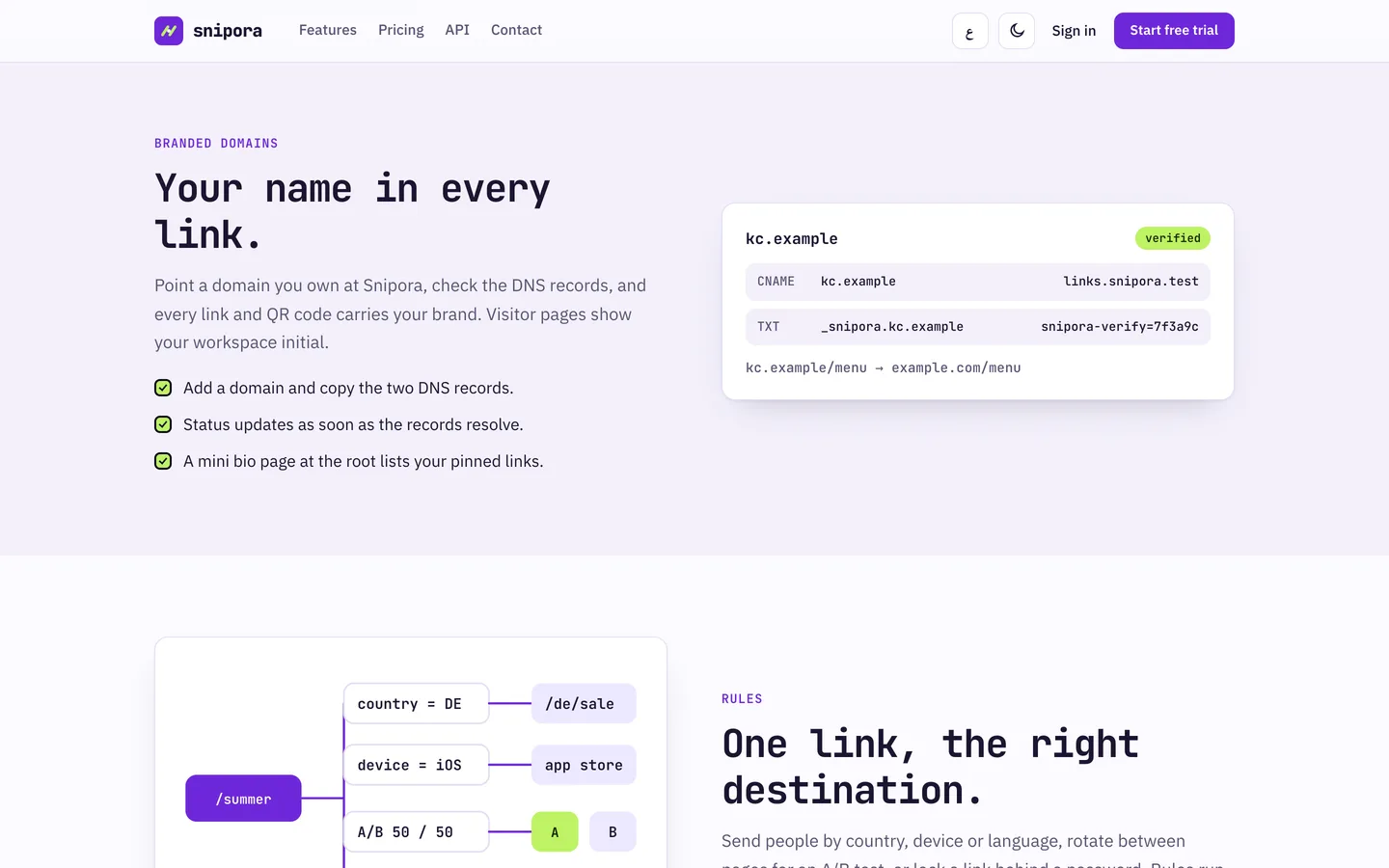
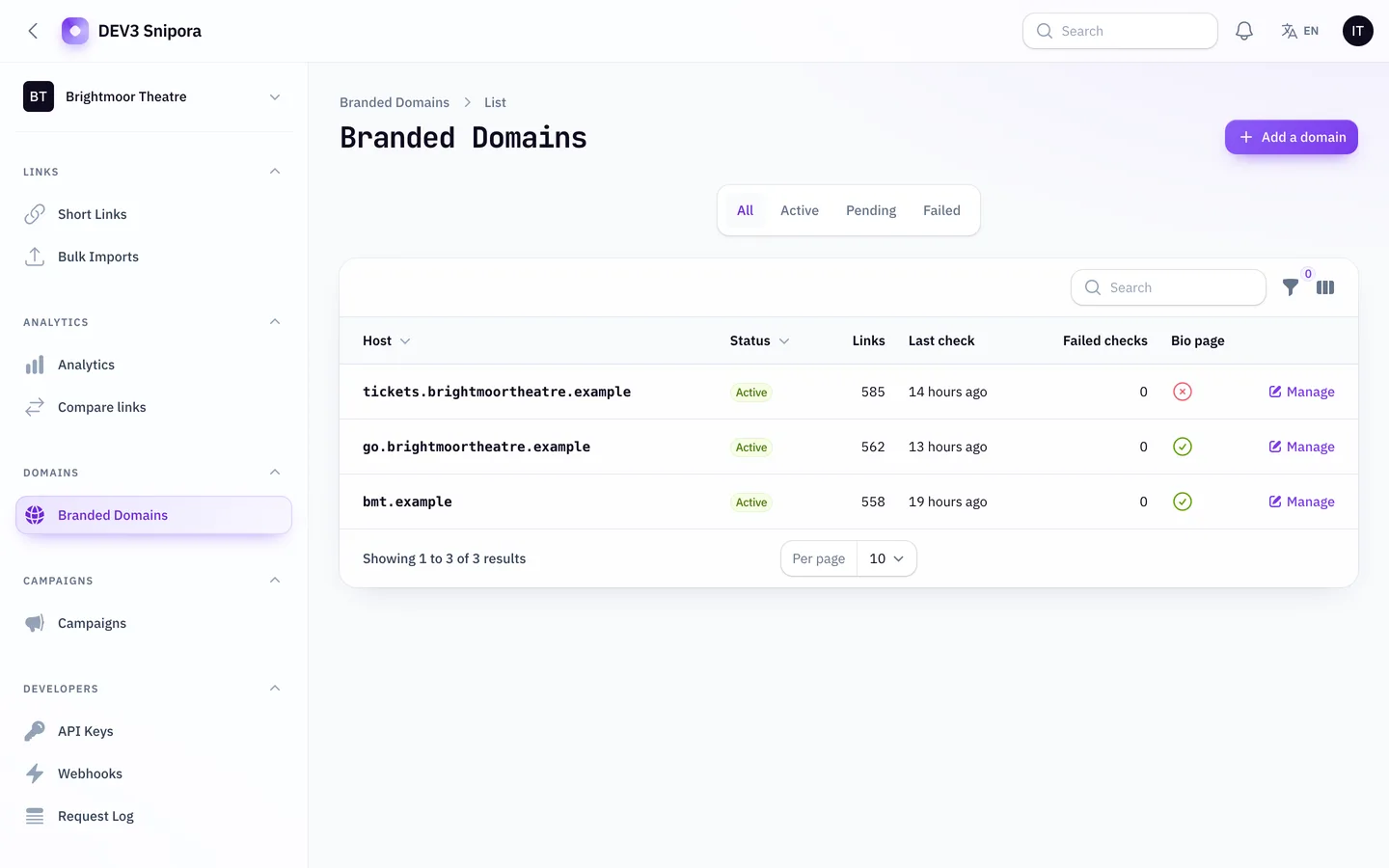
Short links on your own domain build trust and keep working if you change tools. Snipora gives each workspace its own domains with the DNS records to add, a verify button and a small link-in-bio page per domain.
2. How fast is the redirect?
The redirect is the product. Look for a path that answers before it records anything. Snipora evaluates rules in memory, answers, then records the click after the response, and its tests hold the in-process time under a budget.
3. Can one link send people to different places?
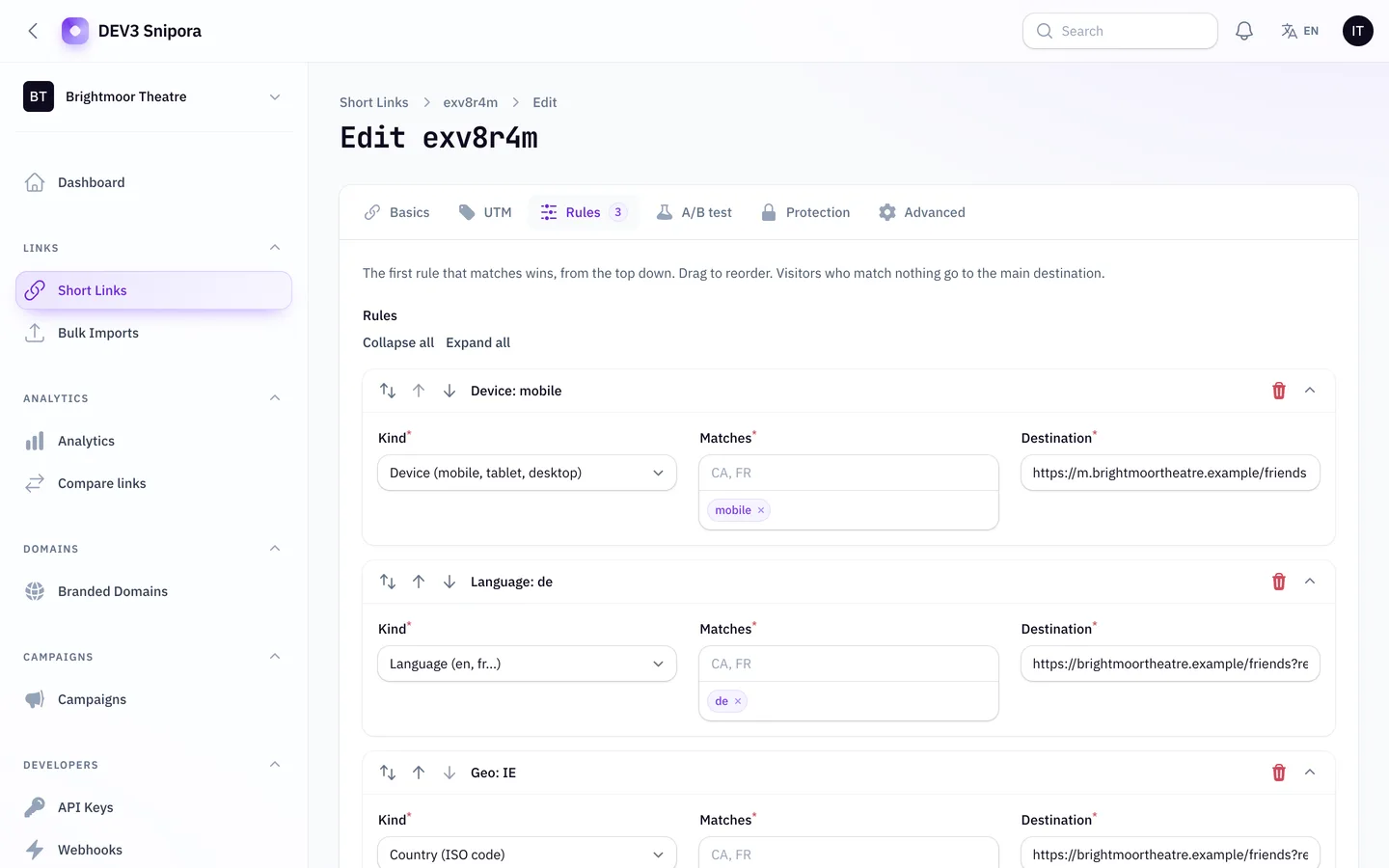
Country, device, language, time and referrer rules, weighted A/B rotation, a password, an expiry date and a click cap should all be there, and they should be checked for loops and unsafe destinations.
4. Do the numbers exclude bots?
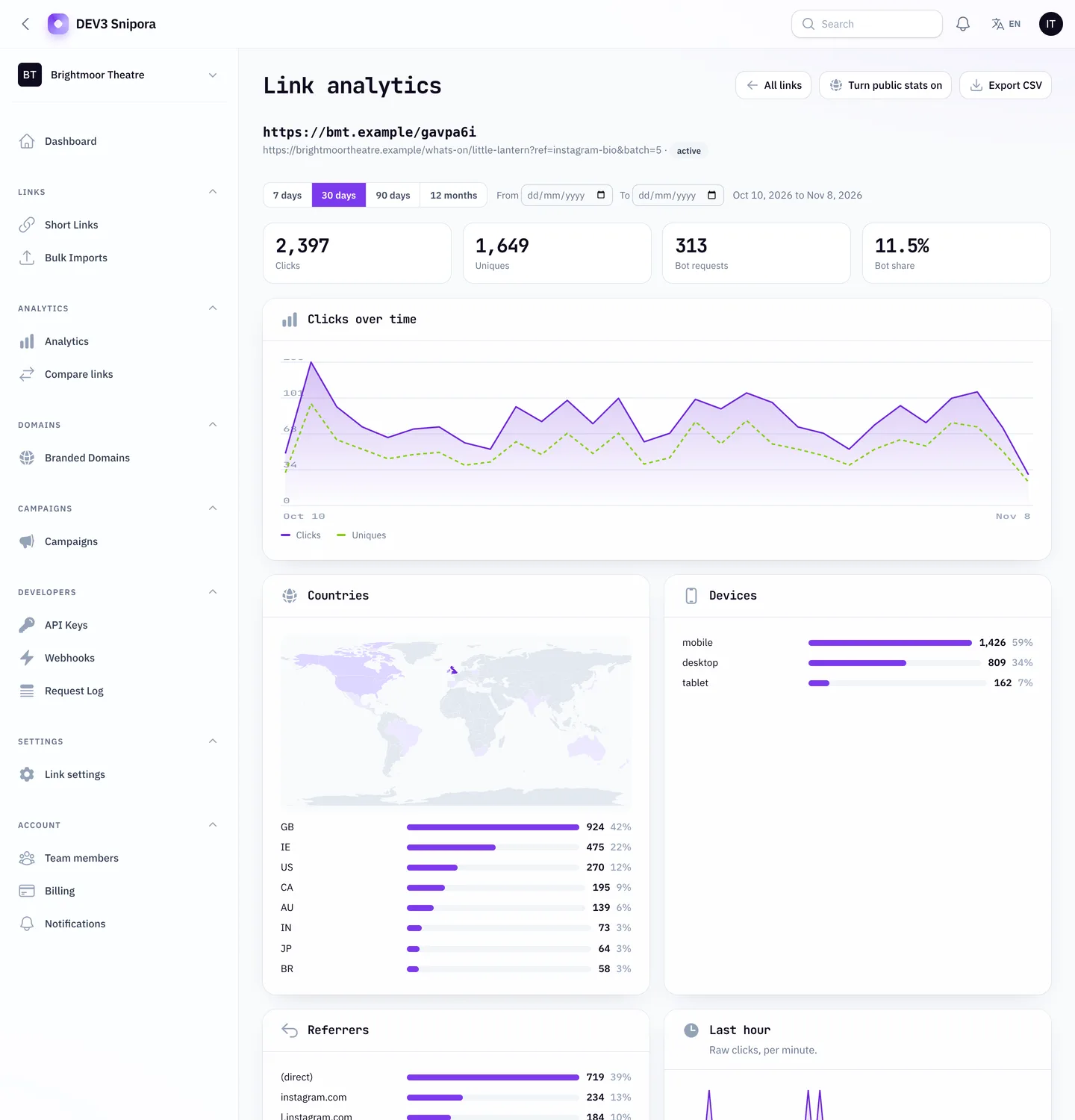
Analytics are only useful if replays and crawlers are separated from people. Snipora scores bots, keeps them out of the quota and the headline numbers, and reconciles its daily rollups with the raw clicks.
5. Do QR codes come with every link?
Print needs vector files. Every link should offer SVG, PNG and EPS with colours you choose.
6. Is there an API, and is it safe to hand out?
Scoped keys, per-plan rate limits, a request log and signed webhooks let a customer integrate without handing over the account.
7. What happens when someone abuses it?
Public shorteners get abused. You want a deny list, a safety check, a report-a-link form, a takedown that blocks the link and closes the report, and a log of support sessions.
Limits
Geo-IP, DNS checks and the safety check are simulated until you add a GeoLite2 file and real keys, redirects are served by PHP rather than a CDN, SSL is reported rather than issued, and SaaS billing runs on a simulated gateway. Snipora has no mobile apps.