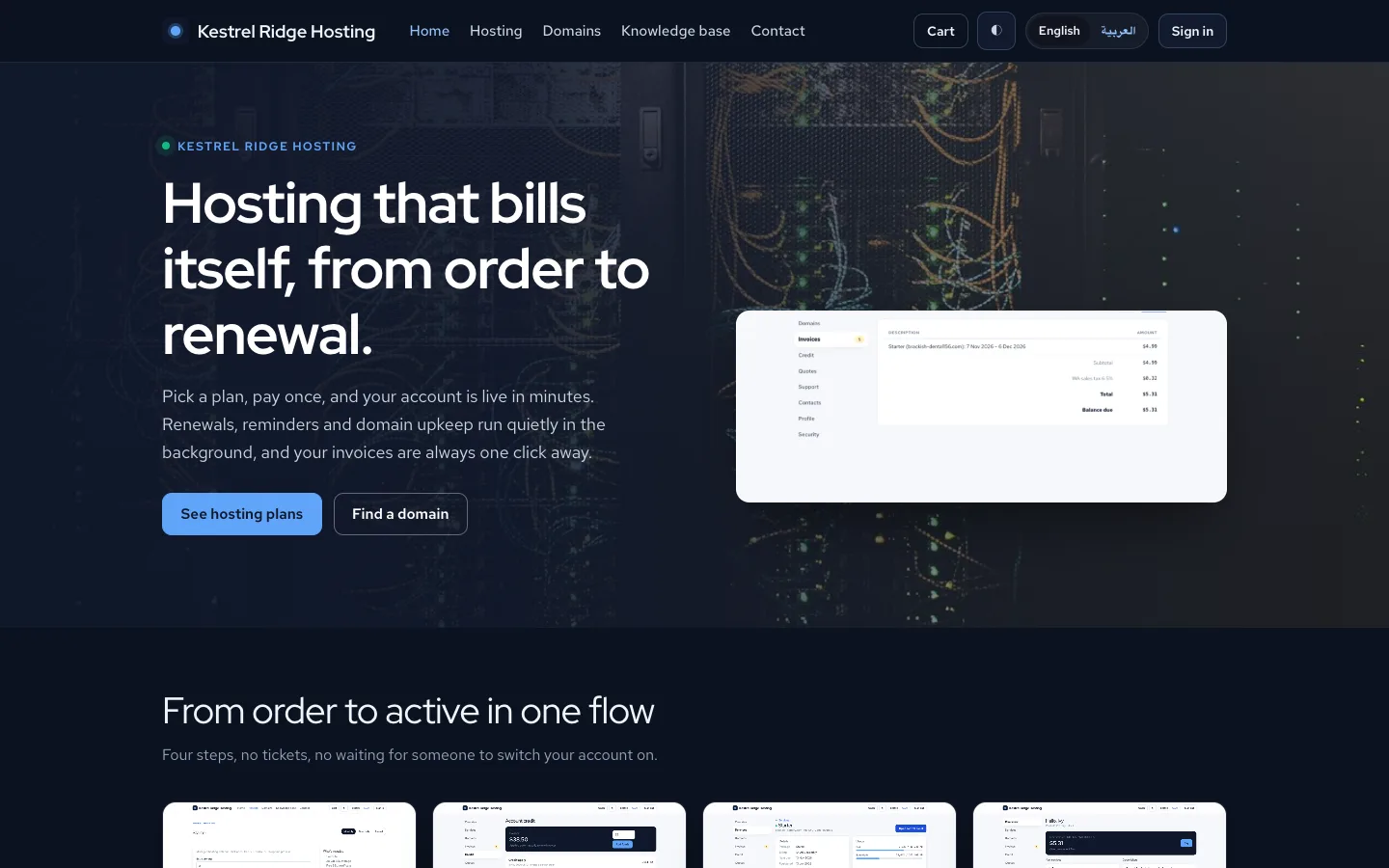
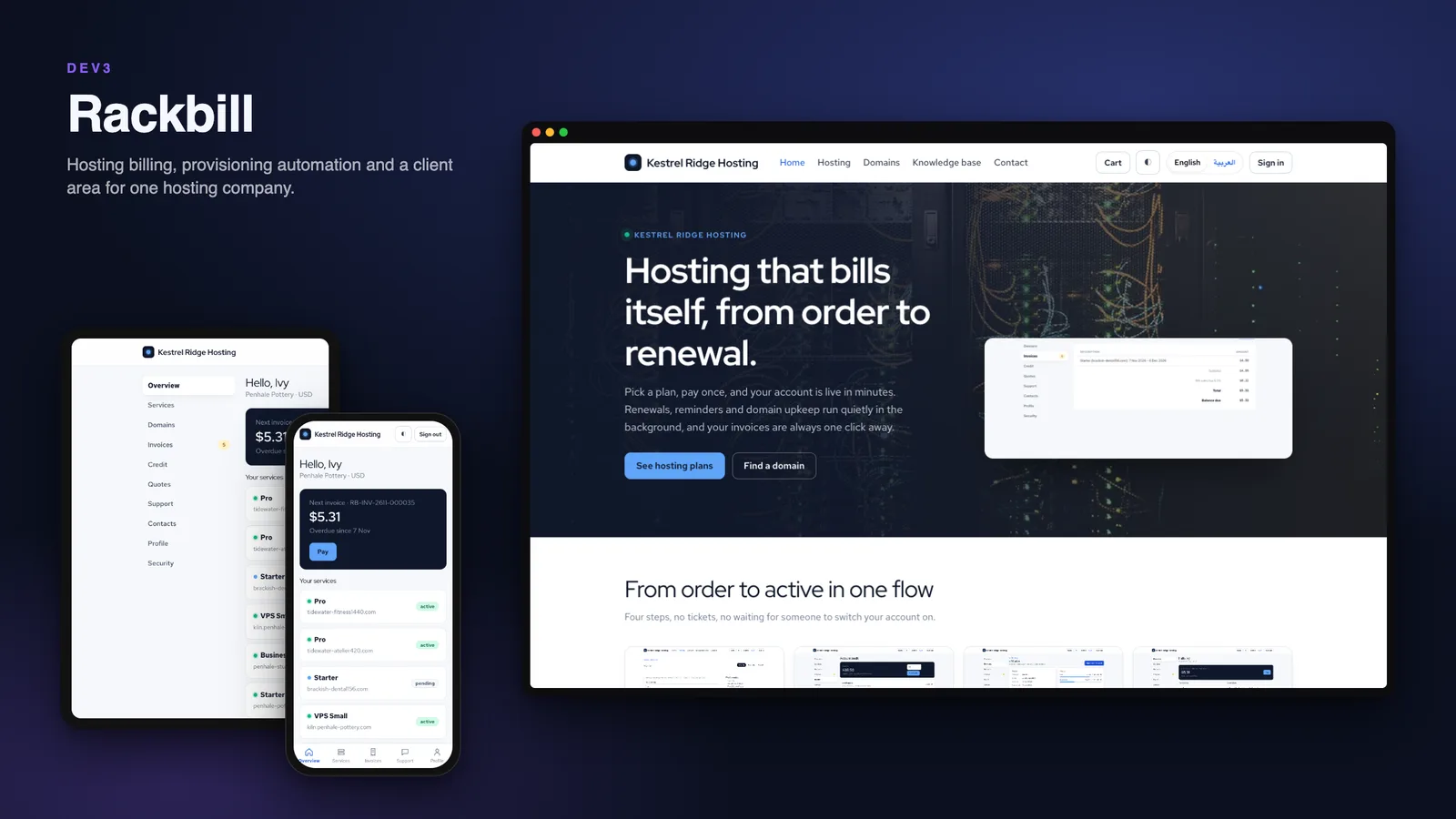
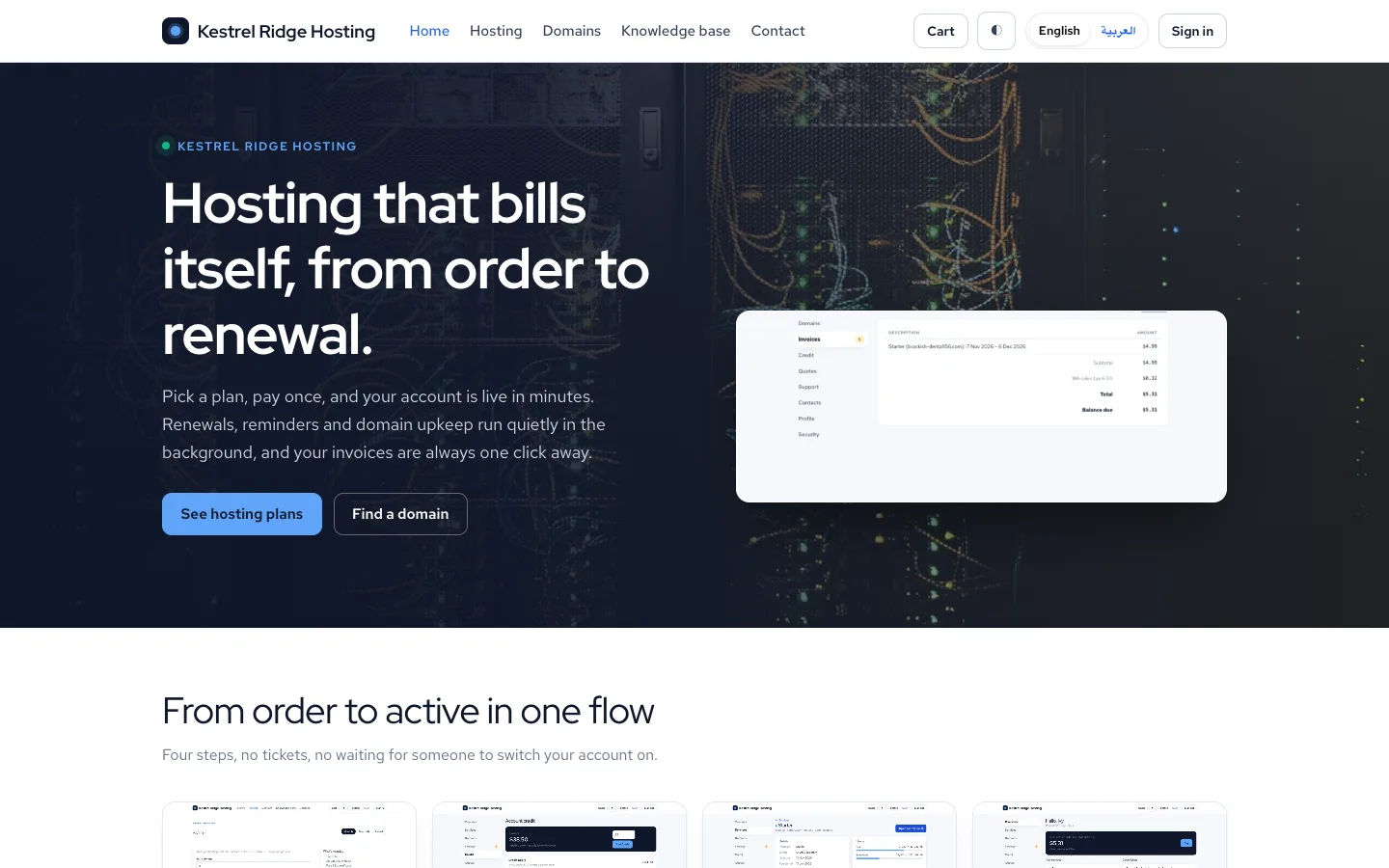
 Home in dark mode — The same page for visitors who prefer a dark theme.
Hosting billing software: 7 things to check before you pick one
Last updated
Hosting billing looks like invoicing until the first suspended account, the first duplicate charge and the first domain that expired because a job ran twice. Here are seven things to check before you pick software, with DEV3 Rackbill as the worked example.
1. When is the invoice raised, and can it be raised twice?
Invoices should exist before the due date, group everything a client owes, and survive a job that runs twice. Rackbill raises one invoice per client 14 days before due, with a unique line per item and period, so a re-run or a parallel run adds nothing.
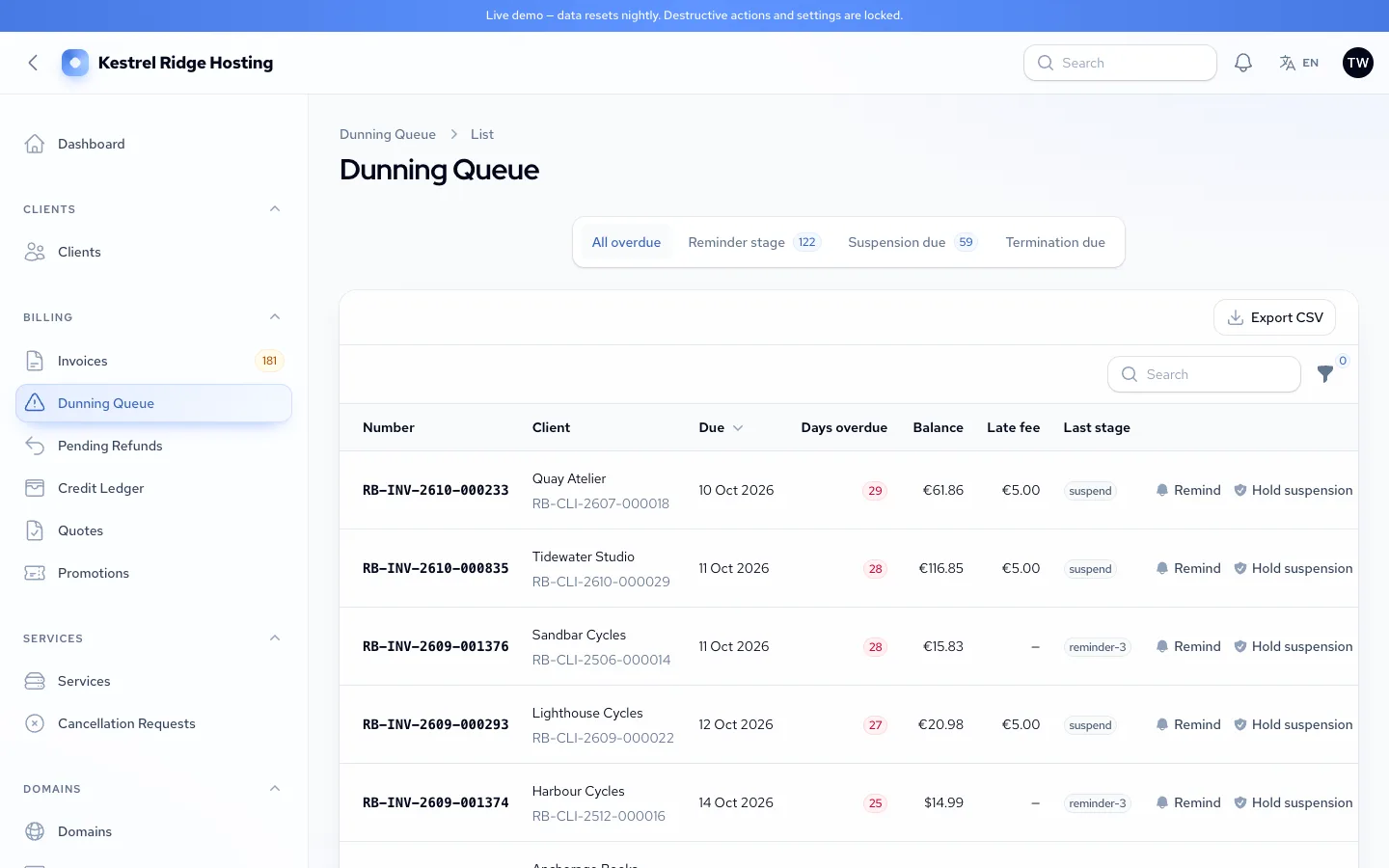
2. What happens when a payment fails?
A decline should lead to reminders, a late fee once, suspension and finally termination, at days you control, and a payment at any point should bring the service back at once.
3. Does provisioning survive a timeout?
A panel that did the work and then timed out must not get a second account. Rackbill sends an idempotency key with every command and asks the panel before it retries.
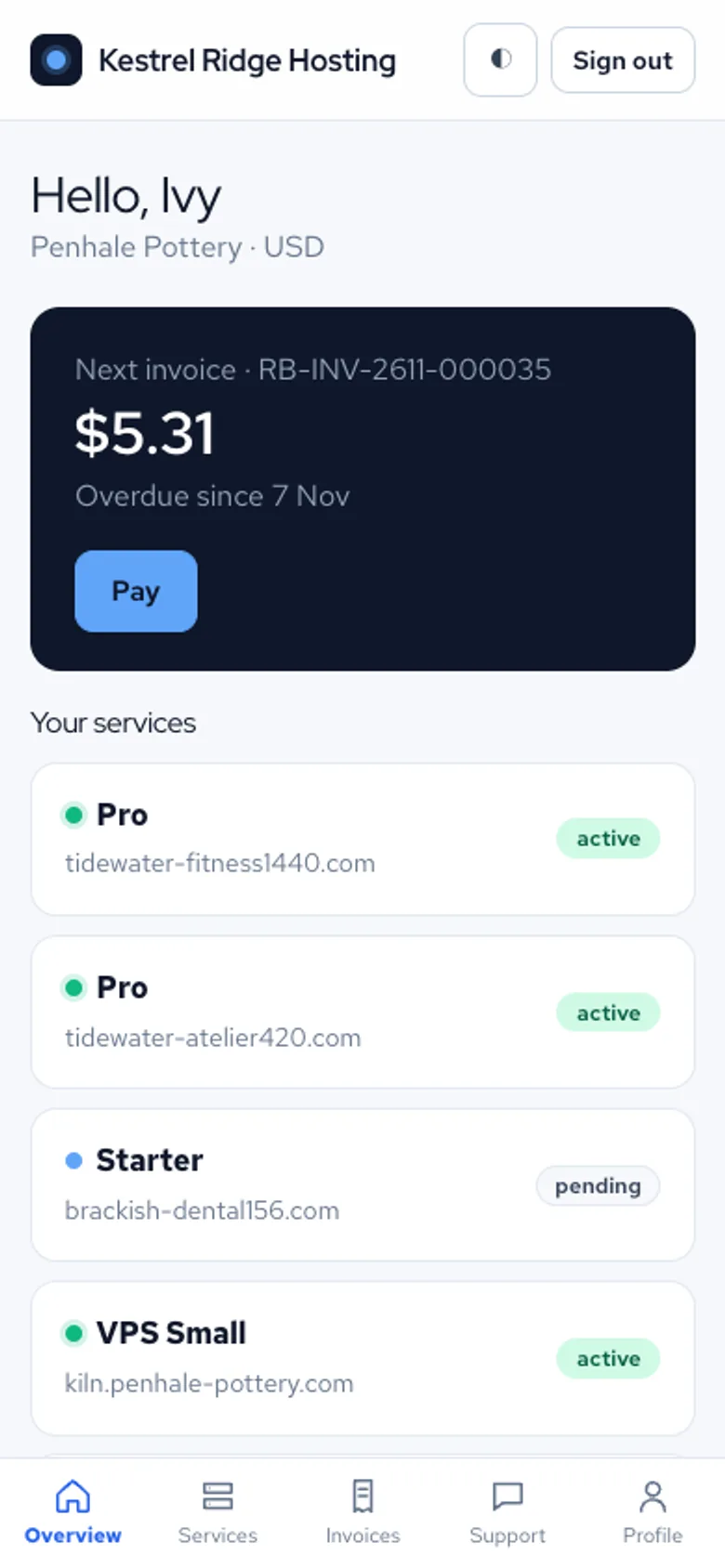
4. Can clients help themselves?
Pay, upgrade with an exact preview, open the control panel, renew a domain and open a ticket should all work on a phone.
5. Is tax right?
Rules by country, exclusive or inclusive per currency, EU reverse charge and a snapshot on every invoice, so a rate change never rewrites history.
6. Do support deadlines count business time?
A ticket due Friday evening is due Monday morning, and the clock should pause while you wait for the client.
7. Does the money tie out?
Credit, revenue, tax and refunds should reconcile to the invoices. Rackbill checks this every night.
Limits
Control panels and registrars are simulated until you finish the driver classes, stored-card charging on real gateways is a guarded stub, the VAT number check is simulated, and Rackbill is a single-company install with no mobile apps.