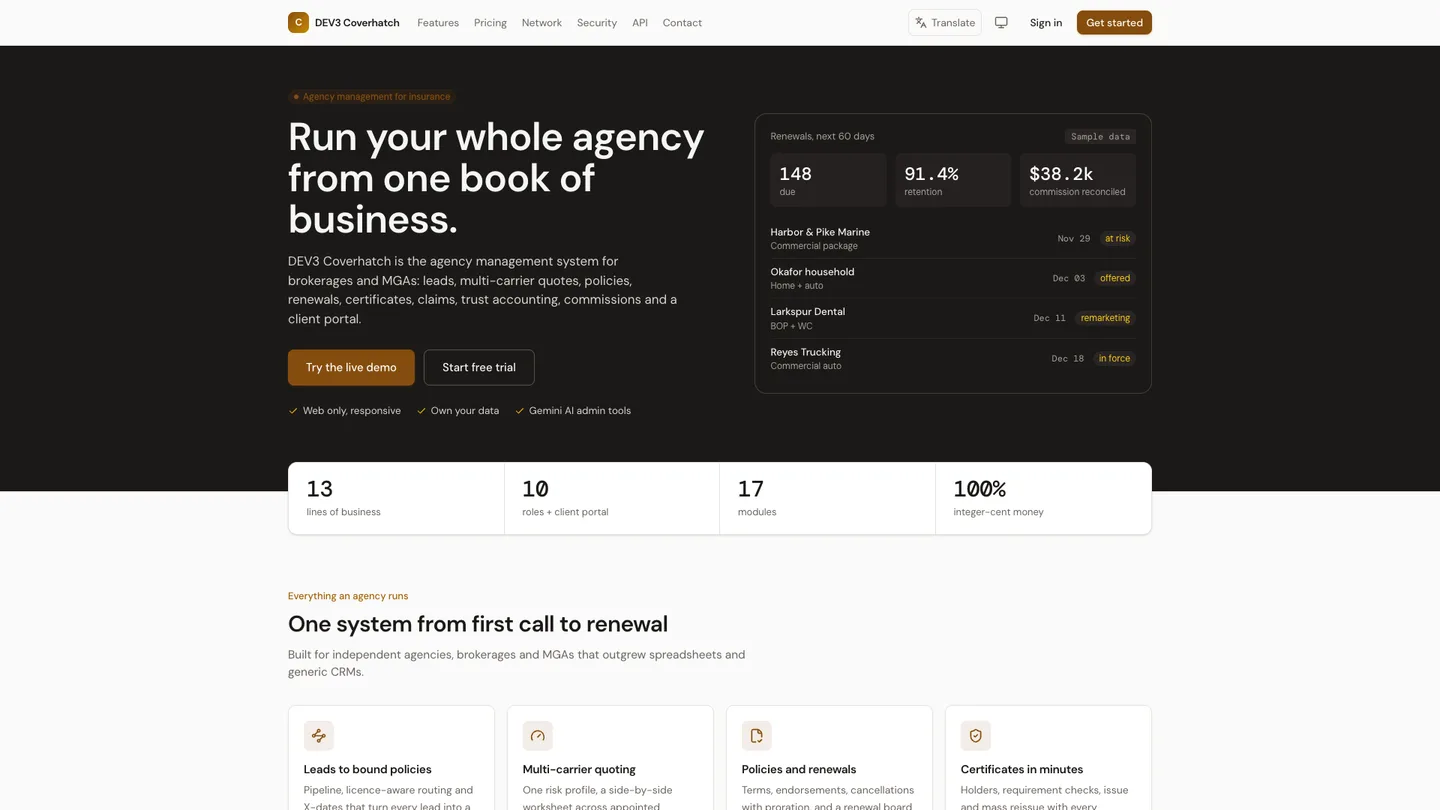
 Landing — The agency system for renewals, retention and commission, with the live book on the first screen.
 Network mode — One platform for a single agency, a brokerage with sub-agents or a whole MGA network.
Insurance agency software: 6 things to check before you pick one
Last updated
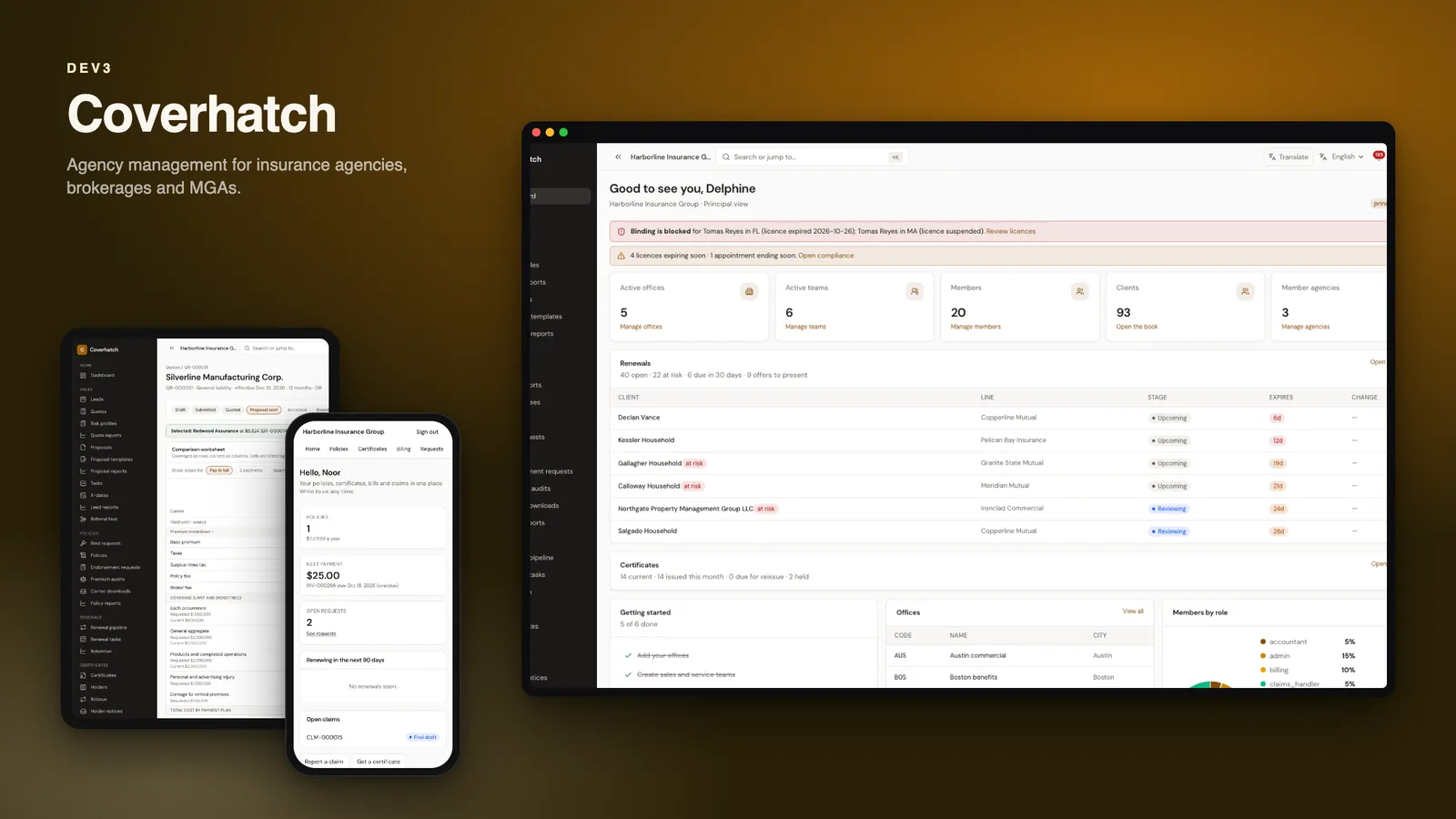
Agency software looks alike in a feature list until you ask the awkward questions: what happens to trust money when a payment bounces, how a mid-term change is prorated, and how a certificate stays correct after a cancellation. Here are six things to check, with DEV3 Coverhatch as the worked example.
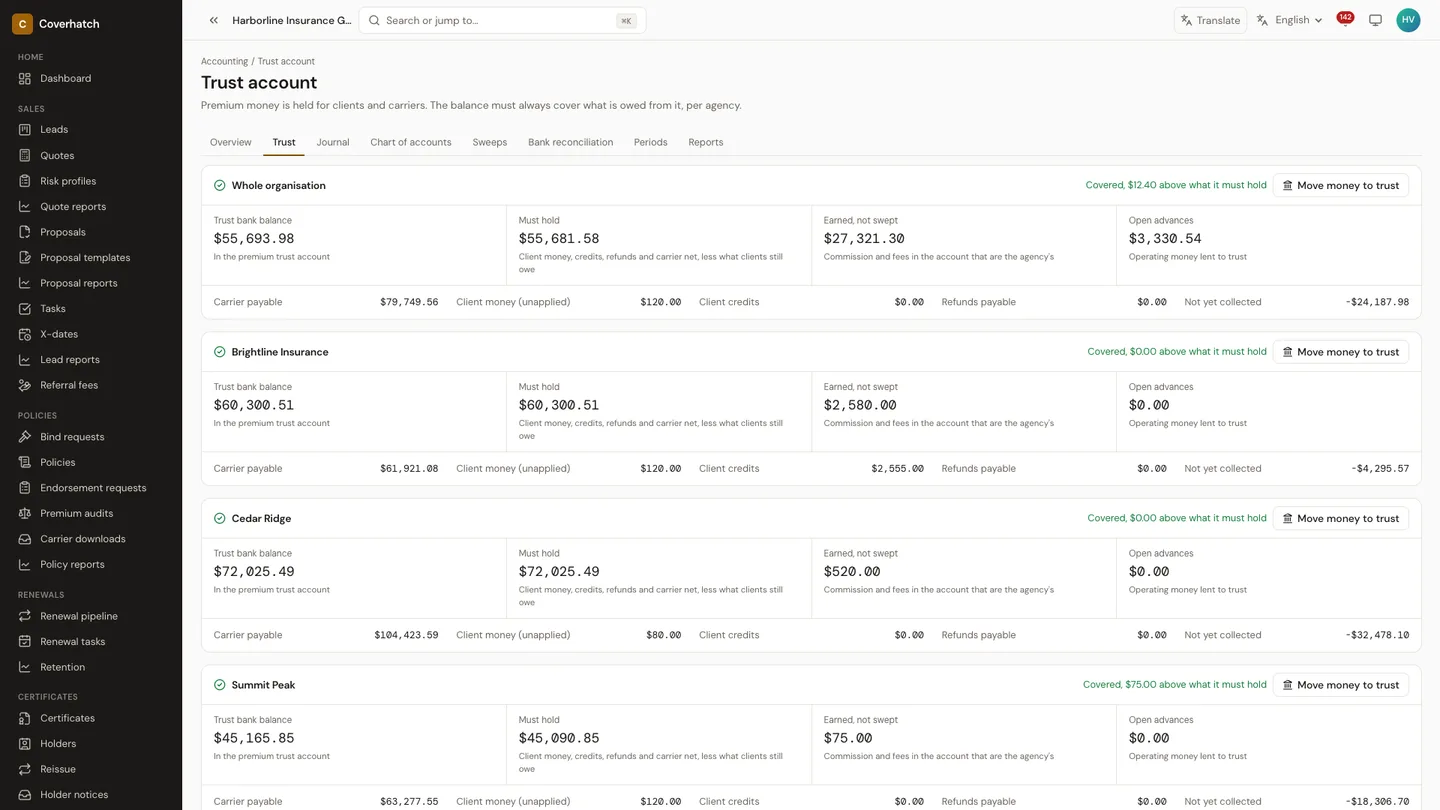
1. Is trust money protected by rule, not habit?
Look for a ledger that cannot be edited and a check that compares the trust account with what is owed from it. Coverhatch posts every billing event to append-only journals and blocks disbursement when an agency's trust account is short.
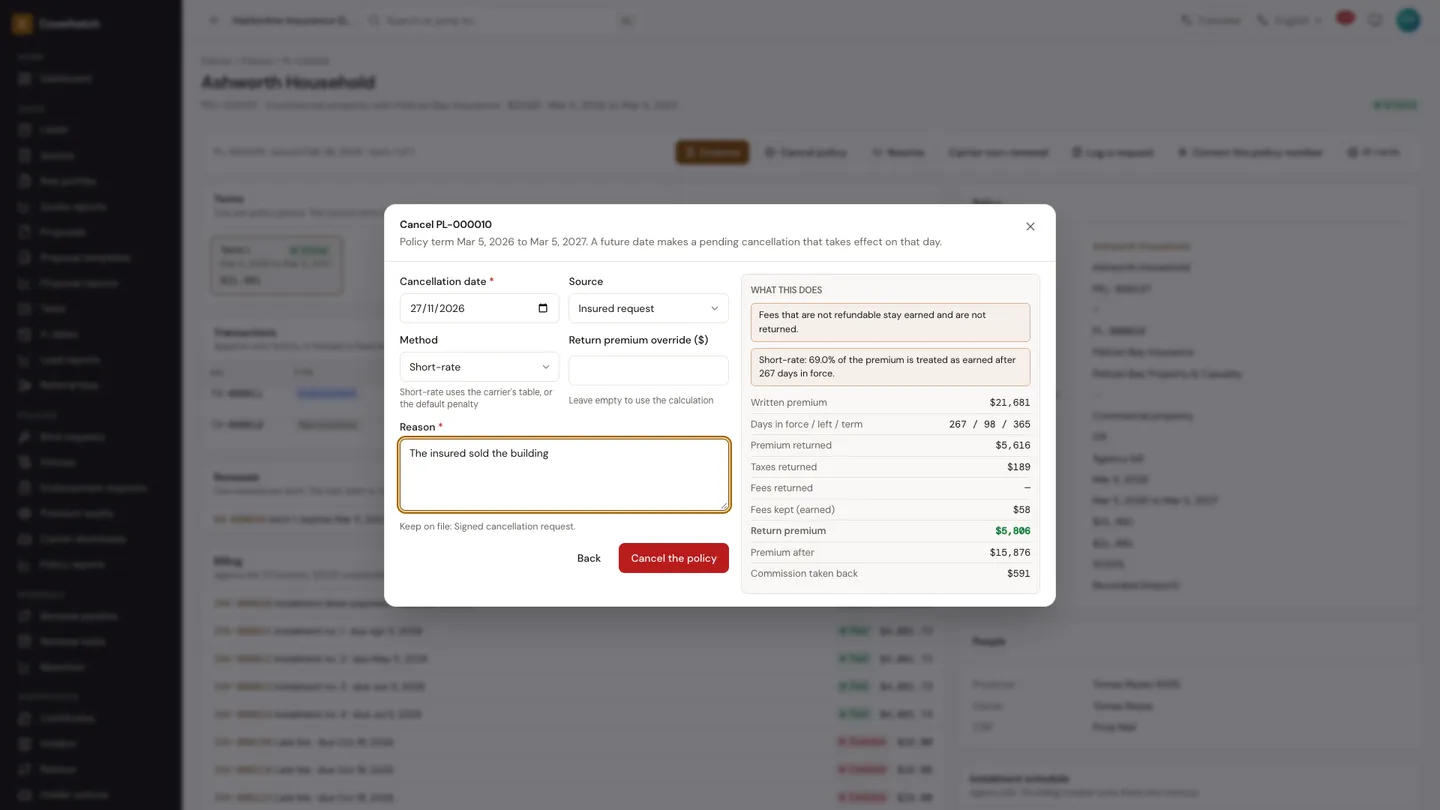
2. Does proration show its working?
Endorsements and cancellations should show the premium, taxes, fees, minimum earned and commission before you save, including changes dated before a later transaction.
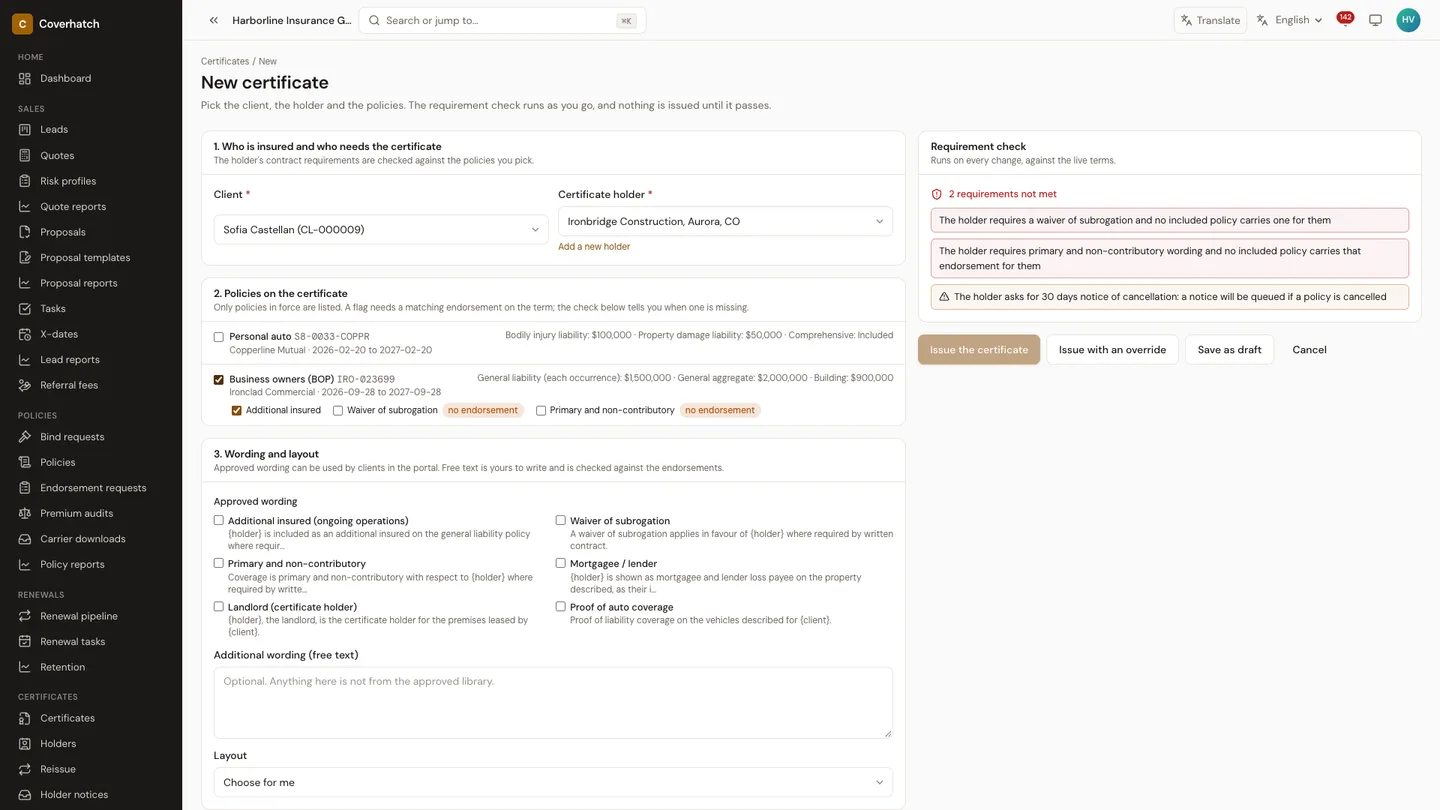
3. Do certificates check the holder's requirements?
A certificate should fail with a clear reason when the policy lacks a required endorsement, and an issued certificate should never change silently.
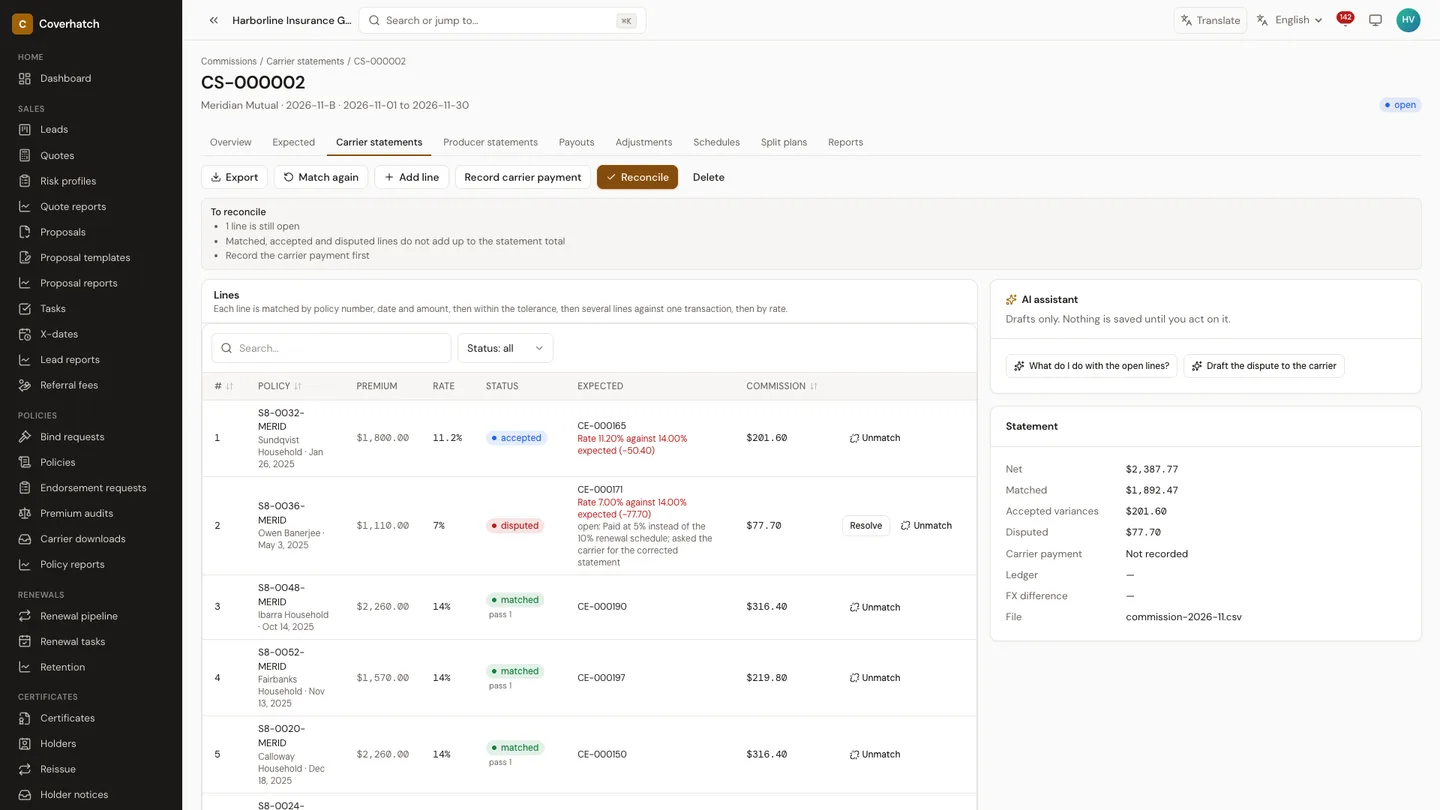
4. Are carrier commission statements reconciled line by line?
Expected commission should be priced from the policy and matched to each statement line, with variances you can work.
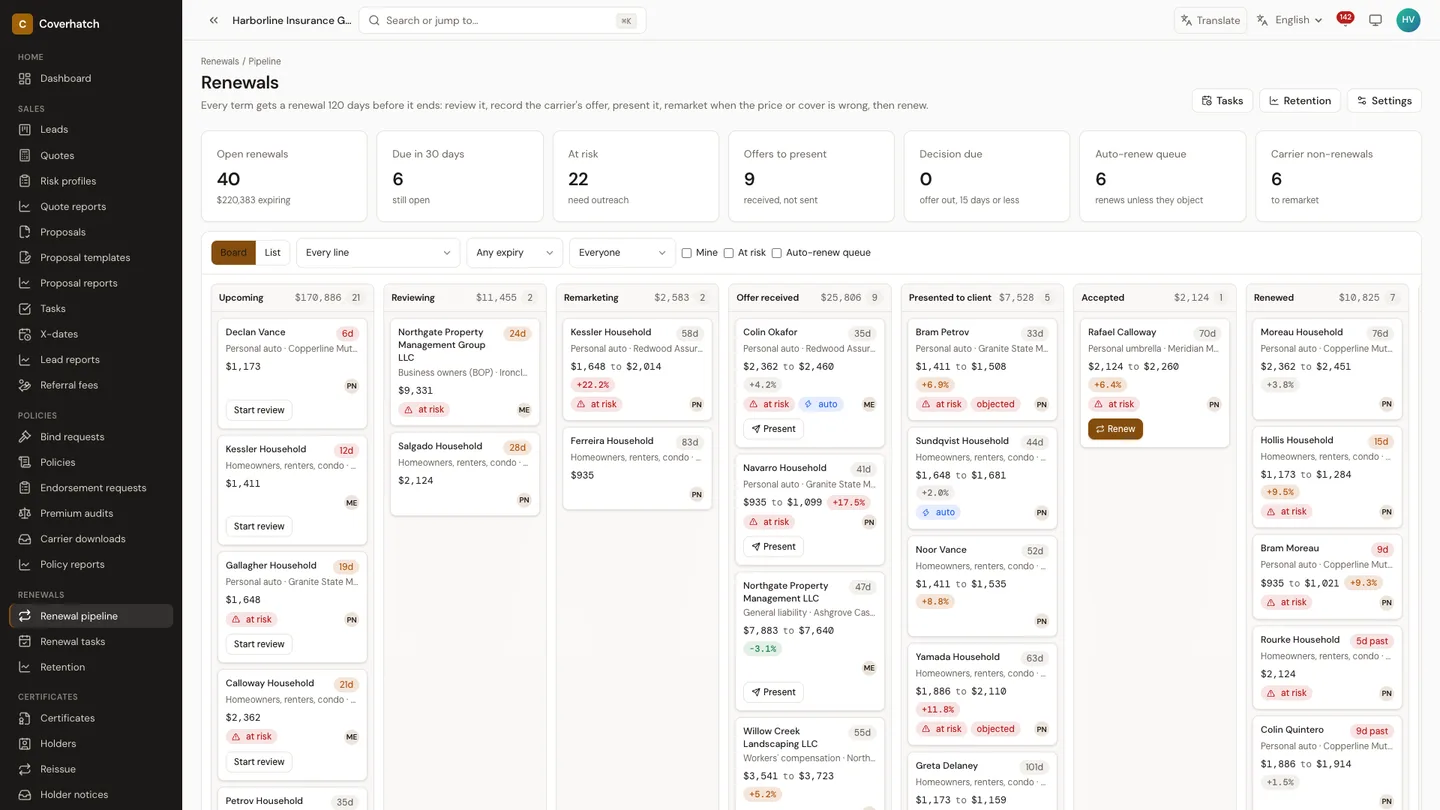
5. Can renewals be worked, not just listed?
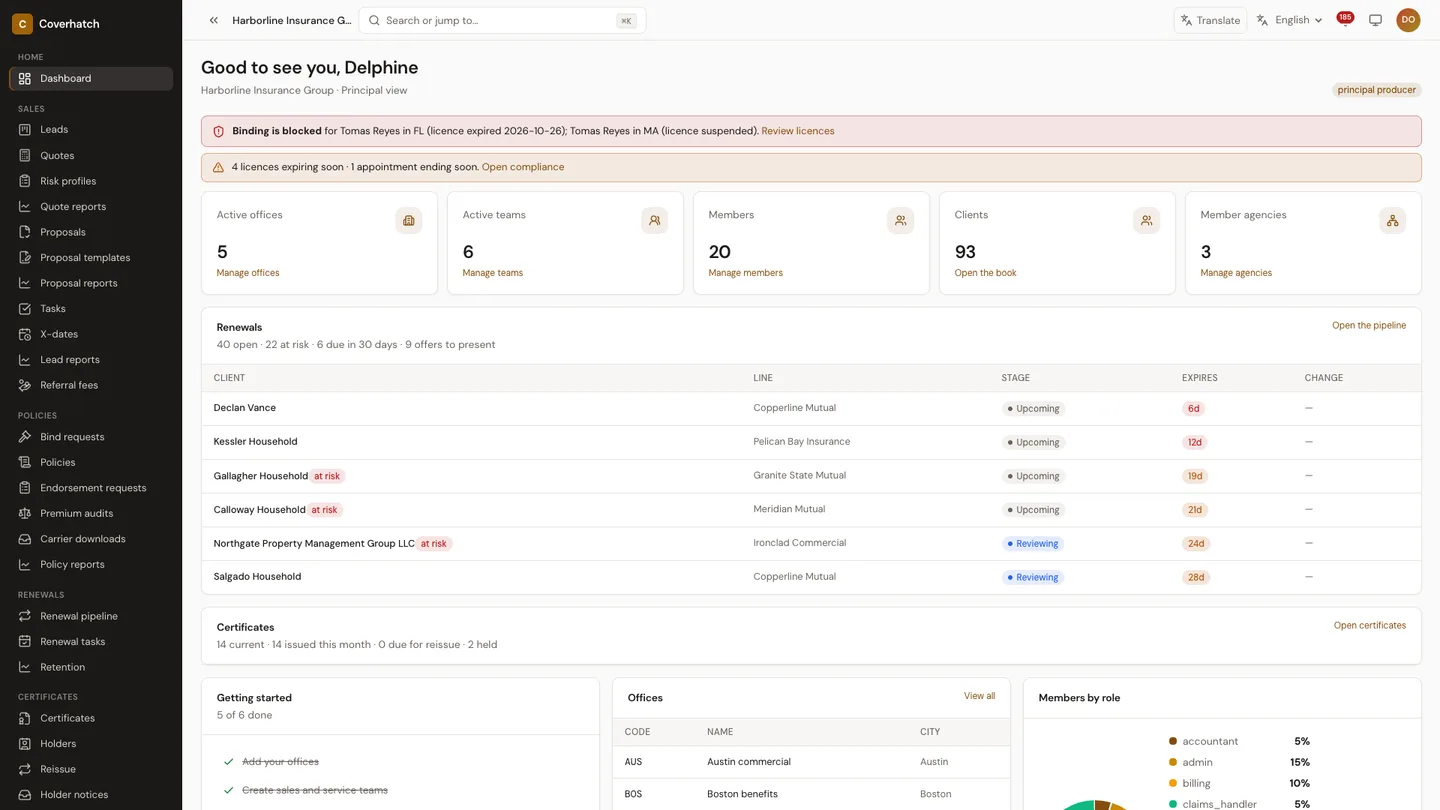
Look for a board with at-risk flags, an offer with the change in premium and a remarketing worksheet.
6. Do you own the system and the data?
Coverhatch is source code you host yourself on Next.js and MongoDB, with an API, webhooks and a full audit log.