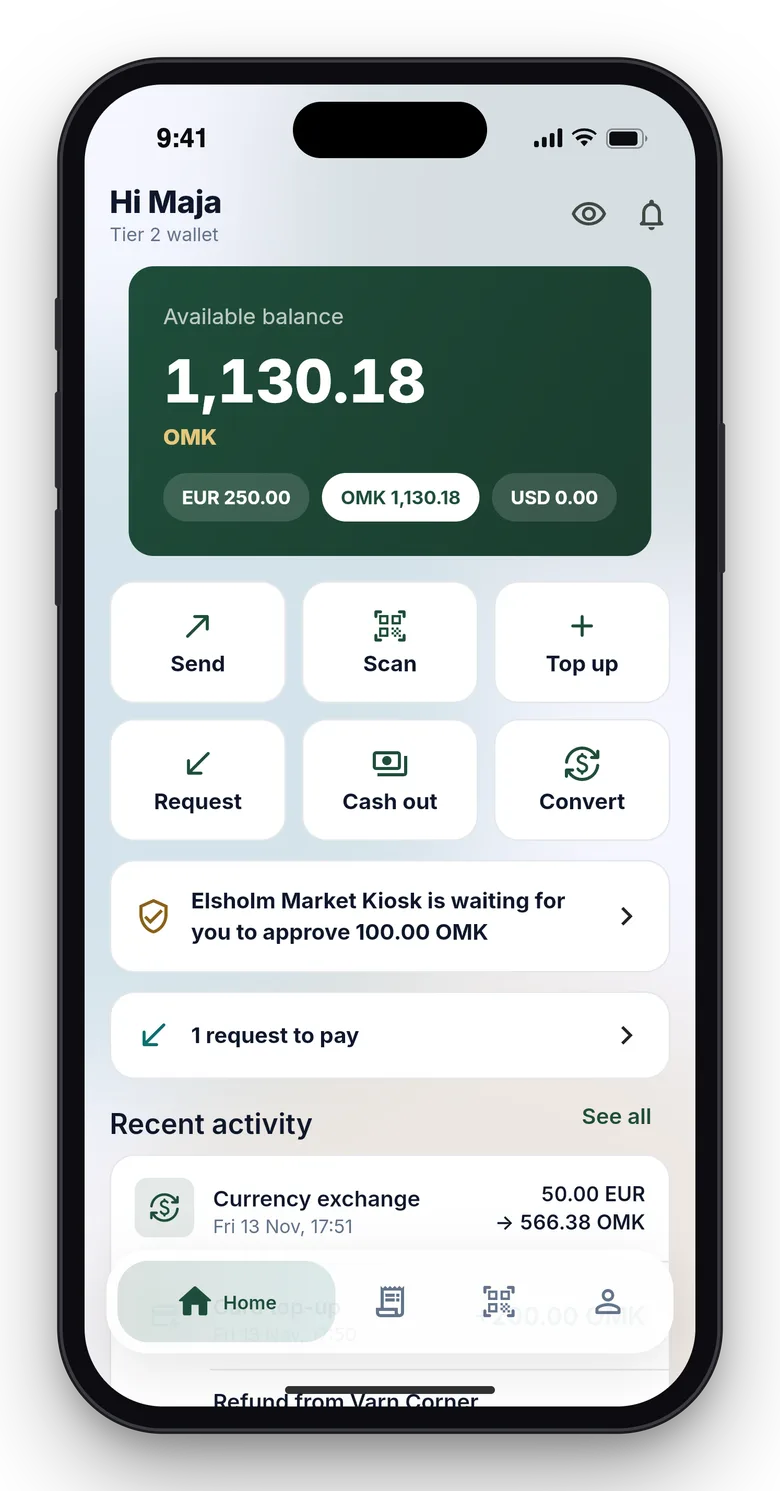
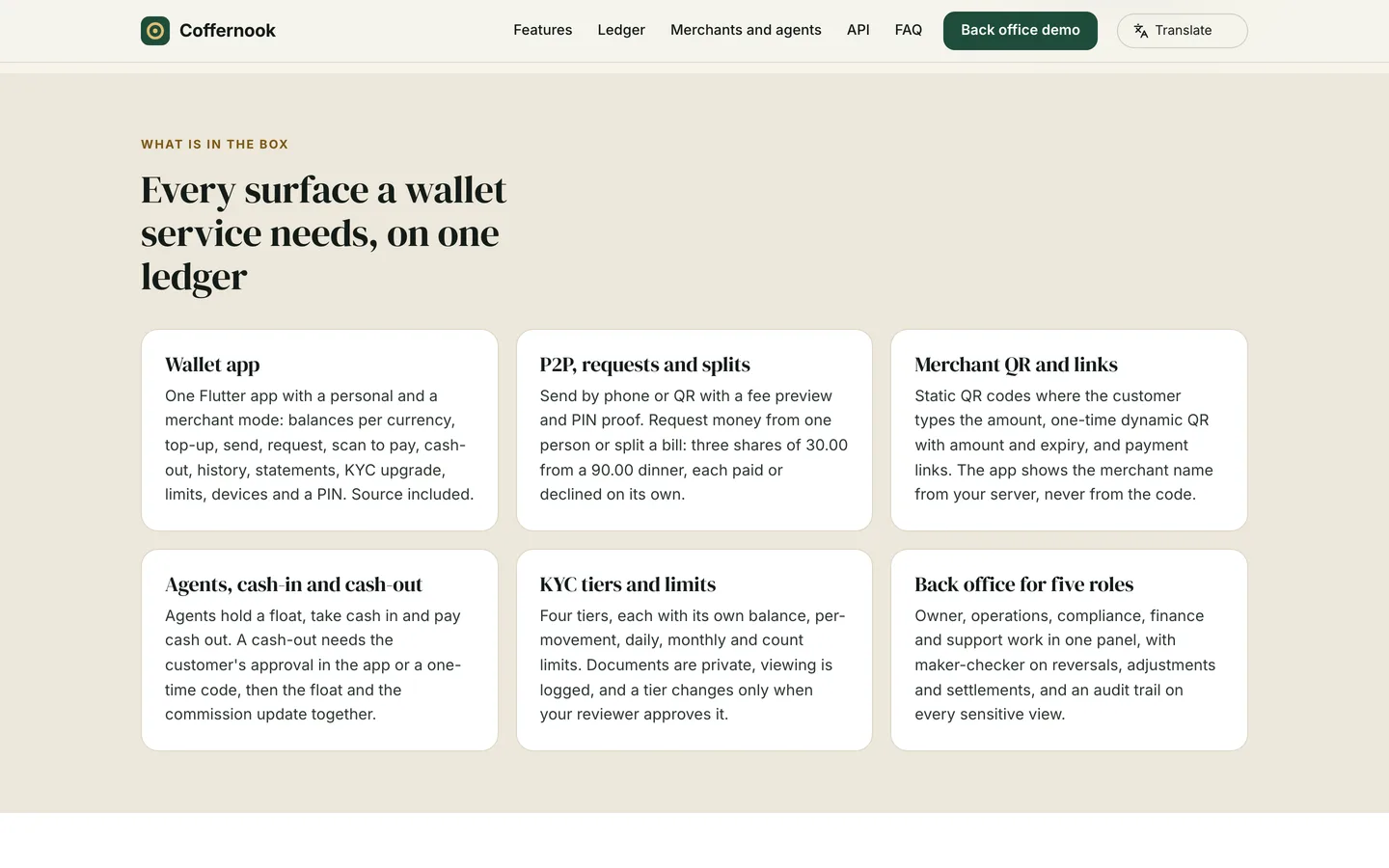
 The wallet app — send, request, split and pay with a QR code, with the fee shown before the PIN.
Digital wallet software: 6 things to check before you pick one
Last updated
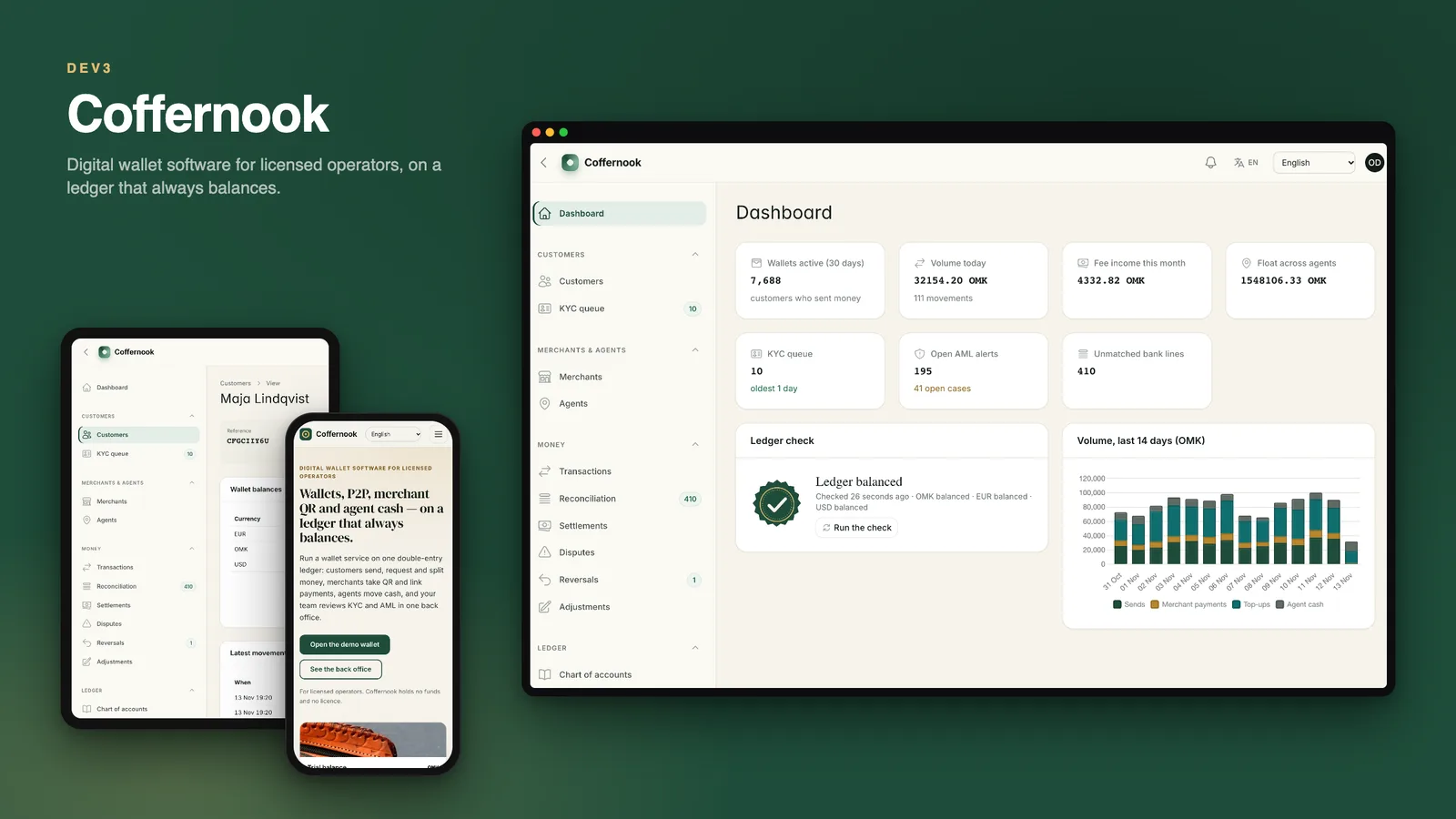
A wallet runs on trust in the books. Here are six things to check before you pick wallet software for a licensed operation, with DEV3 Coffernook as the worked example. Coffernook is software for a licensed operator: it holds no funds and no licence, and you need your own.
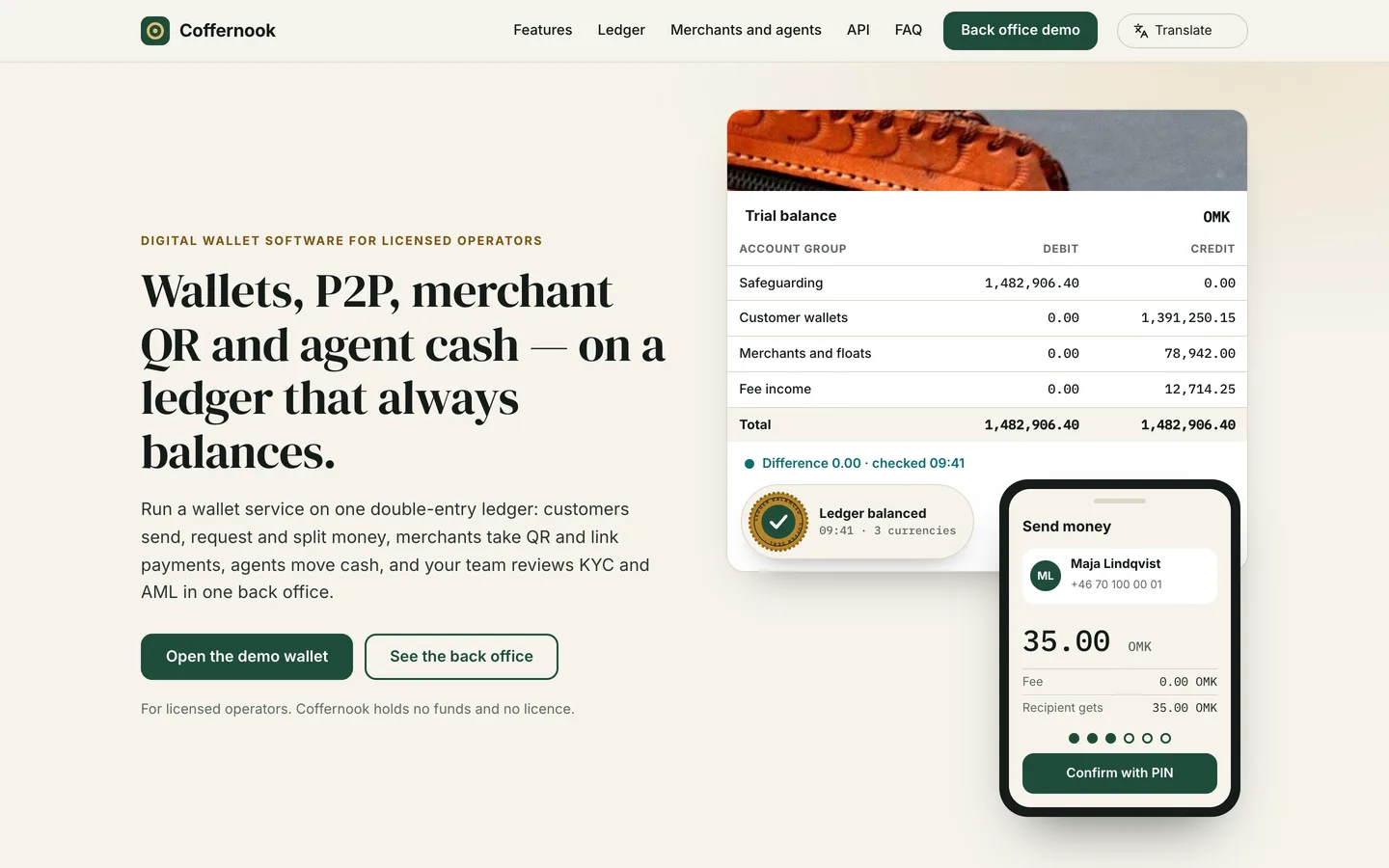
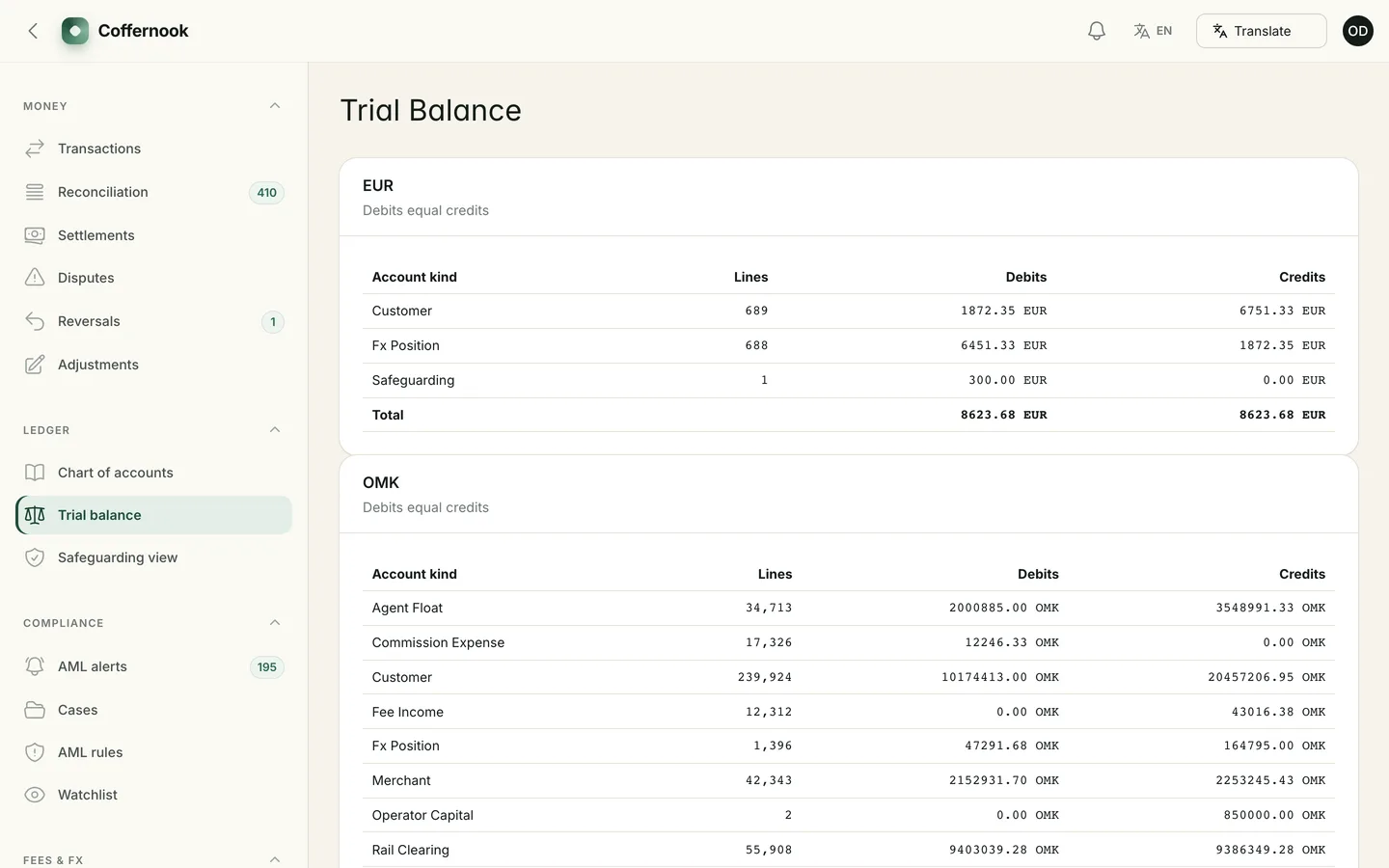
1. Does every movement balance?
Ask for a ledger where each movement is a balanced journal entry, with a trial balance and a way to re-check the books. Coffernook posts double-entry lines per currency and shows the entry behind every transaction.
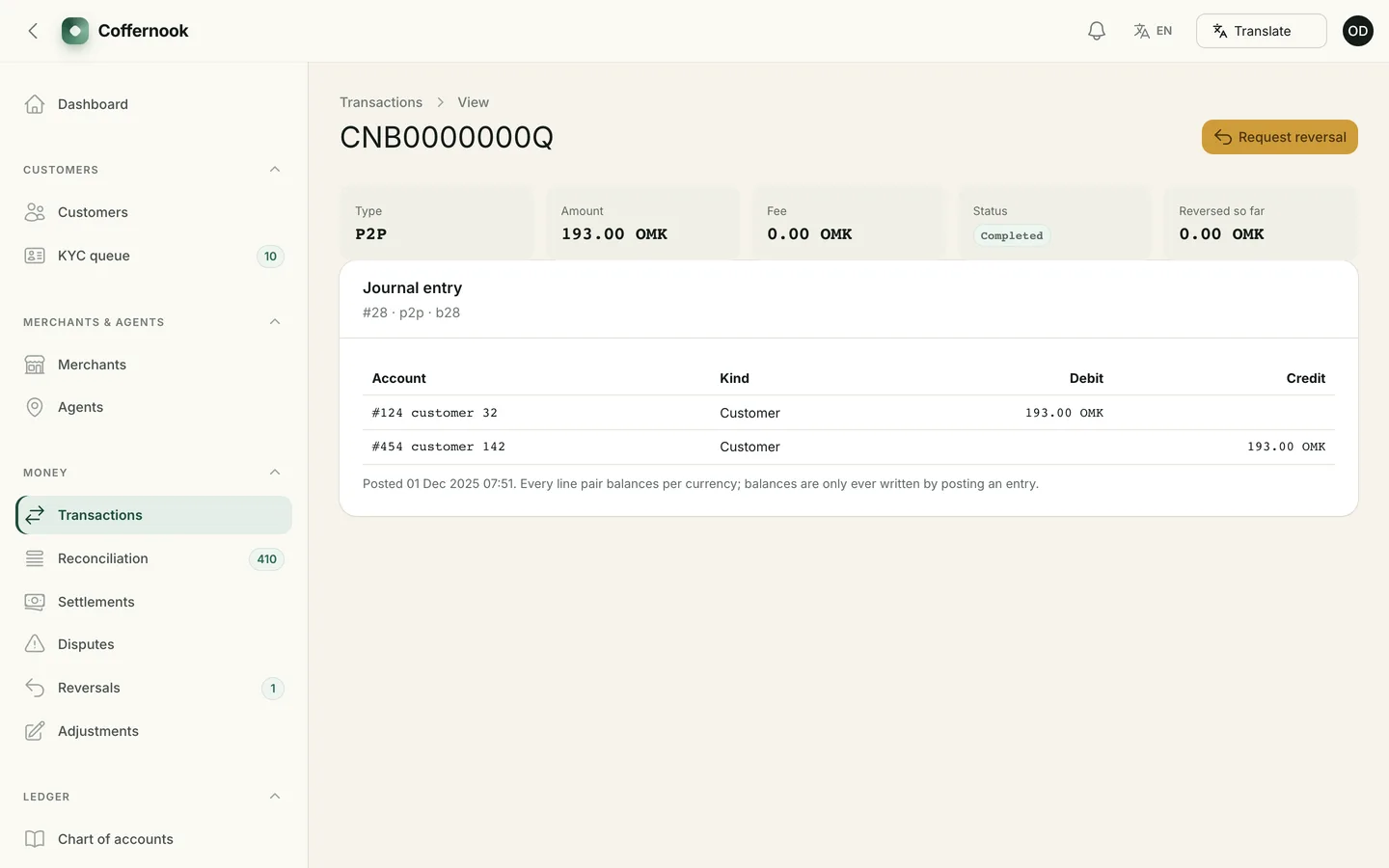
2. Can the same money be spent twice?
Two phones, one balance, one second. The right answer is one payment and one clear refusal. Look for row locks, idempotency keys and tests that fire parallel requests.
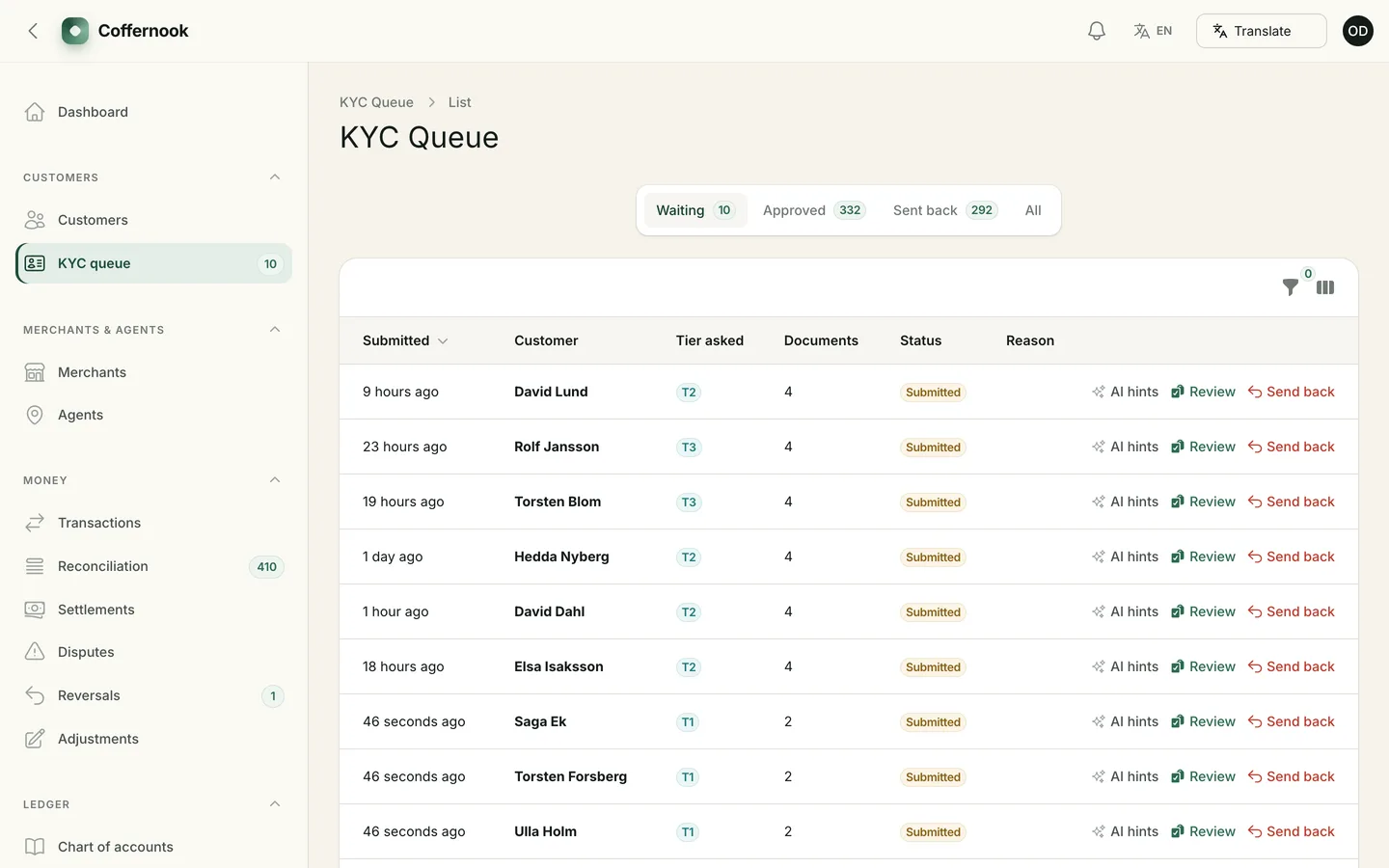
3. Are KYC tiers and limits real?
Limits per tier, document review against a checklist and private files with a log of every view. Coffernook uses manual review; no identity-verification service is included.
4. Is agent cash safe?
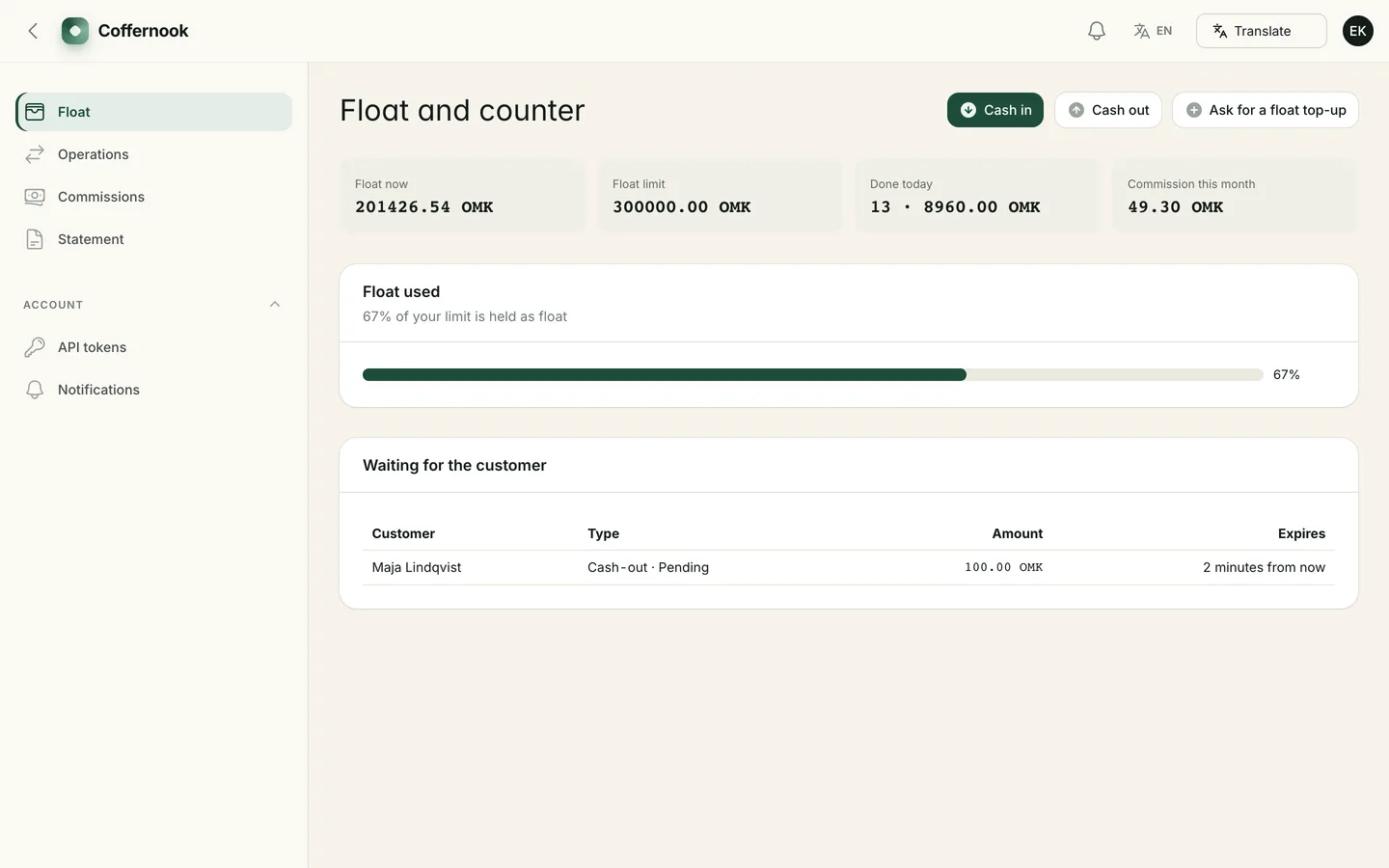
A cash-out code that reaches only the customer, a lock-out after wrong tries, float limits and commissions that reconcile.
5. Are AML rules and cases usable, and is the AI kept in its lane?
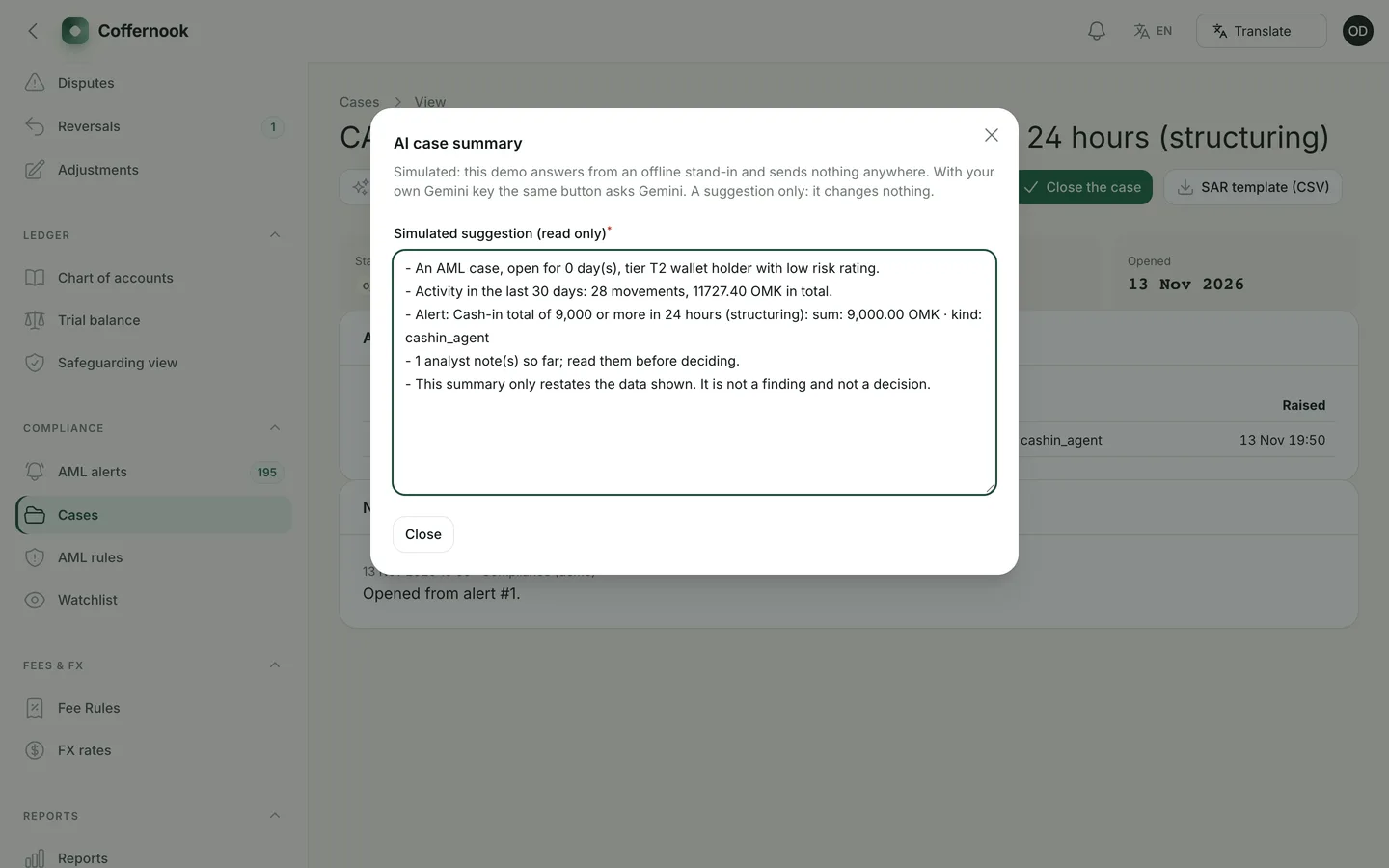
Configurable rules, alerts, cases and a report template. Coffernook's rules are not AI. Its Gemini AI admin tools only draft summaries and notes from de-identified briefs, you edit and confirm every suggestion, and you add your own key.
6. Are the limits honest?
All rails are simulated until you connect your partners; there are no cards, crypto, interest or lending; statements are print pages; and the Flutter wallet app was verified in simulator builds, tests and against the live API, not on a real device. Say that plainly to your own customers.