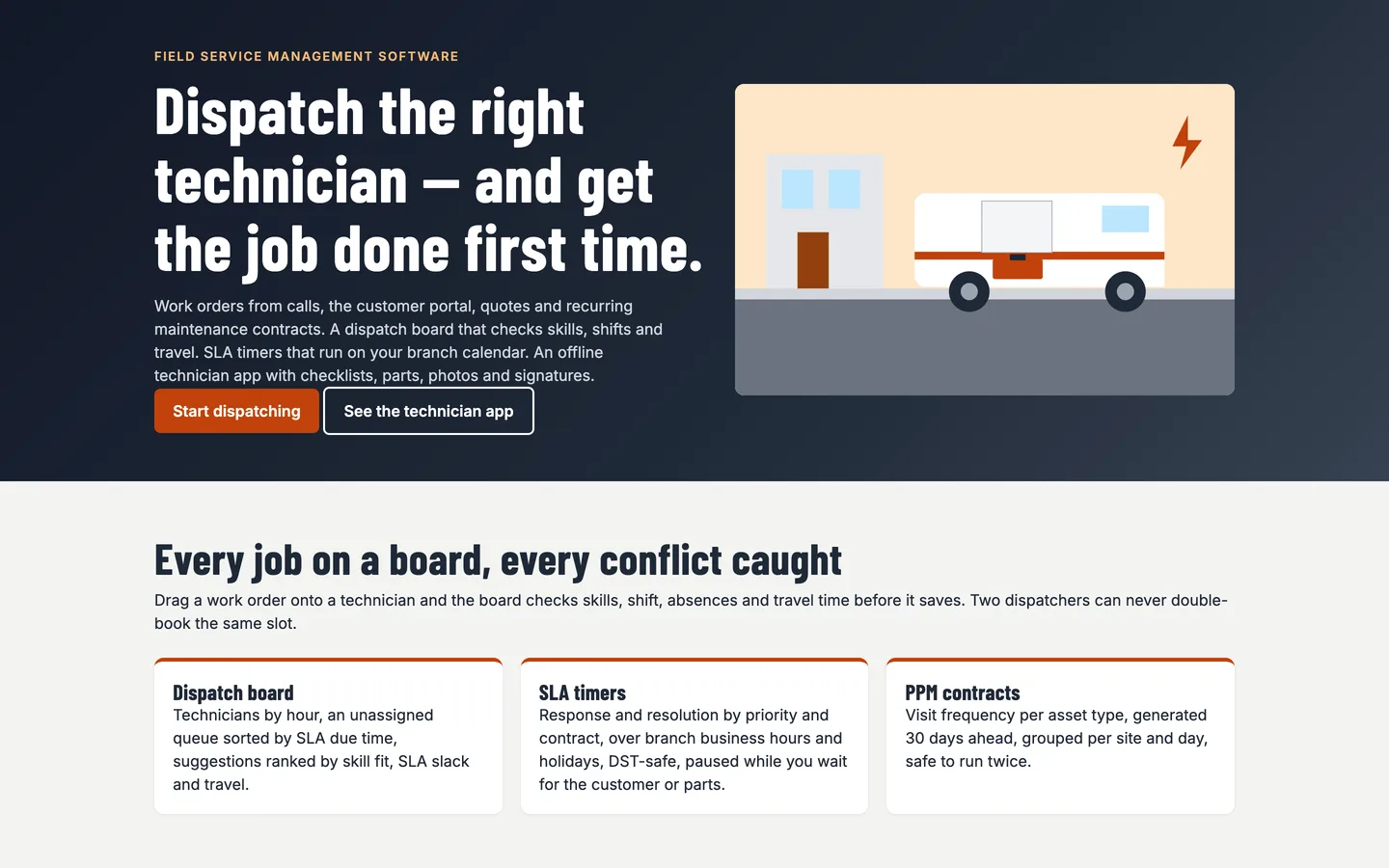
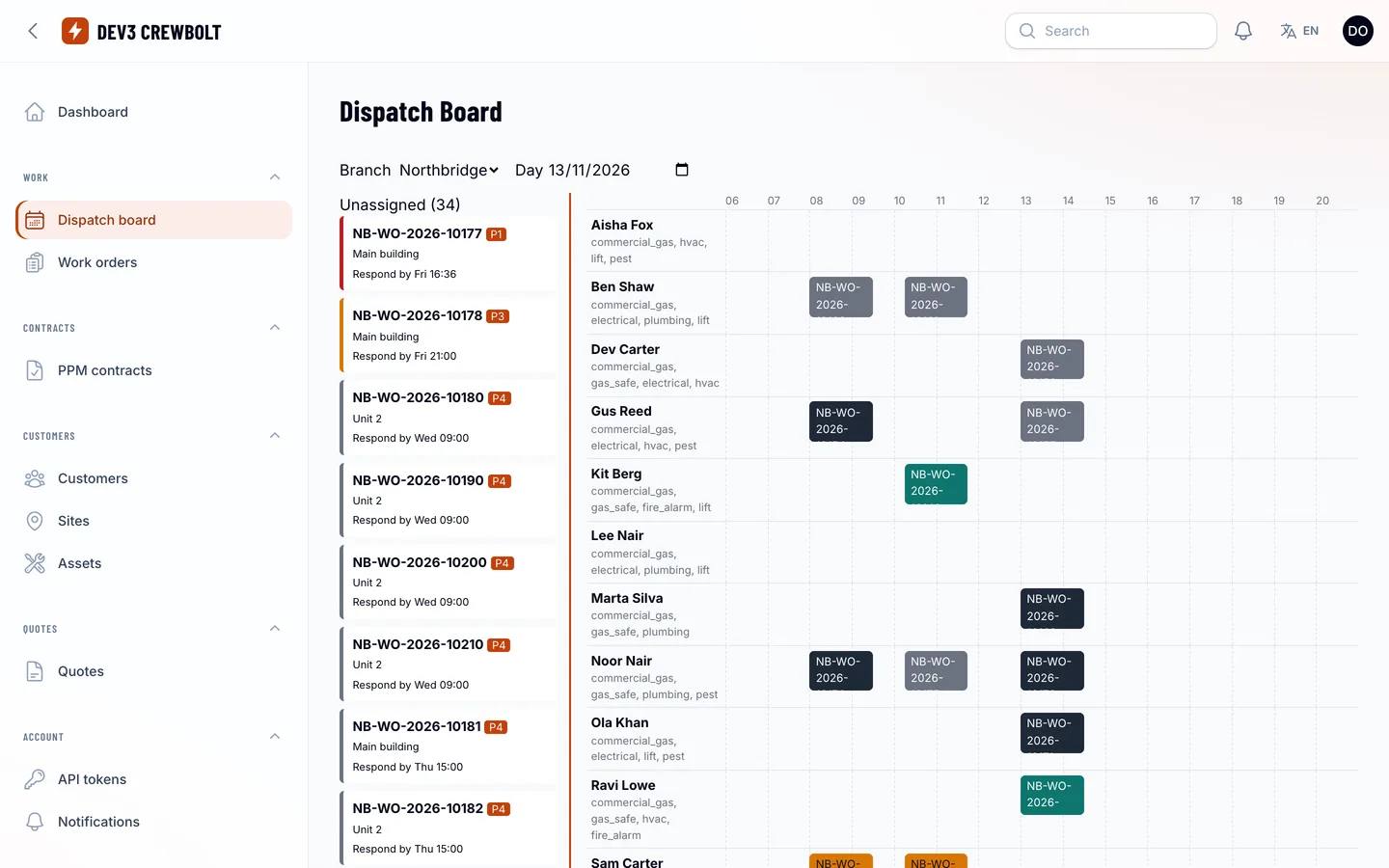
 Dispatch board — Drag a job to a technician and the board checks skills, shift, absences and travel before it saves.
Field service software: 6 things to check before you pick one
Last updated
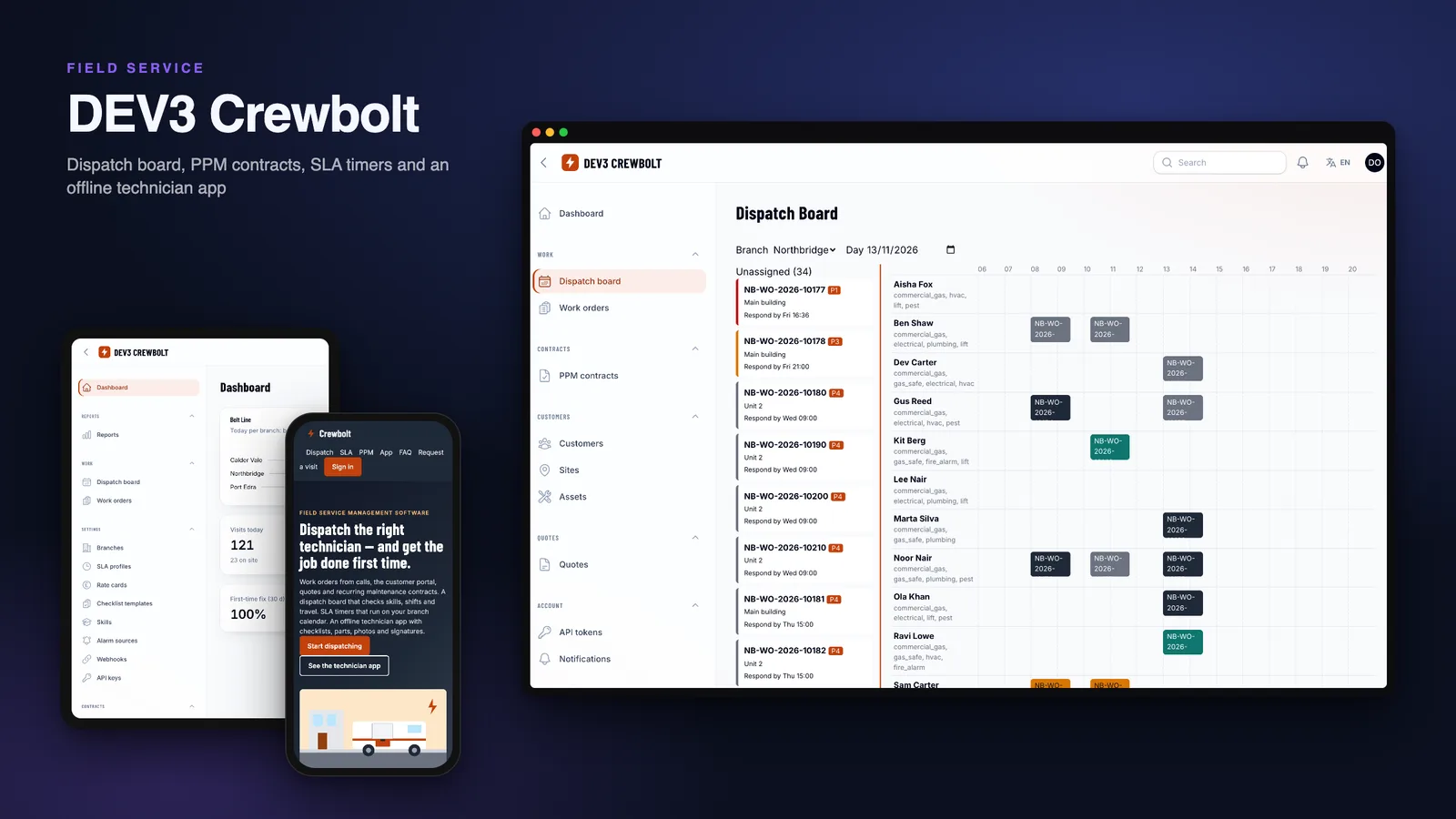
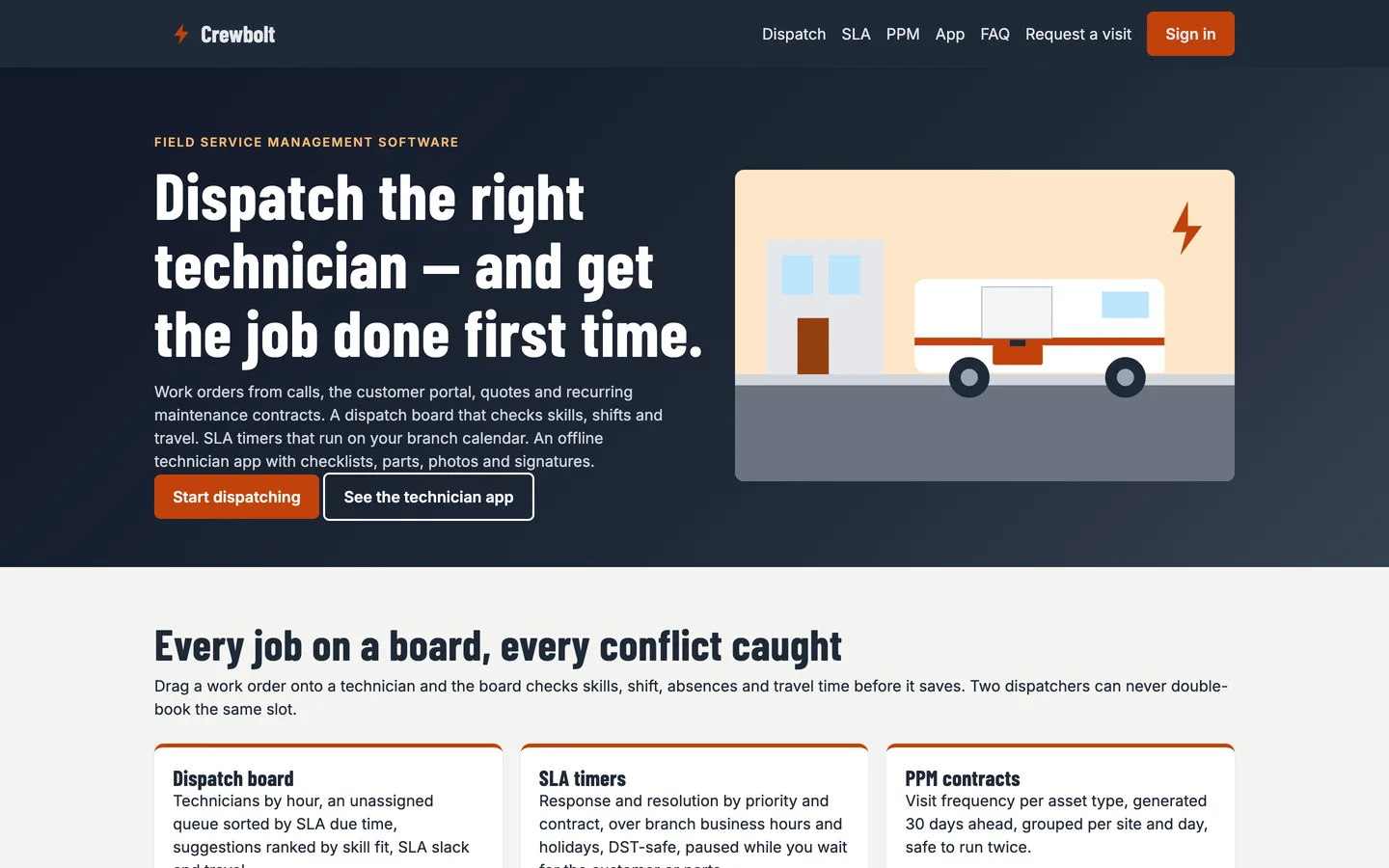
A field service business loses money in small gaps: the technician booked twice, the response promise missed on a bank holiday, the maintenance visit generated twice or not at all, the job done in a plant room with no signal and lost. Here are six things to check before you pick field service software, with DEV3 Crewbolt as the worked example.
1. Can two dispatchers ever double-book a technician?
Ask what happens when two people drop jobs on the same technician in the same second. The right answer is one booking and one clear "slot conflict", with skills, shift, absences and travel time checked first. In Crewbolt the assignment locks the technician's day under a row lock, and the board shows the conflict before you save.
2. Do the SLA clocks understand business hours?
A response target that ignores holidays and branch hours is a number nobody trusts. Look for clocks that run on each branch's calendar and pause while the job waits on the customer or on parts.
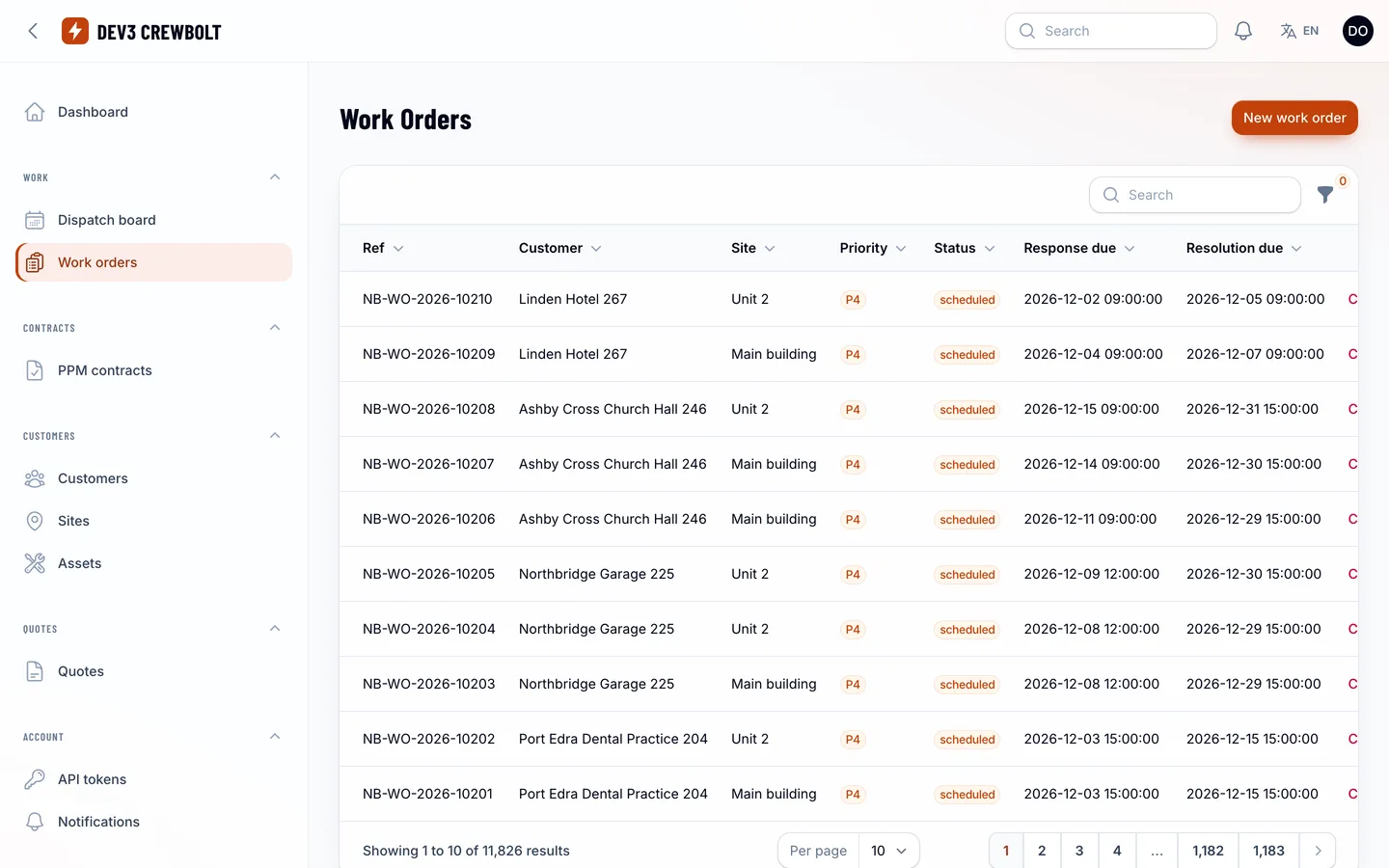
3. Are maintenance contracts generated once?
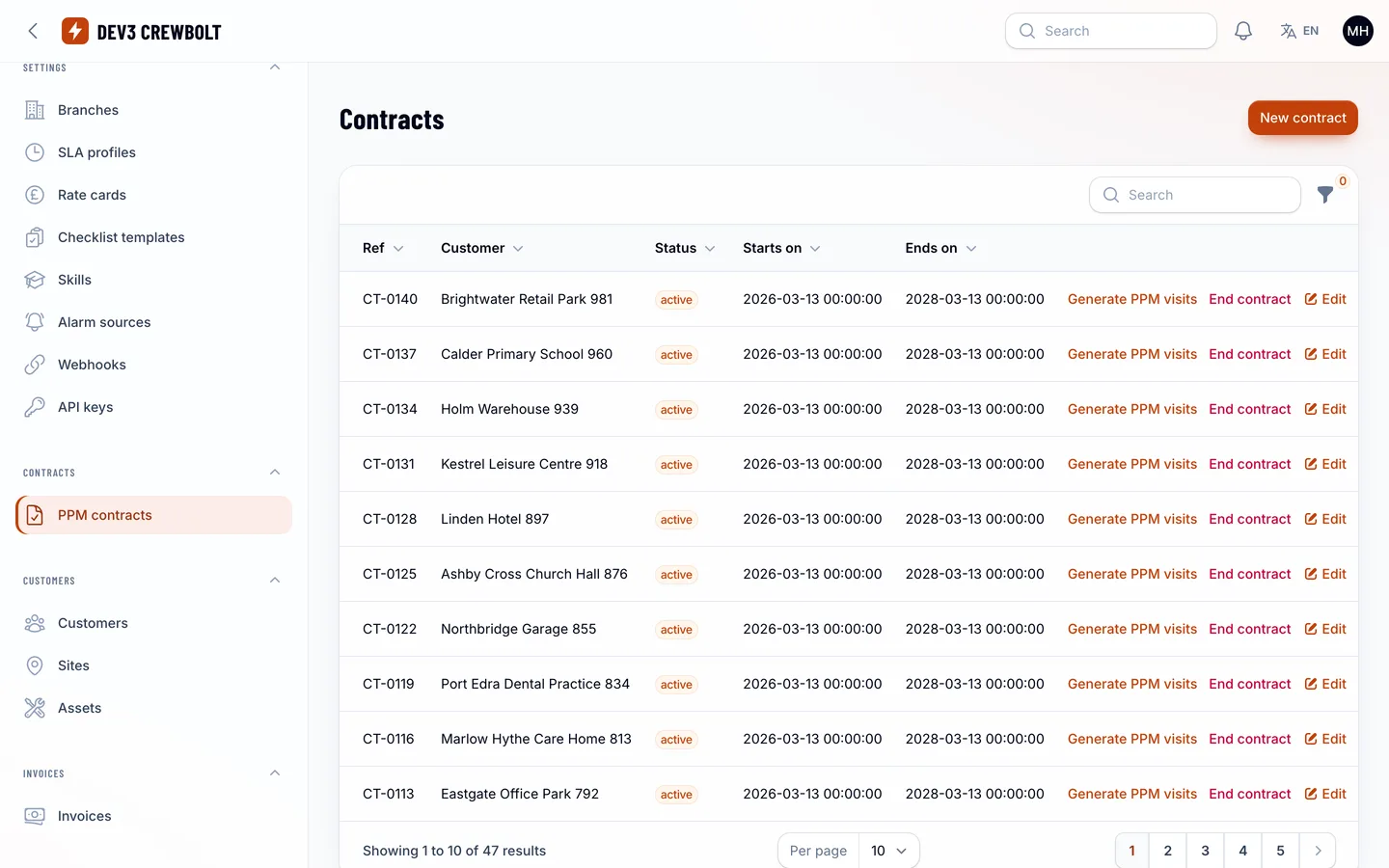
Recurring maintenance should create next month's visits ahead of time, grouped per site and day, and never twice, however often the scheduler runs.
4. Does the app work with no signal?
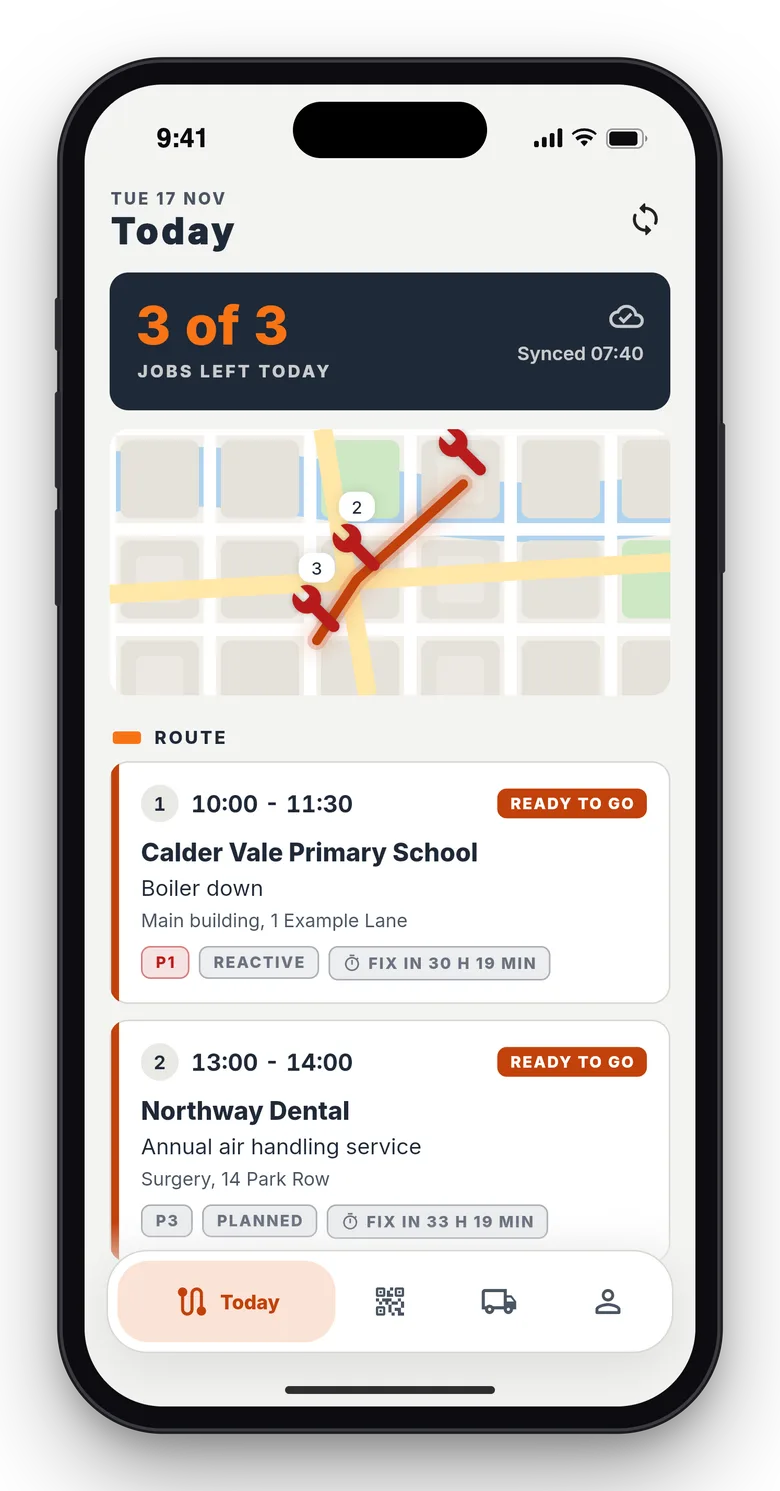
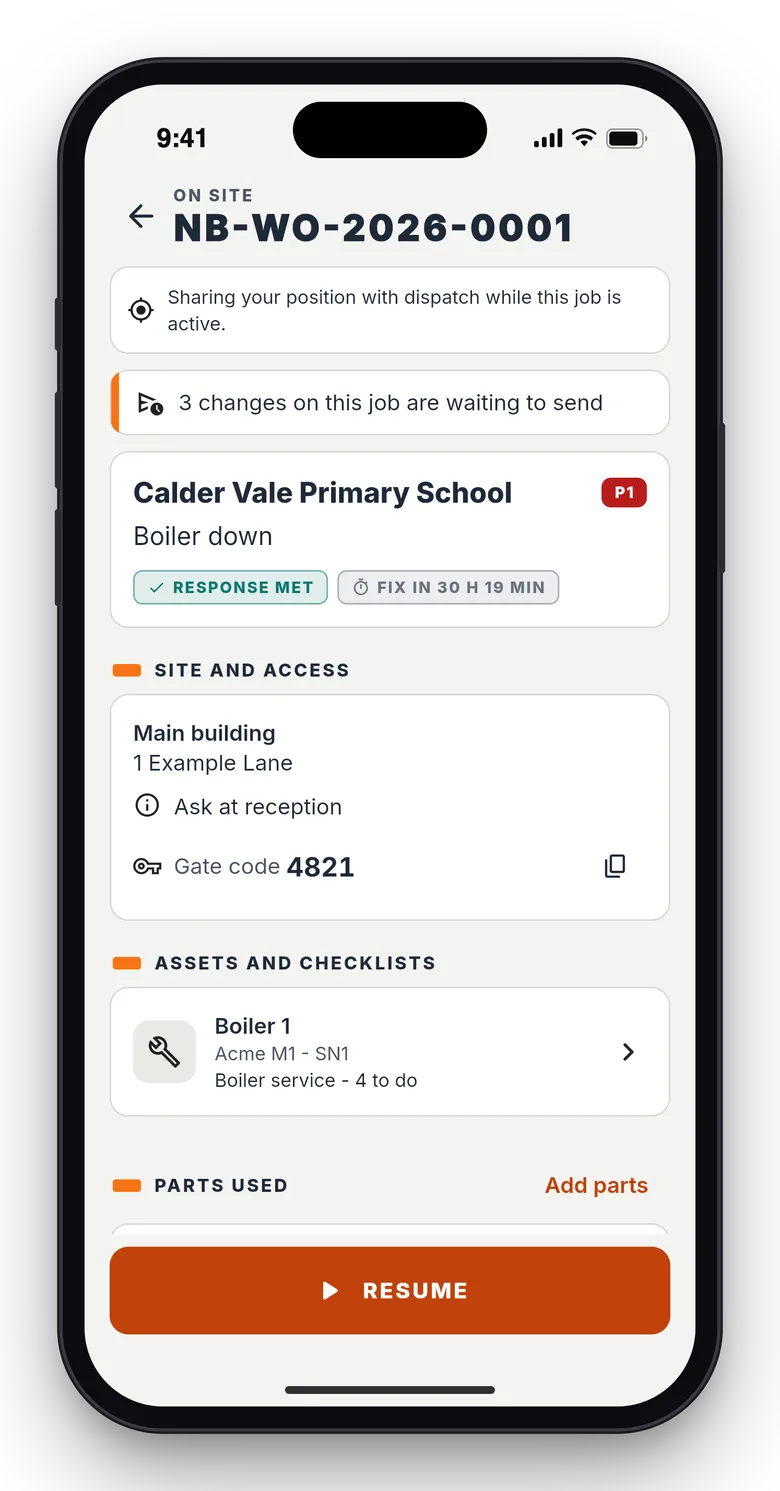
Ask whether the technician can finish a job offline and what happens when the office changed that job meanwhile. Crewbolt queues every change in order and shows a refused change on a Needs attention screen.
5. Does van stock stay honest?
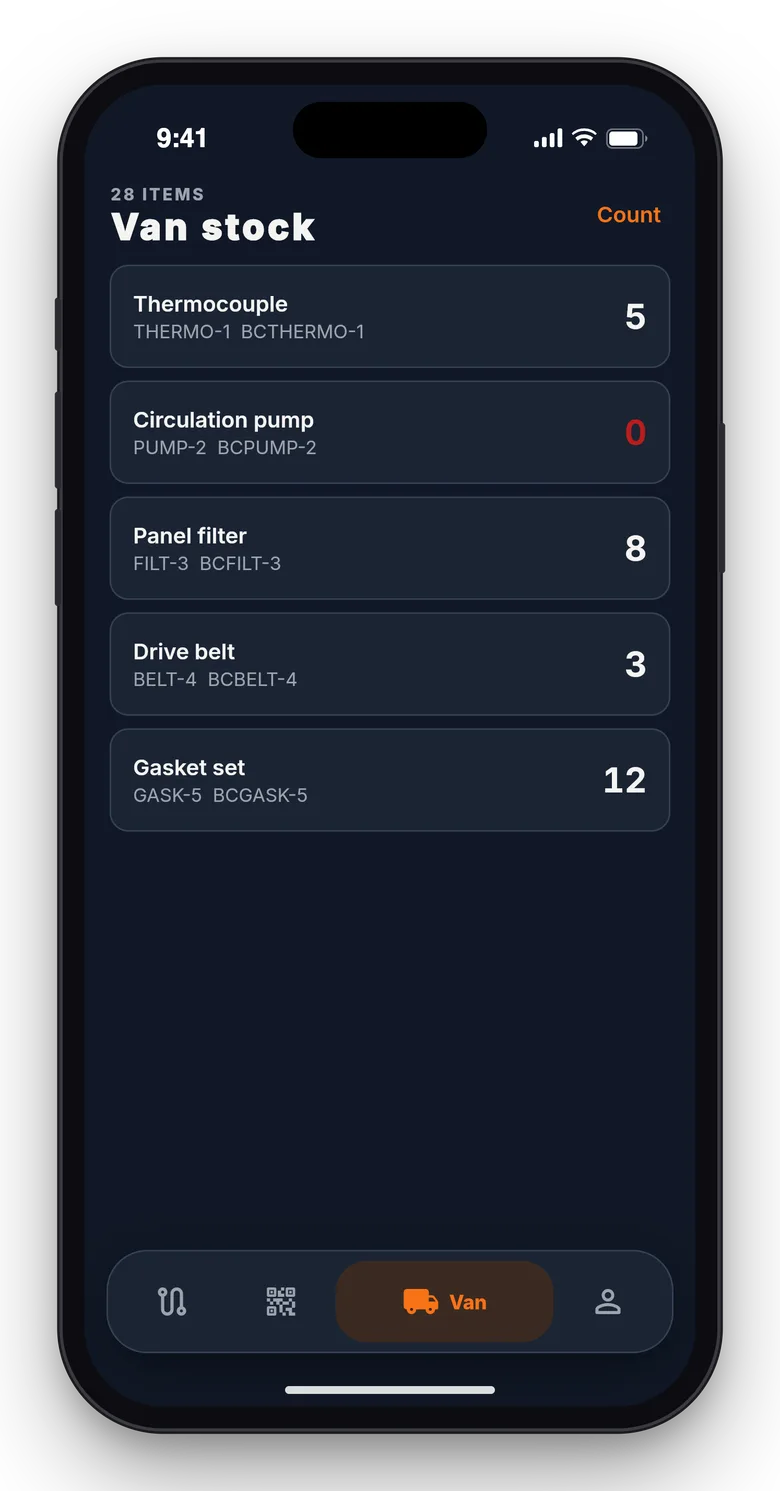
Parts should leave the van shelf as they are used, and a count that differs from the system should wait for a manager rather than quietly overwrite it.
6. Are the limits honest?
Crewbolt is an install you run for one company with one or more branches. Travel time is an estimate with no traffic data. Card payments, SMS, mail, push and maps are simulated until you connect real ones, accounting is an export rather than a ledger, and there is no AI scheduling or payroll. A technician's position is shared only during an active job, in the foreground, and you must tell your technicians and follow local employee-monitoring law. The Flutter app was verified in simulator builds, tests and against the live API, not on a real device, and publishing it to the stores is your step. Say that plainly to your buyers.