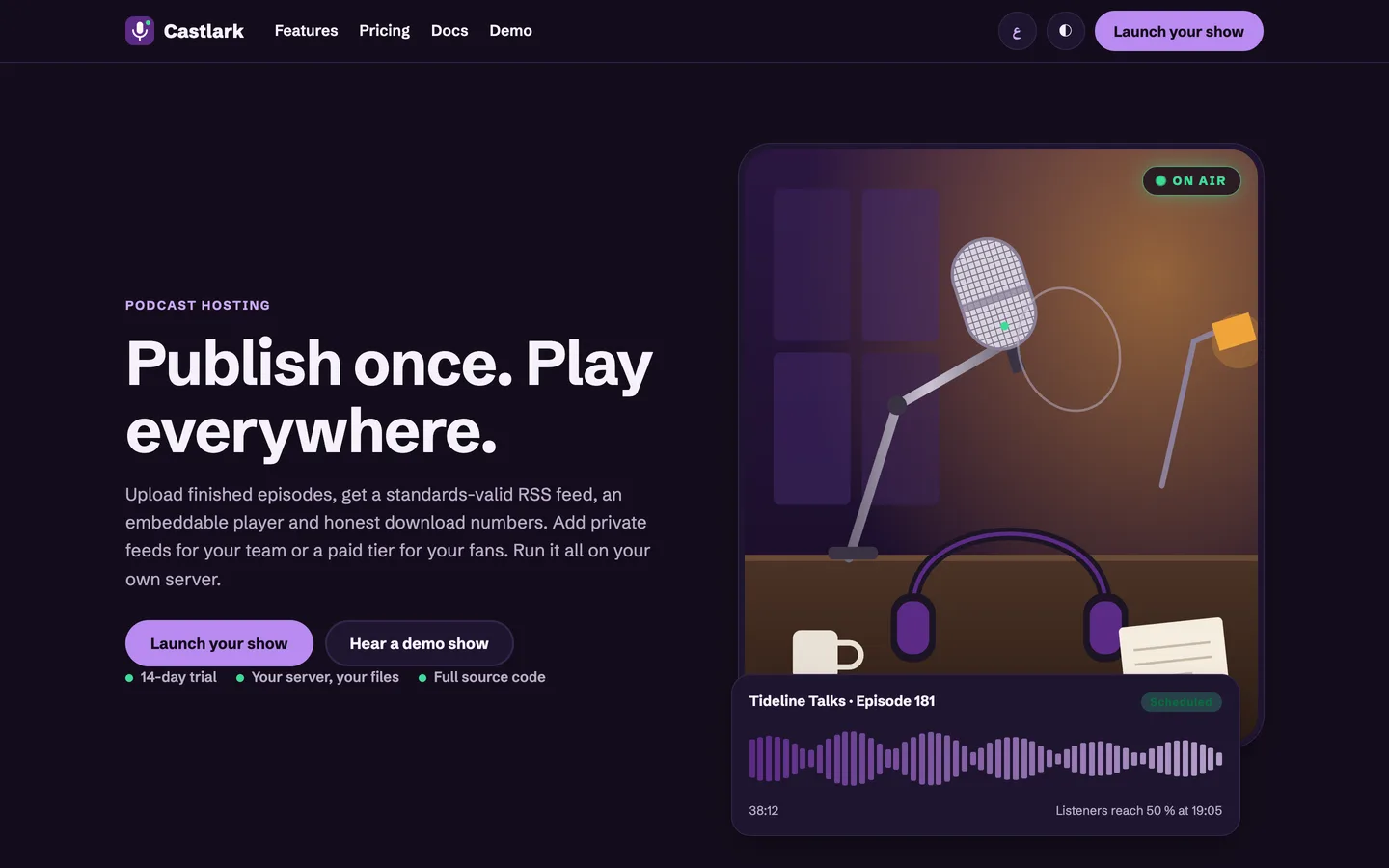
 Home in dark mode — The site follows the visitor colour scheme and keeps the plum and mint accents.
Podcast hosting software: 6 things to check before you choose one
Last updated
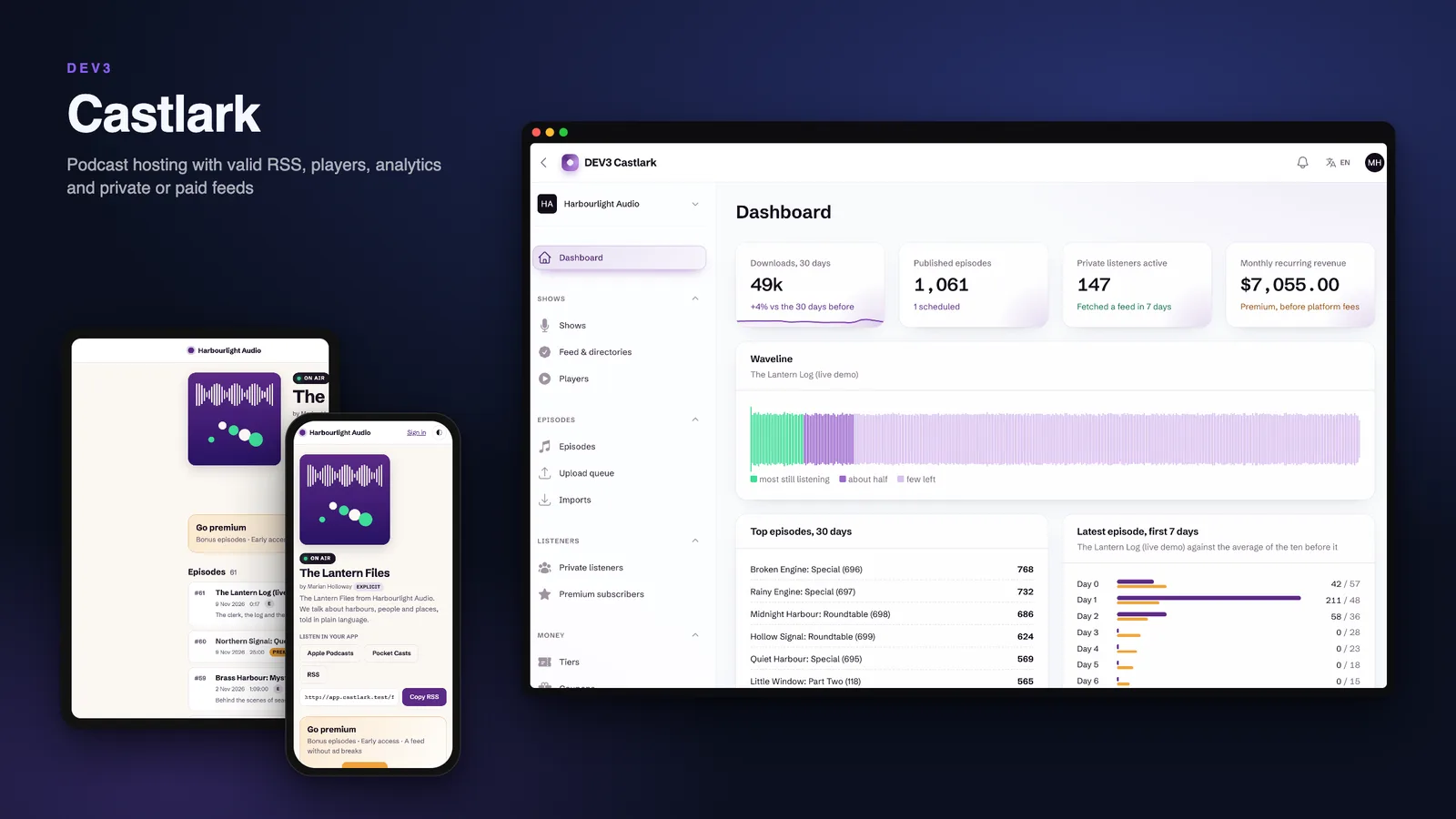
A podcast is a promise that a feed will keep working, so most of the choosing is about boring things done correctly. Here are six things to check before you pick podcast hosting, with DEV3 Castlark as the worked example.
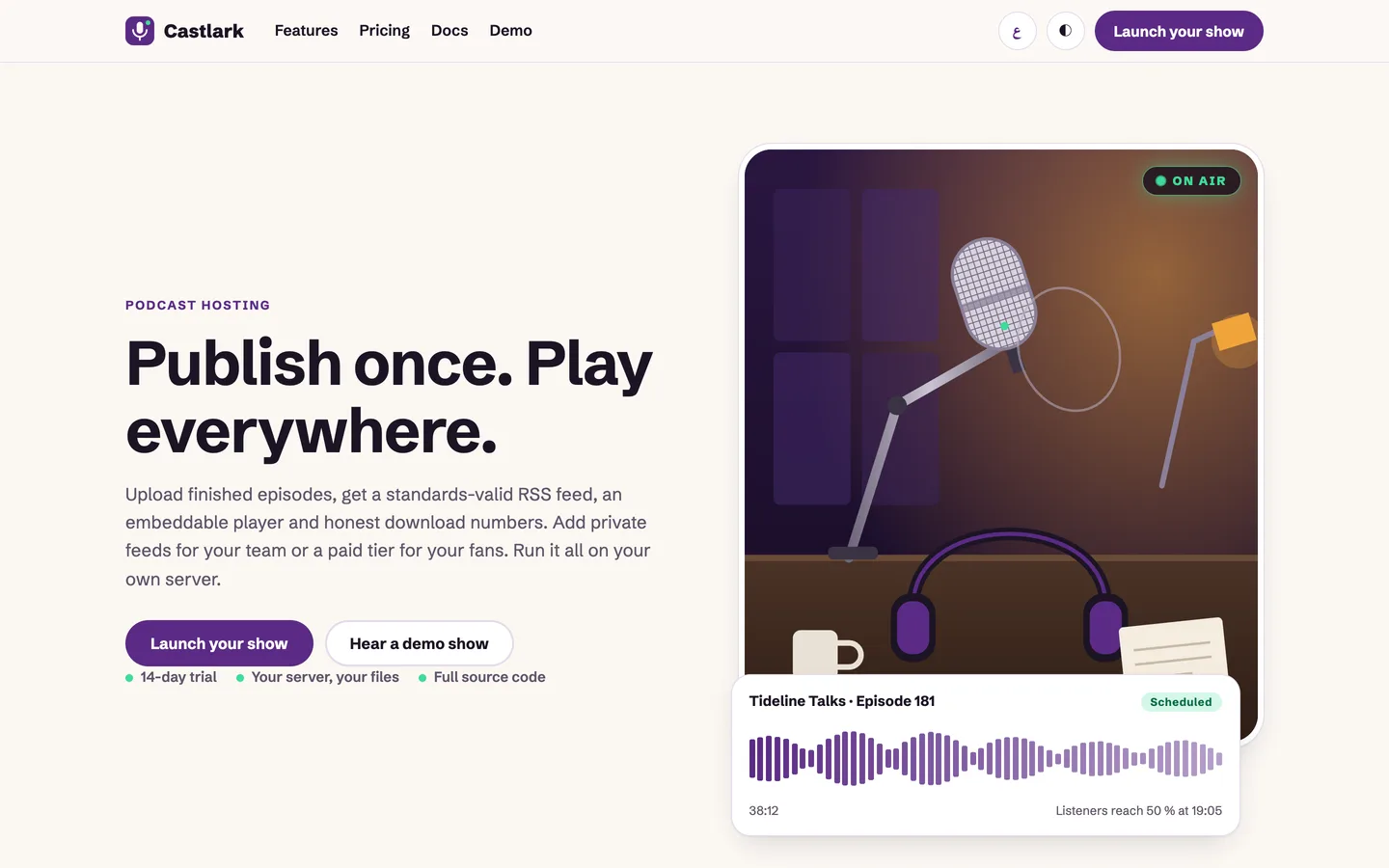
1. Is the RSS feed actually valid?
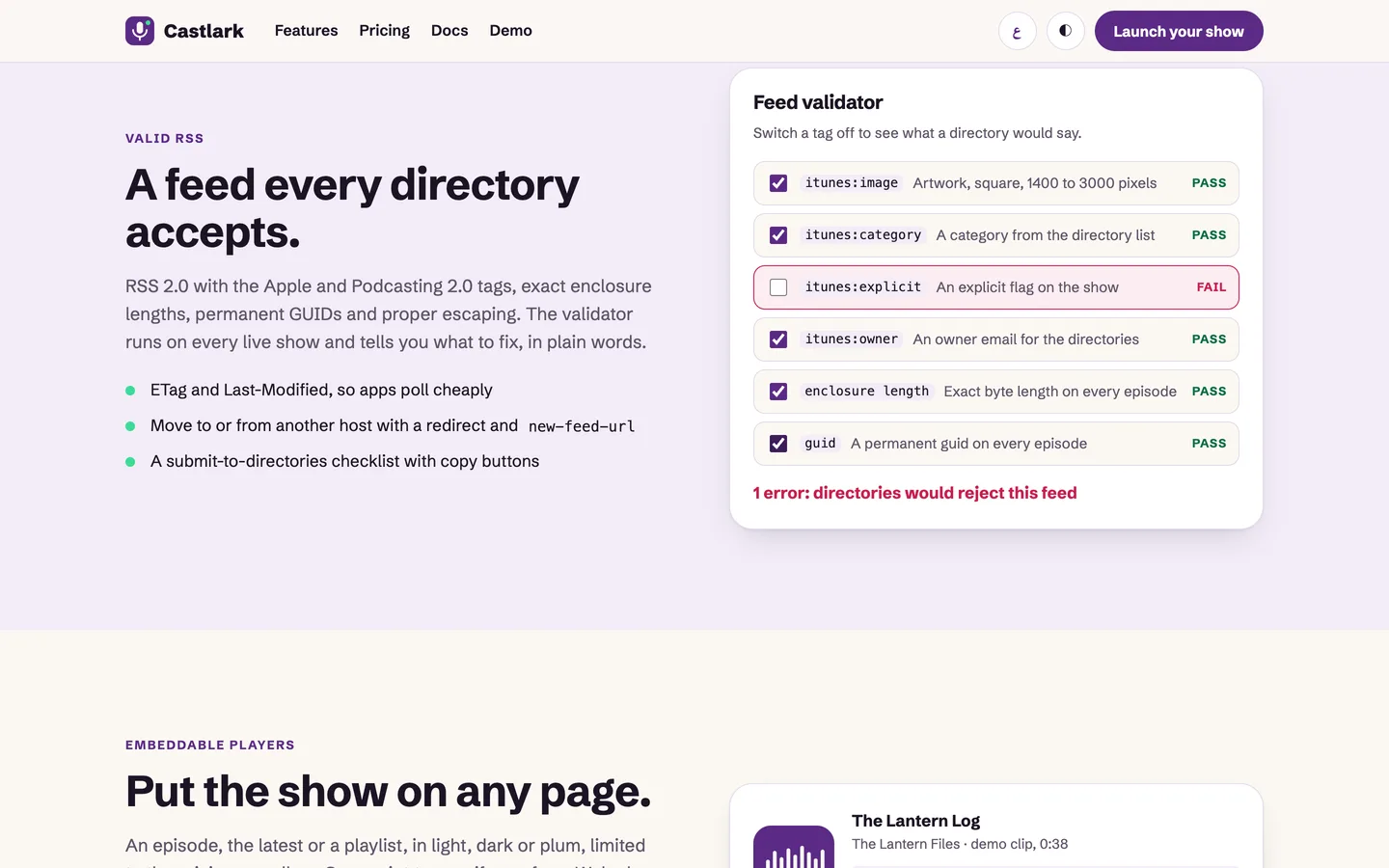
Directories reject feeds for small reasons: a wrong enclosure length, a missing category, an image of the wrong size. Castlark builds the feed from the same data it validates, lists every rule that fails and keeps episode GUIDs fixed once published, so a re-upload never creates a duplicate.
2. Do uploads survive a bad connection?
Long episodes are big files. Uploads should go in chunks and continue from where they stopped, check the file by hash and read the duration from the audio itself.
3. Can you embed a player anywhere?
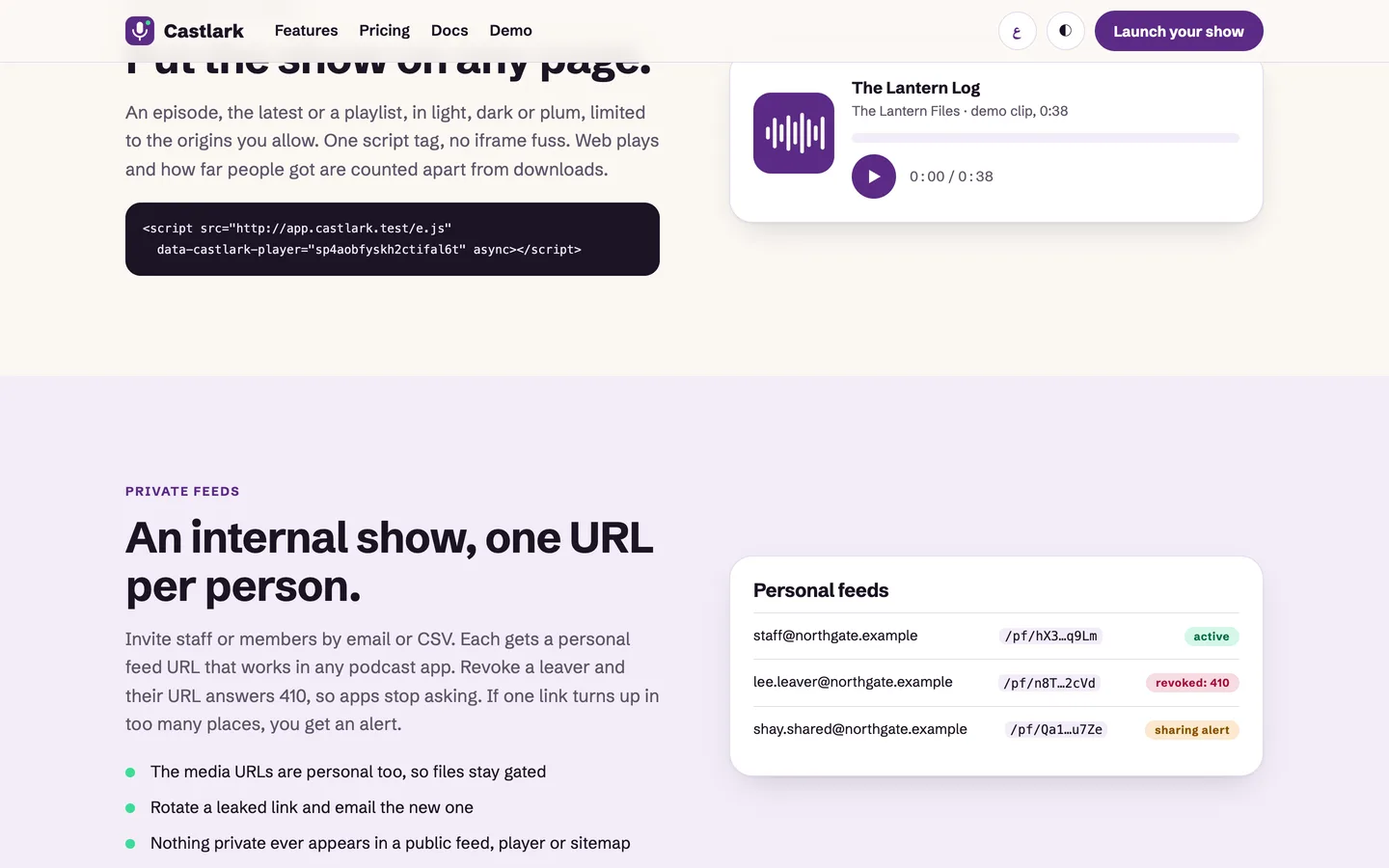
One script tag should place an episode, latest-episode or playlist player on any page you allow, in a theme that matches the site.
4. Are the download numbers defensible?
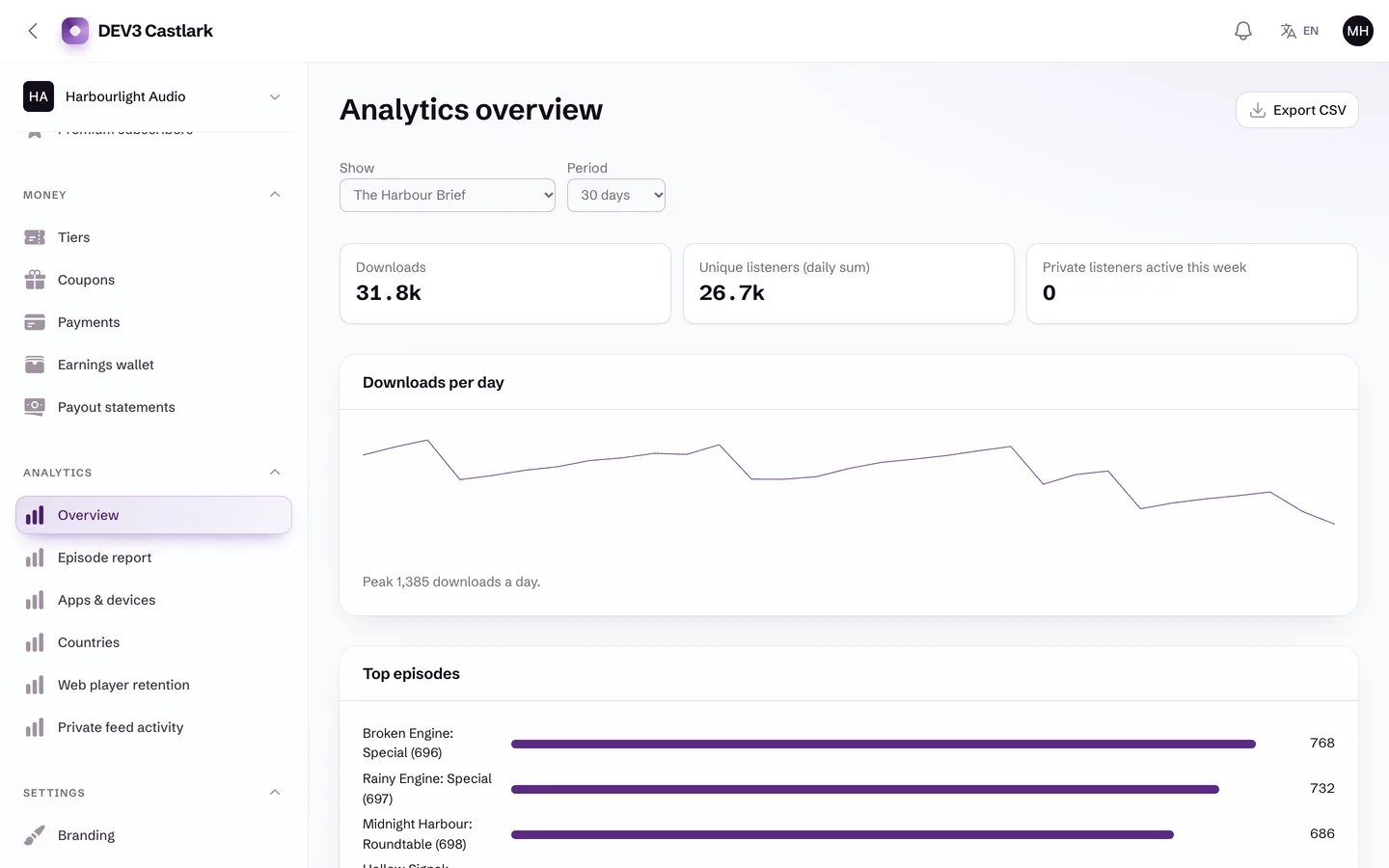
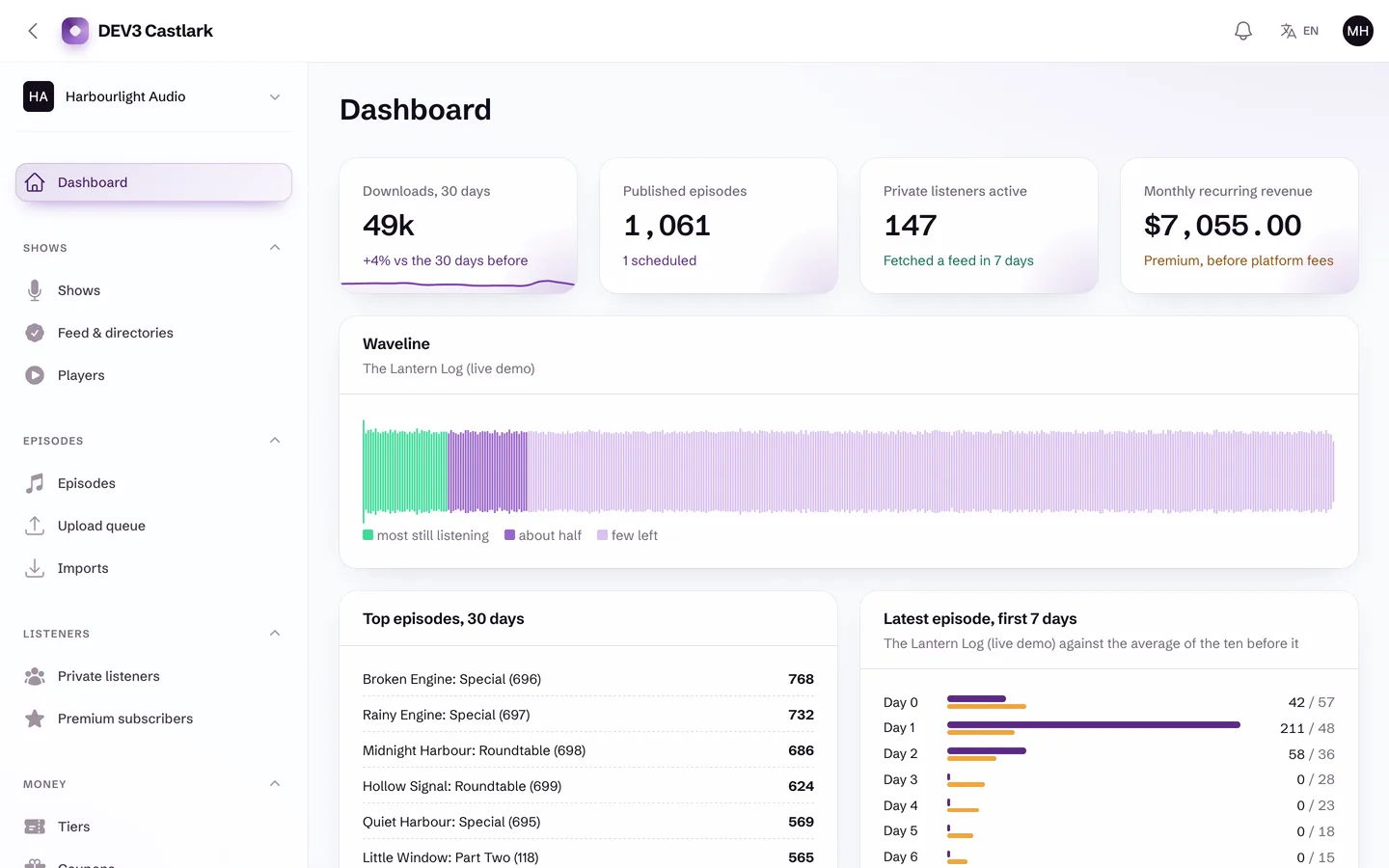
Count one download per listener per day, merge byte ranges, ignore bots and probes and require a minimum number of bytes. Castlark follows IAB-style filtering rules; it is not IAB certified, and you should say so to sponsors.
5. Can you run private and paid feeds?
A private feed is a personal link per listener that stops working the moment you revoke it. Paid feeds add tiers, trials and early-access episodes. Castlark checks access on every request, so premium audio never appears in a public feed.
6. Are the limits honest?
Castlark is audio only. Your storage or CDN carries the bandwidth, there is no transcoding, loudness processing, dynamic ad insertion or automatic transcription, and you submit your show to the directories yourself with the RSS URL.