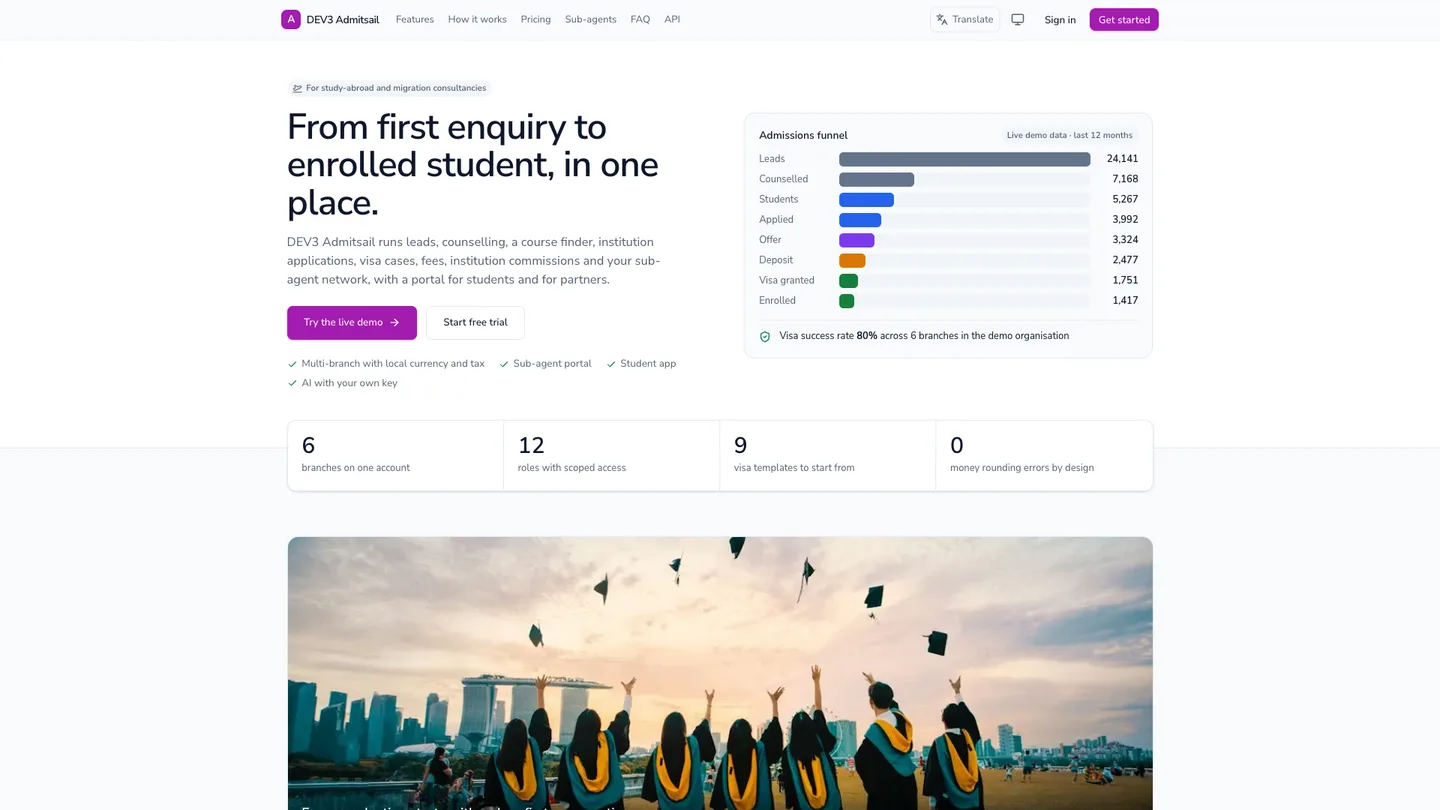
 Landing — Live numbers, features, partners and a lead capture widget.
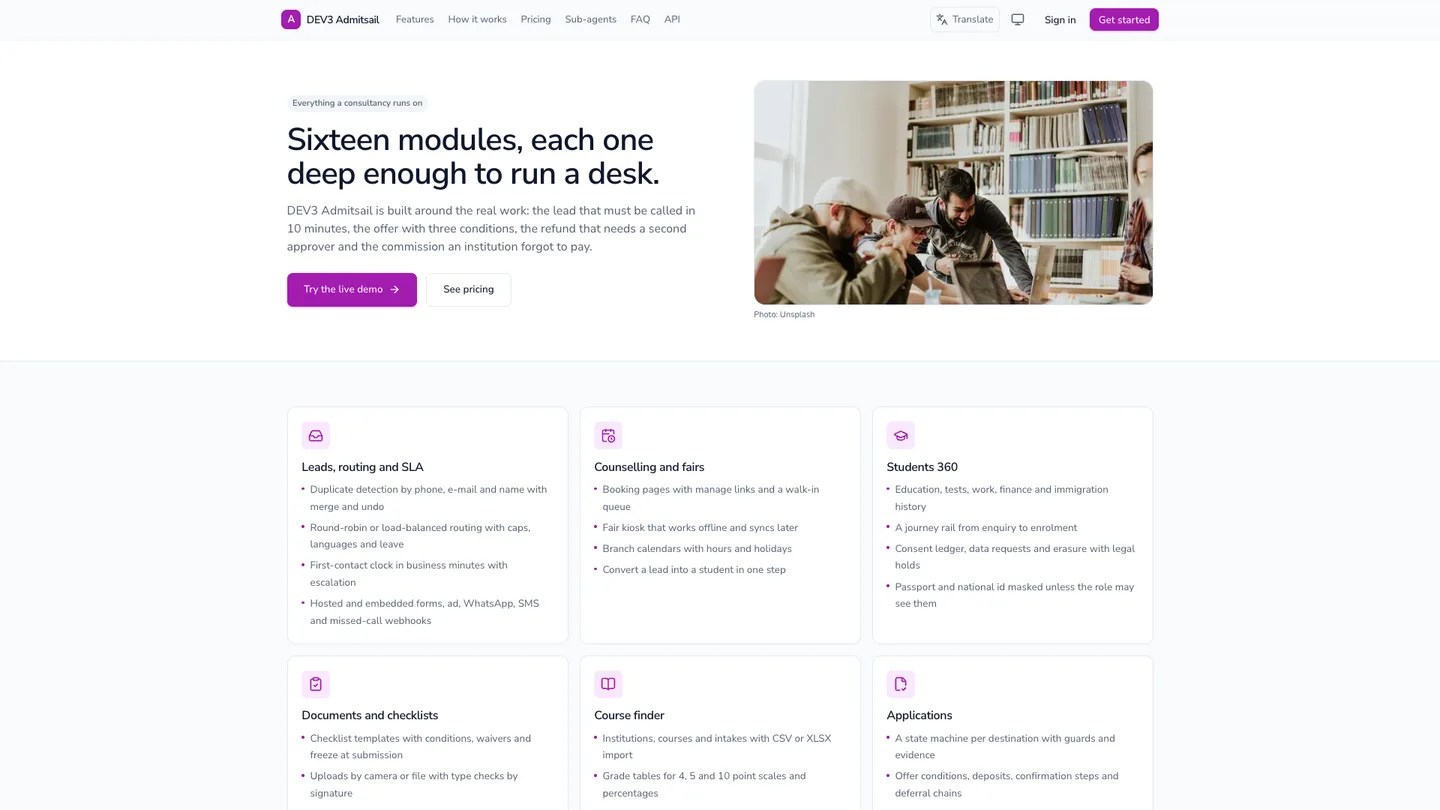 Features — Every module of the study abroad workflow, in depth.
Study abroad CRM: 6 things to check before you pick one
Last updated
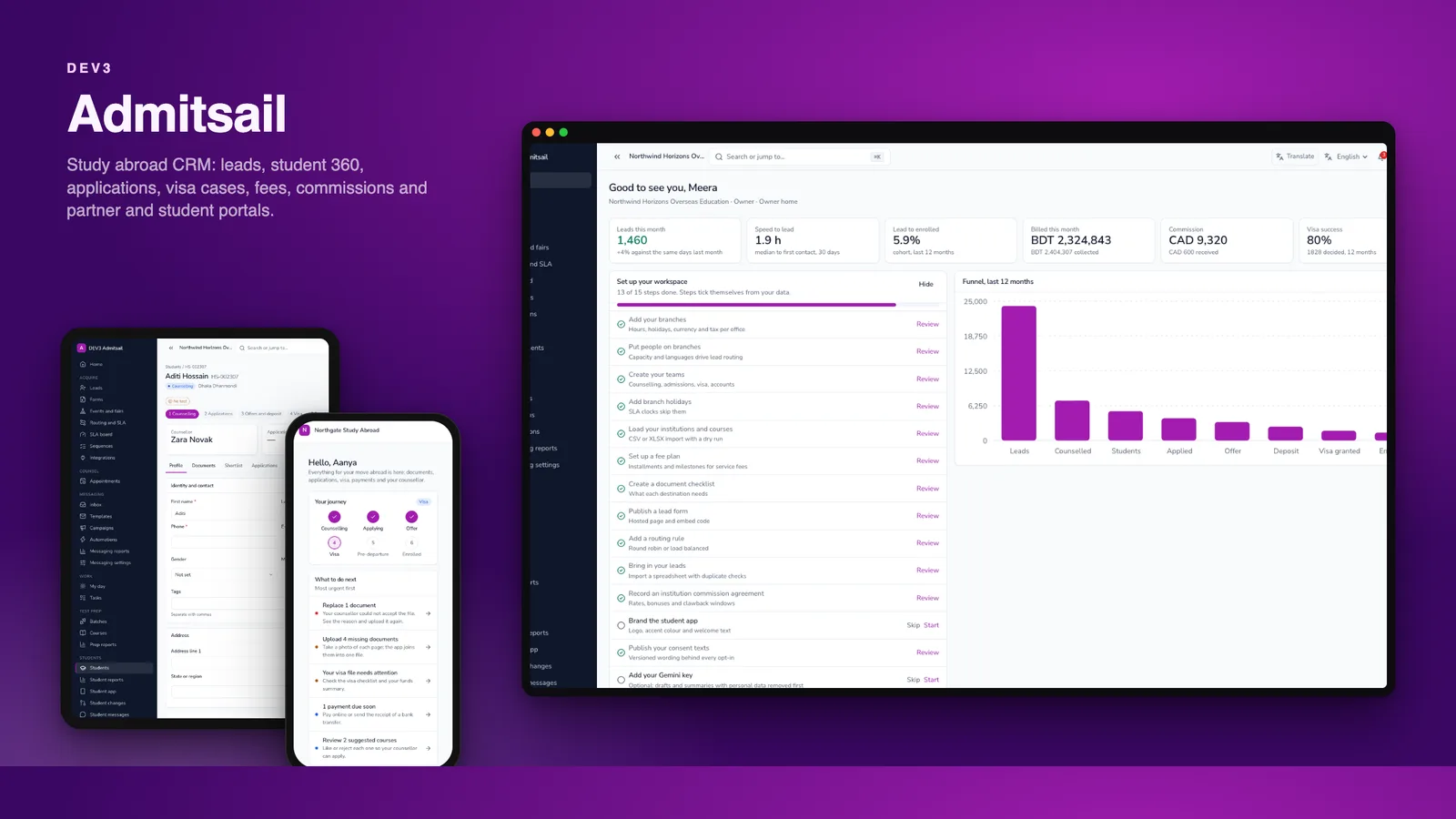
Consultancy software looks alike in a feature list until you ask the awkward questions: what stops two counsellors taking the same enquiry, what happens when a refund is approved twice, and who gets the commission when a student switches partner. Here are six things to check, with DEV3 Admitsail as the worked example.
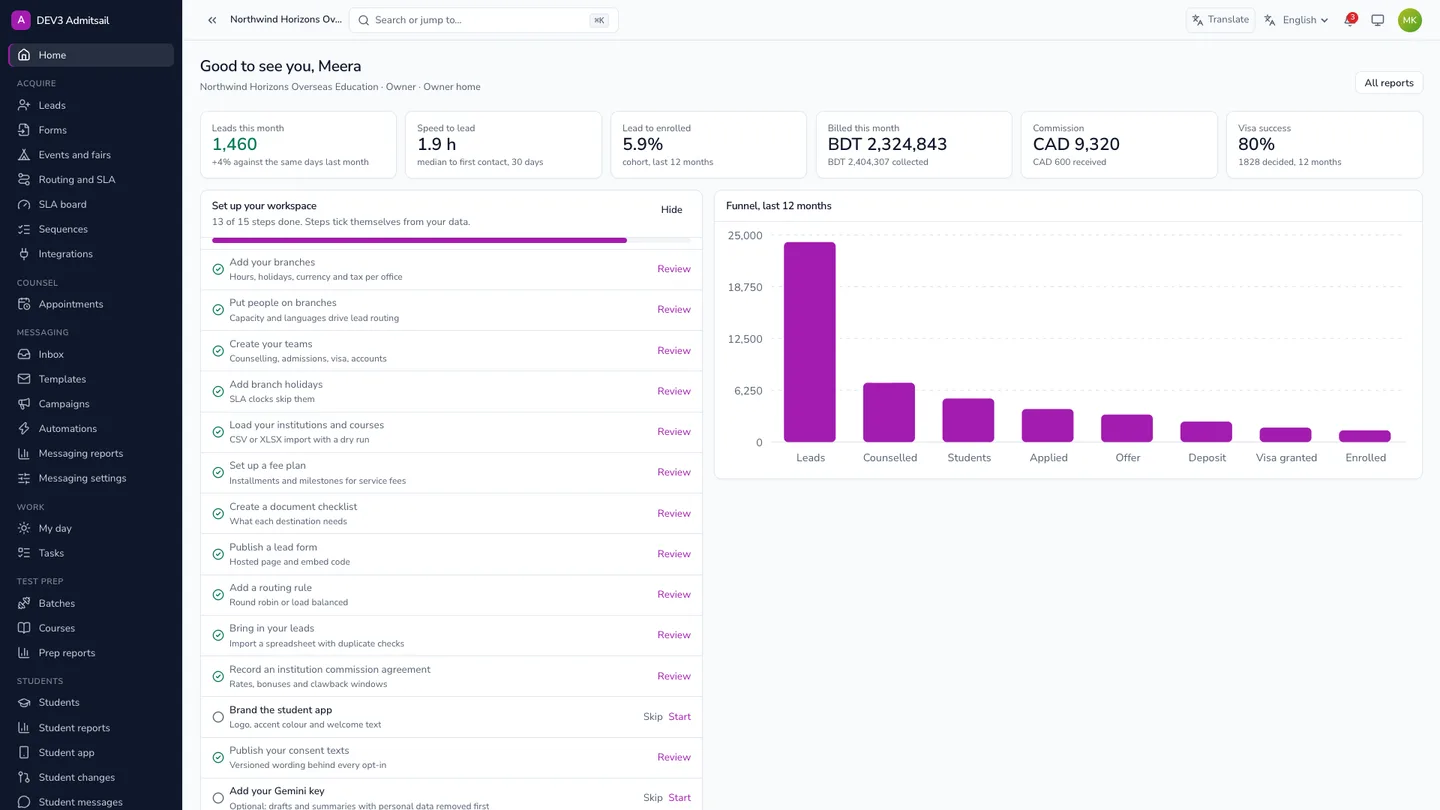
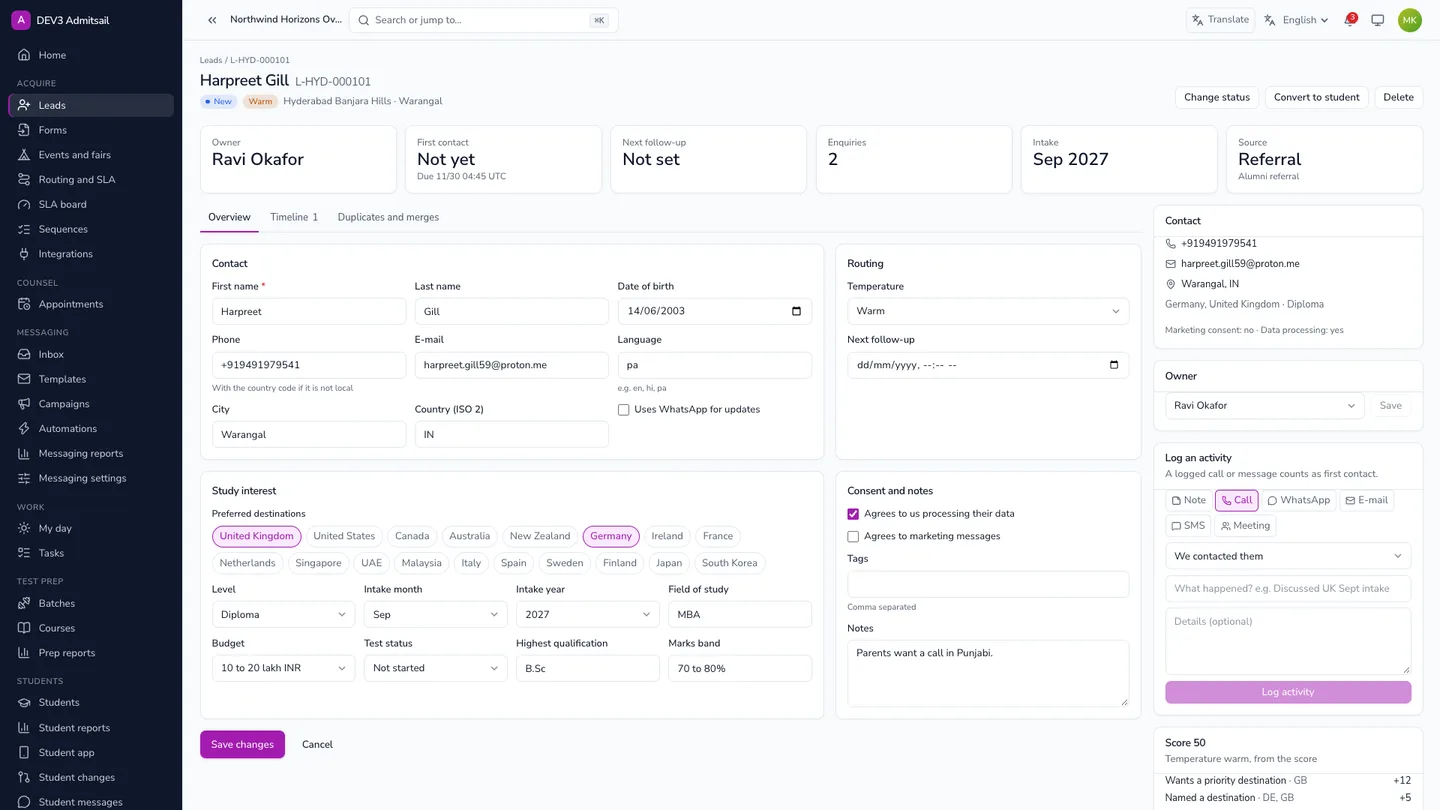
1. Does it stop duplicate leads?
Look for matching on a normalised phone and e-mail, not on the typed text. Admitsail keeps unique keys for live leads, links repeat enquiries, queues fuzzy matches for review and lets you merge with an undo window.
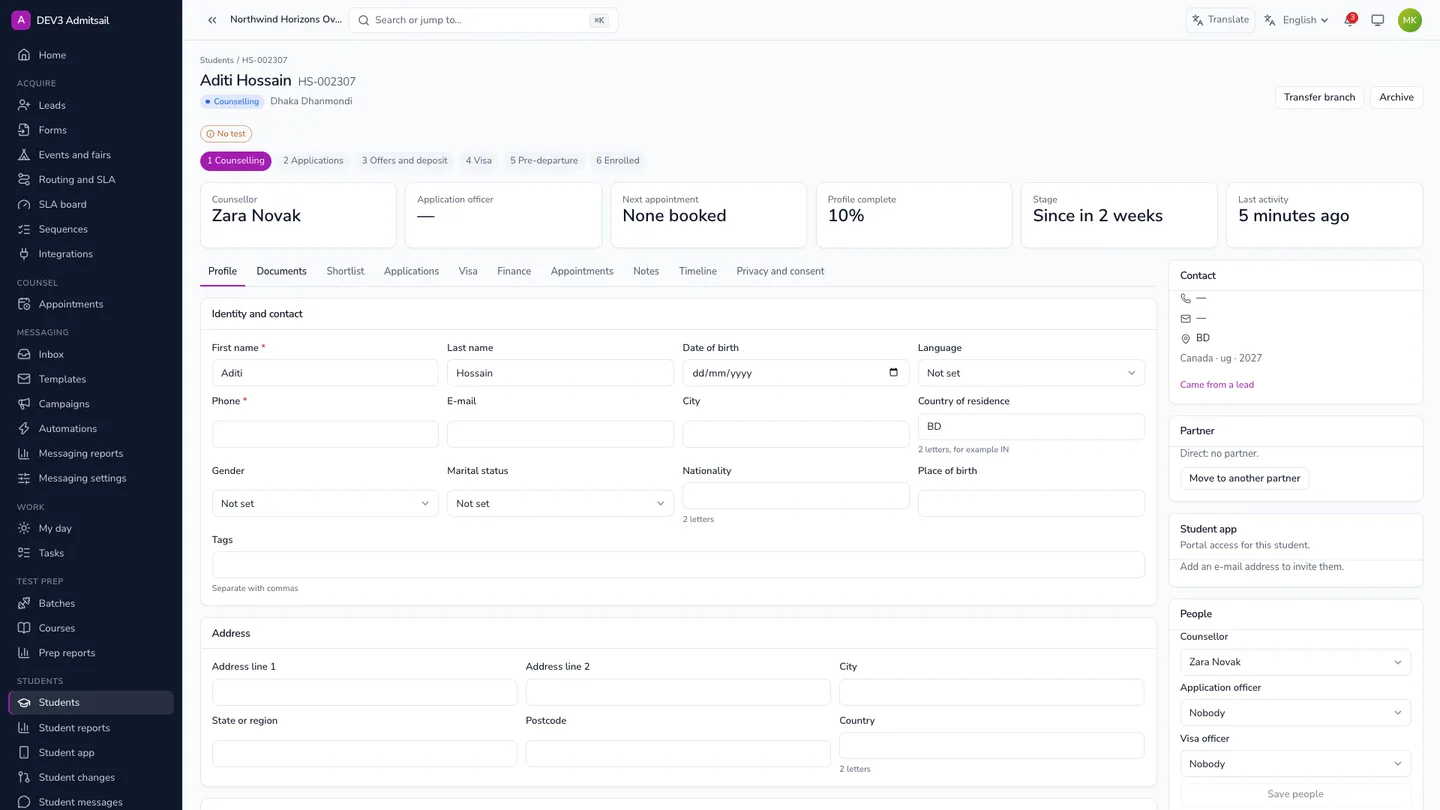
2. Is there one record per student?
Documents, applications, visa, invoices and consent should hang off one page. The student 360 shows the journey rail, profile, consent and finance together, so nobody asks a student for a passport twice.
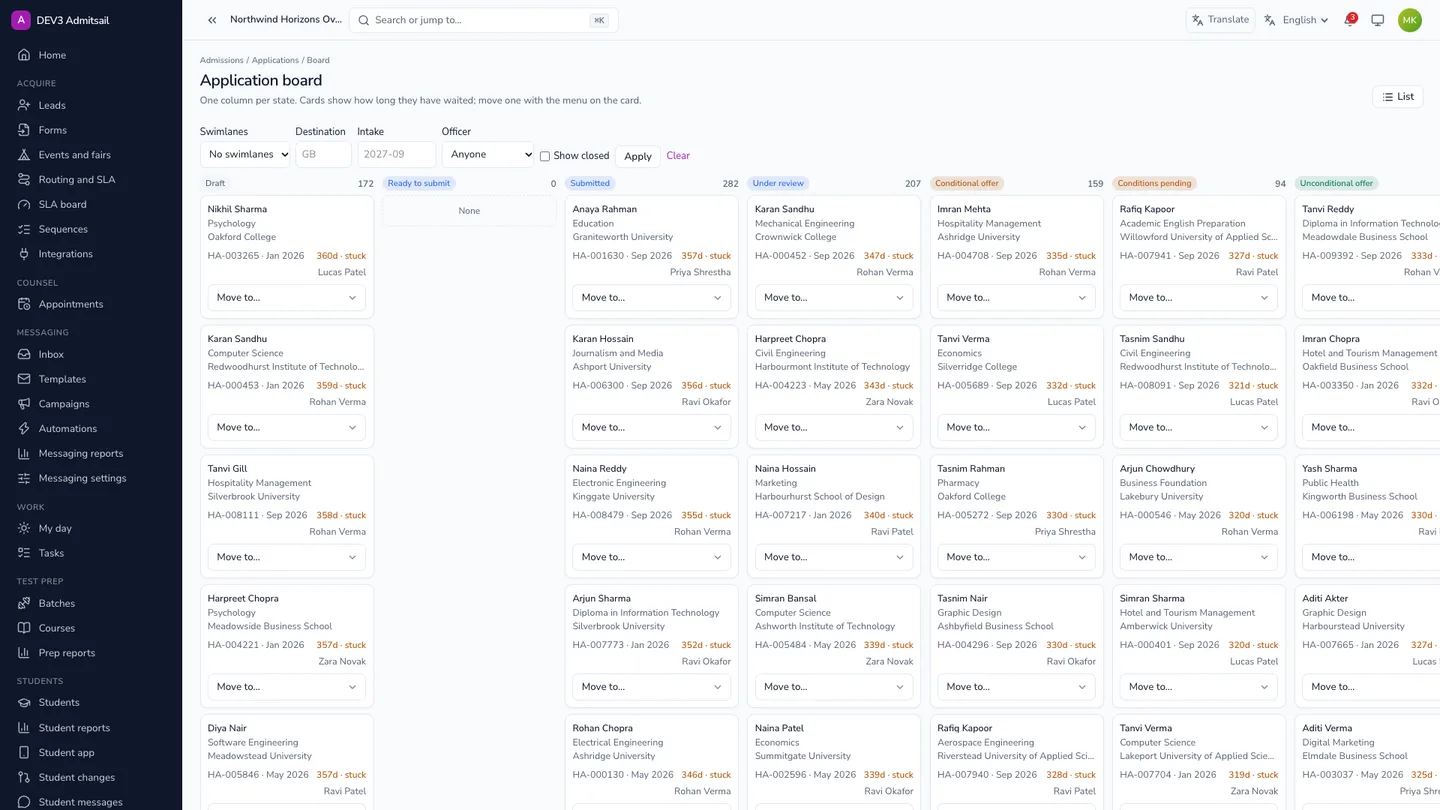
3. Do applications and visas have real stages?
Conditions, offers, deposits and refusal reasons belong in the data, not in notes. Admitsail has a board for applications and visa cases with funds checks and mock interviews.
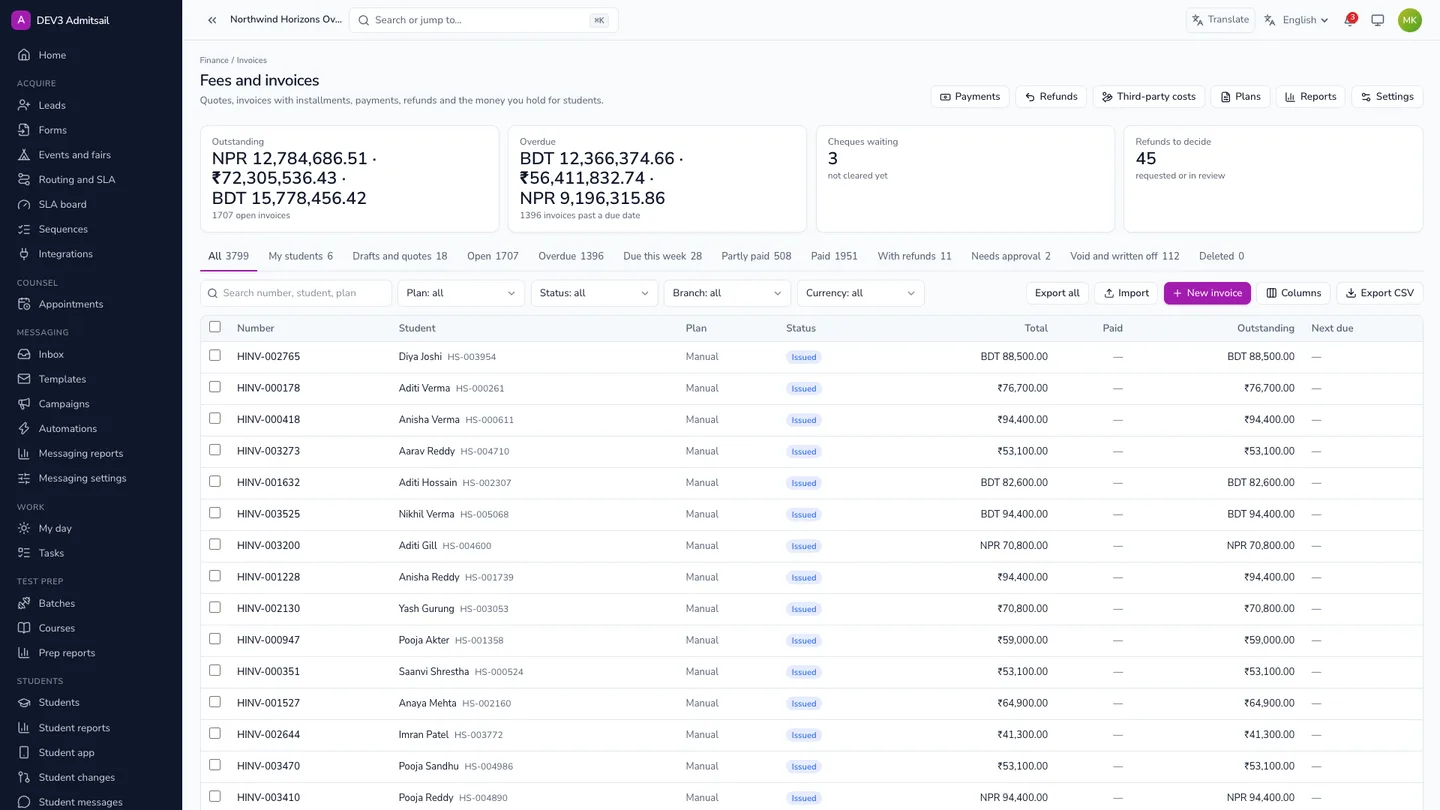
4. Are refunds and fees controlled?
Refunds should follow a policy and an approval chain, respect the amount paid and work in any currency. Admitsail enforces all three and logs each step.
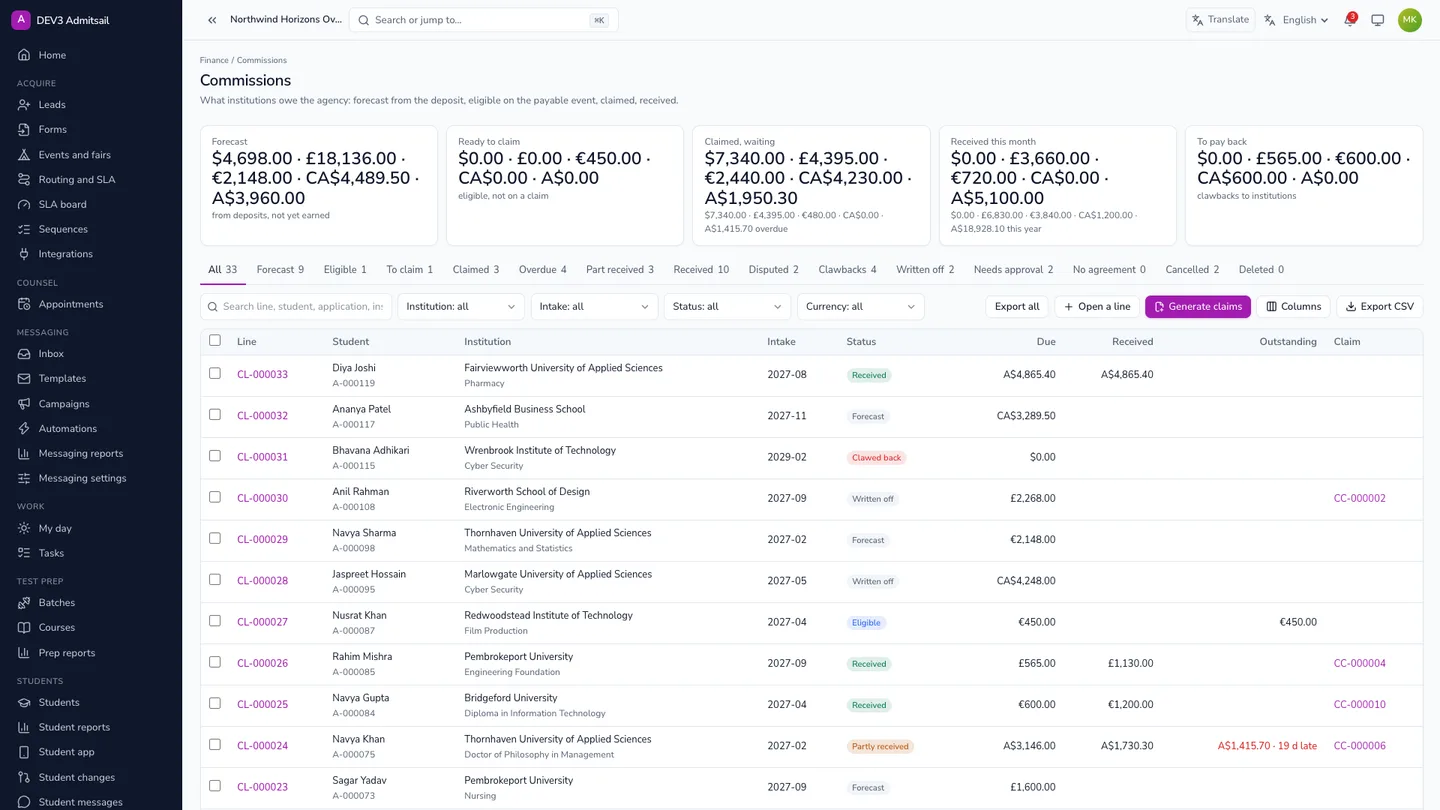
5. Can you chase university commissions and pay partners?
Forecast, claim, reconcile against the statement and claw back. Partners get a portal with their own students and statements.
6. What does the AI see?
Names, e-mails, passports and bank details should be replaced before any prompt leaves the server. Admitsail does this in one boundary and audits every call.
What it will not do
Payments and payouts are simulated, there are no live university or visa connectors, and the AI needs your own key. See the live listing for the demo and the full list.