DEV3 Technologies home

DEV3 Wardkeep – Hospital Management System Laravel Script with Bed Board, IPD Billing and Flutter Patient App

Self-hosted inpatient hospital management on Laravel 12 and Filament 4: admissions, live bed board, nursing and medication chart, OT, pharmacy, lab and running IPD bills with packages and insurer shares. Seven staff areas, patient web area and a Flutter patient app.
by DEV3 TechnologiesVerified Author(0) 0 sales 5 viewsUpdated 11 Nov 2026

Launch Offer: up to 50% off

This item is 50% off: $24.50 instead of $49

Ends in
--
Days
--
Hrs
--
Min
--
Sec

Video tour. Pick a section below to browse 44 screenshots in 8 sections.

App & phone tours

Tap play to watch each app. Nothing downloads until you do.

  • Mobile web0:07

Wardkeep is hospital management software for one hospital or a group of facilities, built inpatient-first. It follows a patient from admission to discharge: the bed, the nursing chart, medicines, theatre, lab, the running bill and the discharge summary. It is built by DEV3 Technologies on Laravel 12 and Filament 4, and it ships with seven staff areas, a patient web area, a public hospital page with outpatient booking, a REST API with webhooks, and a Flutter patient app with full source and a publishing guide.

What it does

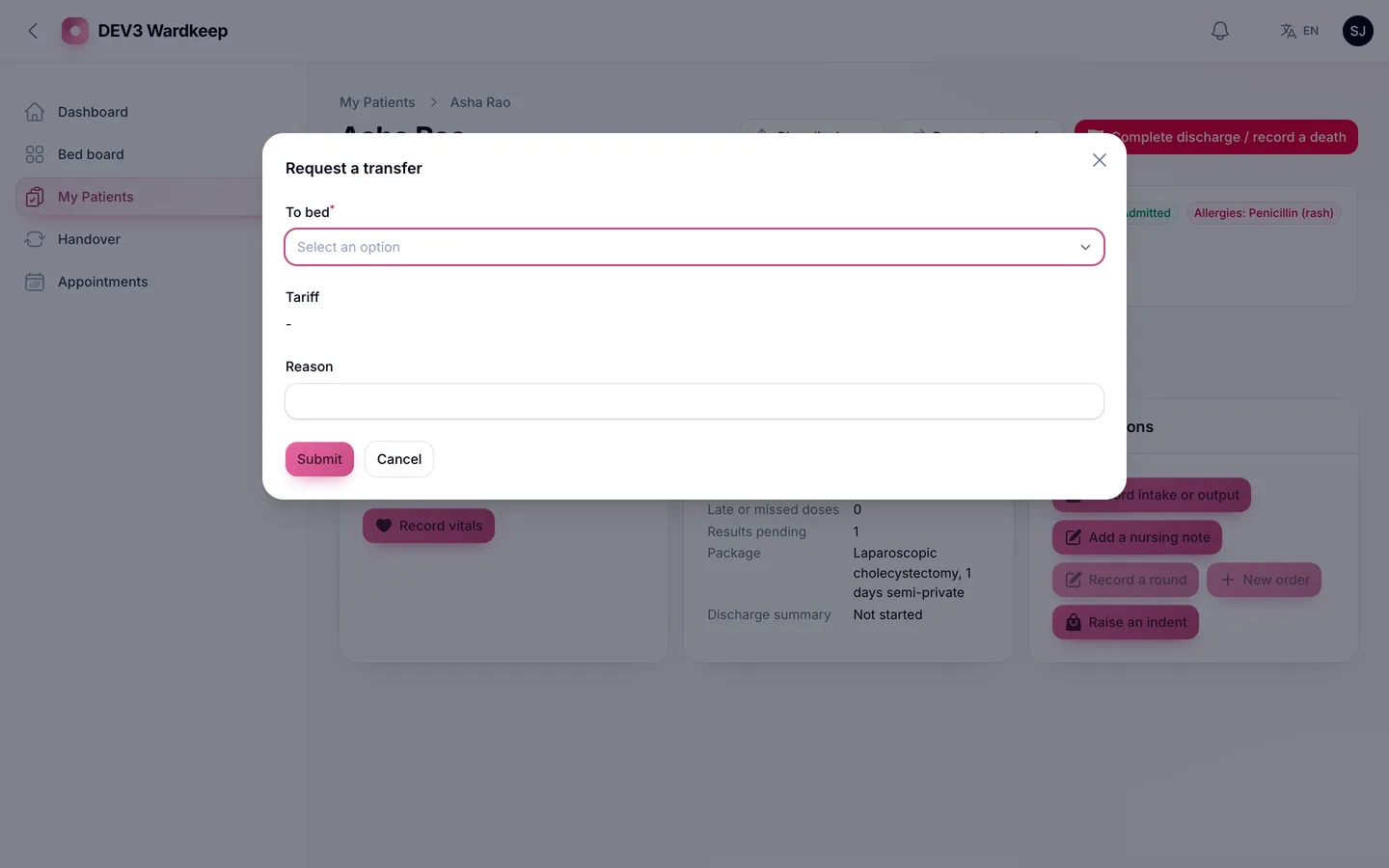
  • Admissions and beds. An admission wizard (record first, then consent with a drawn signature, bed and deposit), a live bed board with drag to admit or transfer, a tariff preview before a move, held and cleaning beds, isolation rules and a waiting list. Wristbands, sample labels and visitor passes print from the browser with Code 128 or QR codes.
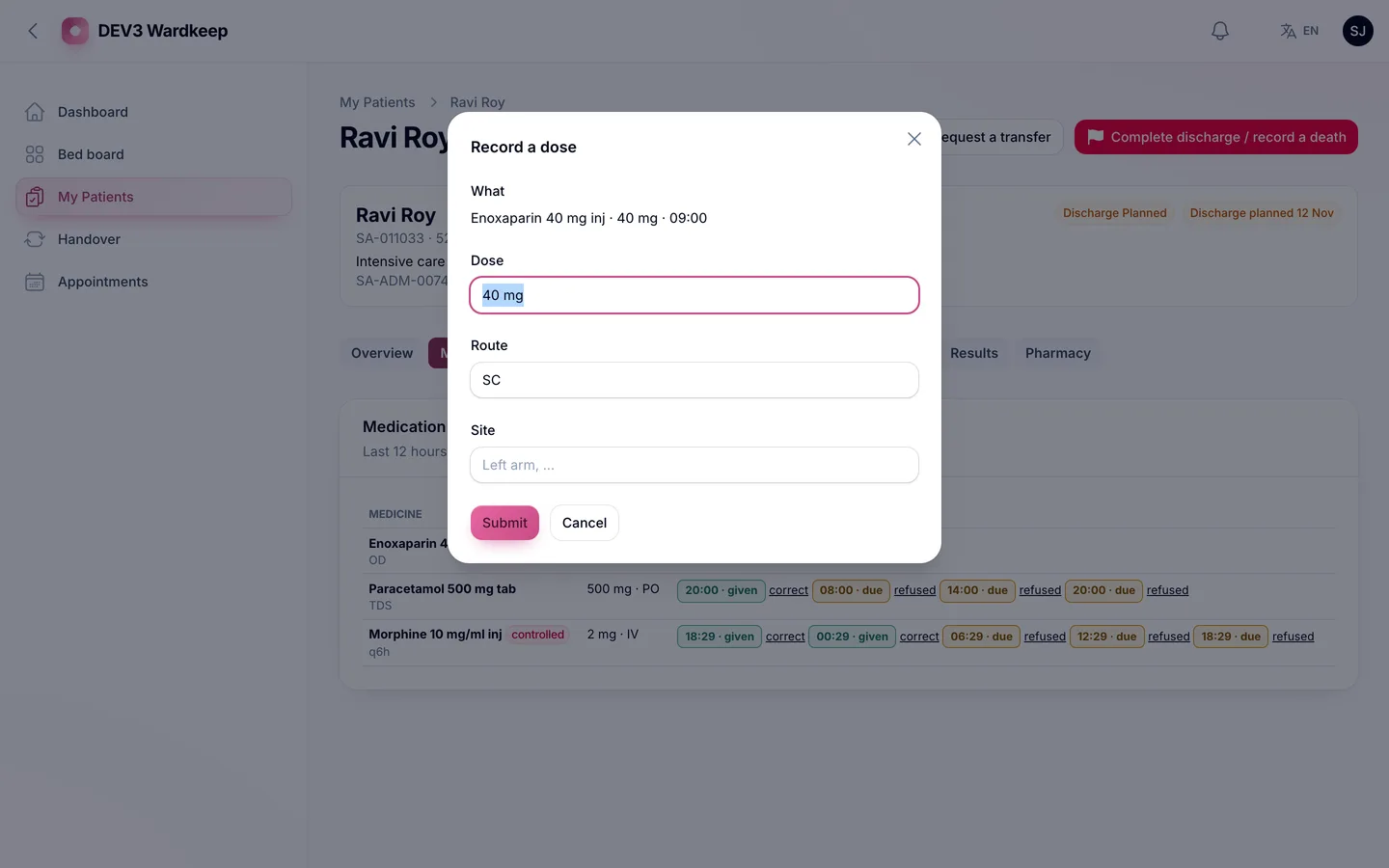
  • Nursing and medication chart. A patient chart with vitals in colour bands you set, intake and output, notes, orders, rounds and a medication grid where every dose is due, late, given, refused or missed. Controlled drugs need a second person with their own PIN, and every correction is a new row rather than an edit.
  • Theatre, pharmacy and lab. A theatre calendar with a pre-op checklist and consumables, ward pharmacy indents issued by soonest expiry with returns, a controlled-drug register, and a lab worklist where a second person verifies before a result reaches the patient.
  • Running IPD bill. Bed-days are posted on a schedule, charges are posted from services, pharmacy, lab and theatre, and every line shows the package, insurer and patient share side by side. Discounts above a limit need an approver PIN. Deposits, refunds, interim and final bills, and PDFs are included.
  • Insurance records. Pre-authorisations and claims are records and documents your insurance desk prepares: draft, mark as sent by hand, record the insurer's answer, prepare a claim pack PDF and record settlement. Nothing is submitted to an insurer or a scheme from the software.
  • Discharge. Planned discharge, a signed discharge summary with a PDF, and a recorded path for leaving against advice or a death, which pauses family access at once and lets the final bill follow.
  • Reports. Occupancy, average stay, bed turnover, medication-round compliance, theatre use, revenue, receivables ageing and deposits held, with CSV export, plus a Ward Glance grid of every bed.
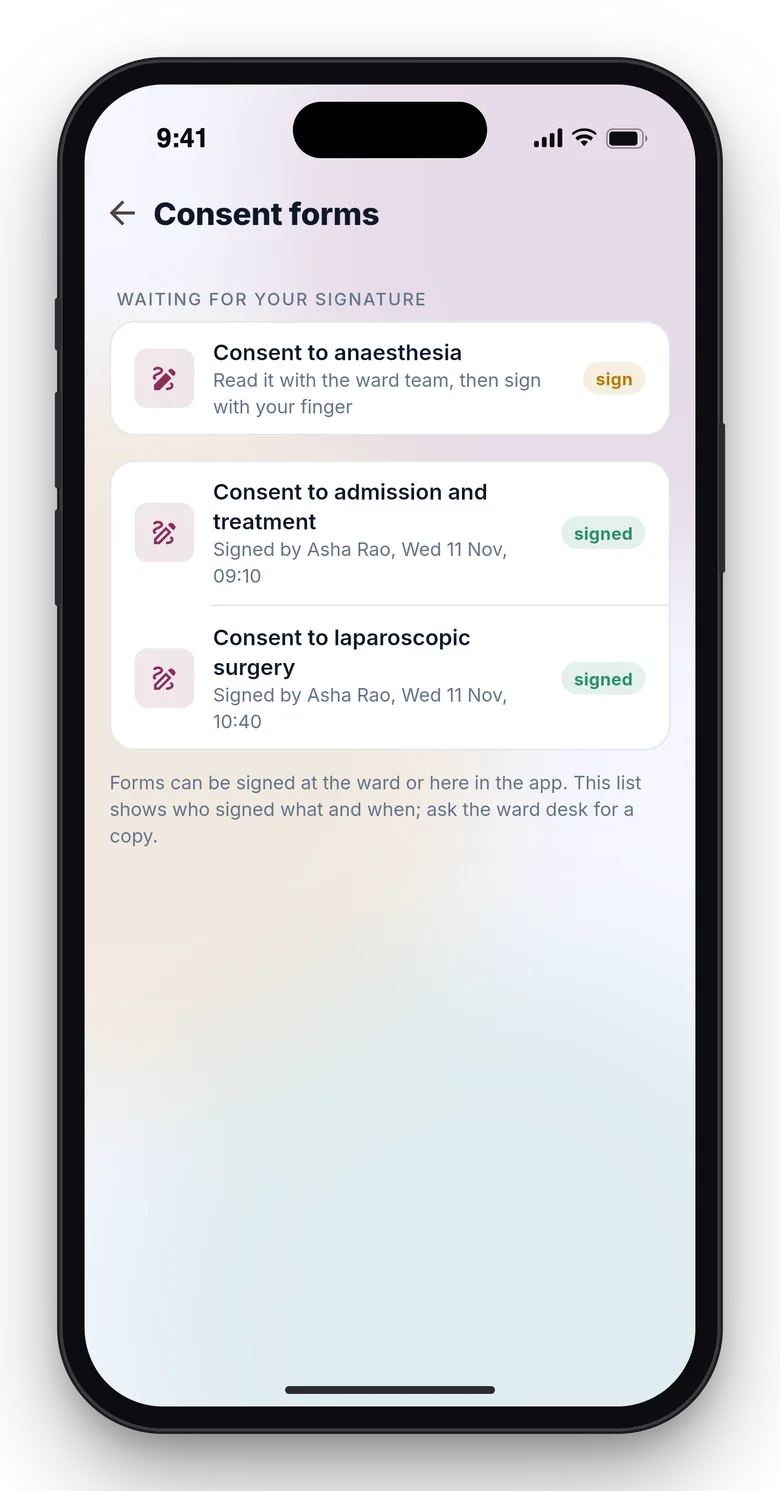
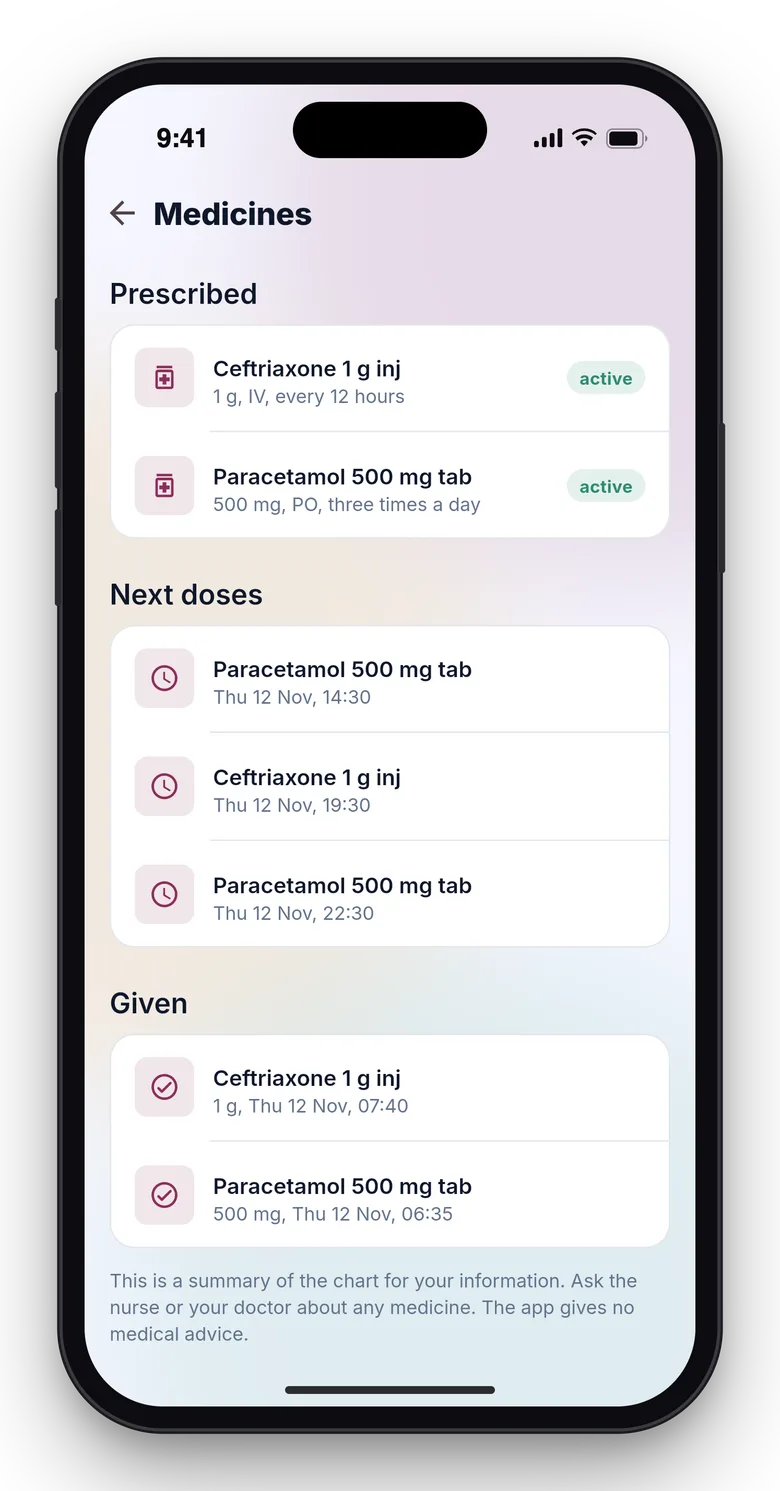
  • Patient and family. A patient web area and the Flutter app show the stay card, the bill with a deposit top-up, verified results, the signed discharge summary, consents, medicines given and due, insurance status, clinic visits, visitor passes and a log of who opened the record. Family members are invited with limited scopes.

The Flutter patient app

One app for patients and invited family, with full source: stay card and timeline, running bill with a deposit top-up through a test card sheet, results with range bars, discharge summary and PDFs, a read-only medicine summary, insurance status, messages with the ward team, signing a requested consent with a drawn signature, clinic visits, visitor passes with a QR, a record access log, and people and access settings. It starts in demo mode with sample data and no server, and switches to your Wardkeep install with an address and a flag. The Documentation folder has a Publishing the apps guide for renaming it, setting your icons and backend, and releasing it under your own Apple and Google developer accounts, including notes for health apps.

What you should know before buying

  • One hospital or one group. Several facilities under one organisation, not a multi-tenant service for many hospitals.
  • Inpatient first. Outpatient is registration, appointments, a consultation note and a referral only. Lab and radiology are order and result entry; there is no analyser, PACS or DICOM link, and no HL7 or FHIR in this version.
  • Records you prepare. Insurance pre-authorisations and claims are not sent electronically to insurers or schemes. There is no ICD or CPT content.
  • Not a medical device. No clinical decision support, no dose checking and no early-warning score. It makes no compliance or certification claim, and you are responsible for health-data law where you operate.
  • Simulated by default. Card payments, mail, SMS and push use working simulated drivers until you connect your own.
  • You publish the app. Building, signing and store review are your step; health apps face stricter review. The app was checked in simulator and APK builds, automated tests and a run against a live backend, not on real devices.
  • Use MySQL or MariaDB for a live site. One cron entry every minute is required.

Included

Source code of the Laravel app, the web installer, the Flutter patient app with a publishing guide, a buyer guide, demo data for a fictional hospital network (two facilities, 280 beds, 26 wards, six theatres, about 150 staff accounts, 18,000 patients and thousands of closed admissions with bills), and six months of support.

How it's built

Architecture, stack, key decisions and the quality gates DEV3 Wardkeep passed before release.

The engineering behind Wardkeep: beds that two admissions cannot take, an append-only medication chart with a second-person rule, bed-days and package maths that match a shared set of test vectors, and a record access log patients can read.

The problem it solves

An inpatient system is full of moments where two things happen at once: two admissions pick the last bed, a nurse and a pharmacist touch the same dose, a package ends mid-stay, a discount crosses a limit, a patient dies before the final bill. Each must end consistent, and each person must see only the part of a record their role allows.

Architecture and approach

Wardkeep is a Laravel 12 application with seven Filament 4 areas (admin, front desk, ward, theatre, pharmacy, lab, billing), a patient web area and a REST API used by the Flutter patient app. Money is integer minor units with half-up rounding. Bed-day posting, package absorption, the insurer and patient split, discounts and settlement are pure calculators checked against a shared file of hand-computed vectors that the Dart app also runs. Beds, doses and stock are taken under row locks, and medication entries are append-only: a correction is a new row. Controlled drugs need a second person with their own PIN, clinical records pass a role gate that logs every open, and a break-glass open needs a reason and shows up in the patient's own access log. Dates are stored in UTC and shown in the facility's time zone. wardkeep:check reconciles beds, bills, deposits, the medication chart, controlled drugs and stock straight from the tables.

Quality gates and results

The release passed seven gates, including a headless smoke test over every area and the patient area, plus race checks on MySQL. The reconciliation command passes on the demo data: two facilities, 280 beds, 18,000 patients and about 9,500 closed admissions with bills, and the Dart app passes all 69 shared bill vectors.

Tech stack

Area Technologies
Application Laravel 12, Filament 4, Blade, REST API
Mobile Flutter, Dart
Data MySQL 8, SQLite
Frontend Tailwind CSS 4, Vite
Quality Pest, Larastan level 6, Playwright

Inside the build

Every bed, every dose, every bill: The hero: a drawn ward, the bed board and the patient app on a phone. Every bed, every dose, every bill — The hero: a drawn ward, the bed board and the patient app on a phone.

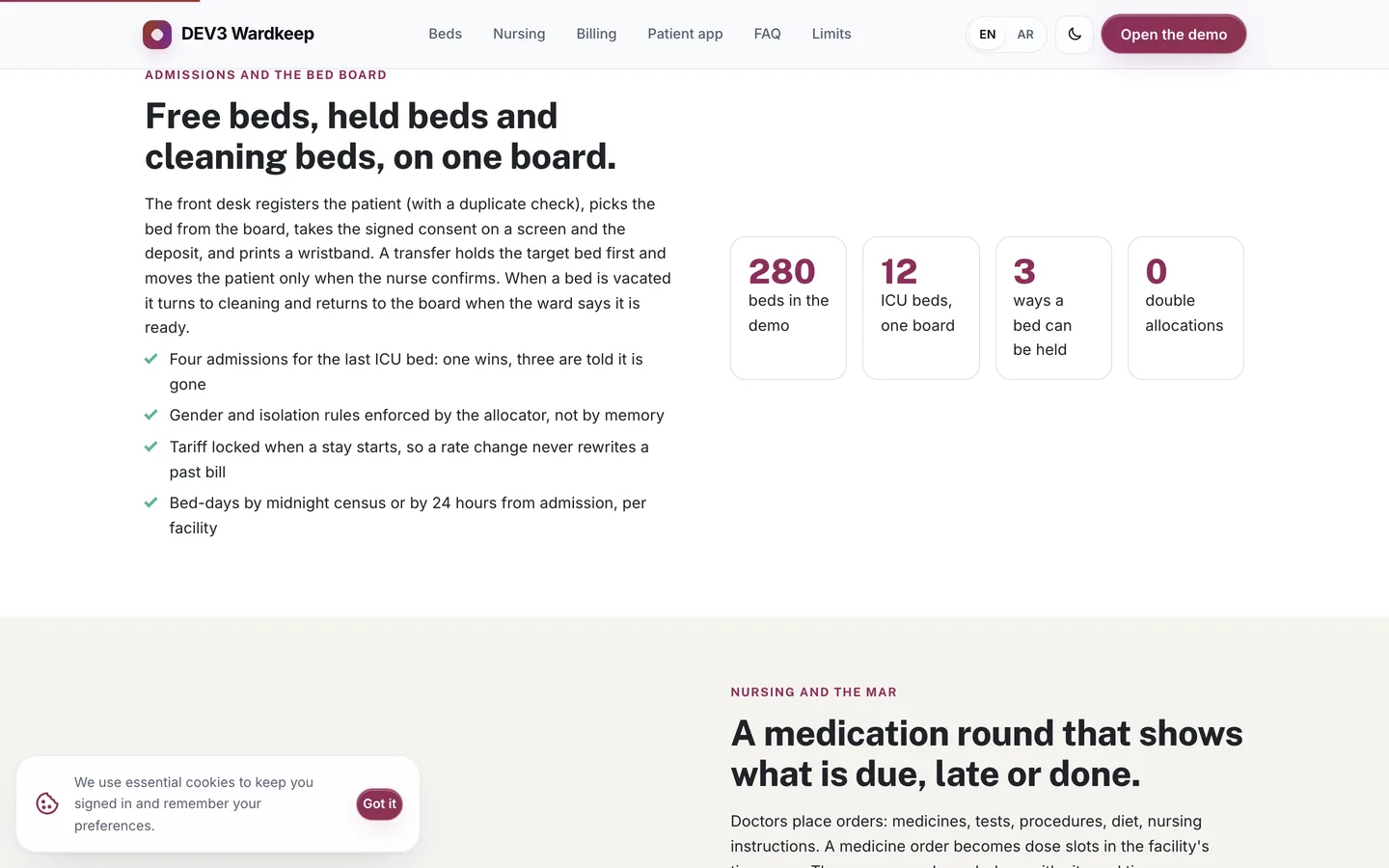
Free, held and cleaning beds: The bed board section with the demo numbers. Free, held and cleaning beds — The bed board section with the demo numbers.

Guides & articles

Practical guides and engineering write-ups for DEV3 Wardkeep.

Hospital management software: 6 things to check before you choose one

Last updated
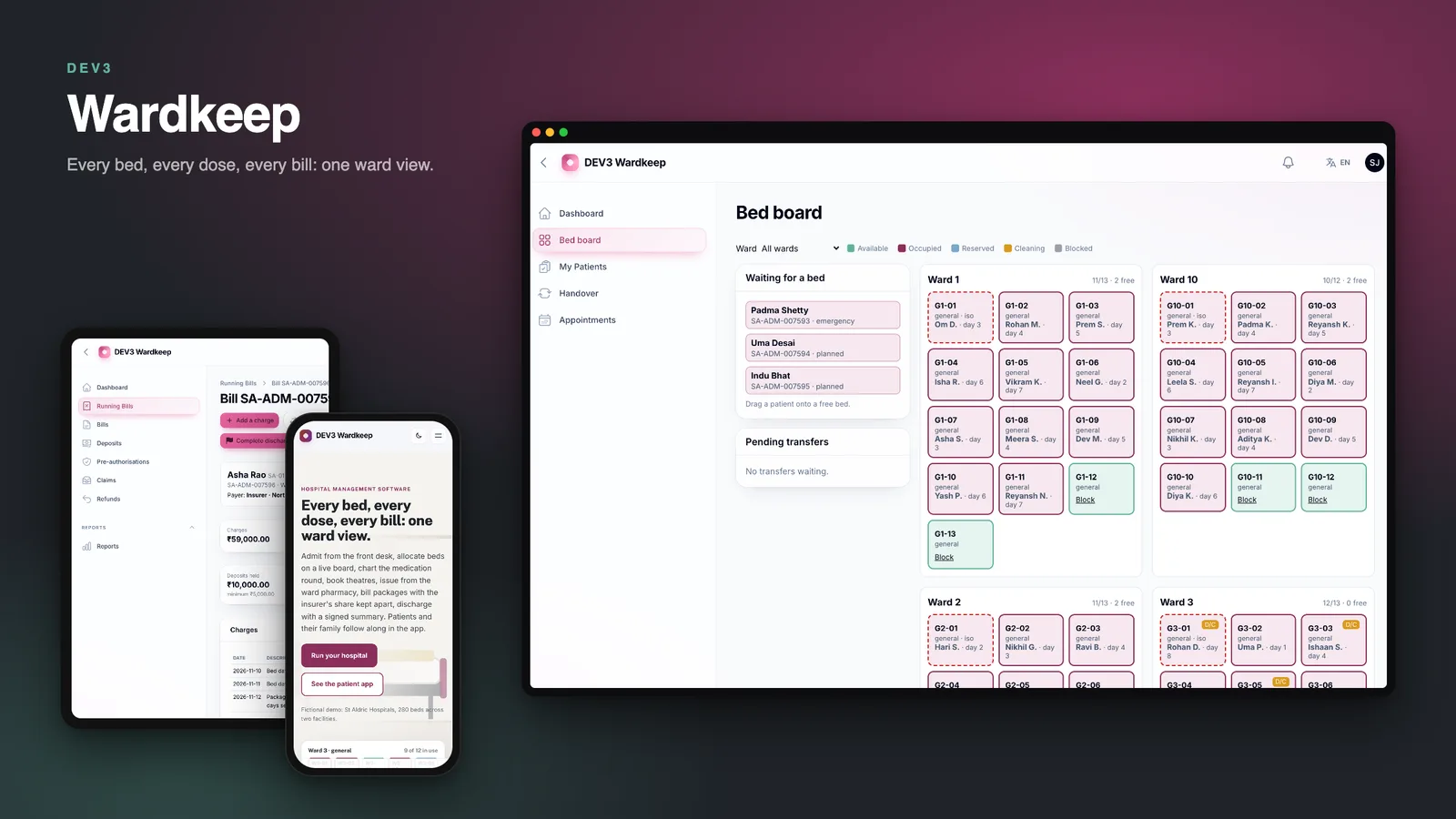
Hospital management software: 6 things to check before you choose one: DEV3 Wardkeep

An inpatient hospital runs on a few promises: two admissions never get the same bed, every dose is recorded once and by whom, and the bill shows who owes what. Here are six things to check before you choose hospital management software, with DEV3 Wardkeep as the worked example.
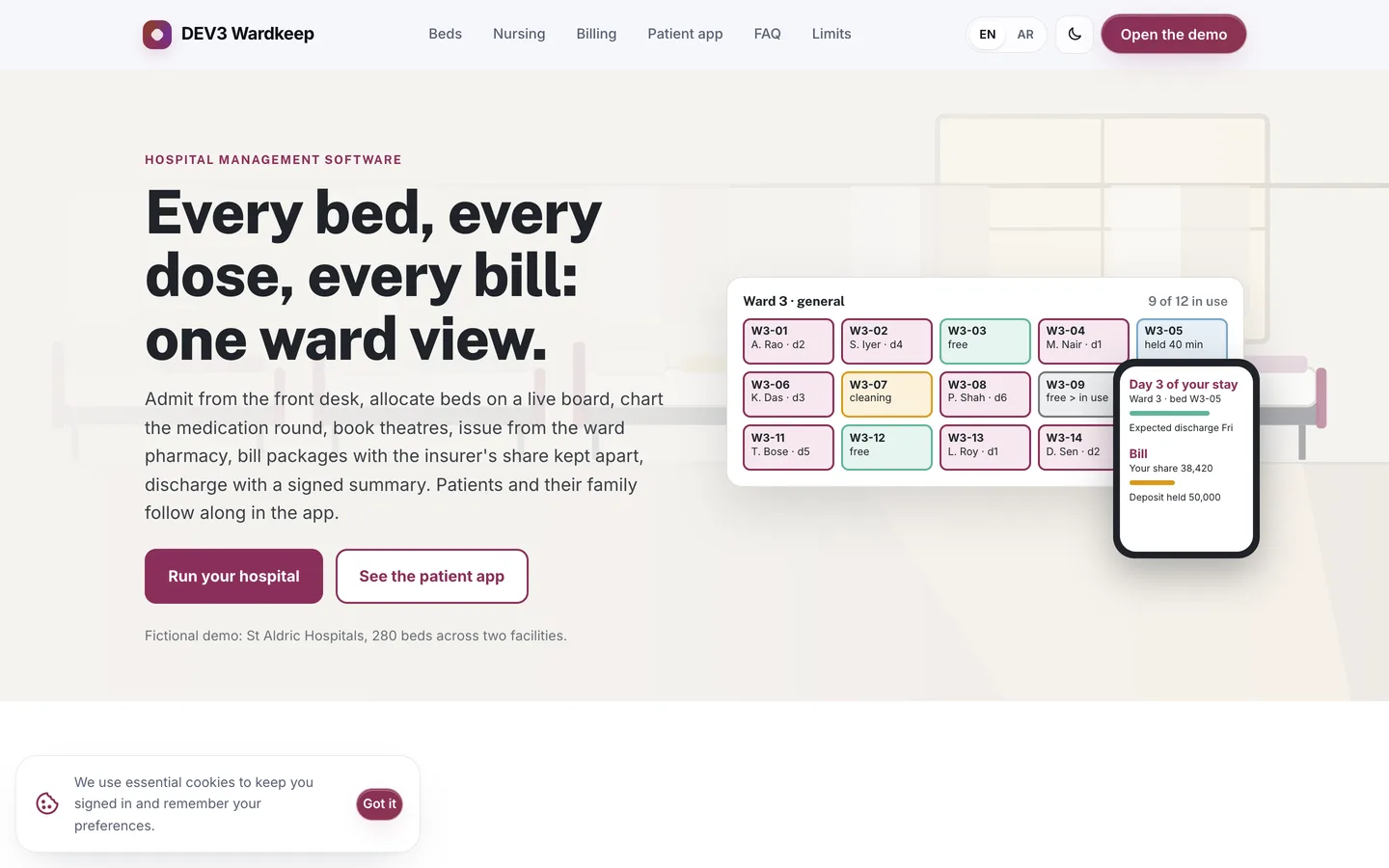
Wardkeep home page: a drawn ward, the bed board and the patient chart

1. Can staff see every bed at a glance?

Look for a live bed board with free, held, occupied and cleaning beds, patients waiting for a bed, and a move that shows the new daily rate before it is confirmed. Reception, the ward and the in-charge should all see the same board.
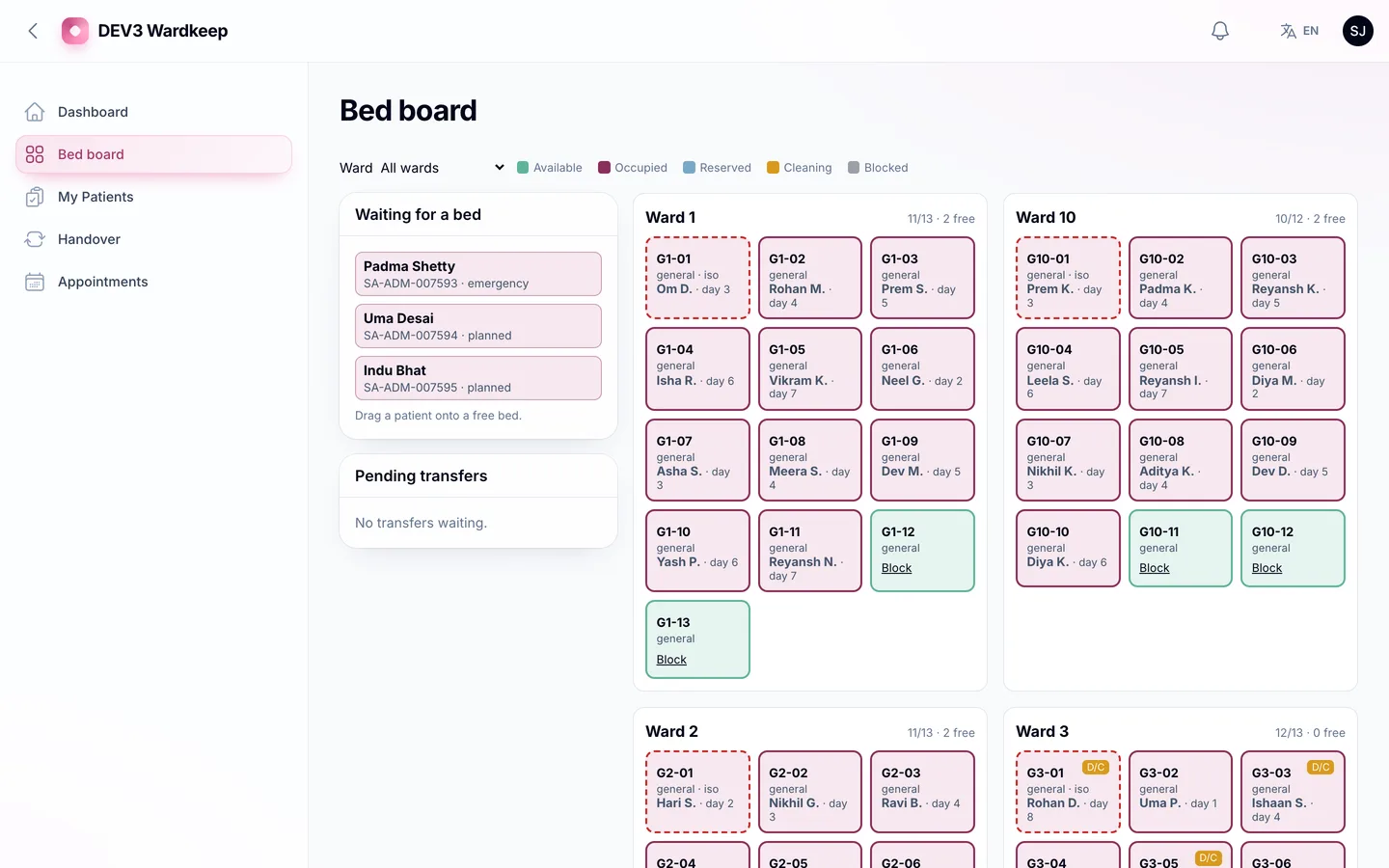
The bed board: wards as columns, beds as tiles

A transfer with a tariff preview

2. Is the medication chart safe to rely on?

Ask how a late dose is flagged, whether a controlled drug needs a second person, and whether a correction overwrites the record. In Wardkeep every dose is due, late, given, refused or missed, a controlled drug needs a witness with their own PIN, and a correction is a new row.
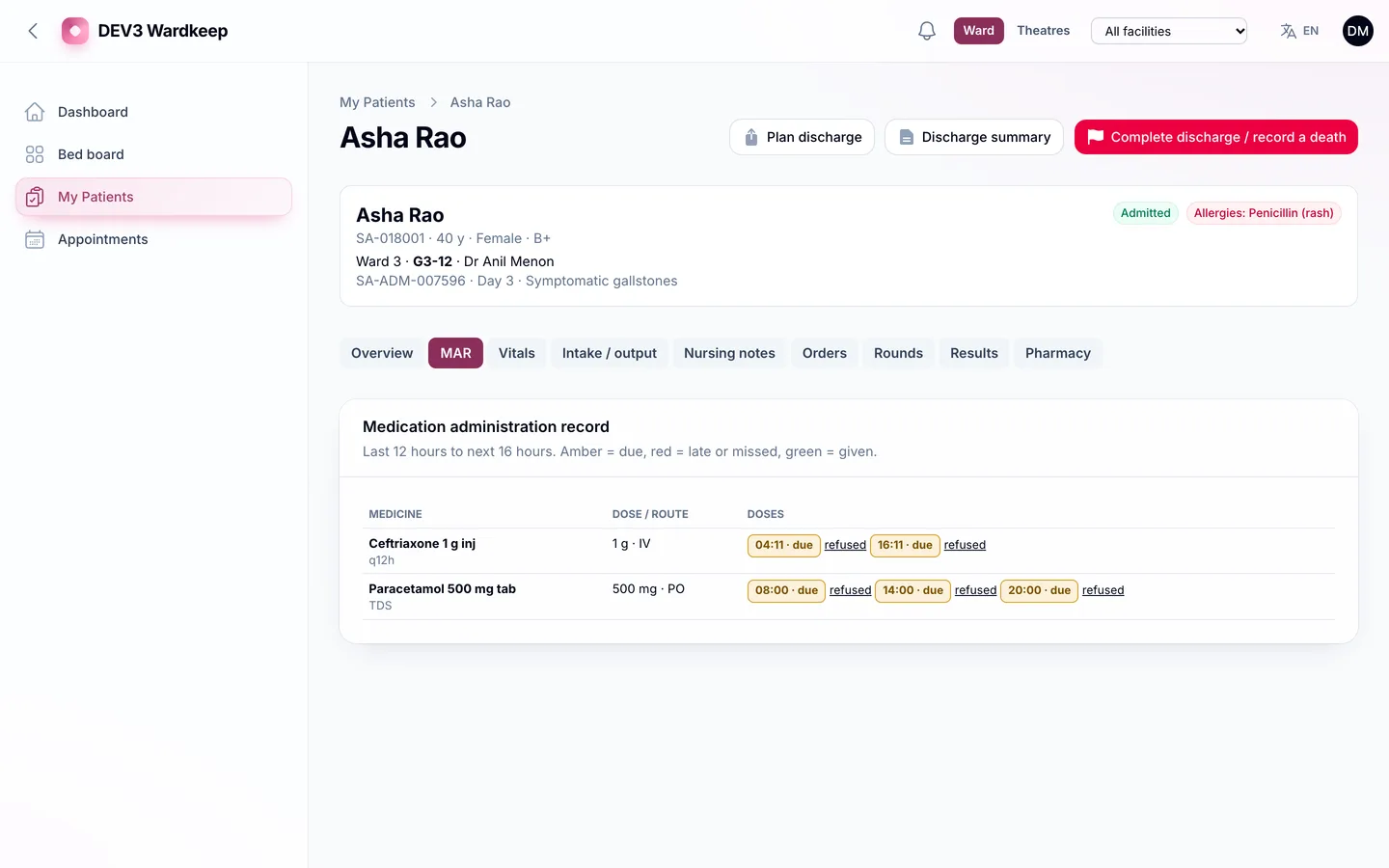
The medication grid with due, late and given doses

A controlled drug given with a witness

3. Does the bill show three payers clearly?

A package, an insurer and the patient all pay part of the same stay. Look for one running bill where each line shows the package cover, the insurer share and the patient share, with approval for discounts above a limit and deposits tracked on the way.
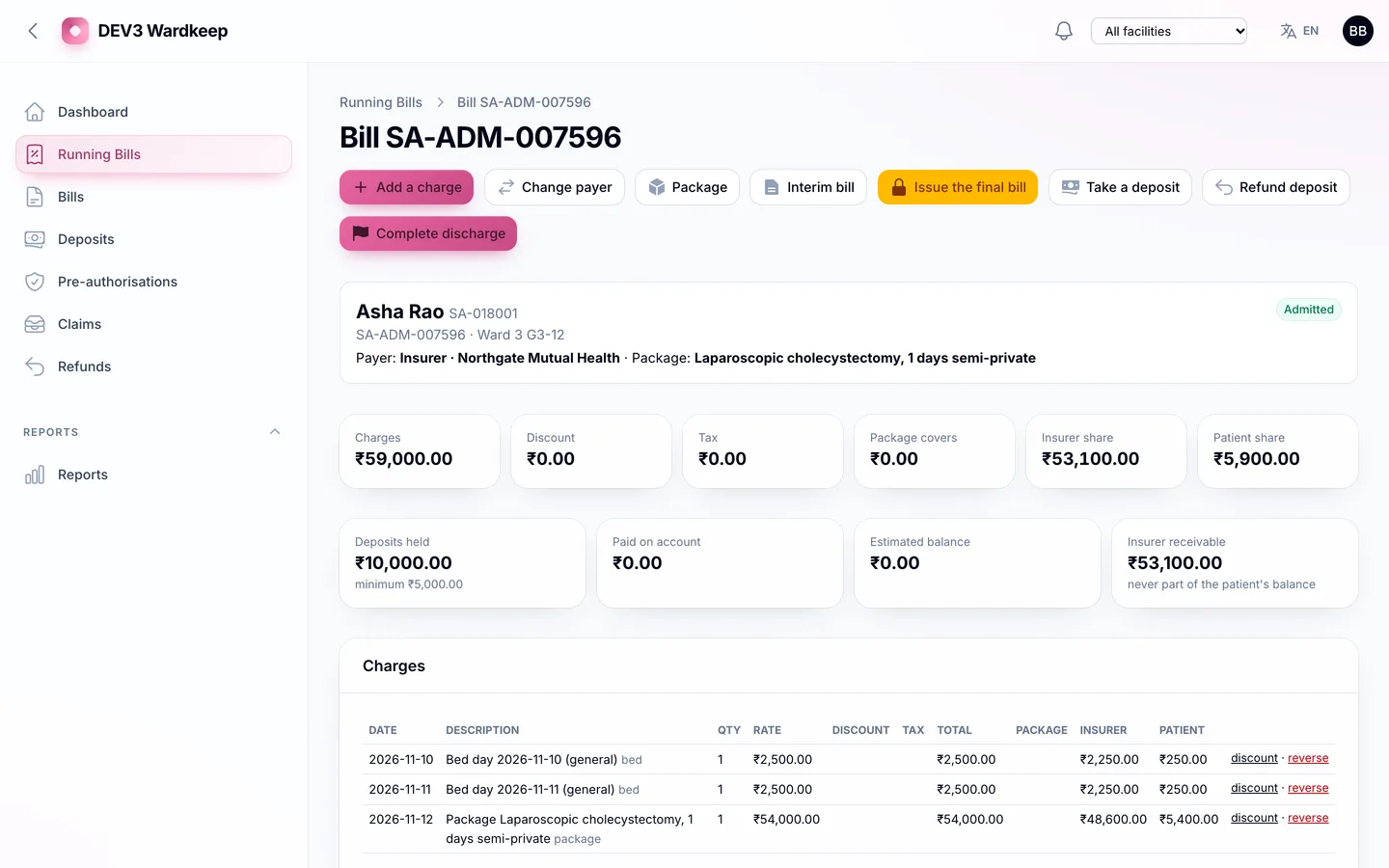
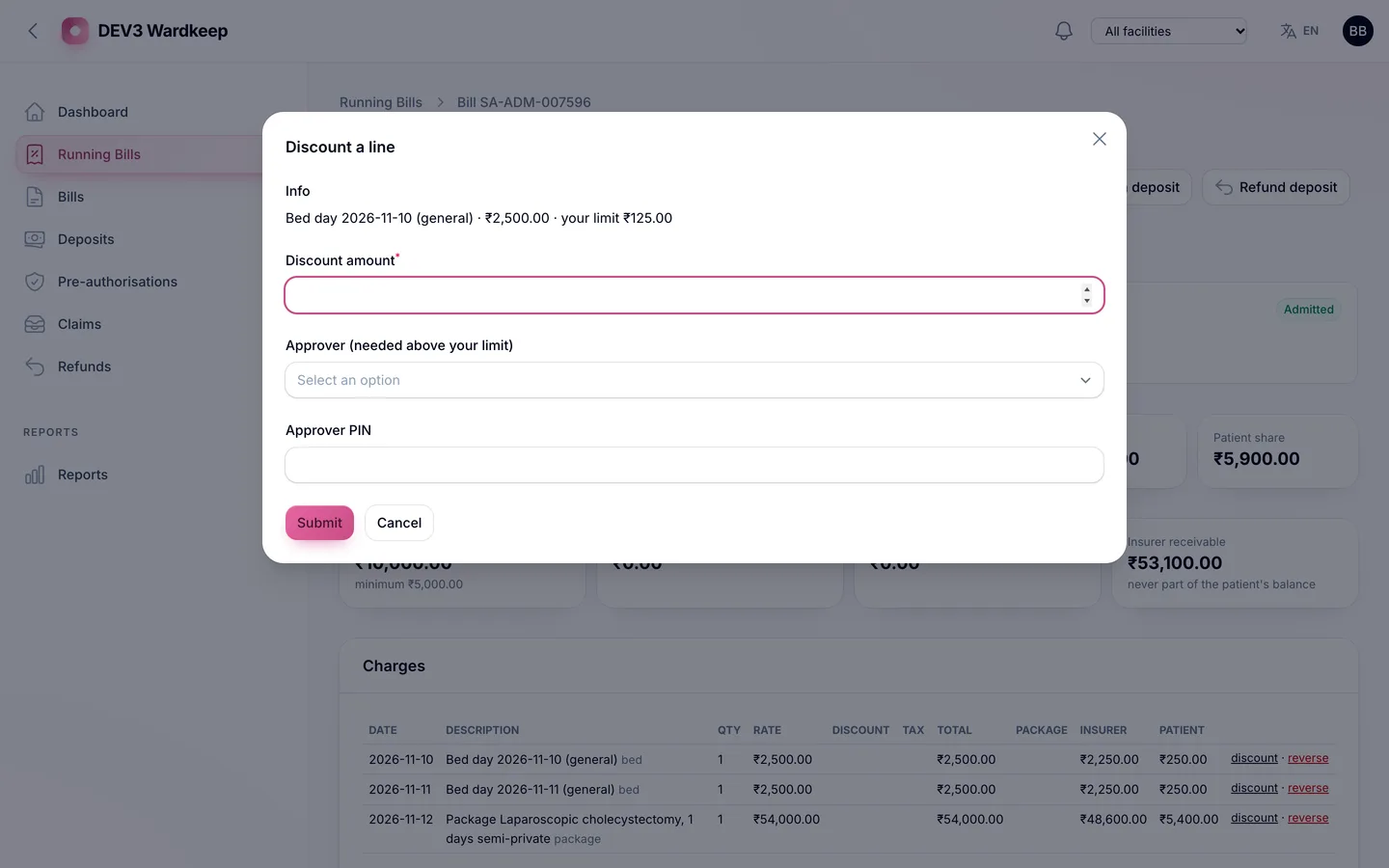
The running bill with package, insurer and patient columns

Discount above the limit needs an approver

4. Are insurer records handled honestly?

Pre-authorisations and claims are paperwork your insurance desk prepares. Wardkeep records each step by hand and prints the claim pack, and it does not send anything to an insurer or a scheme.
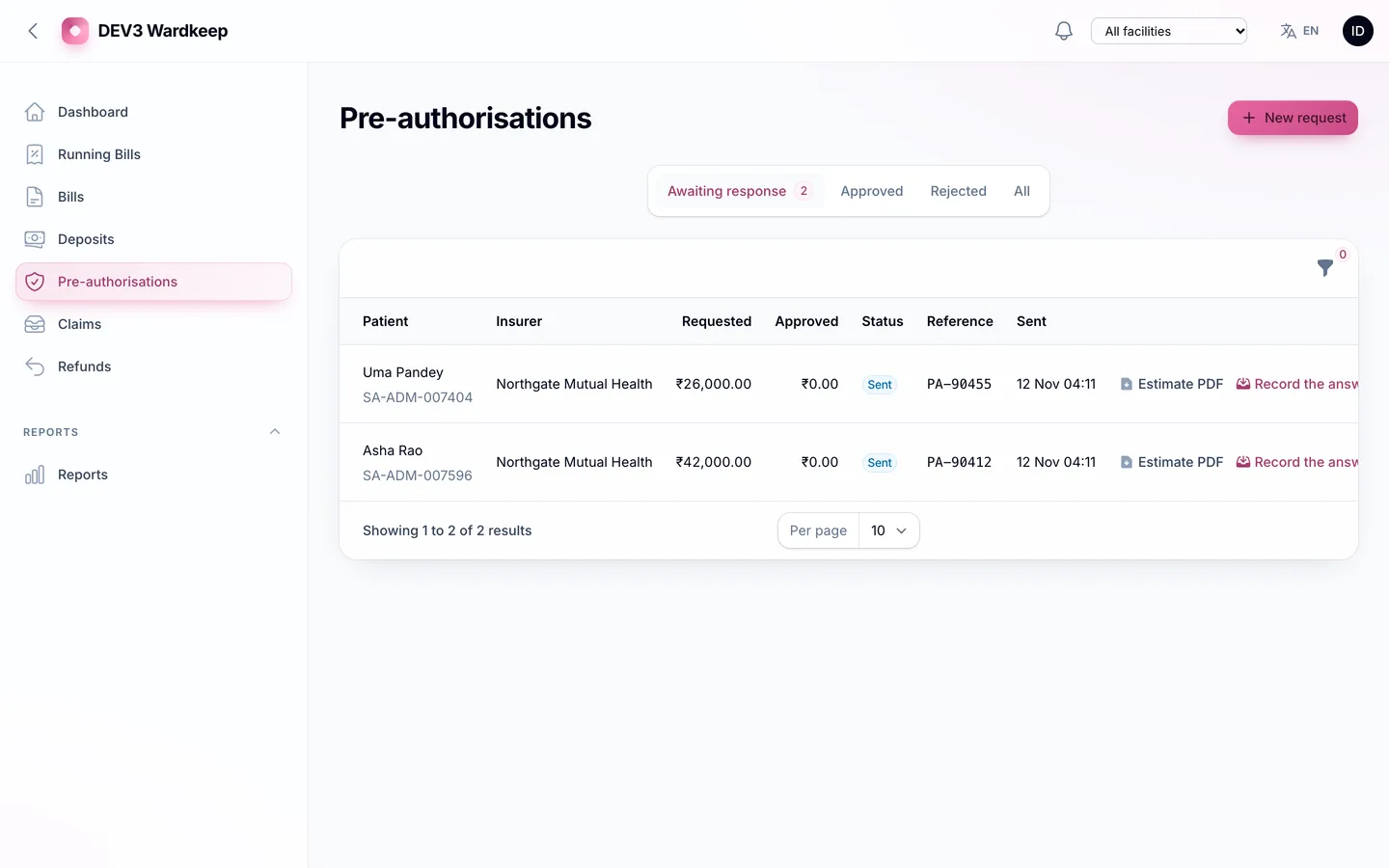
Pre-authorisation records: drafted, sent, answered

5. Who opened the record, and can the patient see it?

Look for a role gate on clinical records, a reason for an emergency open, and a log the patient can read. Family members should see a role, not a staff name.
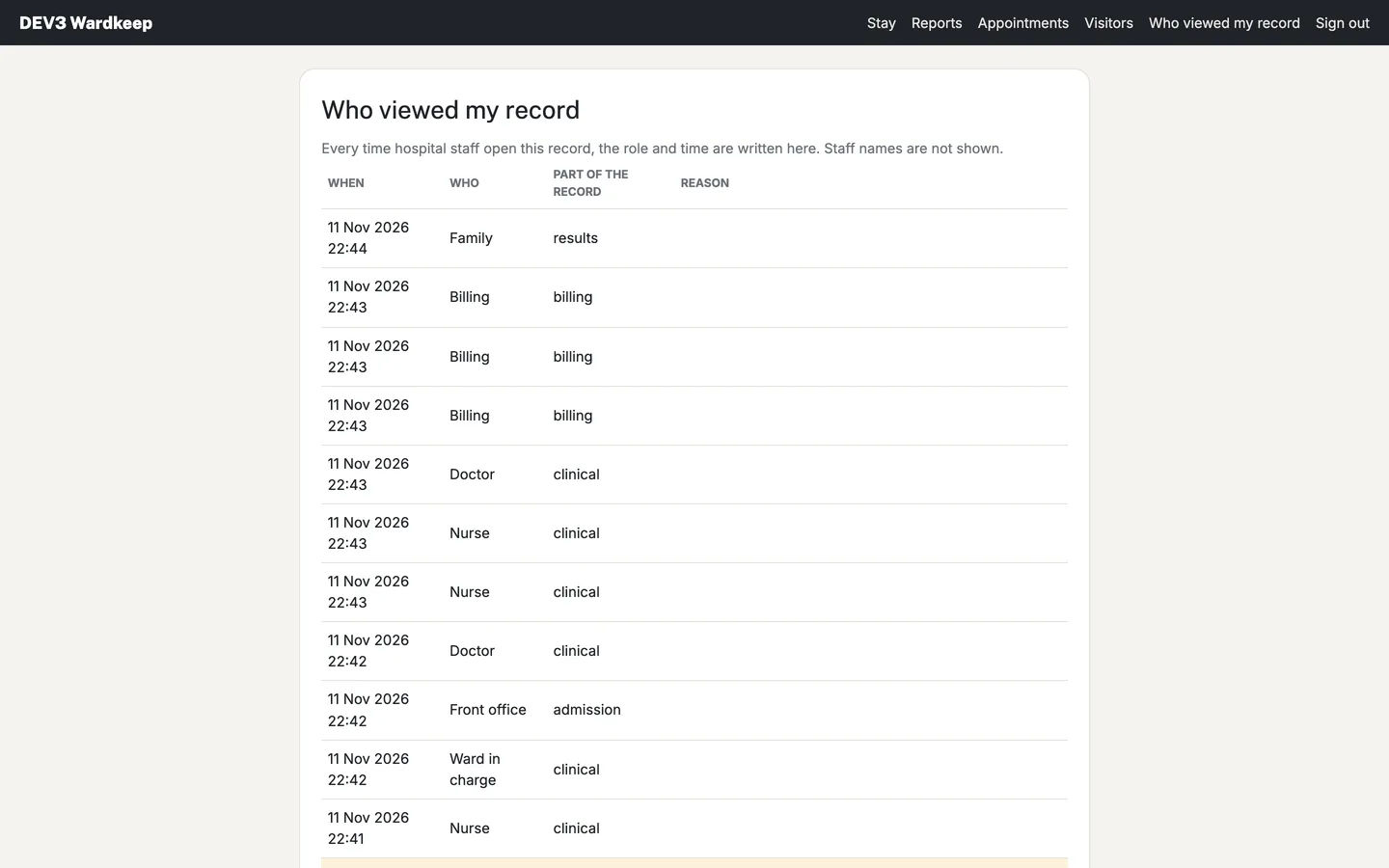
Who viewed my record: every open listed for the patient

6. Are the limits stated, and is there a patient app?

Wardkeep is inpatient first, for one hospital or a group of facilities. Outpatient is a light registration and appointment desk, lab and radiology are order and result entry with no analyser or PACS link, and there is no HL7 or FHIR in this version. It is not a medical device, gives no clinical decision support and makes no compliance claim; you are responsible for health-data law where you operate. The Flutter patient app ships with source and a guide for publishing it under your own store accounts.
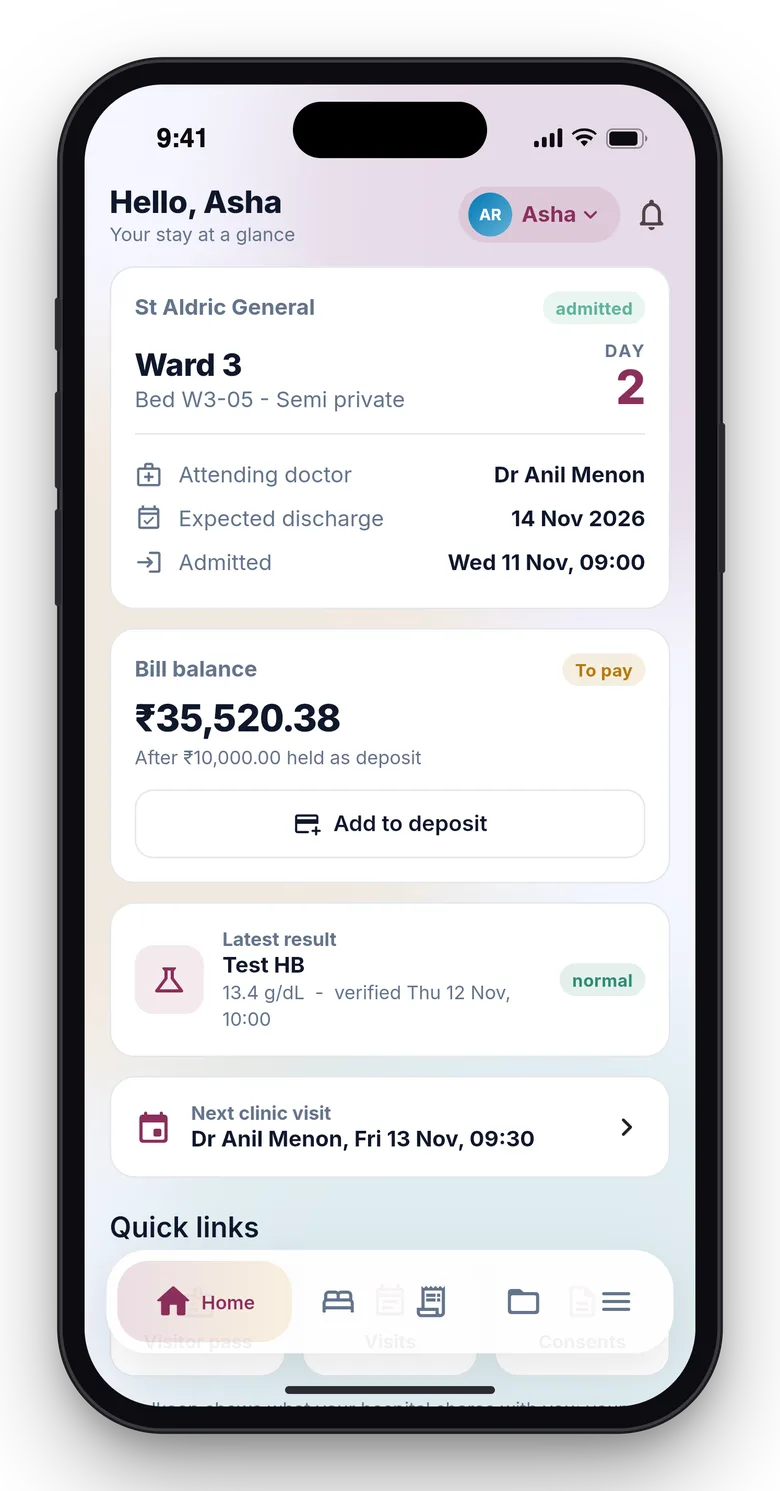
Patient app: the stay card and balance

Patient app: medicines given and due next

Patient app: a consent waiting for a signature

Video: The Wardkeep tour

Frequently asked questions

The complete source code (version 1.0.0) as a download from your account, with the setup and usage guides shown on this page. You can modify the code to suit your product.

Buying guides: Laravel scripts with Filament panels and a web installer · Next.js or Laravel for a SaaS script?

Questions about this product (0)

Answers from the DEV3 team and the community.

Ask a question

No questions yet.

Wondering about setup, licensing or customisation? Ask, and the DEV3 team will help.

More from this author

View all

Related in Web Scripts & Software

View all