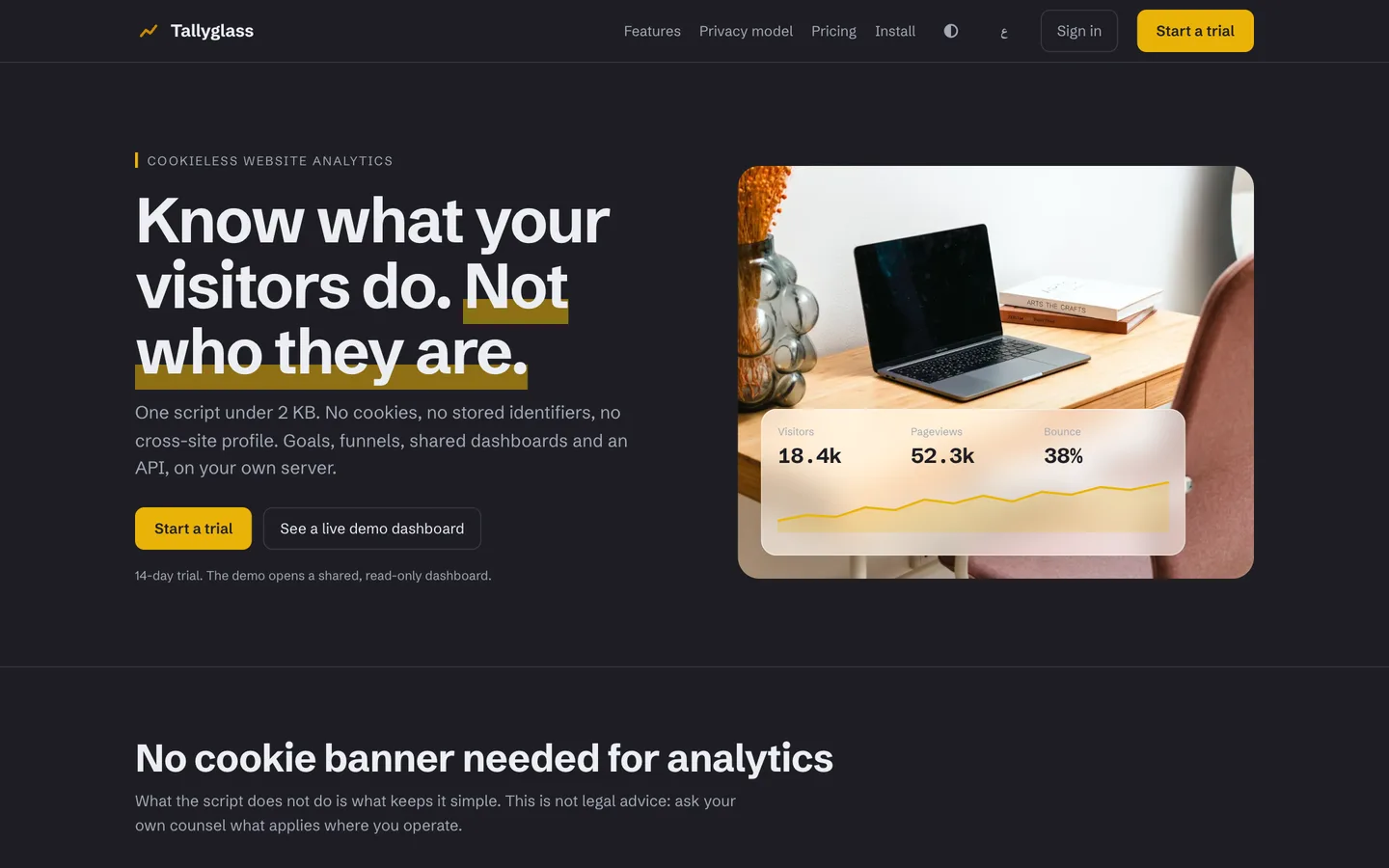
 Home in dark mode — Deep graphite with frosted cards and the same single mustard accent.
Cookieless website analytics: 7 things to check before you pick one
Last updated
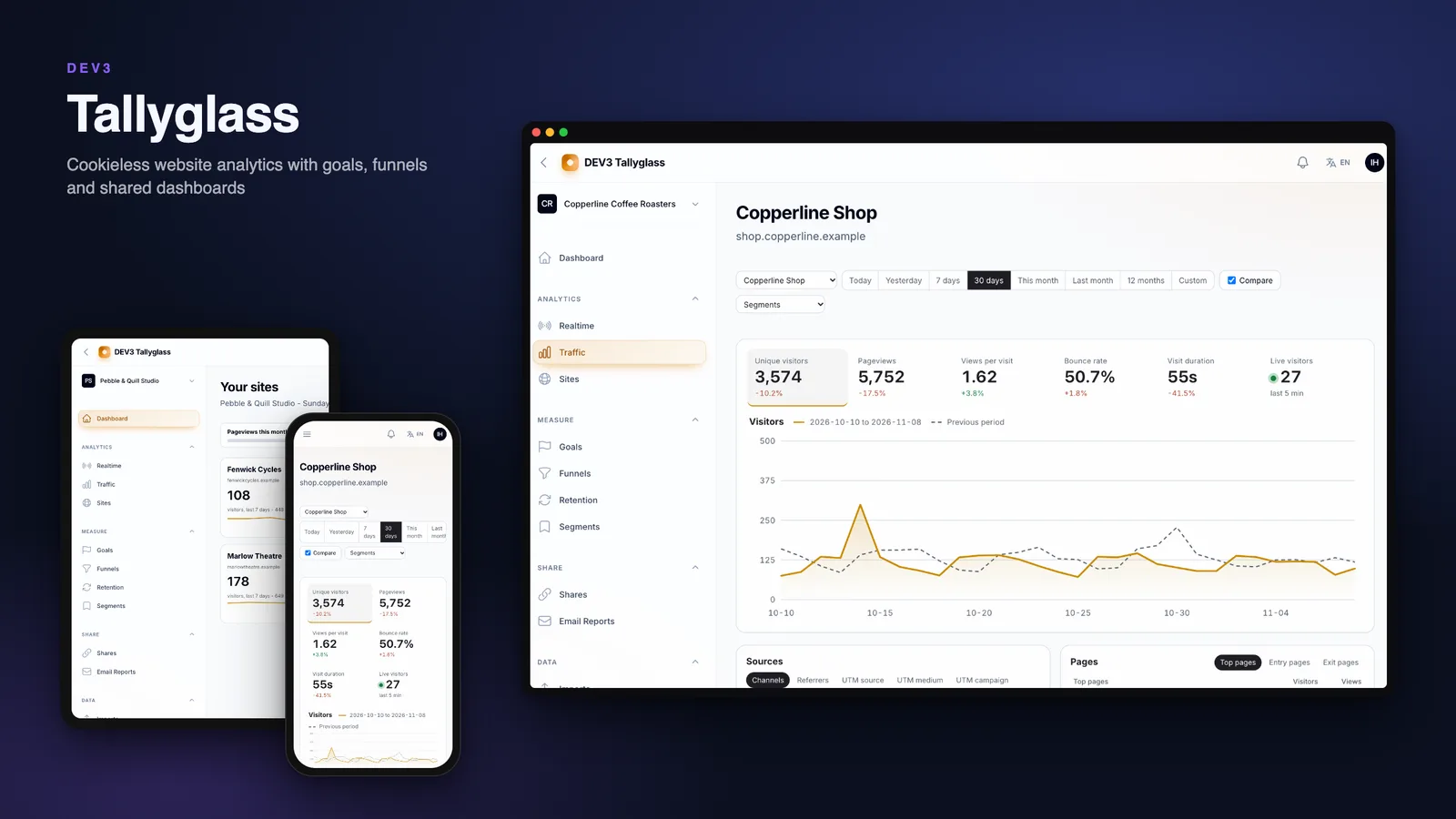
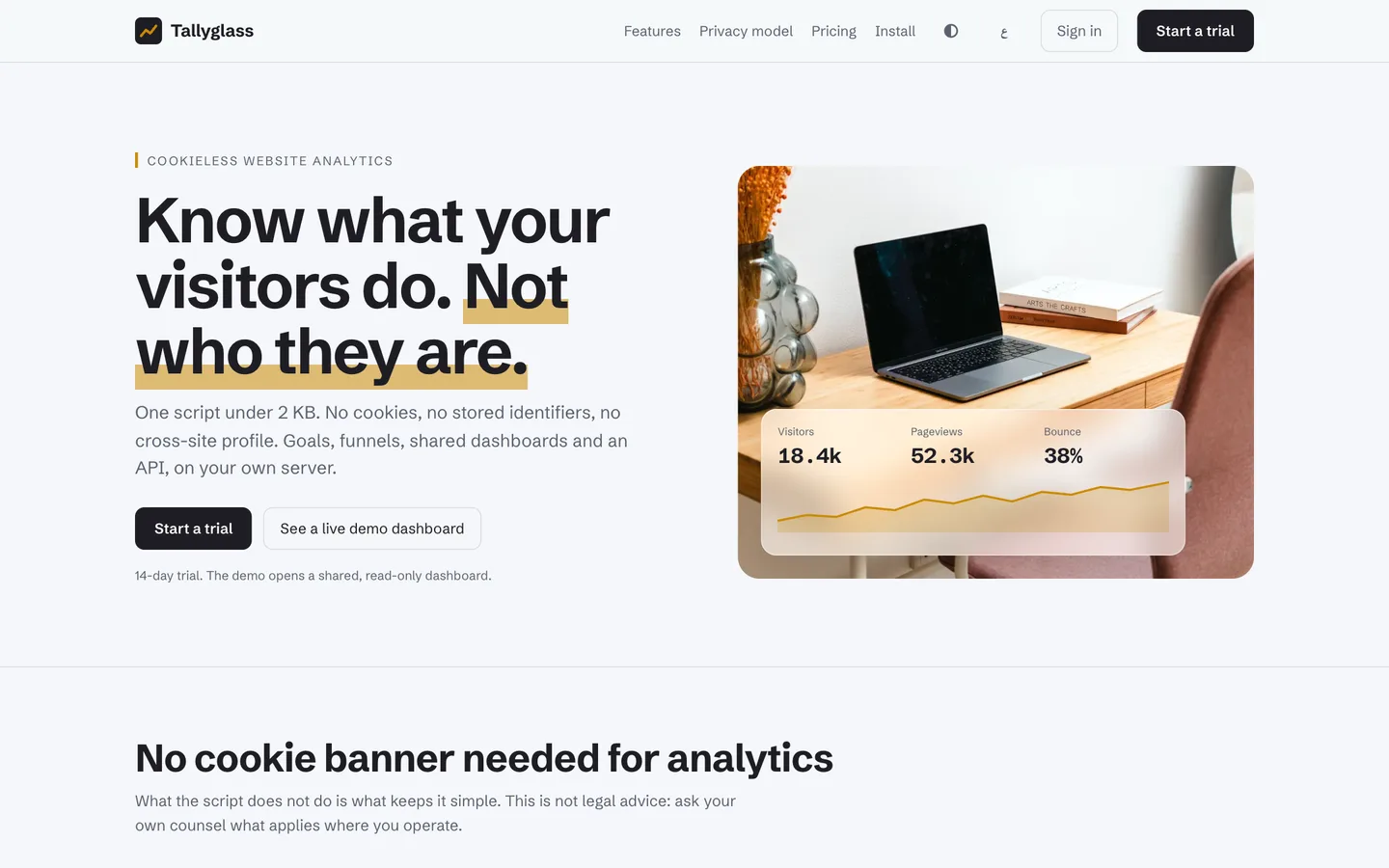
"No cookies" is easy to say and hard to build. Before you trust a number from an analytics tool you host yourself, check how it counts, what it keeps and where it stops being right. Here are seven things to look for, with DEV3 Tallyglass as the worked example.
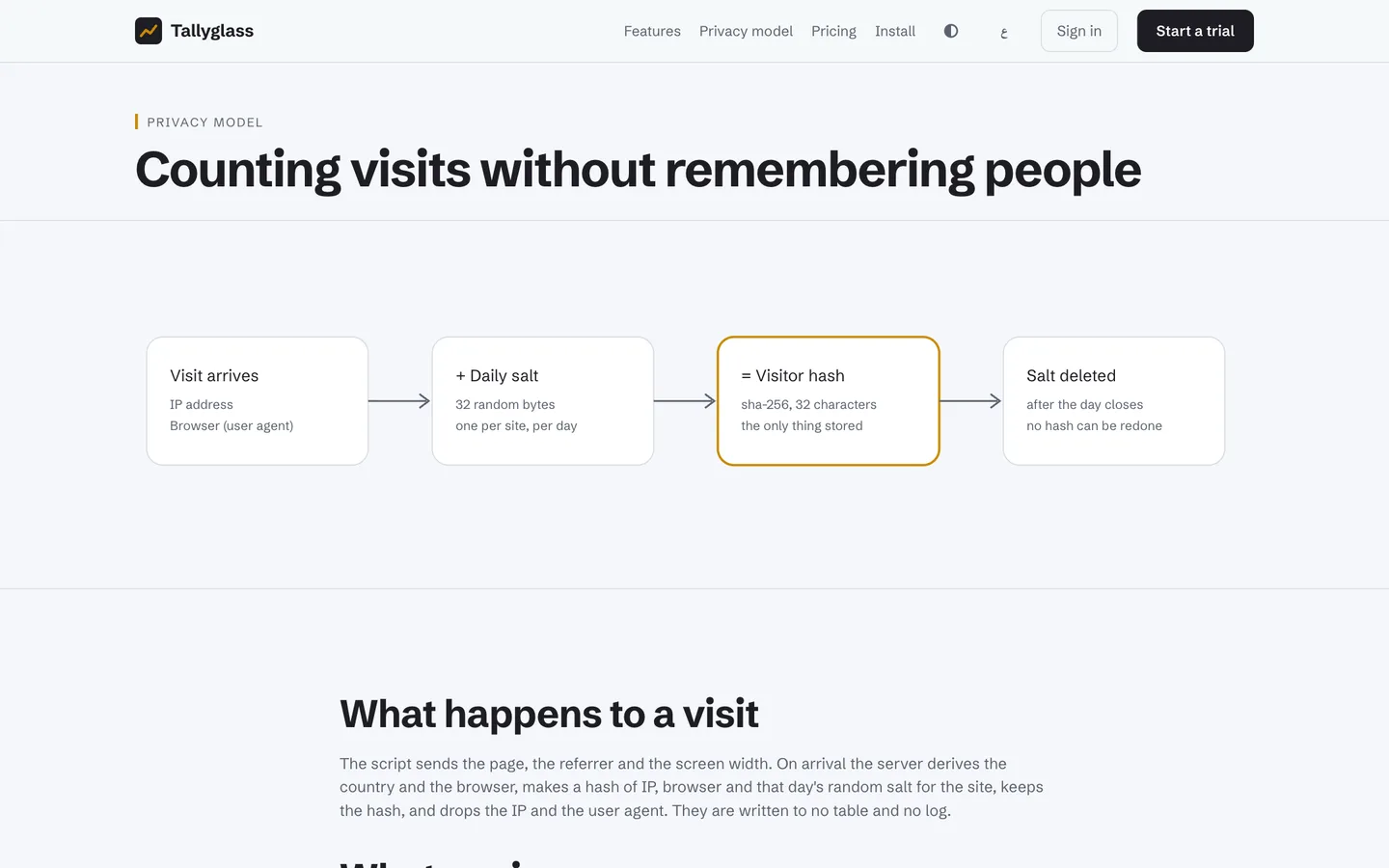
1. How does it tell two visitors apart?
Without a cookie the tool needs something else. Tallyglass hashes the IP, the browser and a random salt that belongs to one site and one day. The hash is the only thing stored. Ask any tool you consider whether the salt is ever deleted, and when.
2. What is stored, and where?
The honest answer is "the hash and the page", not "nothing". Check that IP addresses and user agents are not written to a database or a log. In Tallyglass the country and browser are derived on arrival and the address is dropped, and a test asserts that no analytics table has an IP or user-agent column.
3. Do days follow the site's clock?
A shop in Berlin and a blog in Auckland do not share a midnight. Daily numbers should follow each site's own time zone, survive the days when the clock changes, and never rewrite the past when you change the zone later.
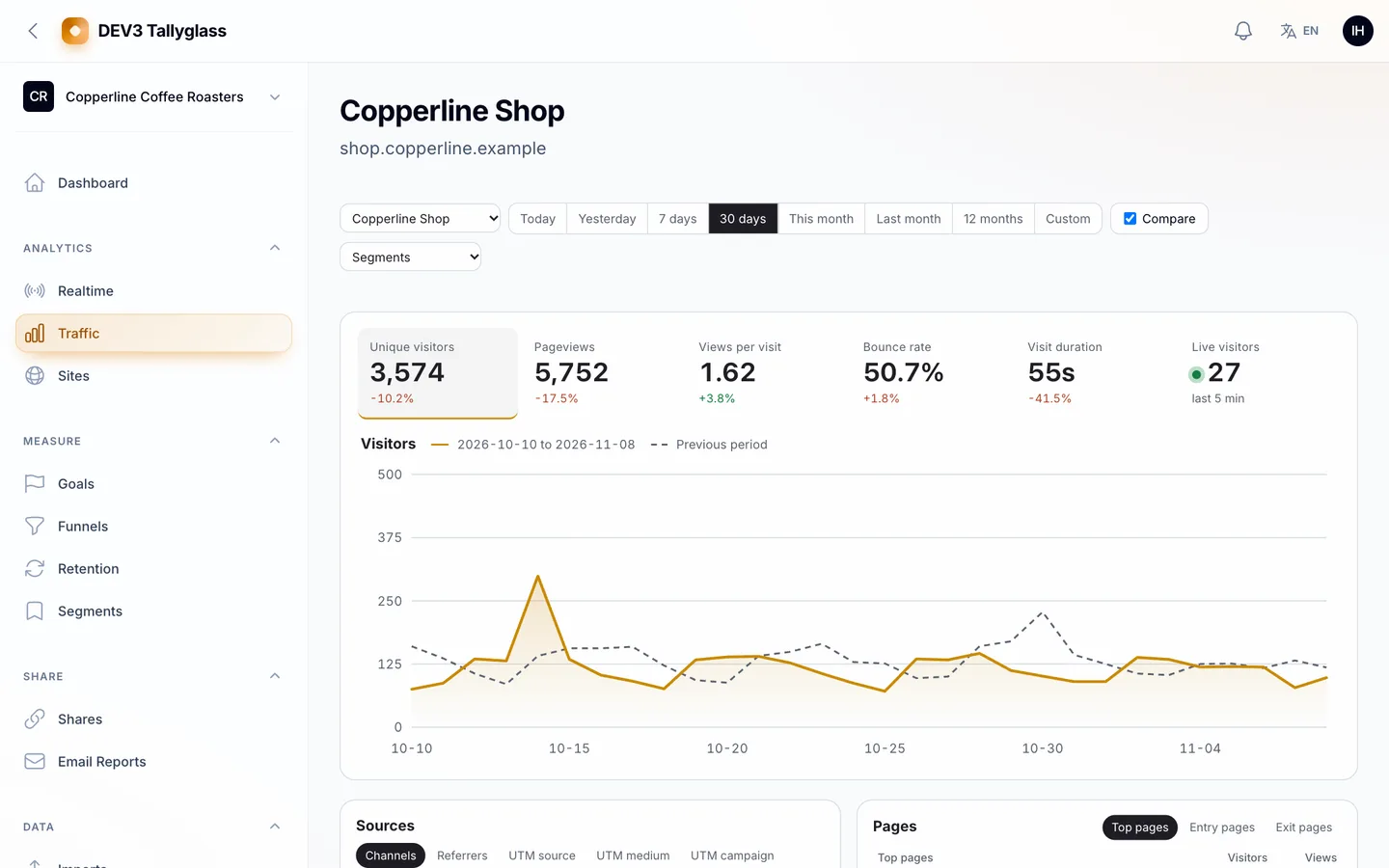
4. What can a funnel and retention really do?
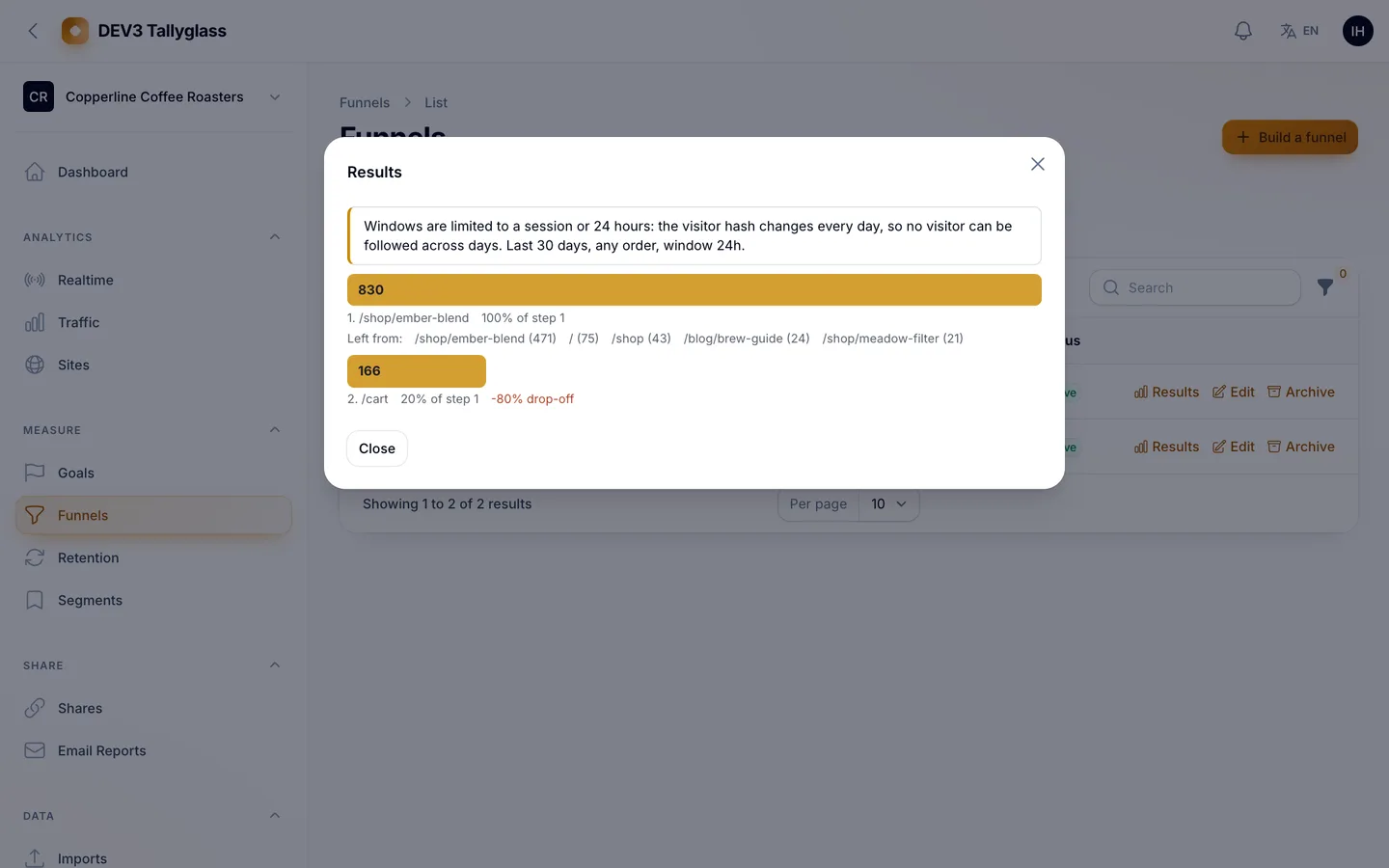
A hash that changes every day cannot follow a person across days. That makes funnels one visit or 24 hours long, and retention possible only when the site sends its own first-party id. A tool that shows perfect weekly cohorts without asking for one is inventing them. Tallyglass shows an explainer instead.
5. Can you share it and get your data out?
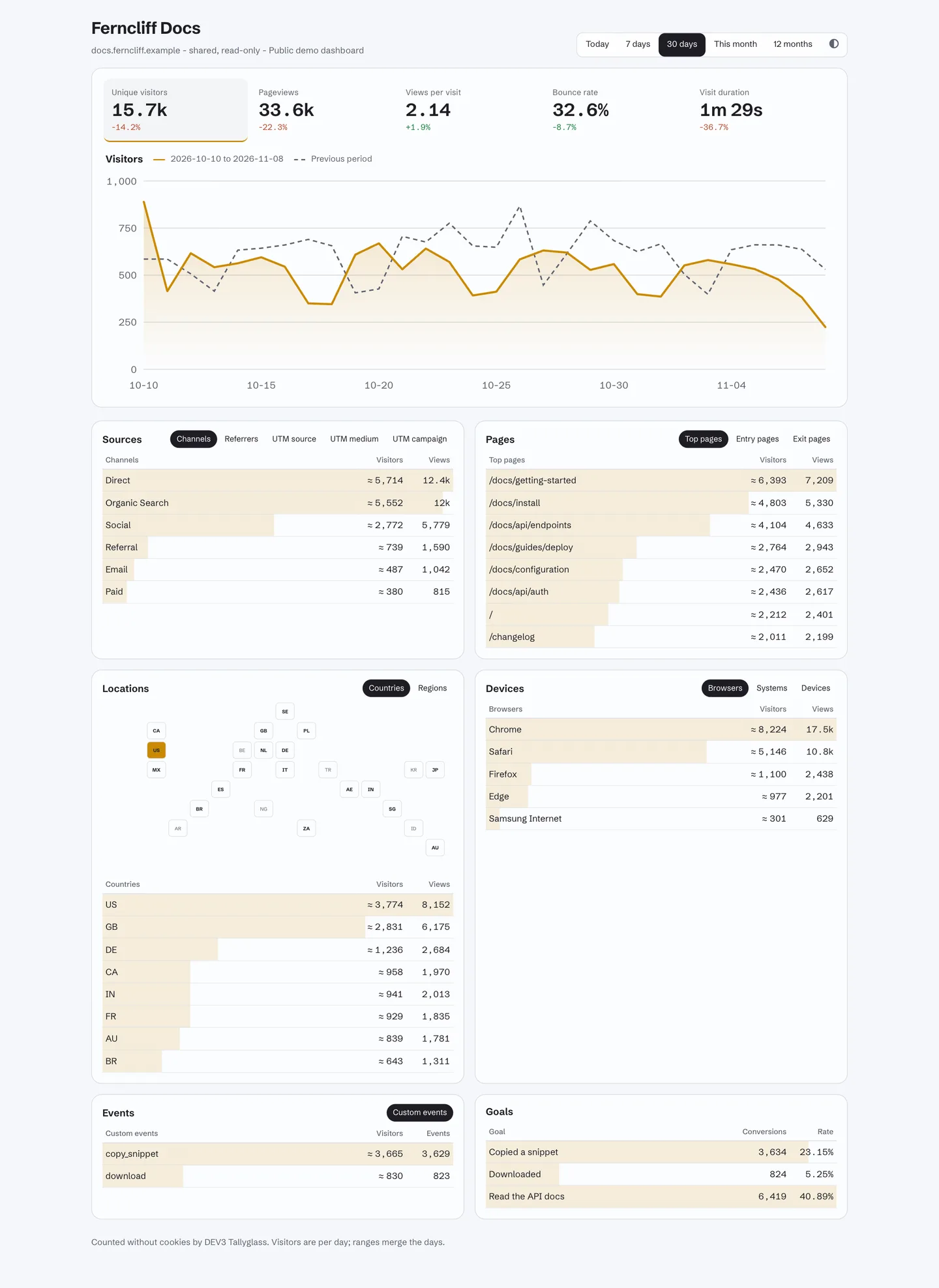
Clients want a link, not a login. Look for read-only links with a password and an expiry that you can revoke, imports from the tool you are leaving, and exports with signed, expiring links.
6. Who sees what?
Owners, analysts and viewers should differ in what they can change, and a viewer should open only the sites assigned to them. For an operator selling the product, check that every table is scoped to a workspace and that a wrong id returns nothing.
7. Where does it stop?
Every analytics database has a ceiling. Tallyglass is tested to about 5 million pageviews a month on one MySQL server, keeps raw events for 35 days and rollups for as long as the plan allows, and uses a simulated geo-IP table until you add your own GeoLite2 file. Read the limits before you buy, not after you launch.
See it run
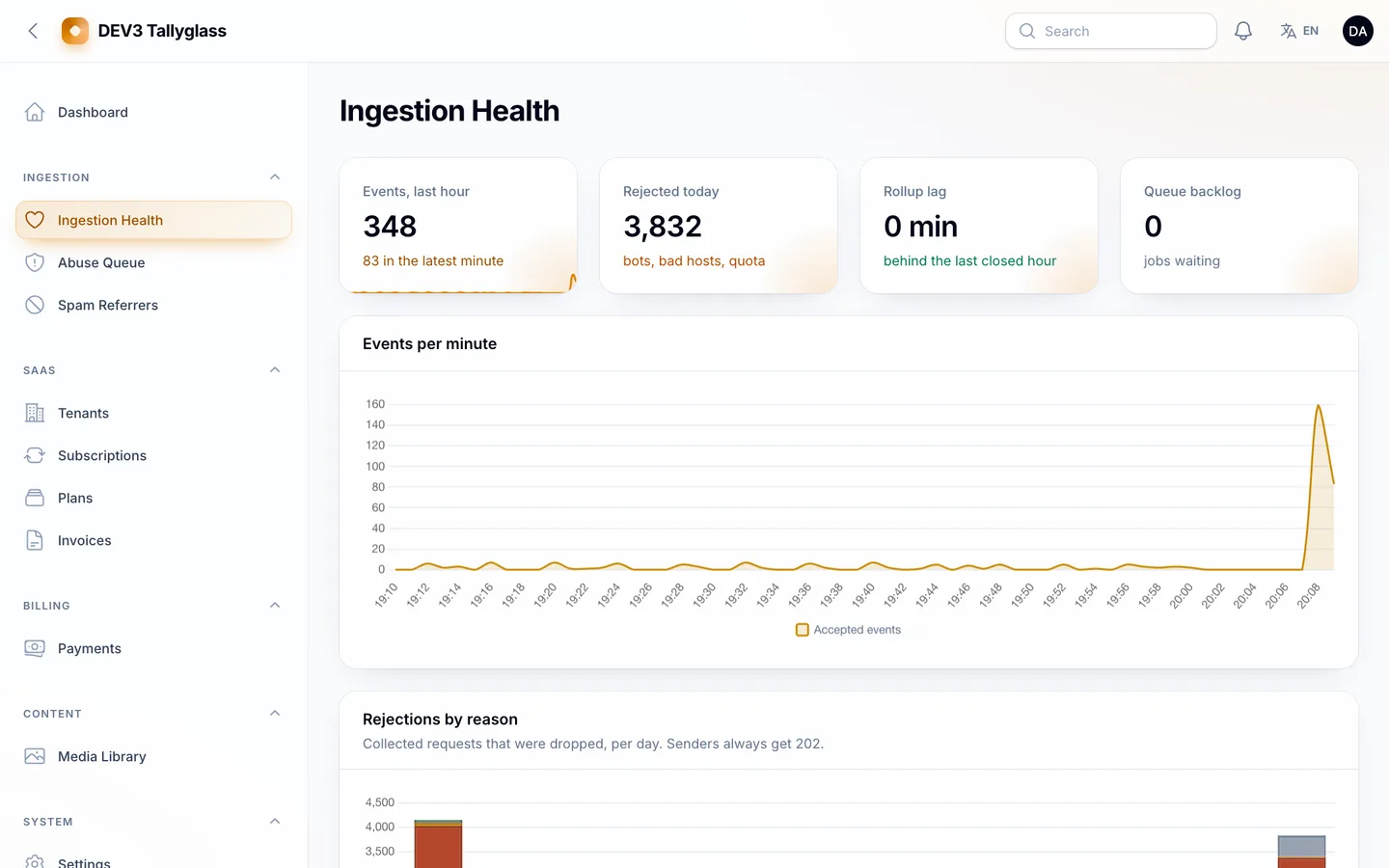
The video tour shows the dashboard, goals, a funnel, a shared link and the operator panel.
Cookieless tracking is not legal advice. Ask your own counsel what applies where you operate.