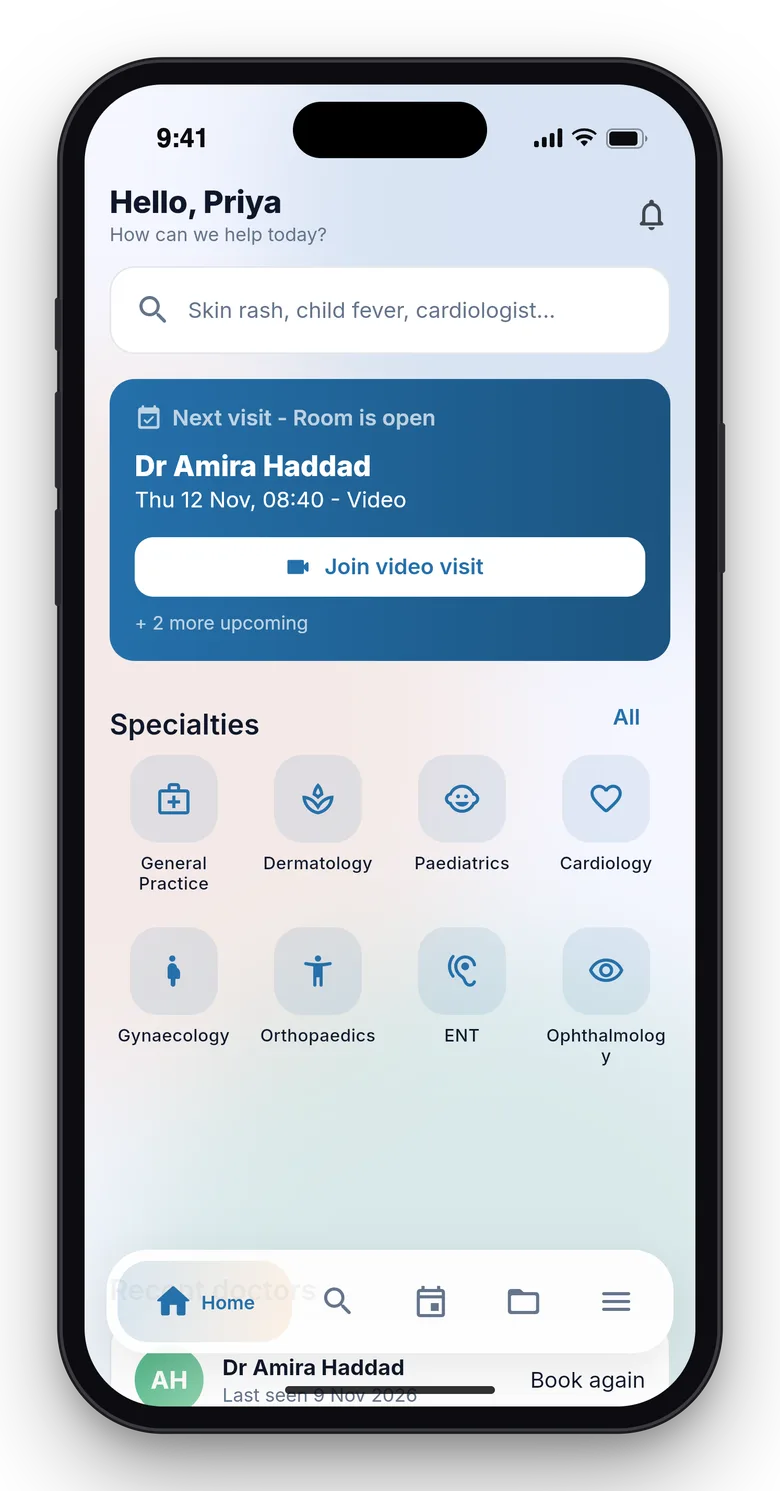
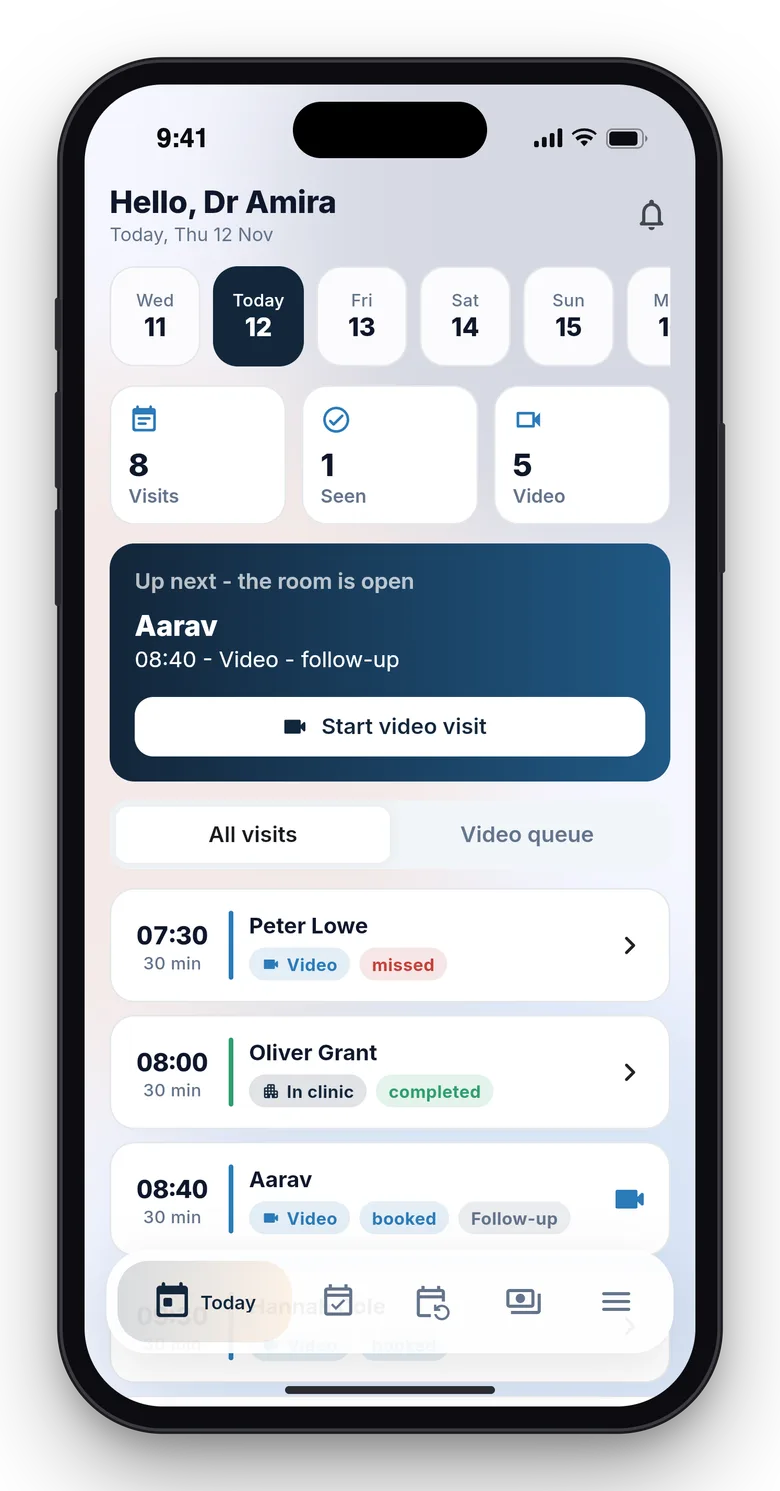
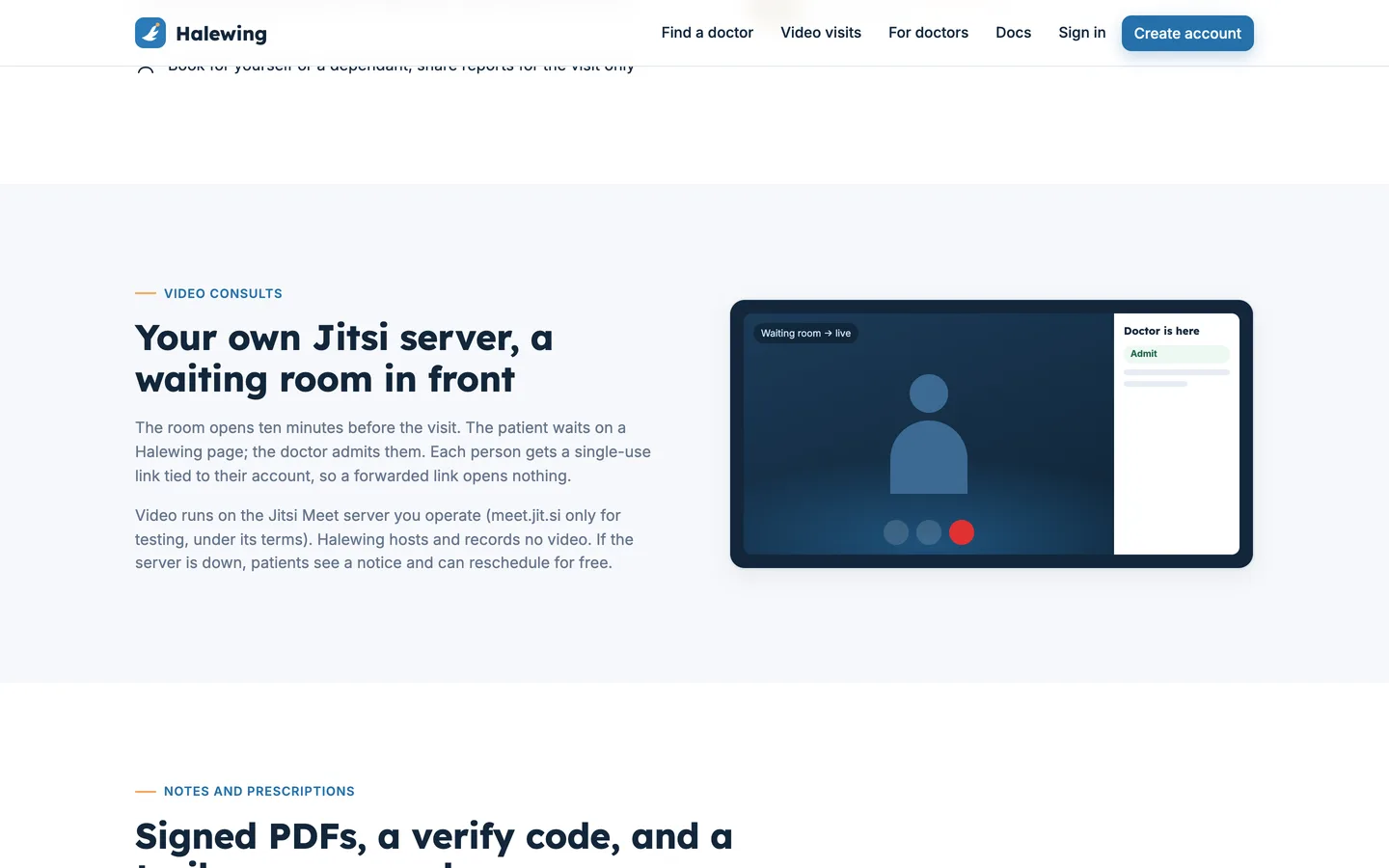
 Video consults — on your own Jitsi server, with a waiting room and an admit button for the doctor.
Doctor appointment booking software: 6 things to check before you choose one
Last updated
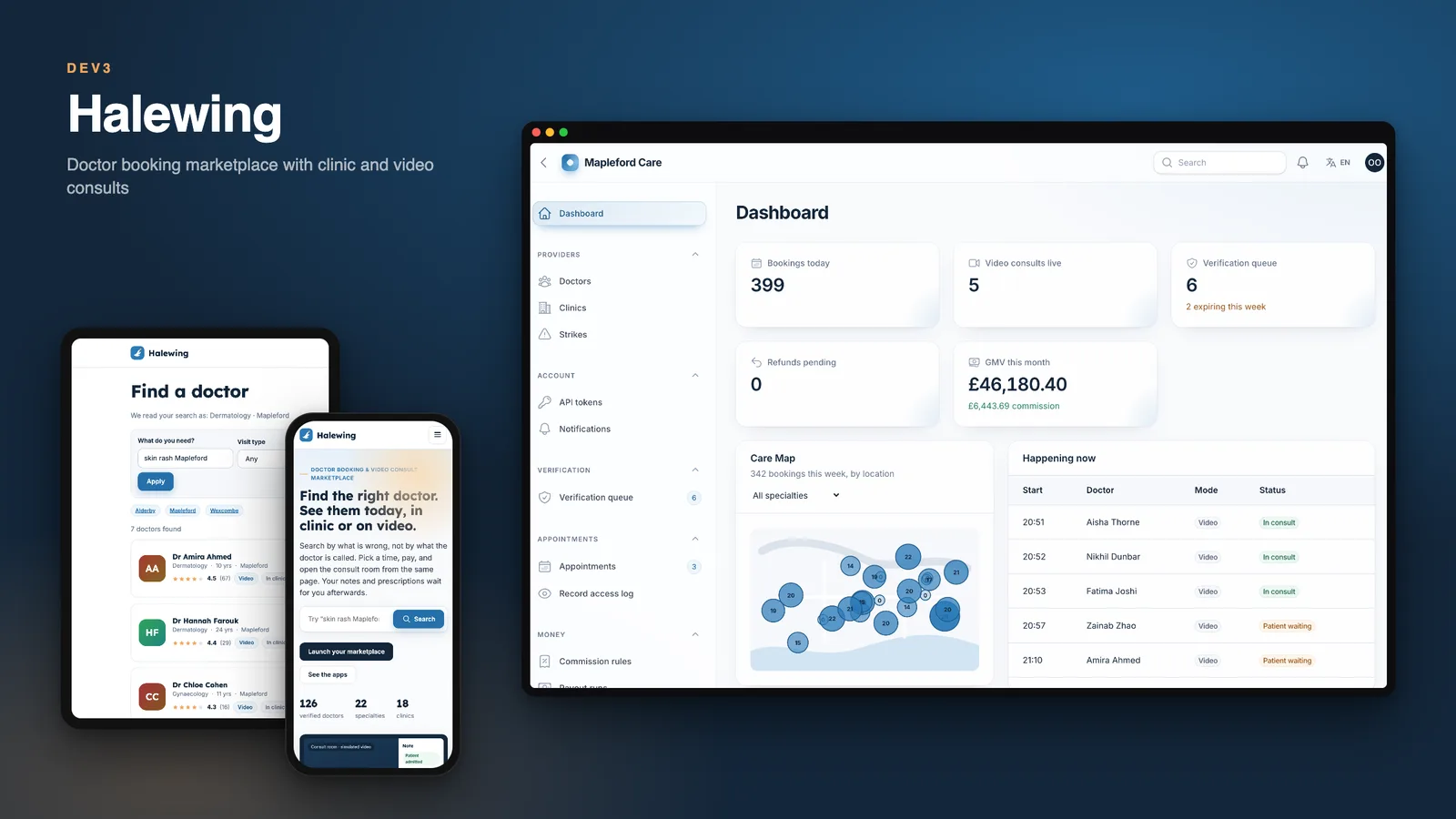
A booking marketplace runs on a few promises: two people never get the same slot, a visit starts when both sides are in the room, and everyone is paid what they are owed. Here are six things to check before you choose doctor appointment software, with DEV3 Halewing as the worked example.
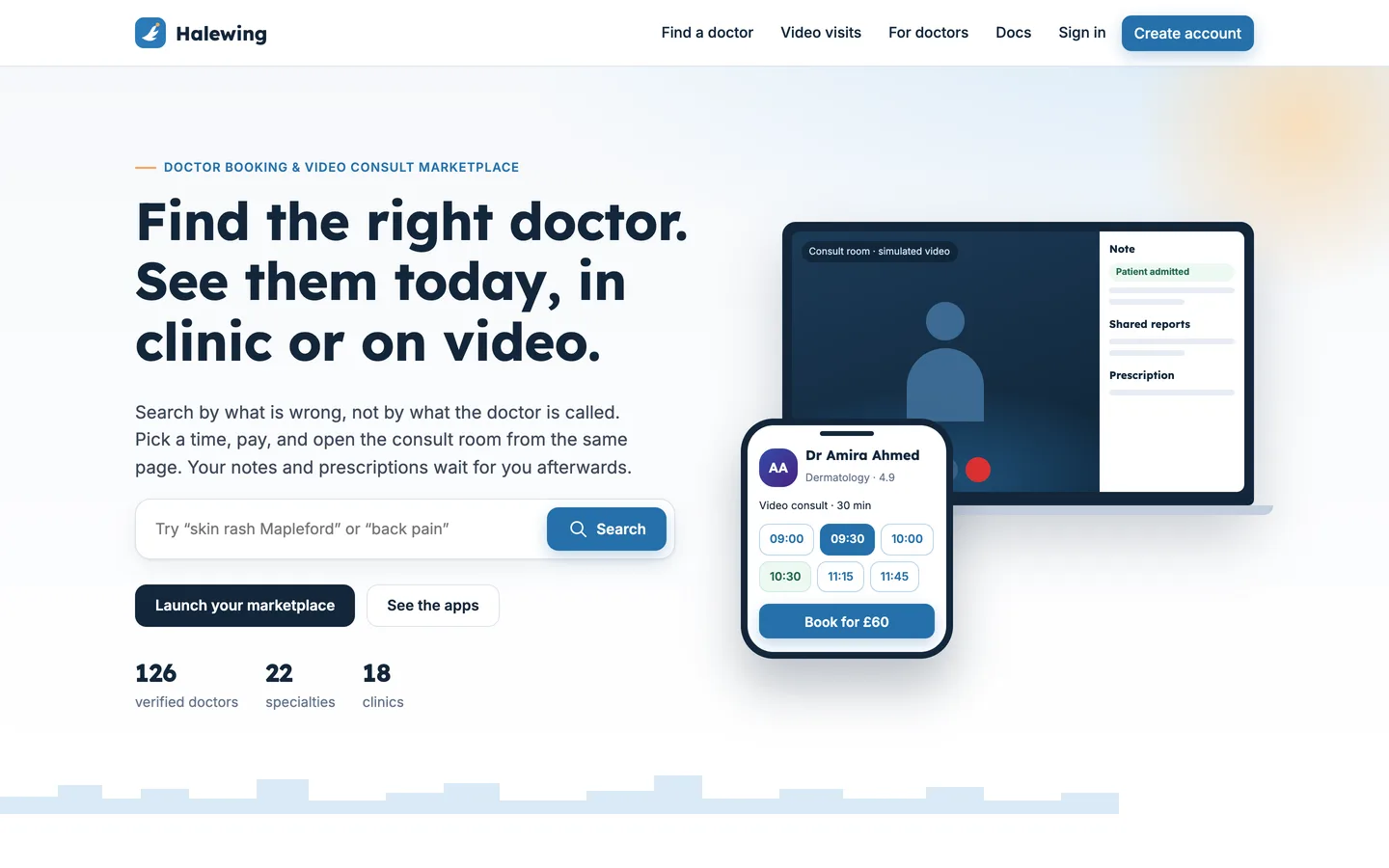
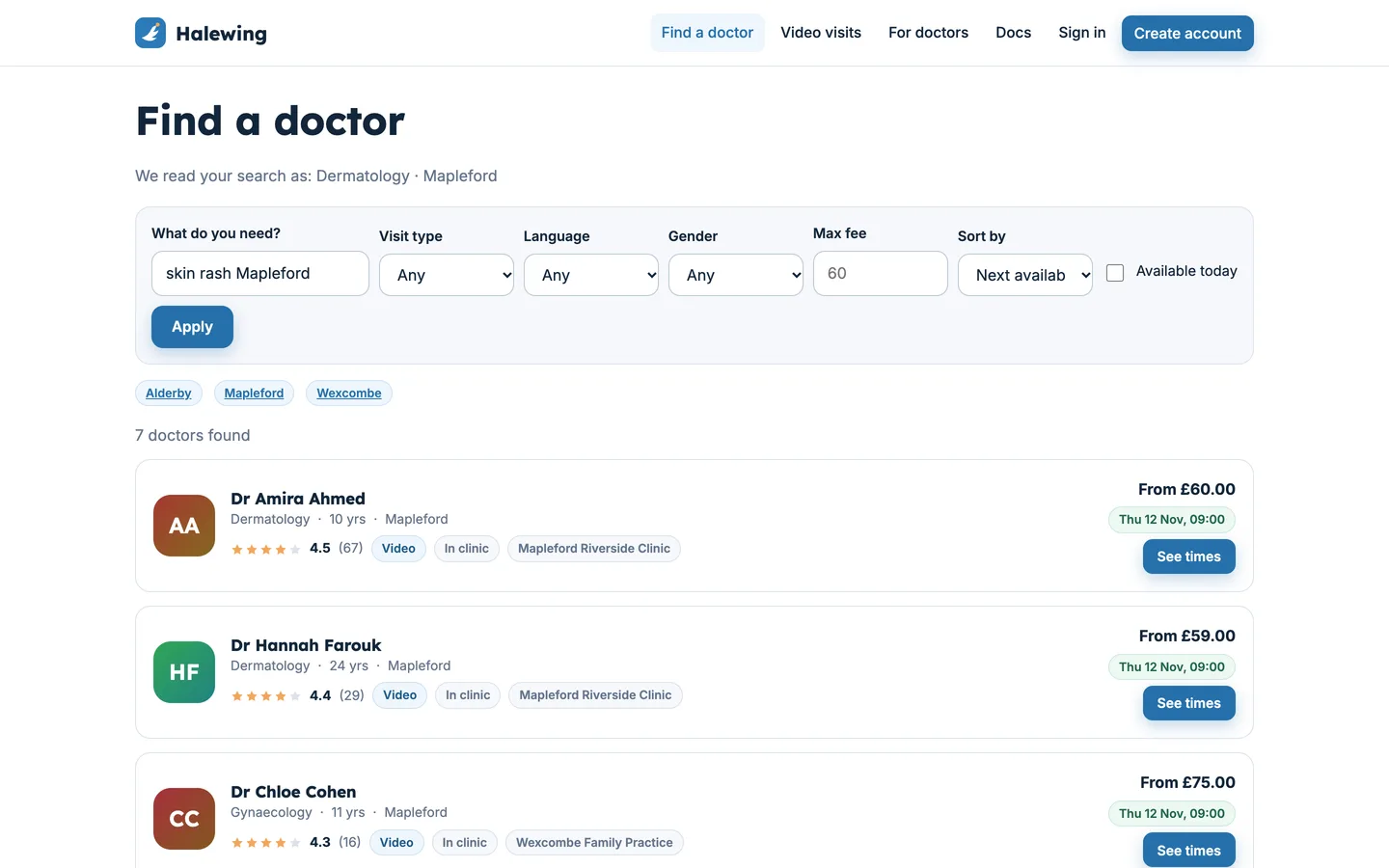
1. Can patients find the right doctor from a plain phrase?
Patients describe a problem, not a specialty. Look for search that maps a phrase to a specialty and a city, filters for visit type, language and fee, and pages per specialty and per city.
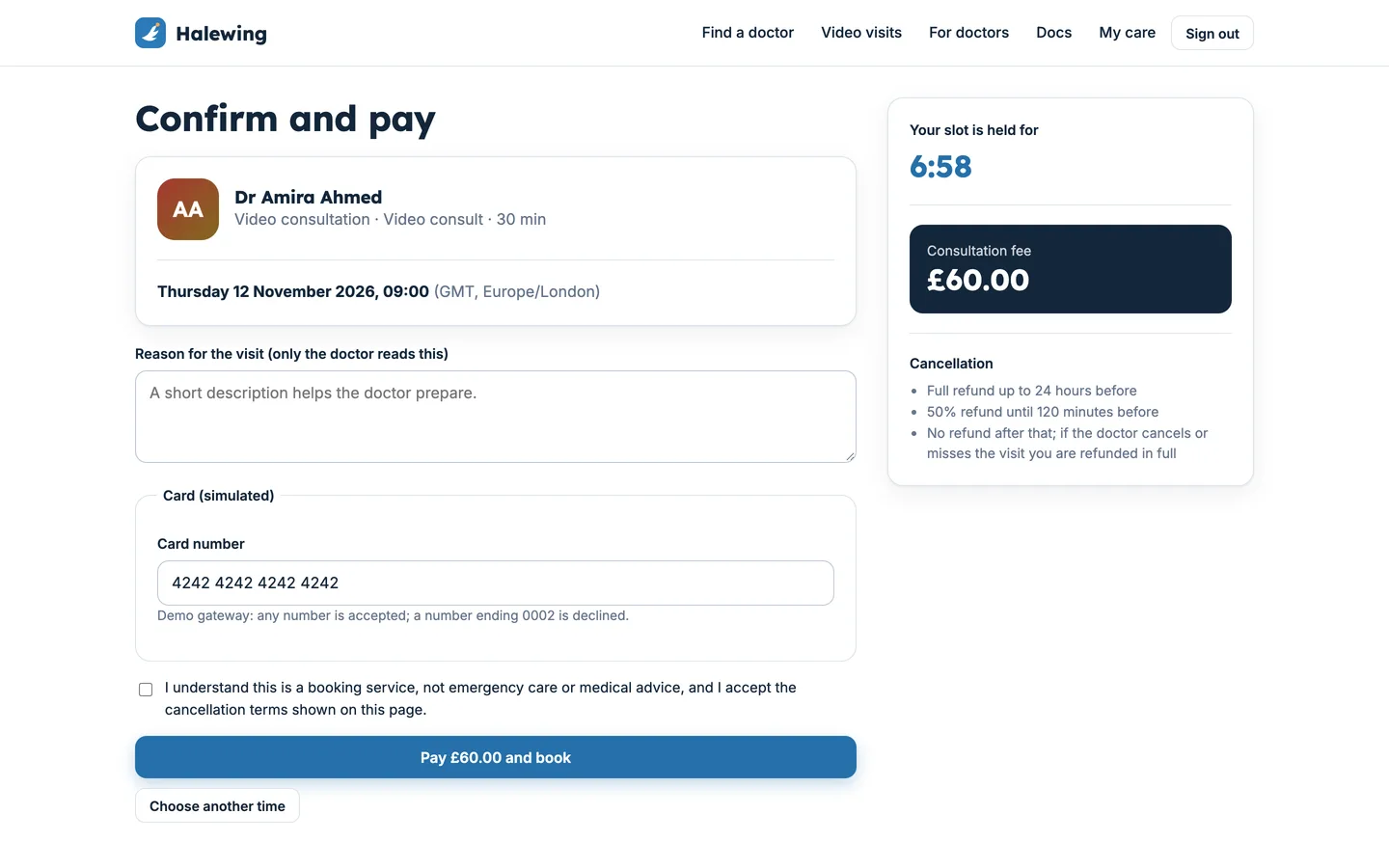
2. Does a slot stay yours while you pay?
A chosen slot should be held for a few minutes, with a countdown, and nobody else should be able to take it. Cancelling should show the refund before the patient confirms.
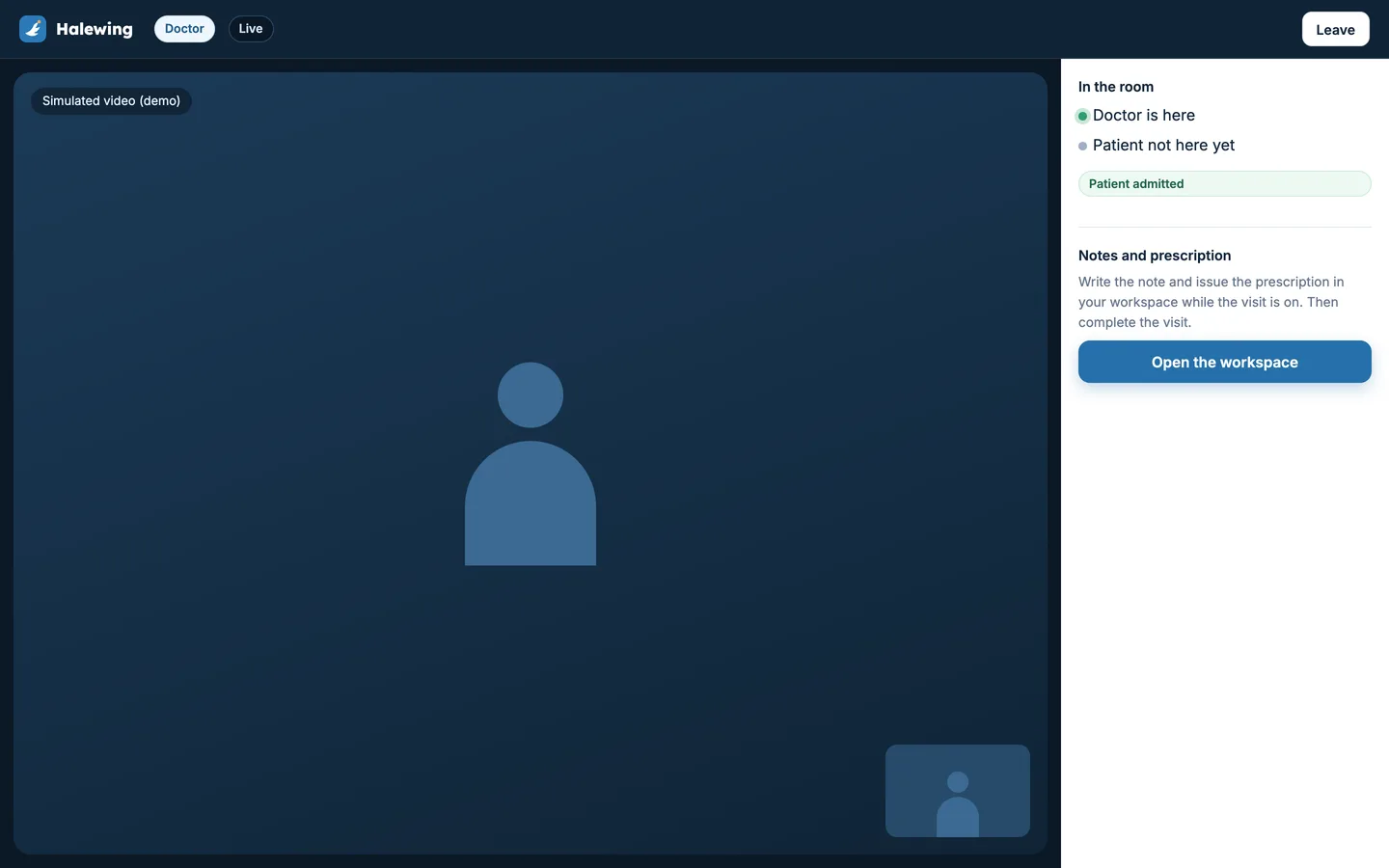
3. Is video a feature or a promise?
A consult needs a waiting room, an admit button for the doctor and a link that cannot be forwarded. Halewing opens a consult page that runs on your own Jitsi server and hosts and records no video.
4. Who checks the doctors?
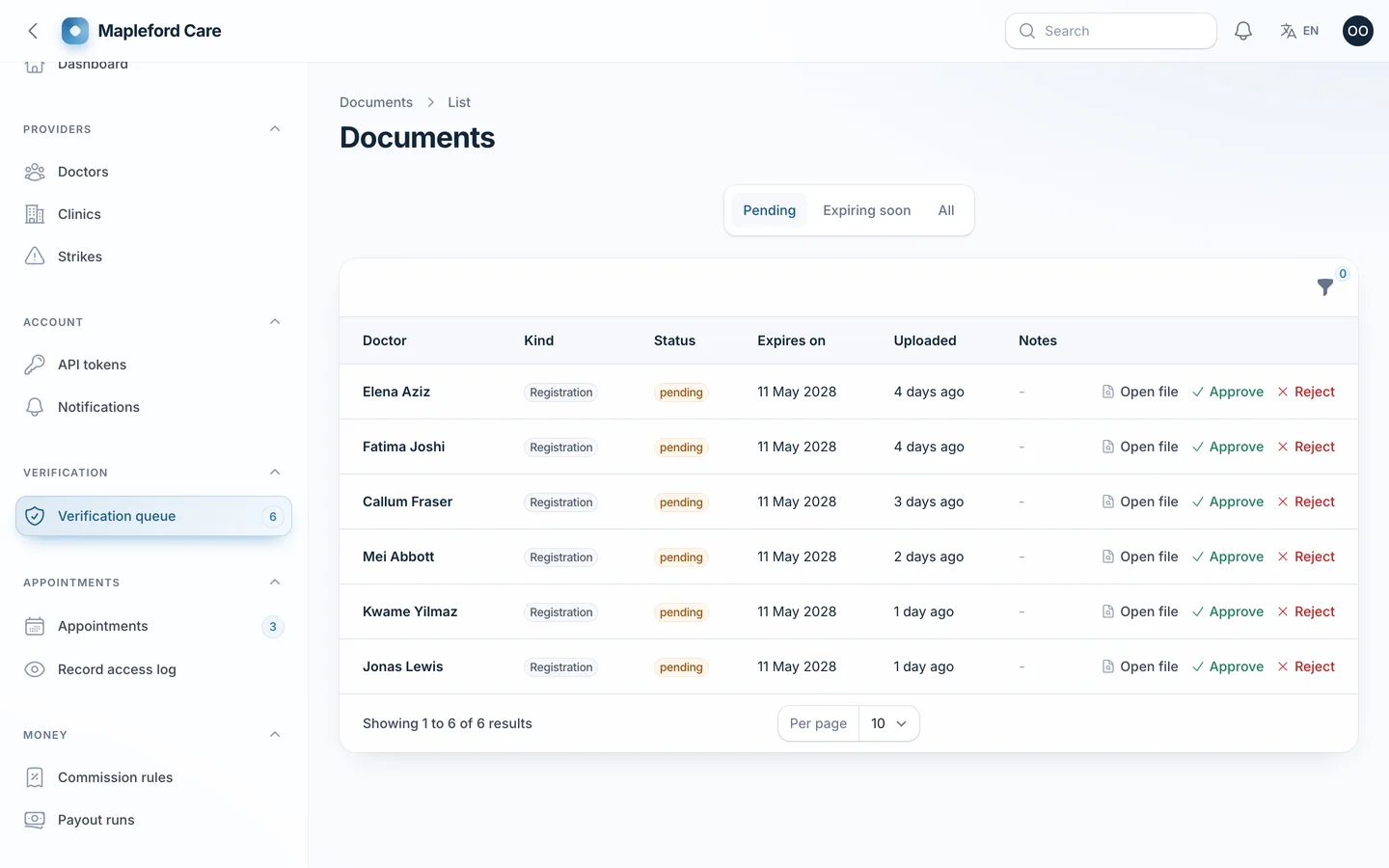
A marketplace is only as good as its listings. Documents should go through a queue where a person approves or rejects each one with a reason, and expiry dates should be watched. Halewing's verification is manual: there is no medical-council lookup.
5. Are notes and prescriptions handled with care?
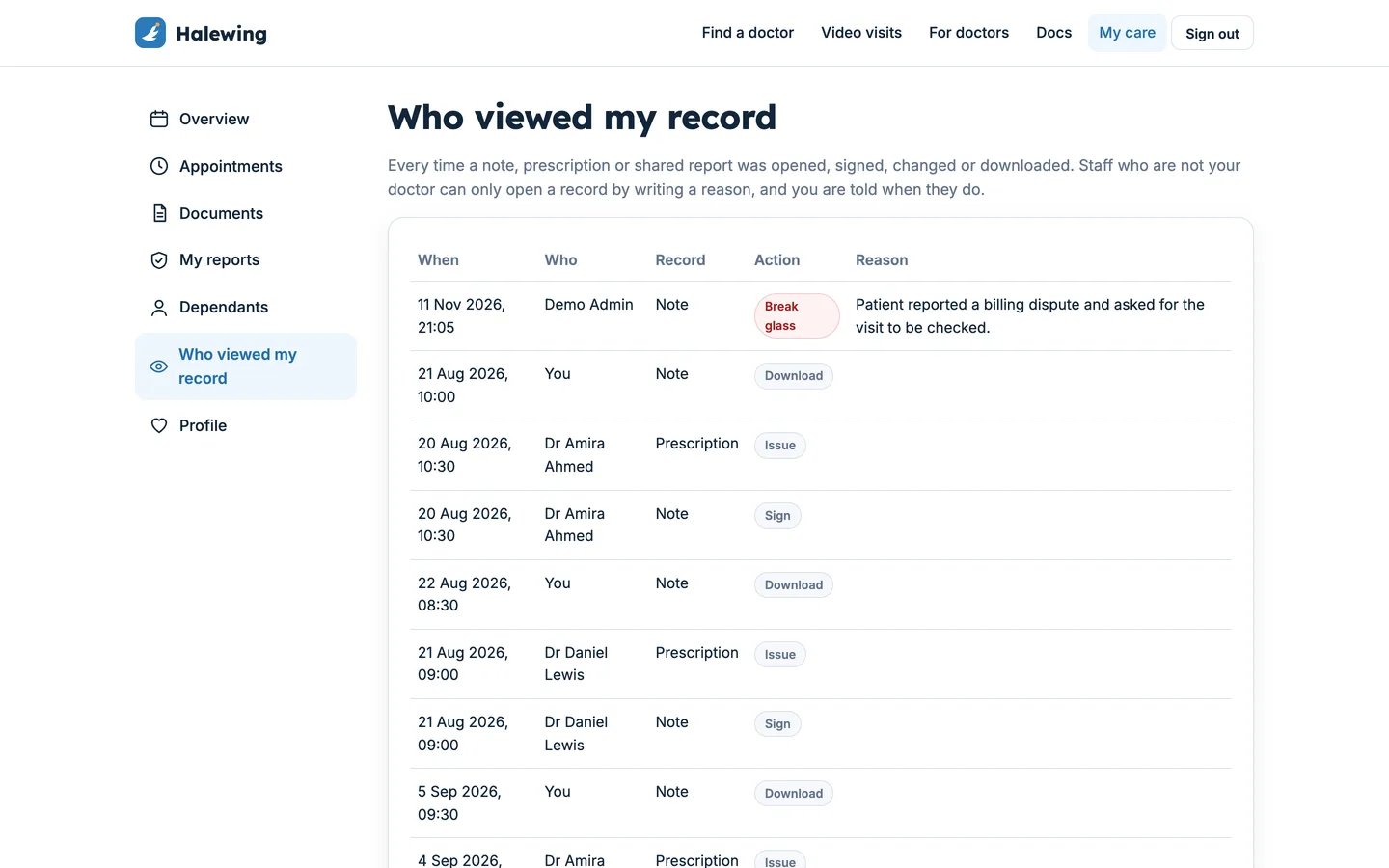
Look for signed notes with an amendment trail, prescription PDFs with a verification code, encrypted storage and an access log the patient can read.
6. Are the limits honest?
Halewing is a marketplace you operate, with one operator and many doctors. Payments and payouts are simulated until you connect a gateway, video needs your own Jitsi server, and prescriptions are PDFs, not electronic prescriptions sent to a pharmacy. It is not a medical product, gives no diagnosis and makes no compliance claim; you are responsible for health-data law where you operate. The patient and doctor Flutter apps ship with source and a guide for publishing them under your own store accounts.