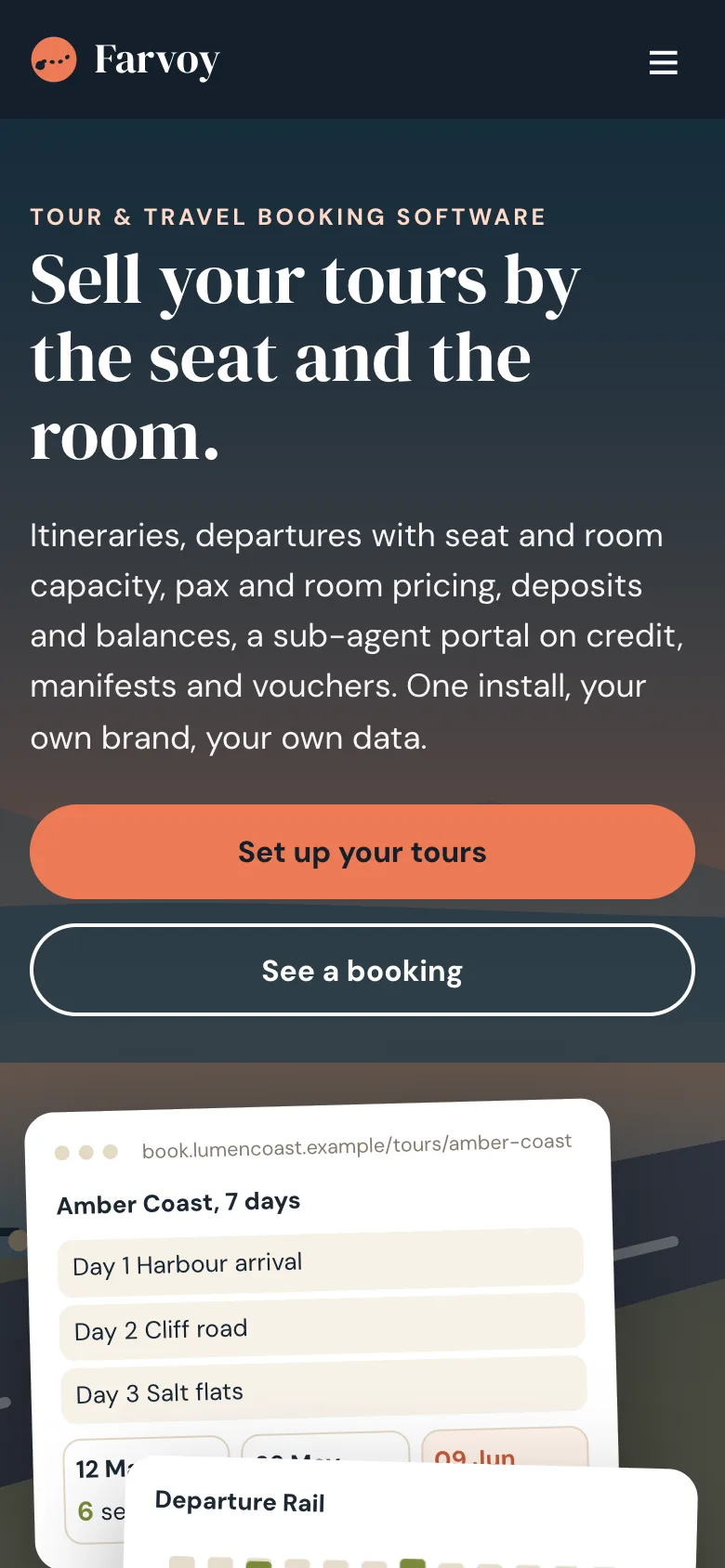
 On a phone — the same page stacks the copy over the scene and the product cards below.
Tour booking software for small operators: 6 things to check before you pick one
Last updated
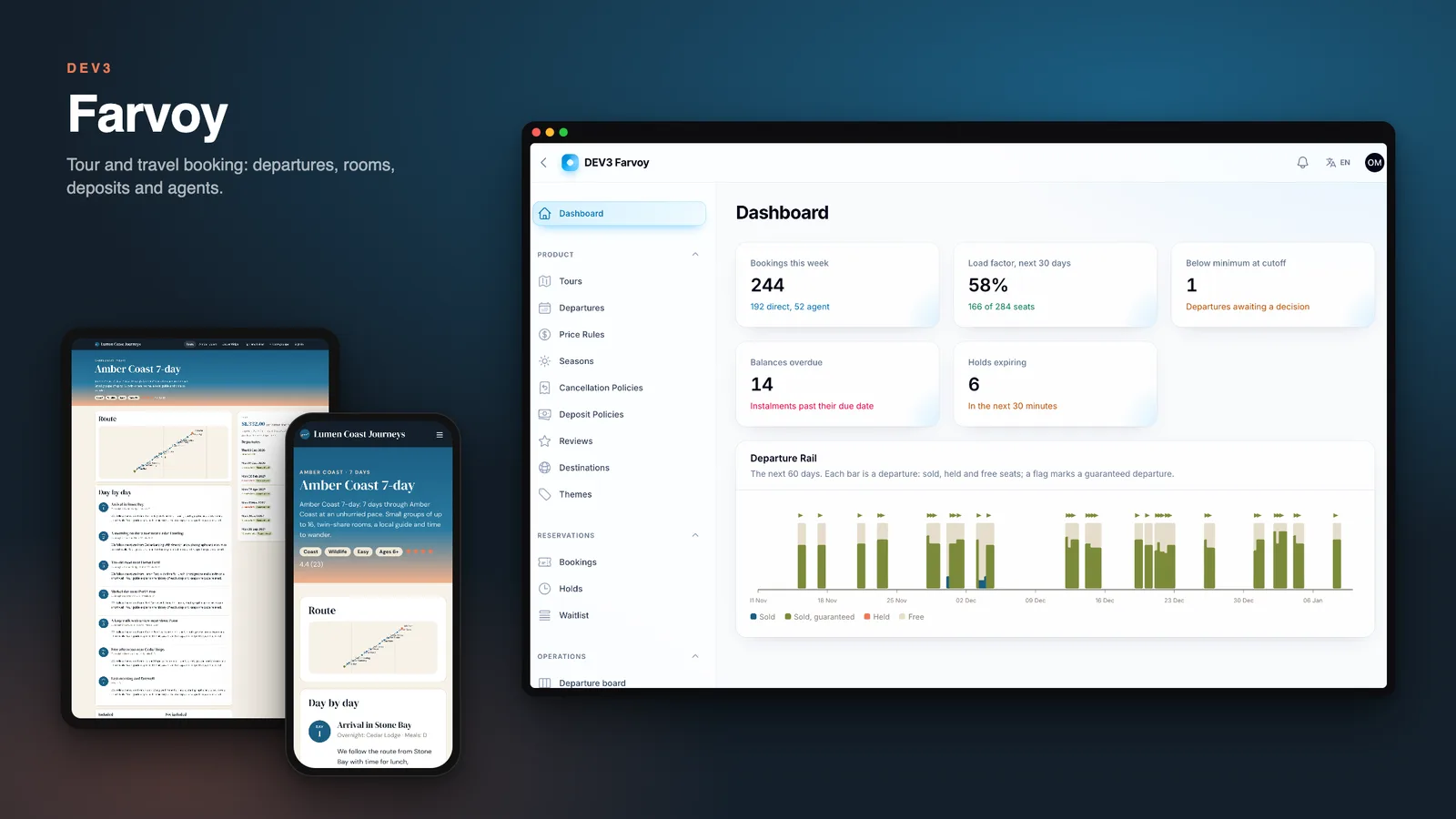
Most tour operators do not lose sleep over the website, they lose it over the last double room that two people tried to book at once. Here are six things to check before you pick booking software, with DEV3 Farvoy as the worked example.
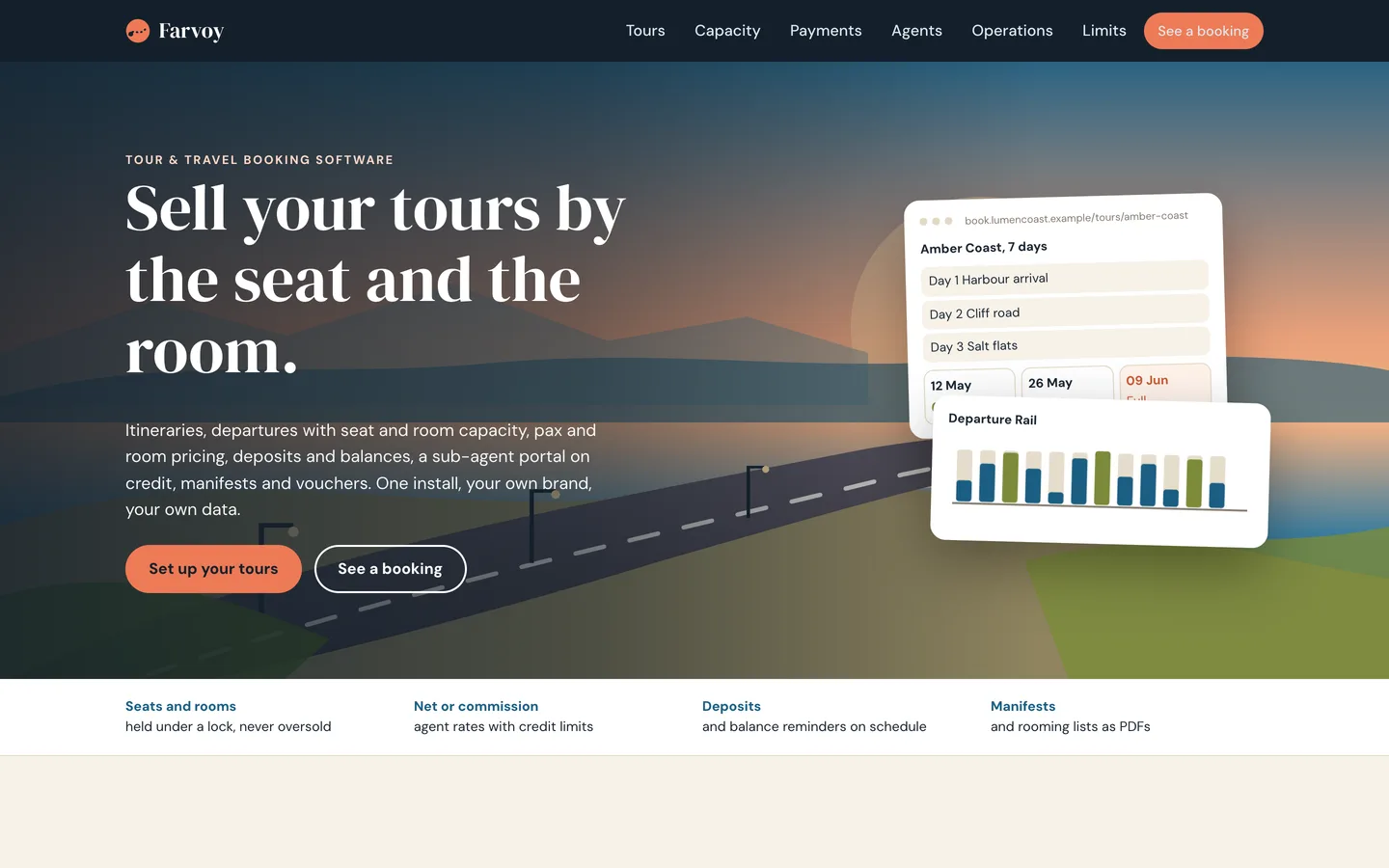
1. Can it oversell a departure?
Seats and rooms should be locked per departure, with sold, held and open counted separately. Farvoy locks departures in a fixed order, so two visitors, an agent and an amendment cannot take the same place.

2. Do holds behave?
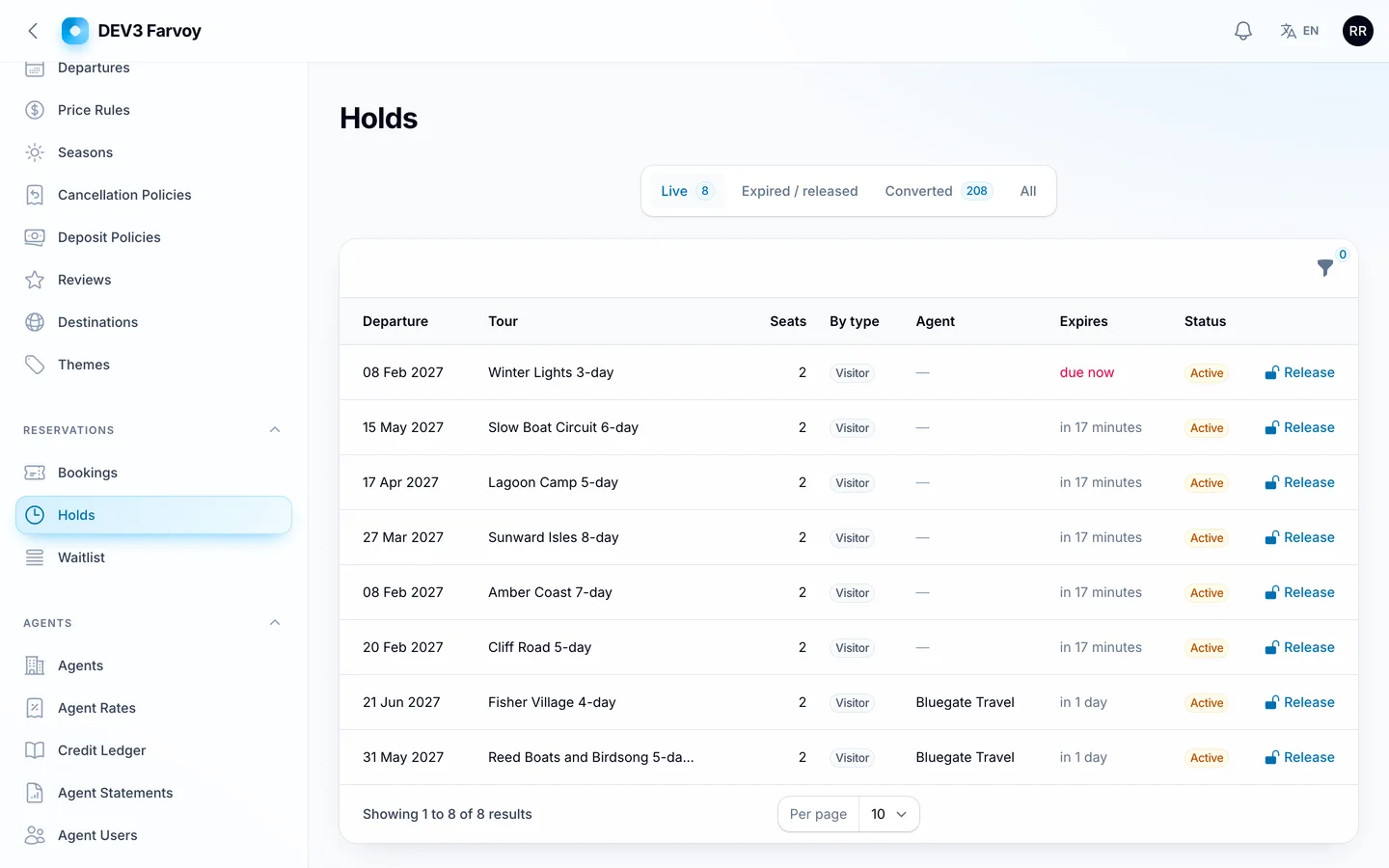
A hold keeps seats and rooms for a countdown while travellers type their details, then lets them go. Farvoy shows live holds with their timers and still honours a deposit that arrives a moment late if the places are still open.
3. Are deposits, balances and cancellations rules, not guesswork?
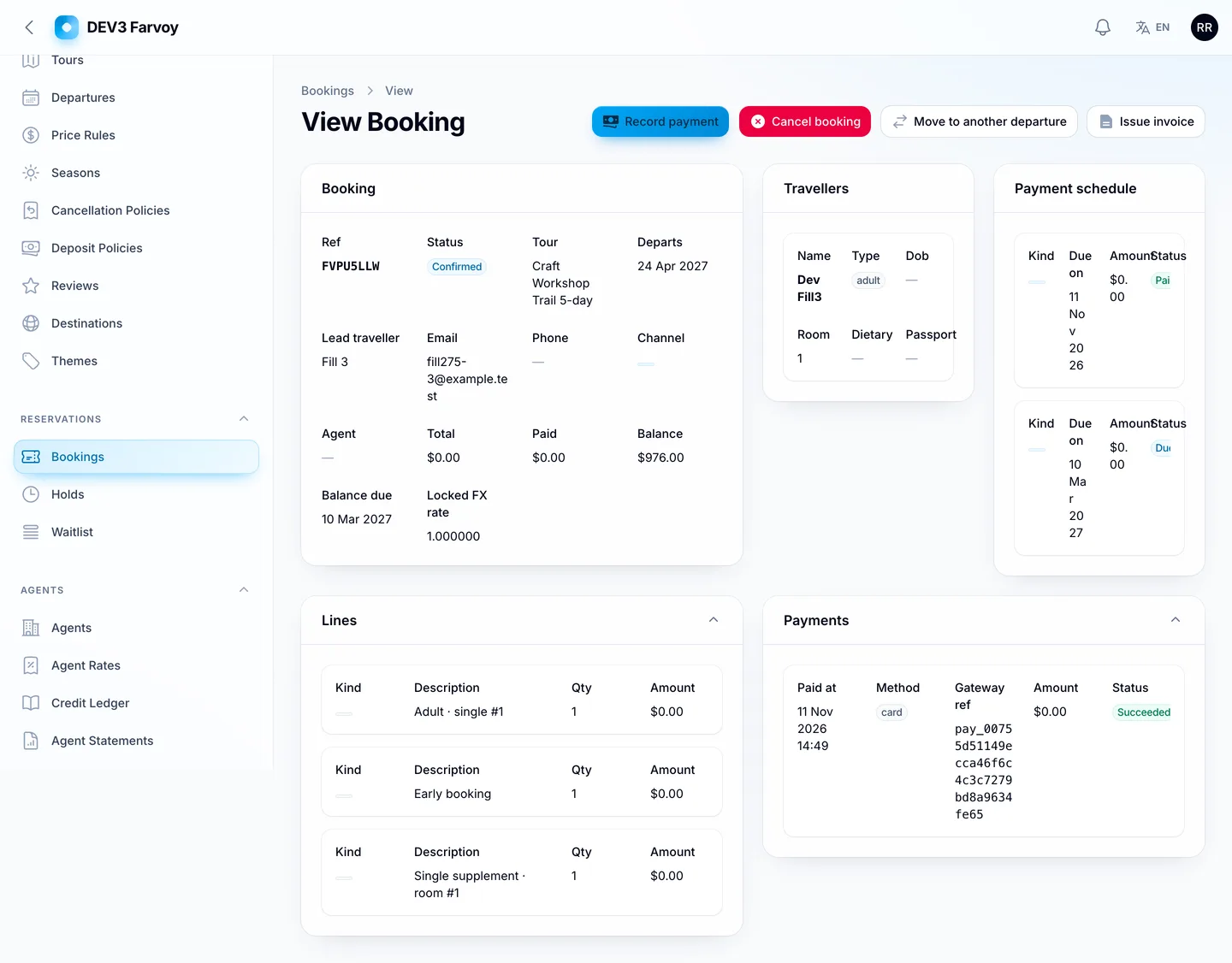
Deposit and balance dates come from settings, reminders go out, and cancellation fees follow tiers copied onto the booking when it was made, so changing a policy later does not rewrite old trips.
4. Can your agents book without calling you?
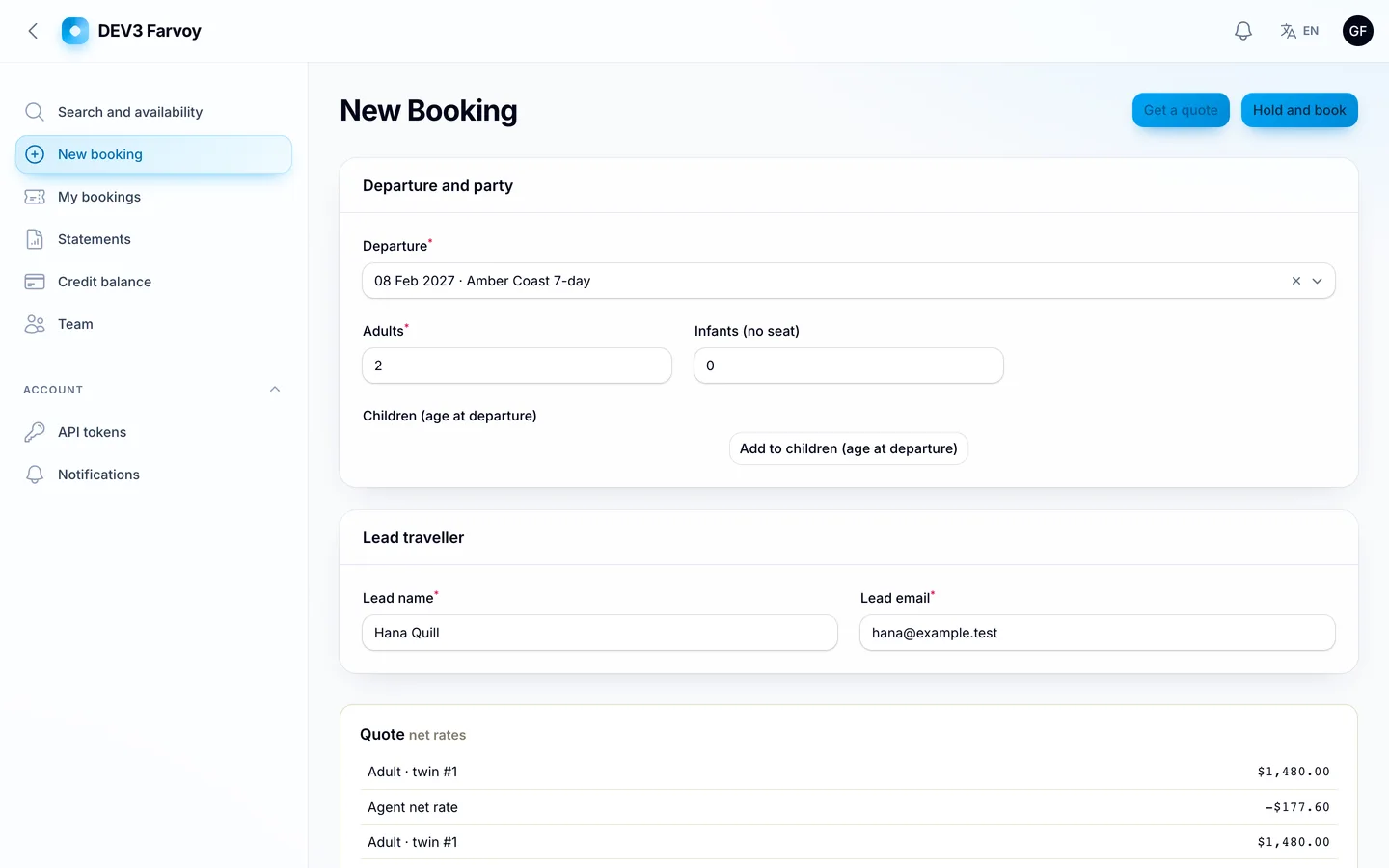
A sub-agent portal with net or commission rates, a credit limit and monthly statements saves a phone call per quote.
5. Does operations get what it needs?
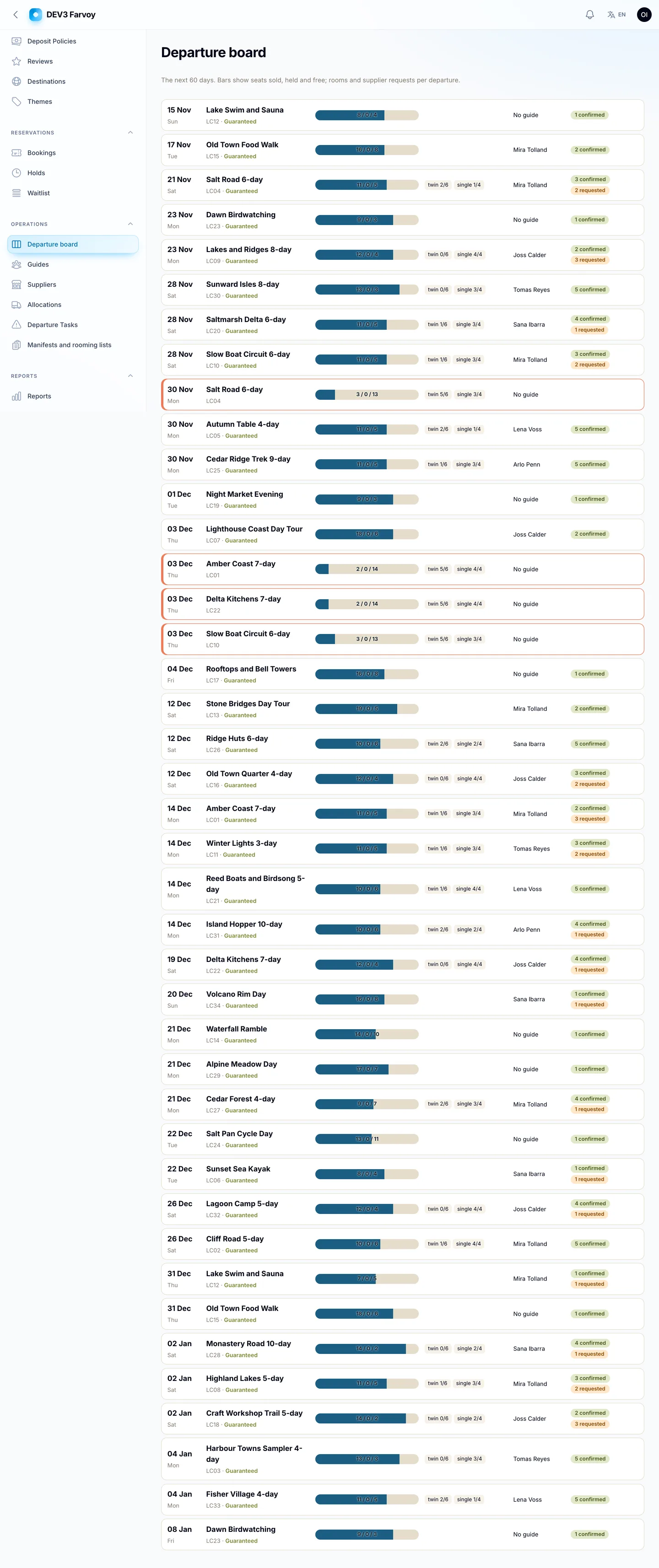
A departure board, supplier allocations and confirmations, guides and a manifest with medical notes only for the guide.
6. Are the limits honest?
Farvoy is a web app for one operator: no flight, hotel or GDS links, supplier costs are entered by hand, payments are simulated until you connect a gateway, and you remain responsible for package-travel rules and insurance. Say that plainly to your buyers.