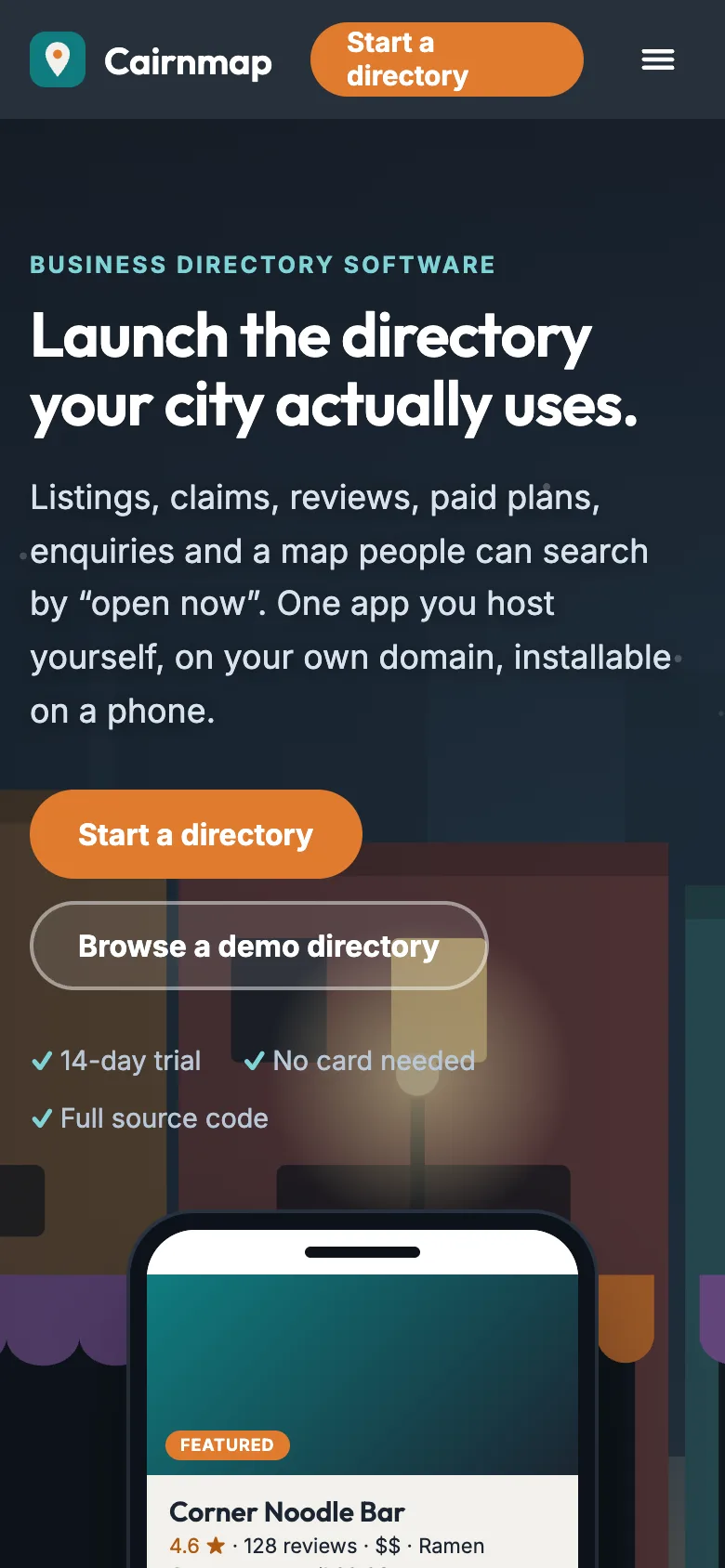
 The home page on a phone — The hero, calls to action and phone frame stack cleanly at phone width.
Business directory software: 6 things to check before you launch a directory
Last updated
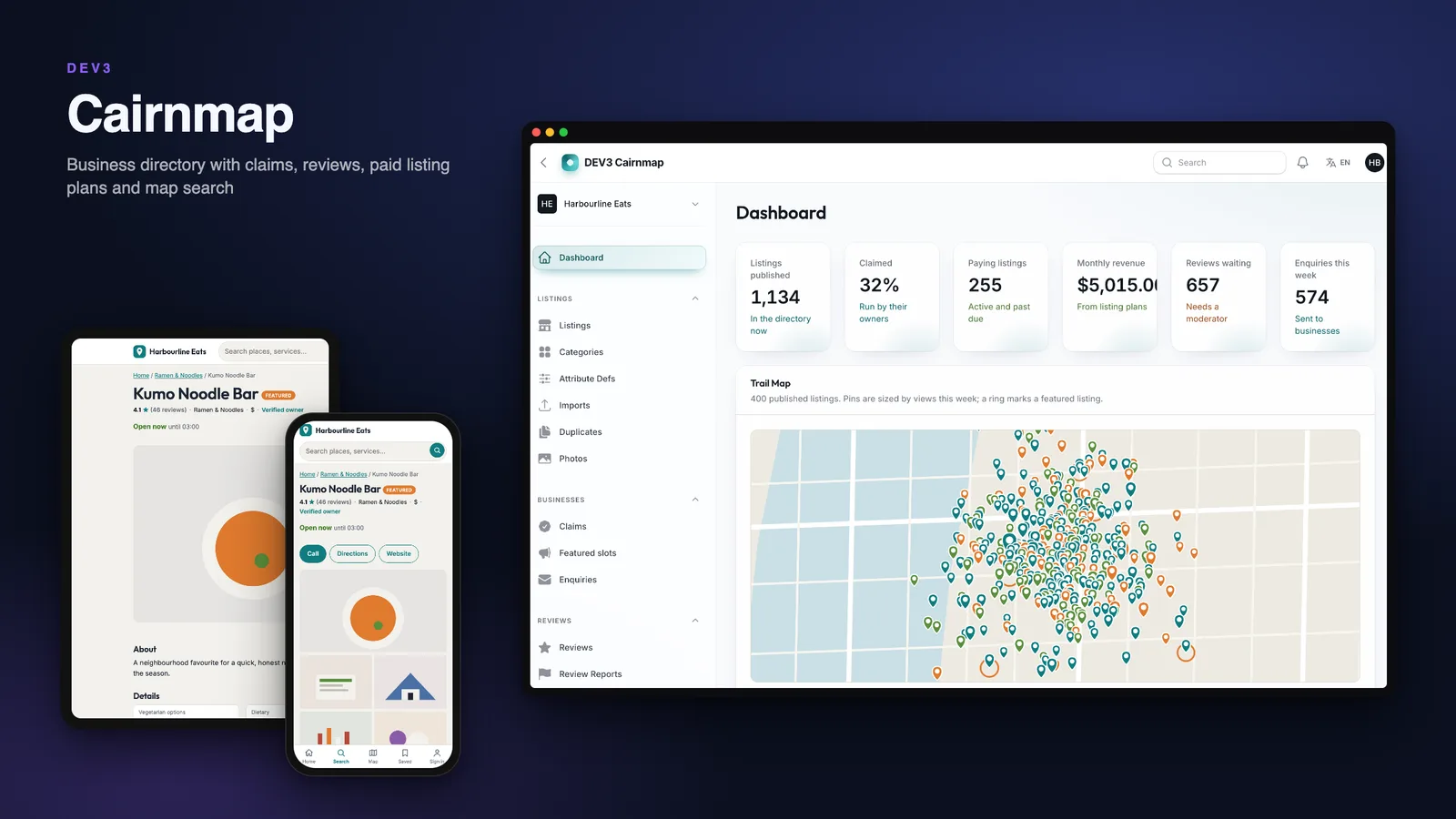
A directory is only as good as its listings, and those are only as good as the checks behind them. Here are six things to check before you pick software for a city guide or a niche directory, with DEV3 Cairnmap as the worked example.
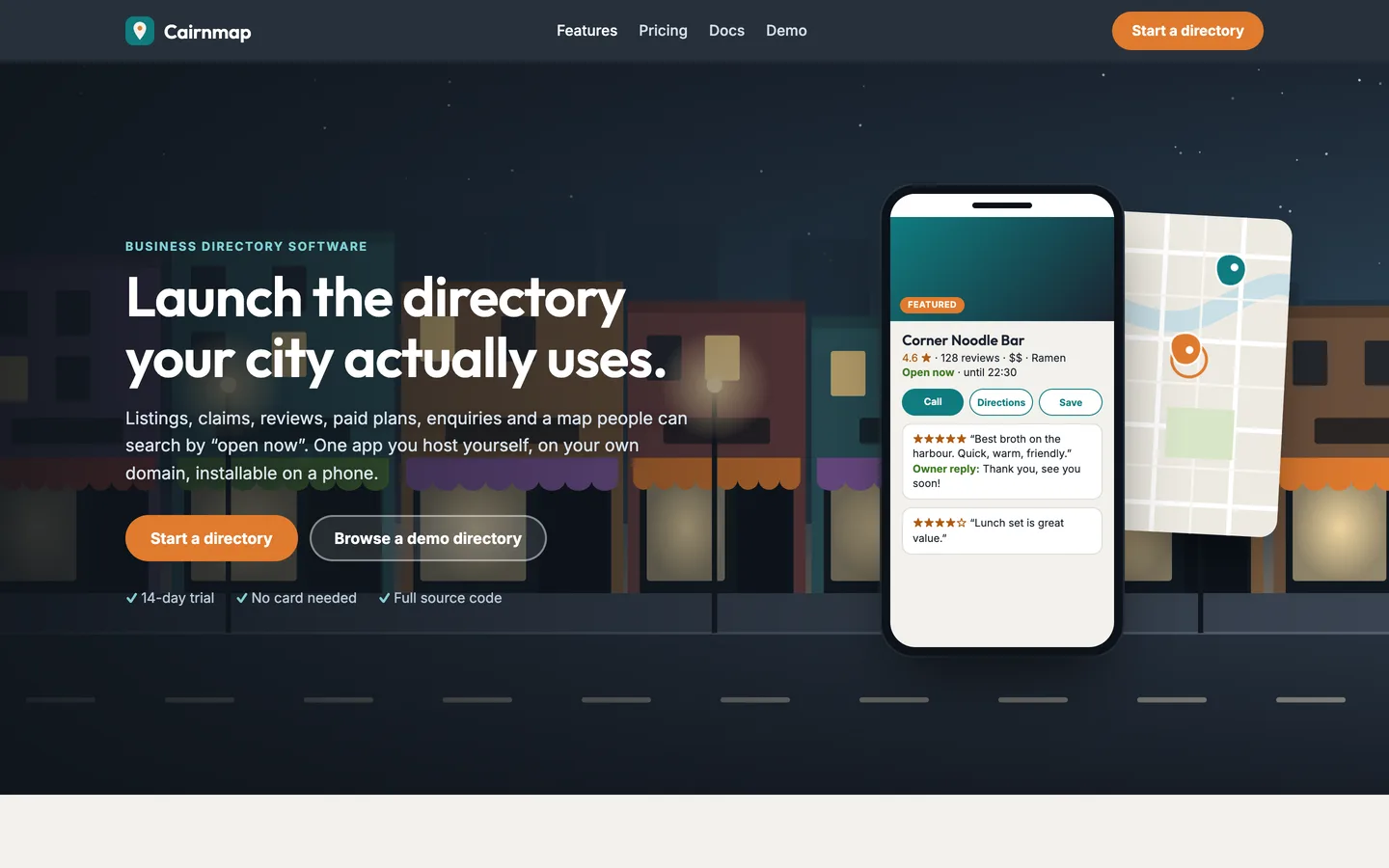
1. Does each directory get its own identity?
A regional guide and a wedding-vendor directory should not share data, pages or domains. Cairnmap gives every directory its own tenant, its own categories and attributes, and its own domain, with a tenant scope that fails closed.
2. Can businesses claim a listing without anyone forging it?
Claims should go to the contact already on the listing, with a code that is hashed, expires and locks after wrong guesses. Document claims wait for staff. Ask the vendor how a claim is decided and who can decide it.
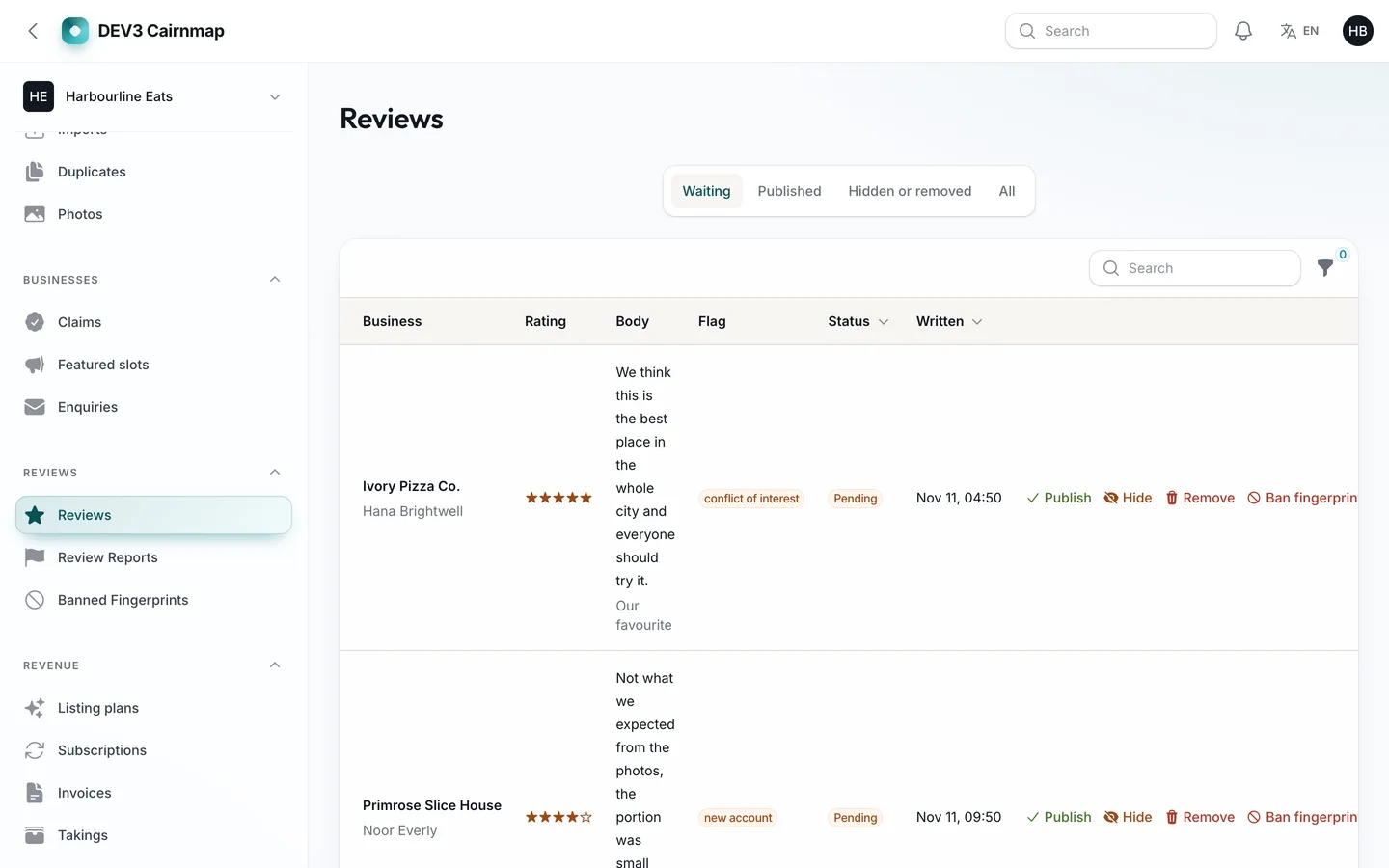
3. Are reviews moderated before they publish?
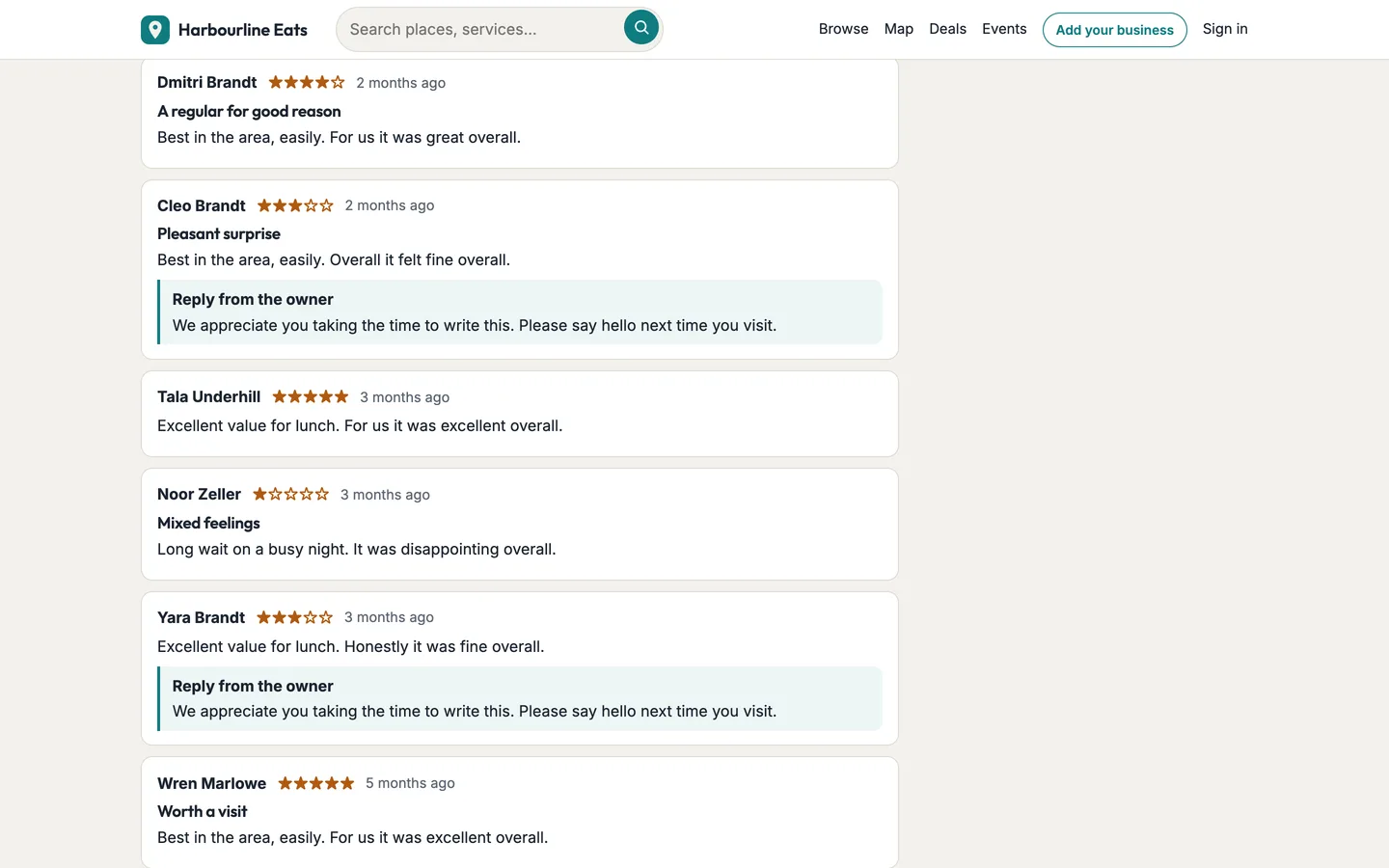
New accounts, flagged words and repeat browsers should wait in a queue. Owners reply once, and the author can no longer edit a reply. Check that the queue is there before you launch.
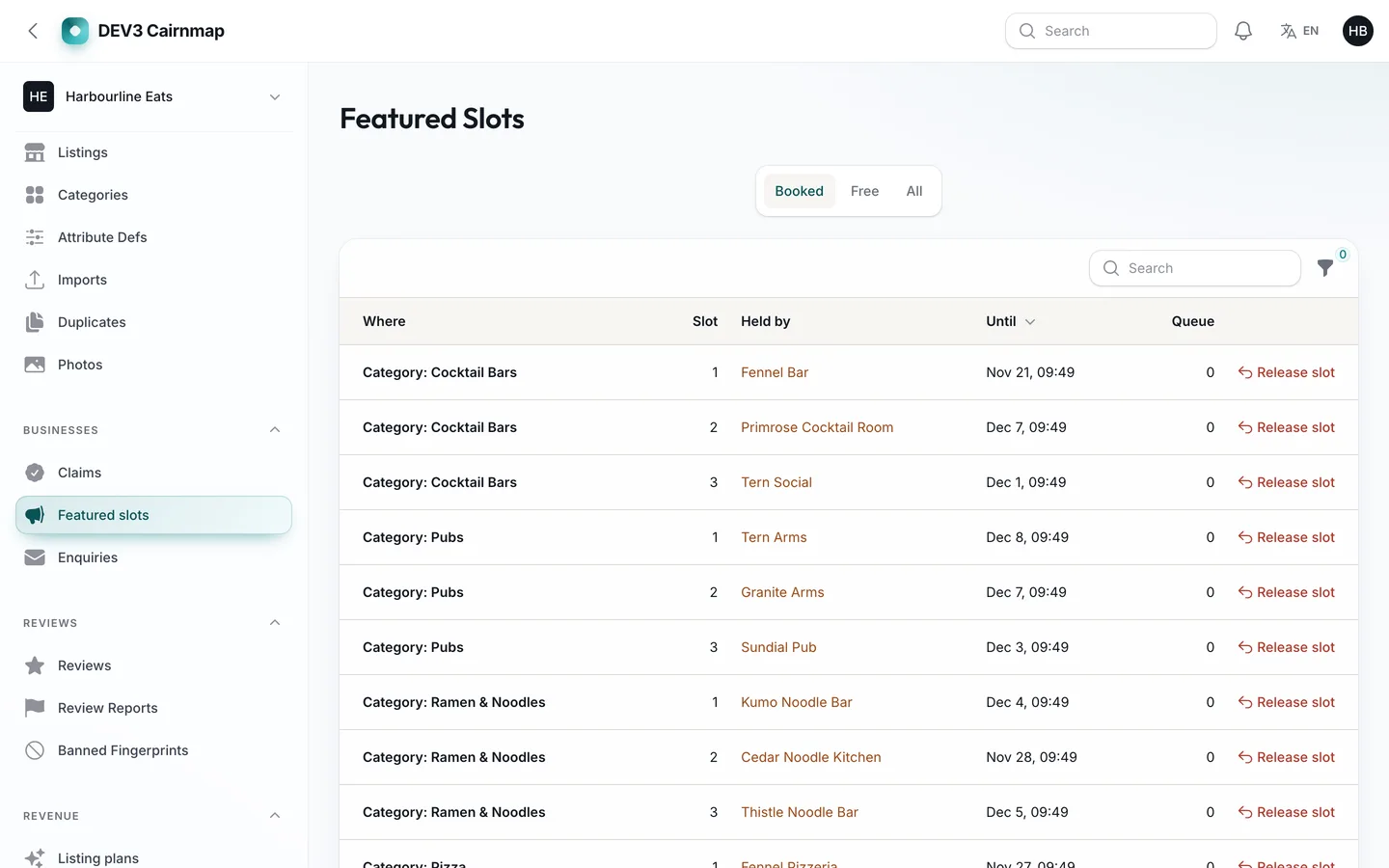
4. Does paid visibility stay fair?
Featured slots need a calendar, a queue and a grace period after a failed payment. When a plan lapses, the slot should pass to the next business, and the search order should not be sold outright.
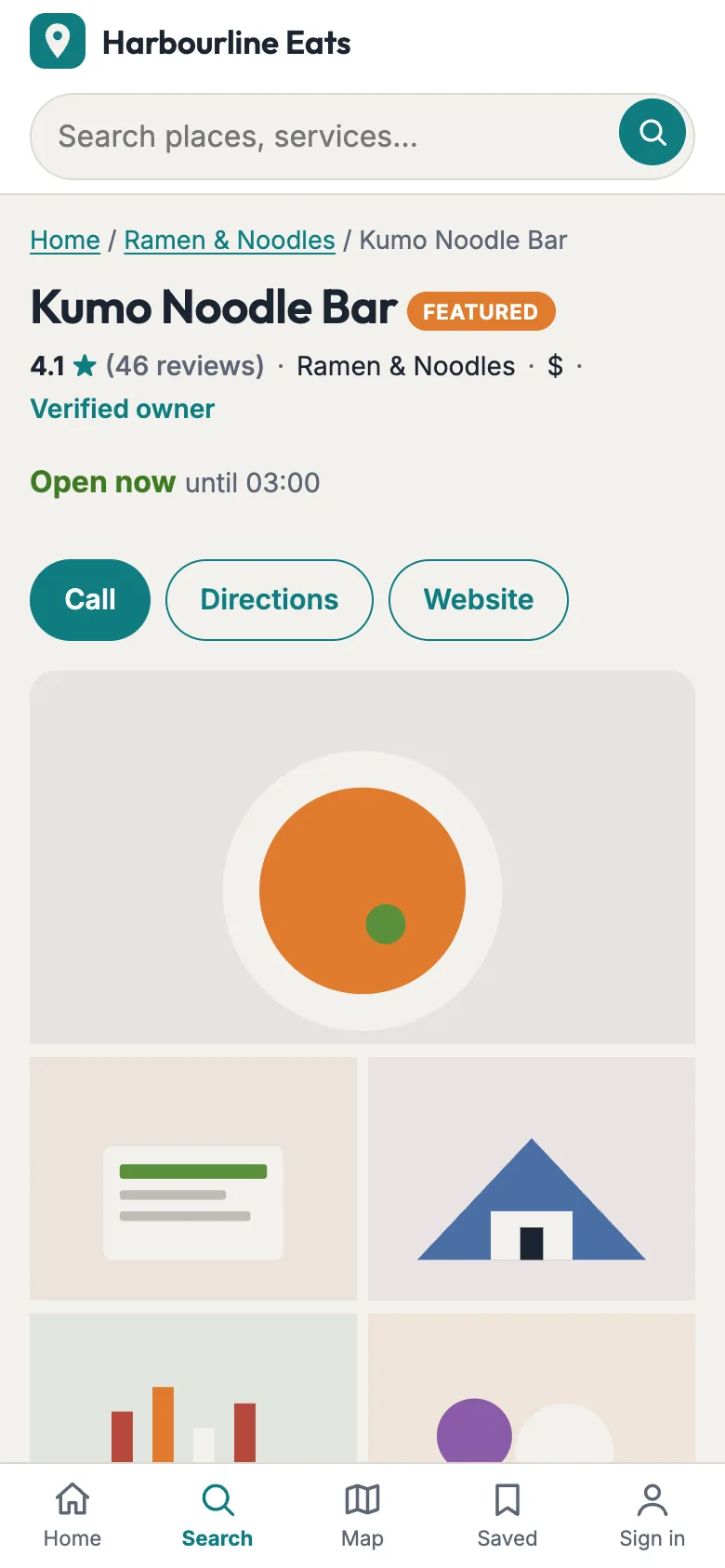
5. Does search answer the question people actually ask?
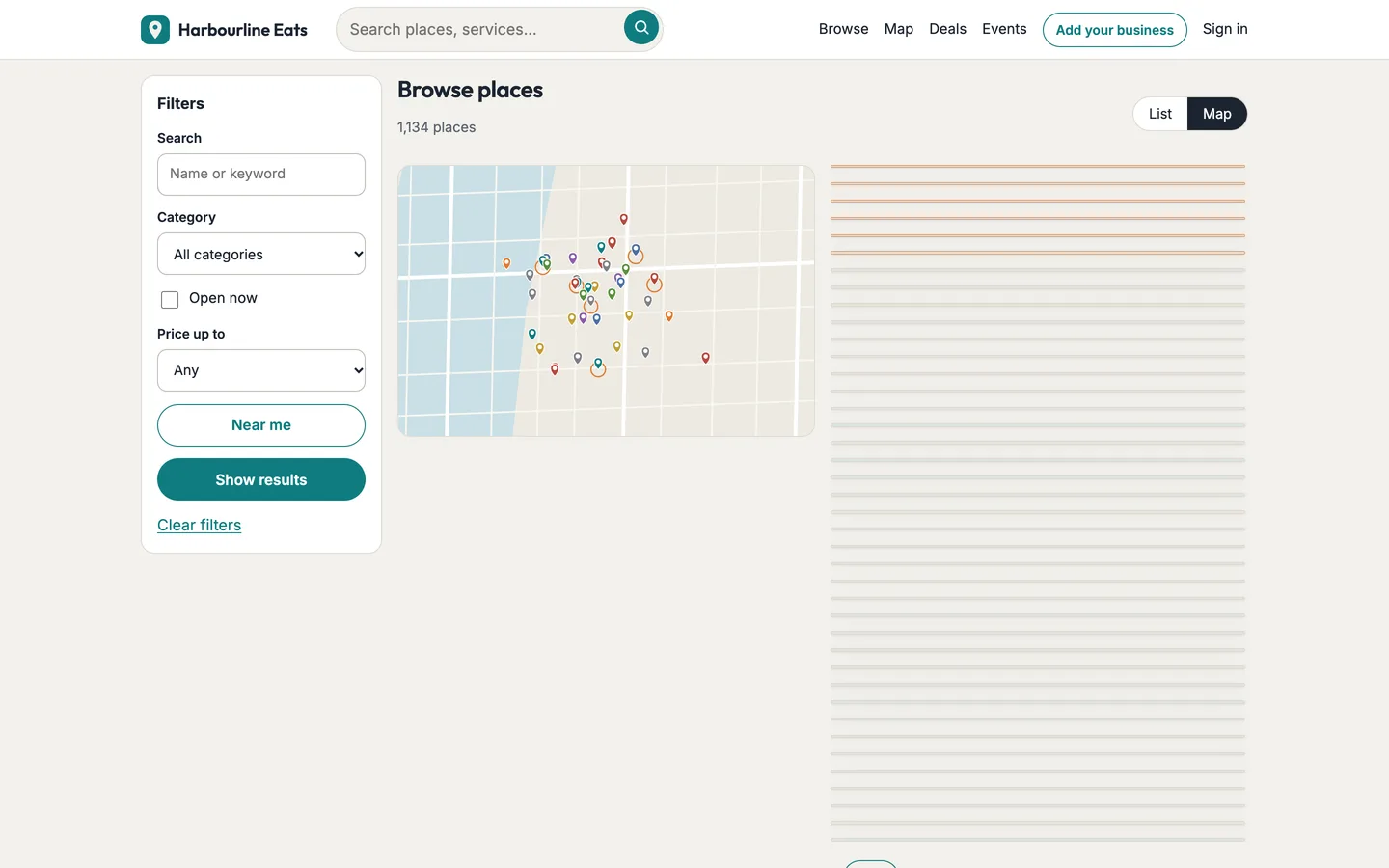
Map search, categories with attributes, and open now (including hours that cross midnight and special days) matter more than a long list. On a phone, the listing should lead with call and directions.
6. Are the limits honest?
Cairnmap is a web app with an installable PWA: no native apps, no registry lookups, and listing fees are simulated until you connect a gateway. The operator or the directory owner is the merchant of record, depending on the mode you choose. Say that plainly to your buyers.