DEV3 Technologies home

DEV3 Stoopside – Neighbourhood Community Network, Events, Chat & Ads Manager SaaS with Gemini AI admin tools

A self-hosted noticeboard for neighbourhoods and local clubs: street groups, events, private messages, an anonymous tip line, organiser memberships and shop, a self-serve local ads manager and a moderation desk. Light paper and dark themes, built for phones too. Next.js + MongoDB.
by DEV3 TechnologiesVerified AuthorUpdated 22 Nov 2026

Video tour. Pick a section below to browse 37 screenshots in 6 sections.

Similar products · 2 more designs

Same features, a different design. Each is its own product: pick one and buy it on its own.

App & phone tours

Tap play to watch each app. Nothing downloads until you do.

  • Mobile web0:23

Stoopside is a self-hosted community network for neighbourhoods, residents' groups and local clubs, built by DEV3 Technologies on Next.js, React 19, TypeScript and MongoDB. Neighbours post notices, join street groups, RSVP to events and message each other; organisers charge for memberships and sell tickets and kits; local businesses buy adverts through a self-serve ads manager; and a moderation desk keeps it all kind. You host it yourself and own the data.

shot:01-home-hero

A noticeboard, not a feed of noise

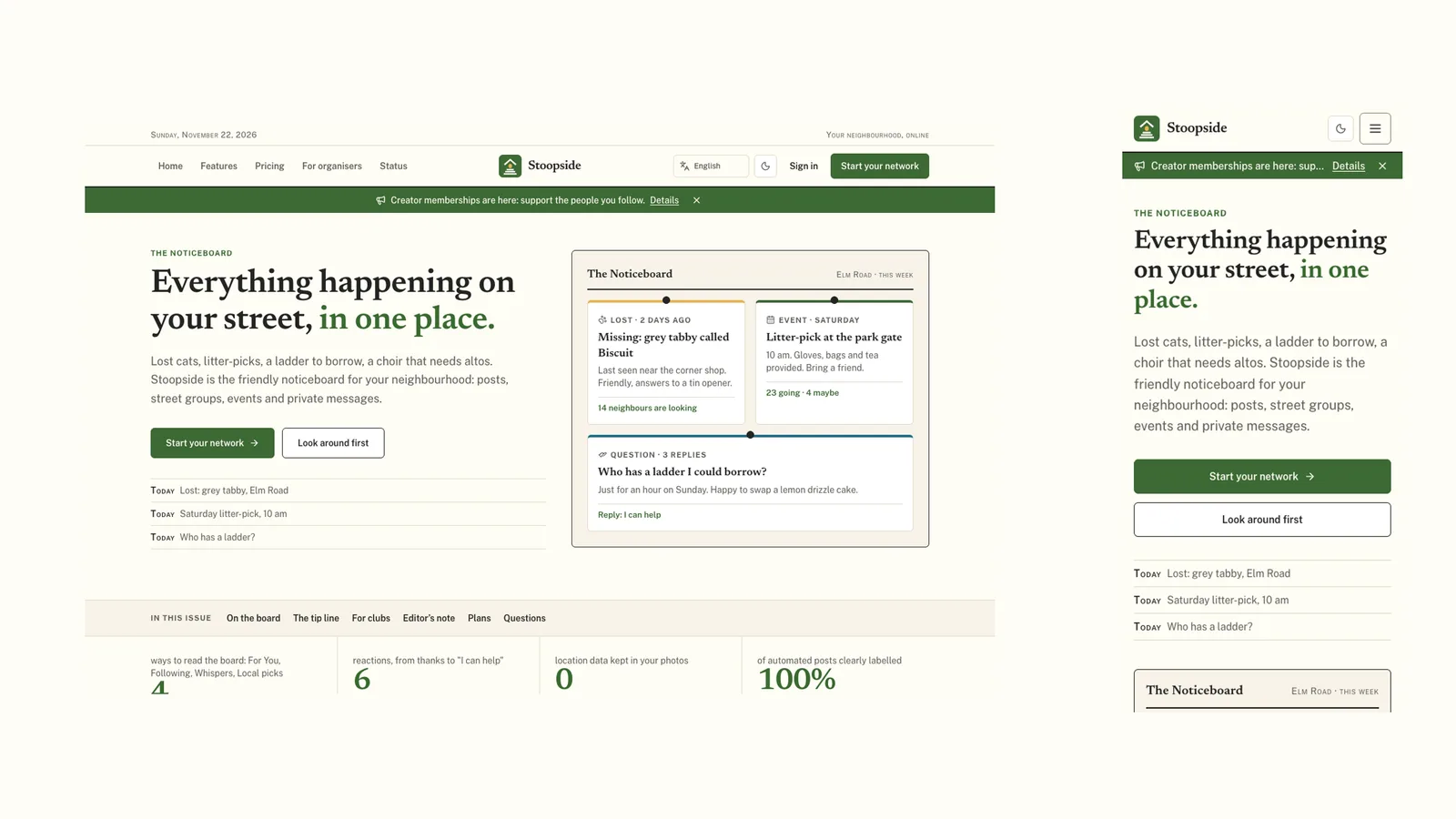
  • The home page is a local paper: a serif masthead, pinned notices and an "On the board this week" column.
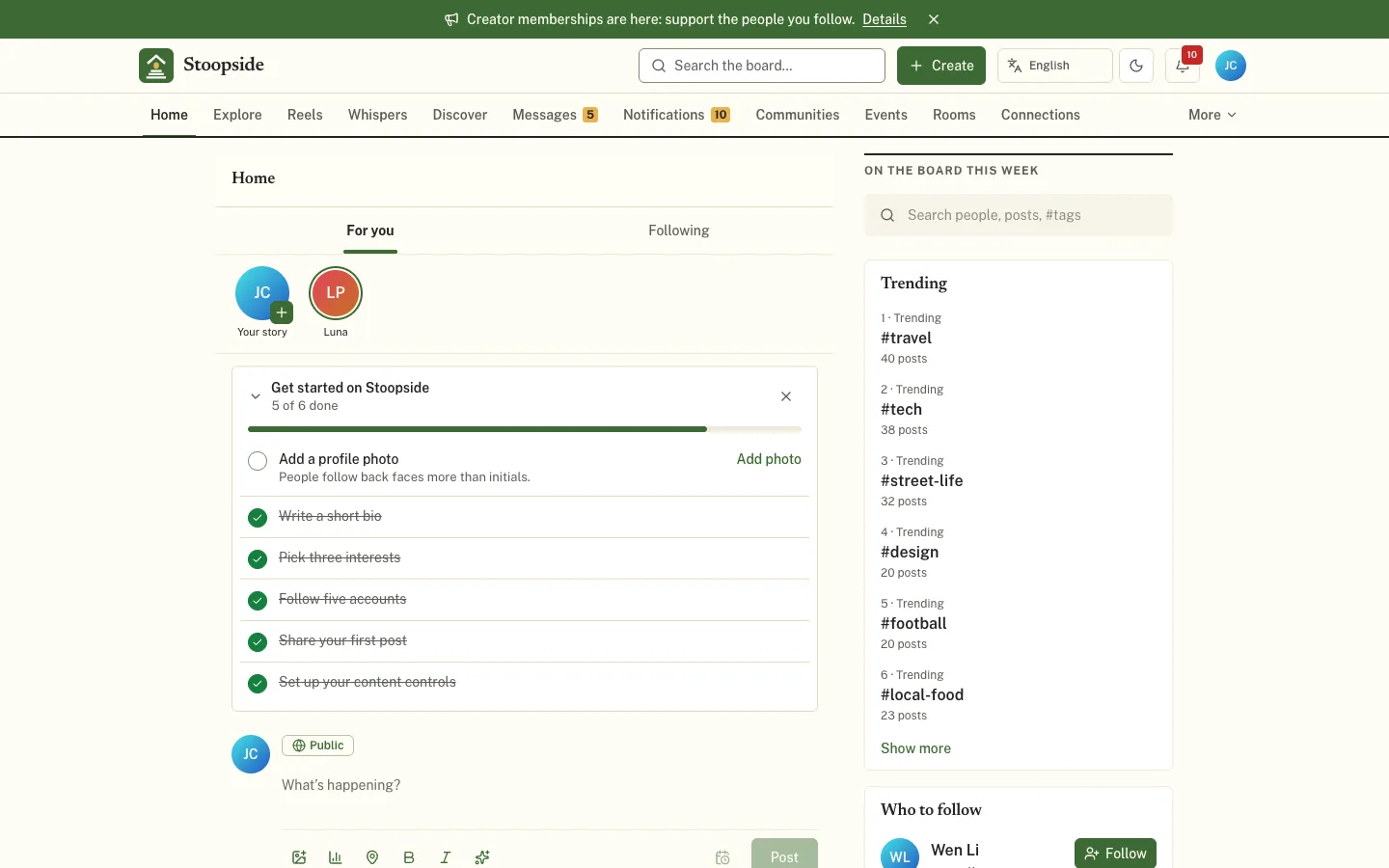
  • For You, Following and anonymous Whispers, with photos, polls, audio and video, reactions, reposts and threaded replies.
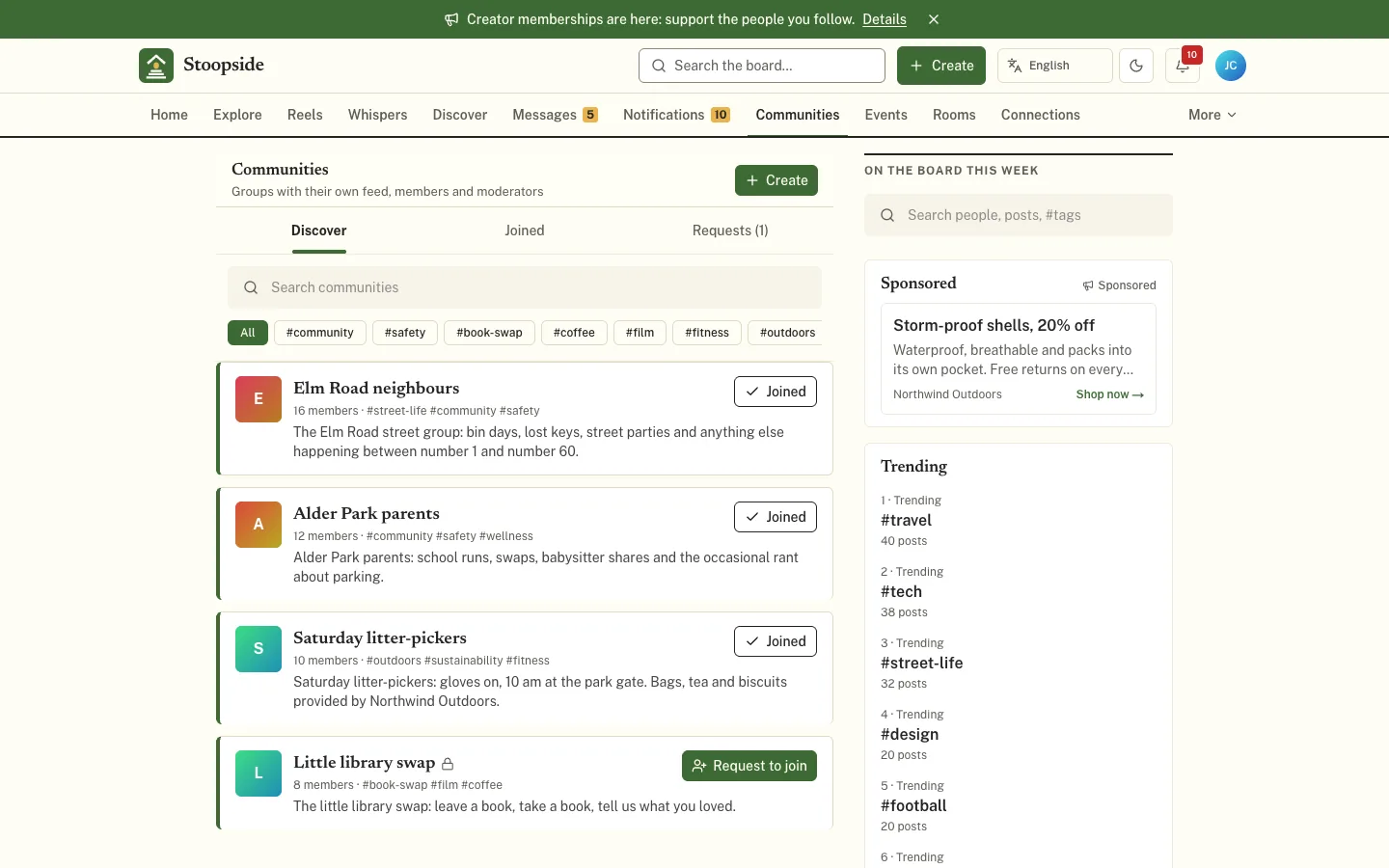
  • Street groups with house rules, their own members and feed, and moderators.

shot:08-noticeboard

Events, messages and the tip line

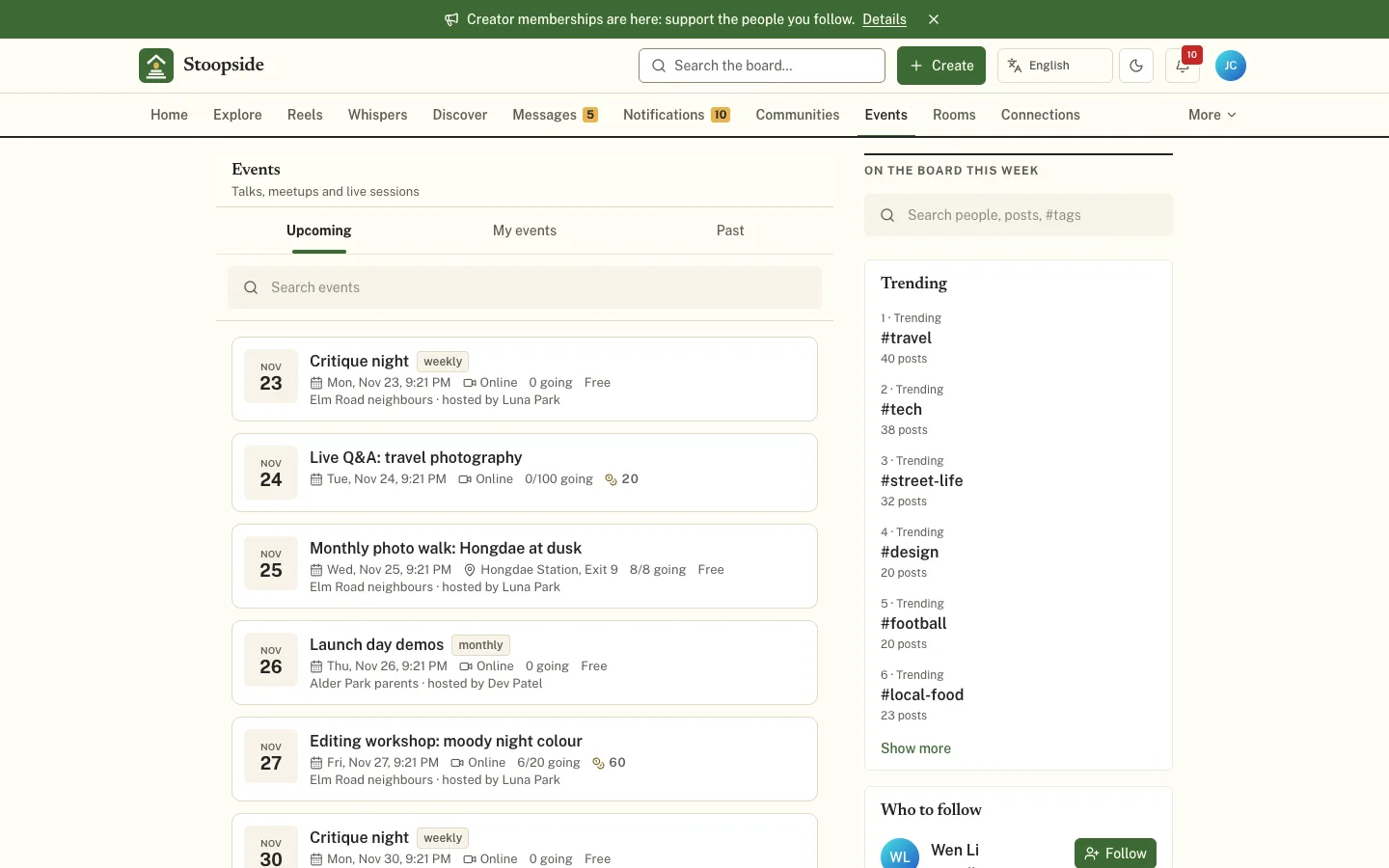
  • Events with RSVP, reminders and calendar-file export.
  • Direct and group chats with typing, read receipts, voice notes, scheduled sends and saved replies.
  • An anonymous tip line: a fresh masked name in every conversation, safety-scanned before delivery.

shot:12-events shot:11-tip-line

Organisers and local adverts

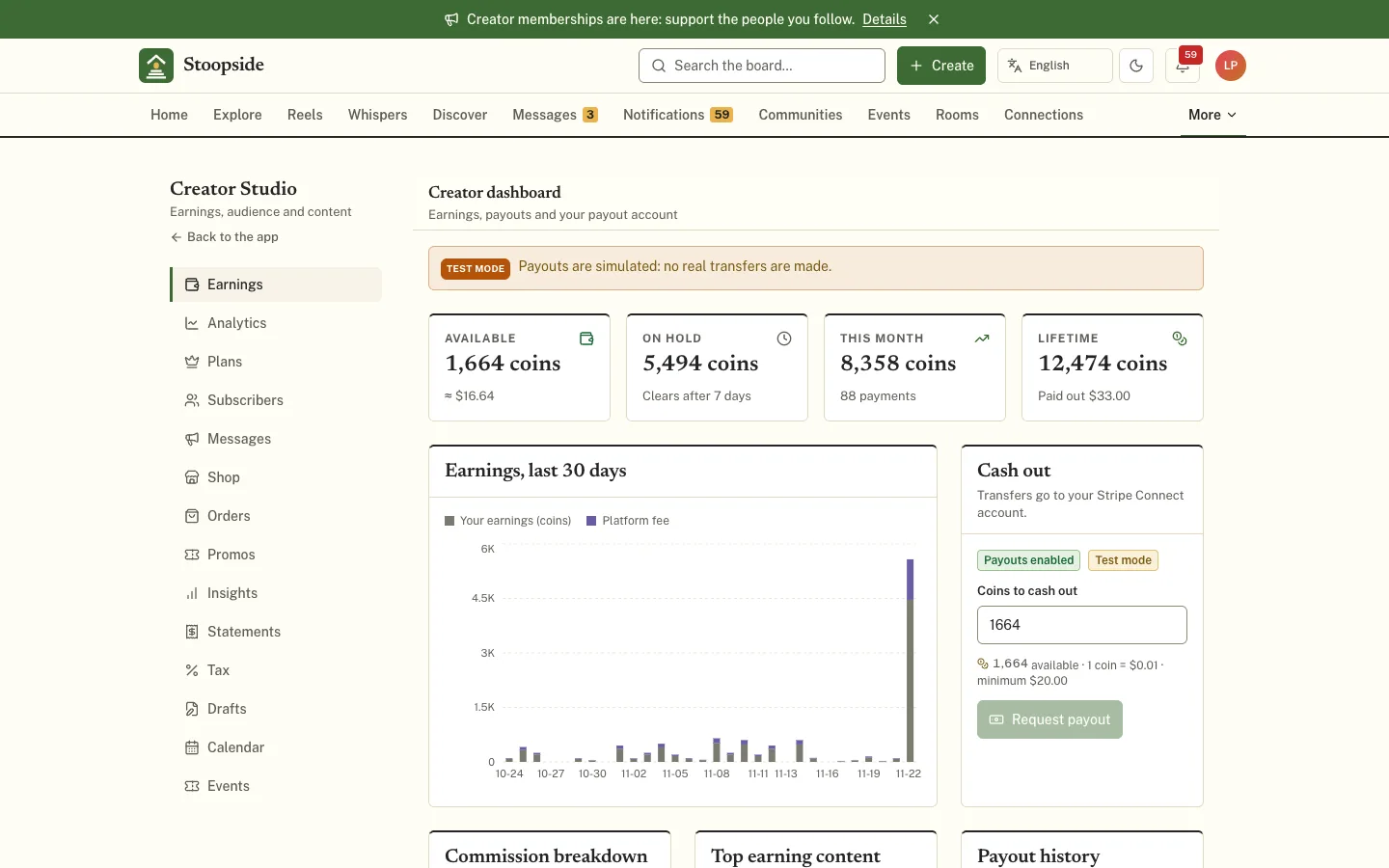
  • Organiser studio: memberships, paid posts, tips, a shop for digital products and bundles, promo codes, statements and payouts.
  • A double-entry ledger behind every balance. Payments are simulated out of the box; Stripe Checkout, Billing and Connect switch on when you add keys.
  • Local ads manager with a campaign wizard, budgets, audiences, creatives, experiments, a conversion pixel and reports, reviewed before anything runs.

shot:17-organiser-studio shot:20-ads-manager

The desk

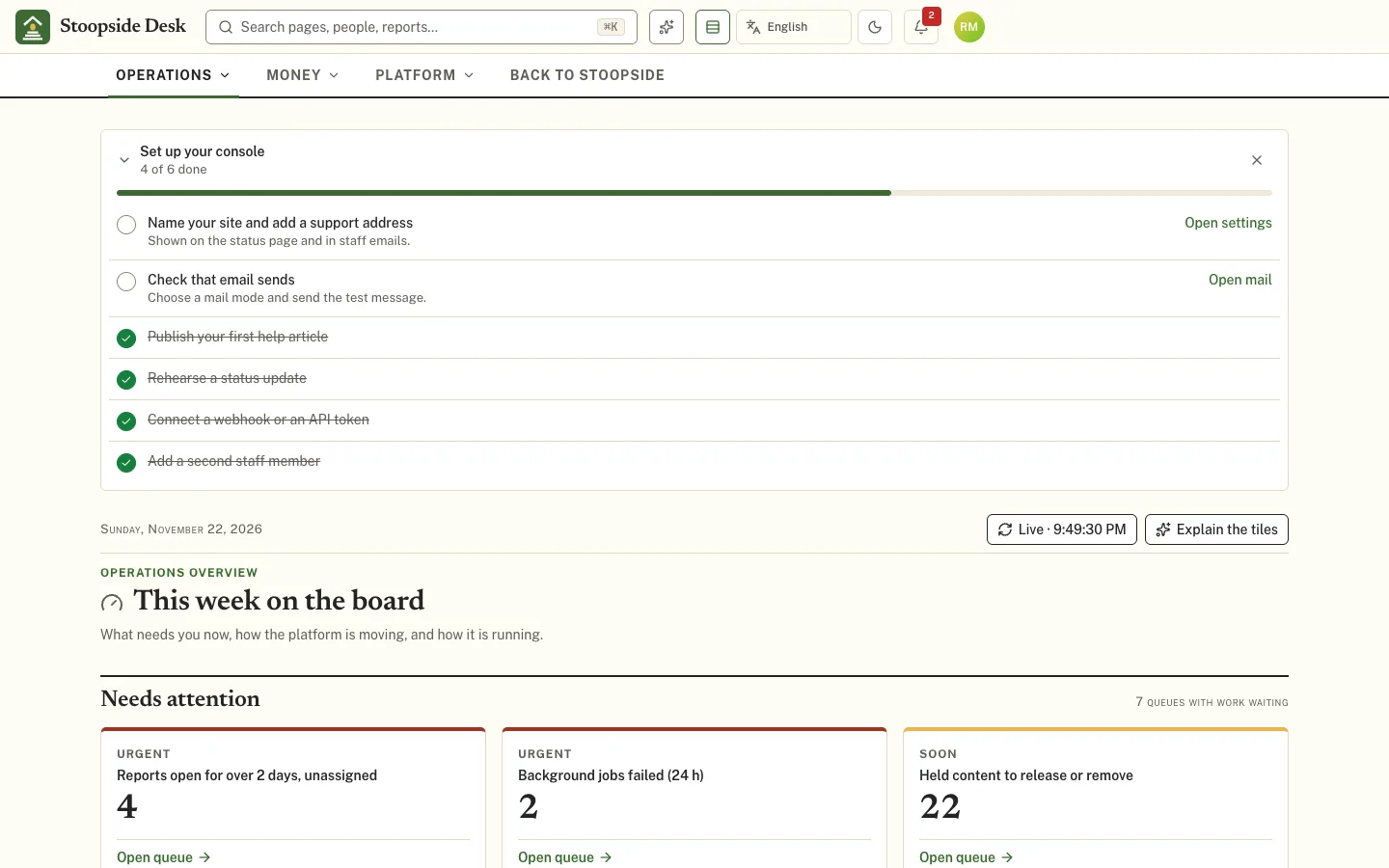
  • Operations overview under newspaper-style section tabs, each opening a ruled menu of its pages.
  • Moderation cases, report queue, appeals, strikes, verification, support tickets with macros, help articles and data requests.
  • Roles and permissions (50 permission nodes, custom roles), audit log, feature flags, an emergency lock and a Gemini-powered assistant (offline driver until you add a key).

shot:23-desk-overview shot:26-desk-cases

Made for phones

Every screen has a 390 px layout: a bottom bar with a square compose button for members and a full-screen menu sheet for the desk. Light and dark themes both meet WCAG AA contrast.

shot:33-phone-home video:tour-desktop

What you run

  • Three Node processes: the web app, a realtime server (Socket.io) and a background worker. The app still works without the realtime server and falls back to polling.
  • MongoDB 5 or newer; a replica set or a managed MongoDB service is recommended so the ledger can use transactions.
  • Optional keys: Stripe, a Gemini key for the AI assistant, SMTP, Cloudinary, Web Push, Twilio, Redis and a TURN relay.

Demo

Eight one-click demo logins (member, organiser, advertiser, manager, finance, admin, support agent, super admin) with one shared demo password listed in the buyer guide. Every demo person, group and business is fictional.

How it's built

Architecture, stack, key decisions and the quality gates DEV3 Stoopside passed before release.

How a self-hosted neighbourhood network pairs a serif noticeboard for residents with a section-tabbed moderation desk, flat design tokens and a double-entry ledger.

The problem it solves

Neighbourhood groups need a calm place to post notices, meet and message, while organisers charge for memberships and moderators keep things kind. The software has to feel like a local paper rather than a feed of noise, and money, privacy and moderation must stay strictly correct.

Architecture and approach

Stoopside is a Next.js and MongoDB community network with three processes: the web app, a realtime server and a background worker. Residents get a front page set like a local paper, street groups, events, private messages and an anonymous tip line. The desk groups operations, moderation, support and finance under newspaper-style section tabs.

Design lives in tokens: one hedge-green-on-paper palette, self-hosted fonts and flat surfaces with no gradients or glow. Every balance is backed by a double-entry ledger, and tip-line identities are masked per conversation.

Quality gates and results

  • Typecheck, lint, the unit tests and the production build all passing
  • Light and dark modes, 390 px phone layouts and WCAG AA contrast
  • Public pages tuned for mobile Lighthouse scores of 90 or more

Tech stack

Area Technologies
Frontend Next.js 15, React 19, Tailwind CSS 4
Backend Server Actions, Mongoose, MongoDB, Socket.io realtime

Inside the build

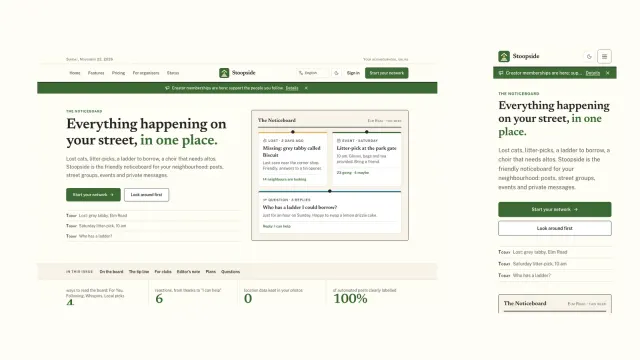
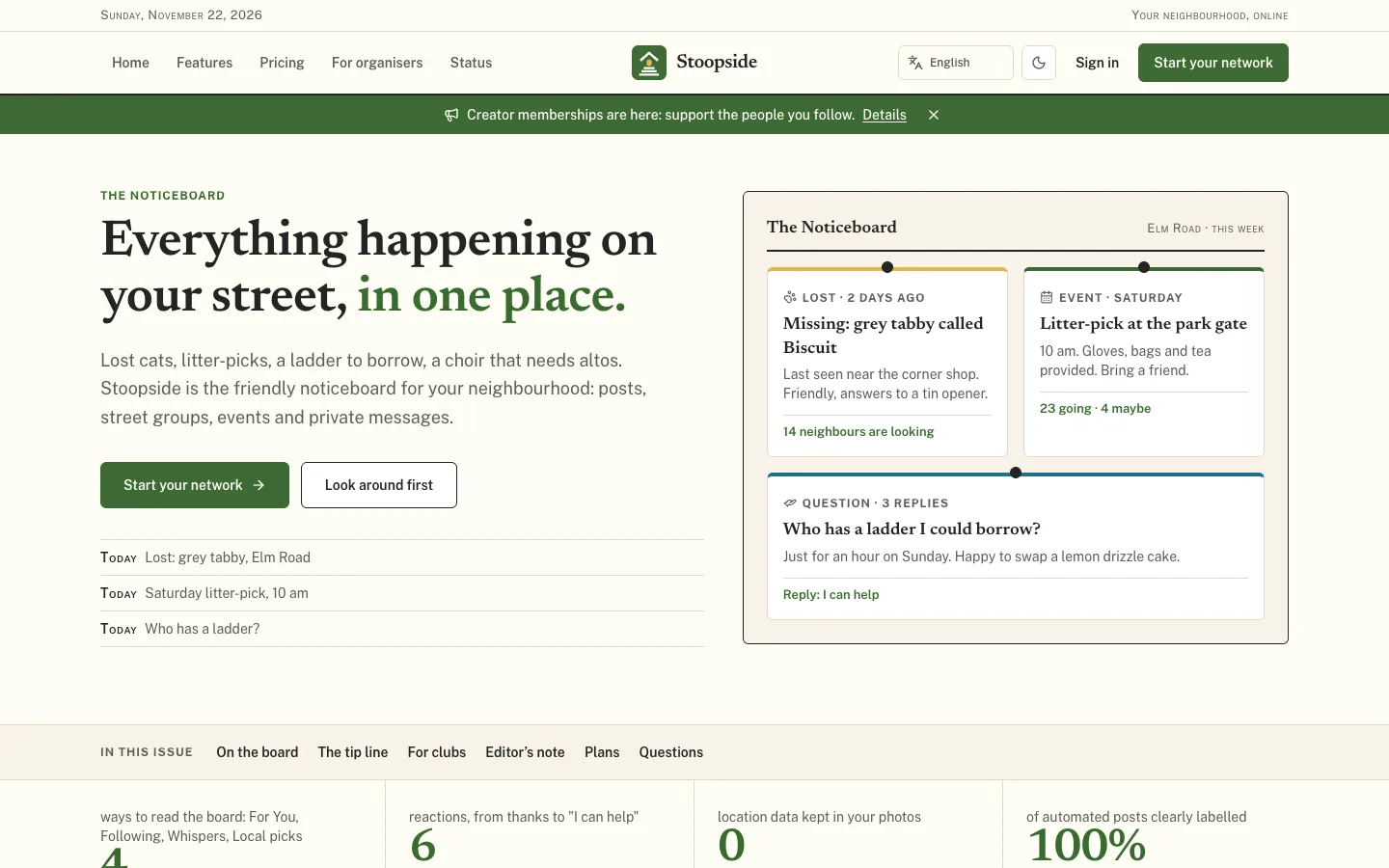
Neighbourhood front page: a serif masthead, a pinned notice and the street groups near you. Neighbourhood front page — a serif masthead, a pinned notice and the street groups near you.

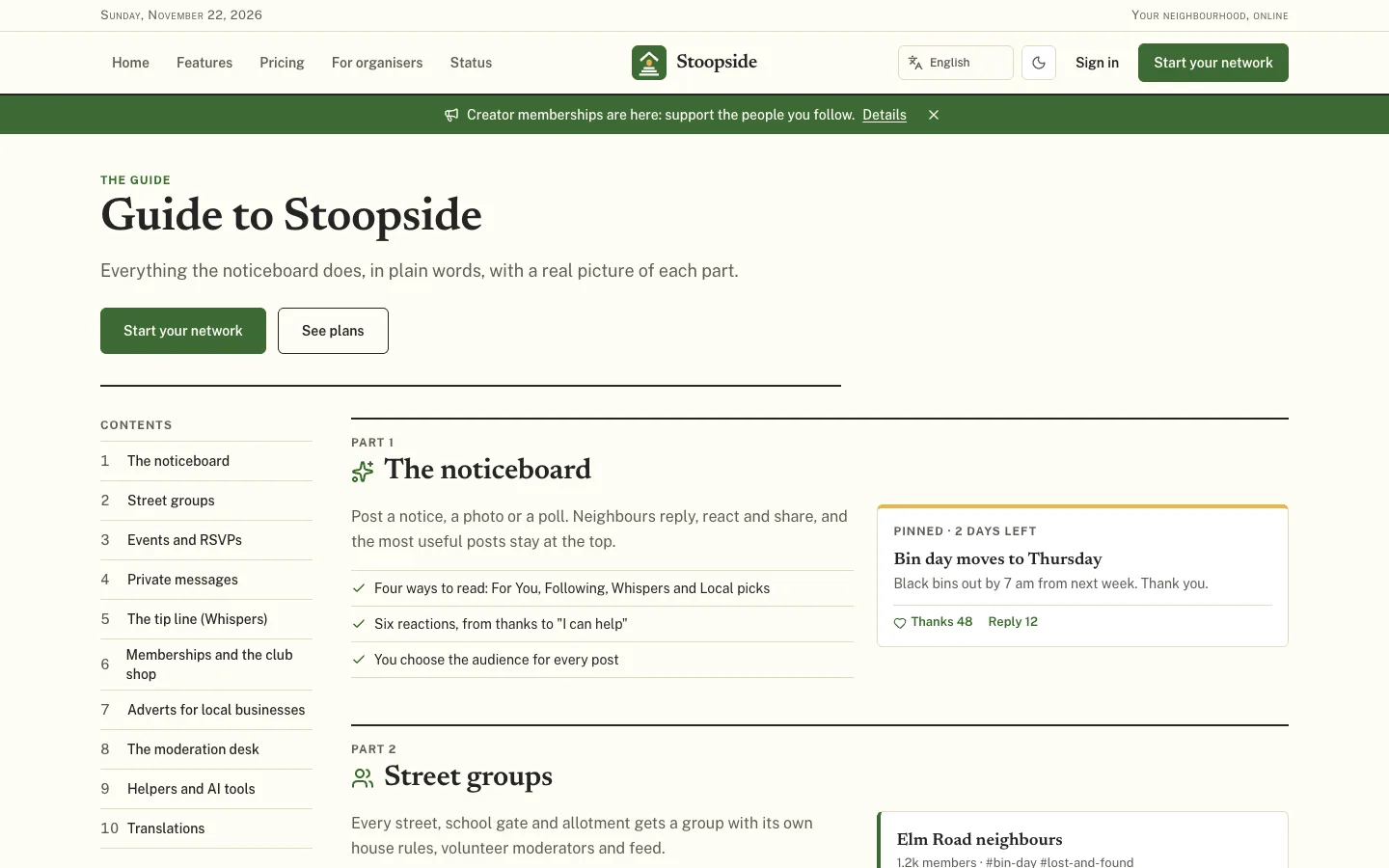
Features: street groups, events, private messages and a tip line on ruled columns. Features — street groups, events, private messages and a tip line on ruled columns.

Guides & articles

Practical guides and engineering write-ups for DEV3 Stoopside.

Community platform software for neighbourhood groups and local clubs: 6 things to check

Last updated
Community platform software for neighbourhood groups and local clubs: 6 things to check: DEV3 Stoopside

Neighbourhood groups and local clubs rarely need a global social network. They need a noticeboard people trust, street-sized groups, events with RSVPs, private messages and a way to keep things kind. This checklist covers six things to check before you pick self-hosted community platform software, with DEV3 Stoopside as the worked example.
Slideshow tour of Stoopside: the front page, noticeboard, events, tip line, organiser studio, ads manager and the desk

The Stoopside front page

  1. A noticeboard, not an endless feed. Pinned notices and a weekly column keep the important things visible. The street noticeboard
  2. Small groups with their own rules. Street groups need house rules, their own members and their own moderators. Street groups
  3. Events and messages. RSVPs, reminders and private threads should be built in, not bolted on. Events with RSVP
  4. Safe anonymity. A tip line with a fresh masked name per conversation, scanned before delivery.

  5. Money for organisers. Memberships, a shop and payouts, with a ledger behind every balance. Organiser studio
  6. A moderation desk. Cases, reports, appeals, support tickets and role-based access in one place. The desk
Stoopside is a Next.js and MongoDB community network that covers all six, with light and dark modes and 390 px phone layouts.
Frequently asked questions

The complete source code (version 1.0.0) as a download from your account, with the setup and usage guides shown on this page. You can modify the code to suit your product.

Questions about this product (0)

Answers from the DEV3 team and the community.

Ask a question

No questions yet.

Wondering about setup, licensing or customisation? Ask, and the DEV3 team will help.

More from this author

View all

Related in Enterprise SaaS Starters

View all