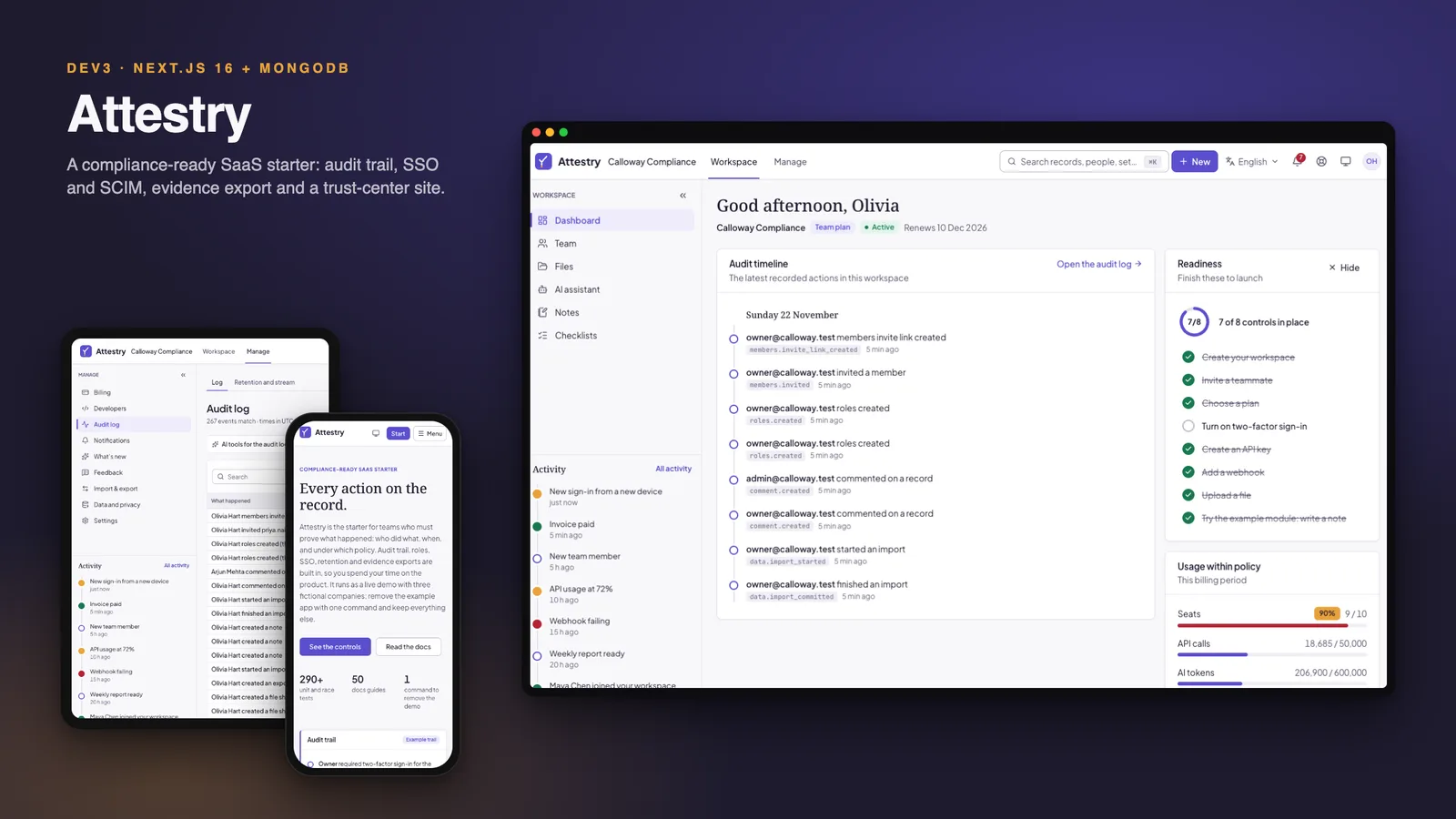
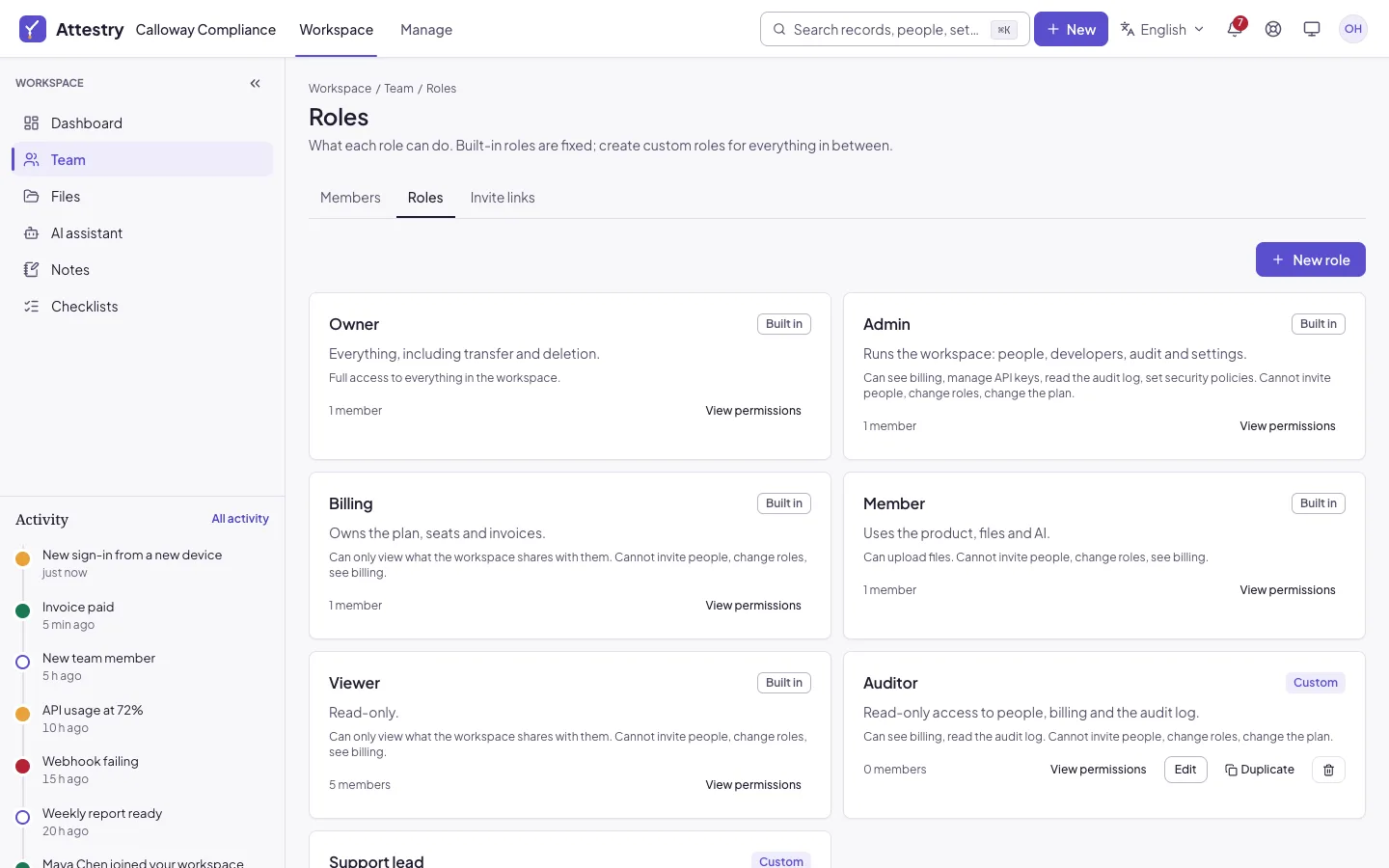
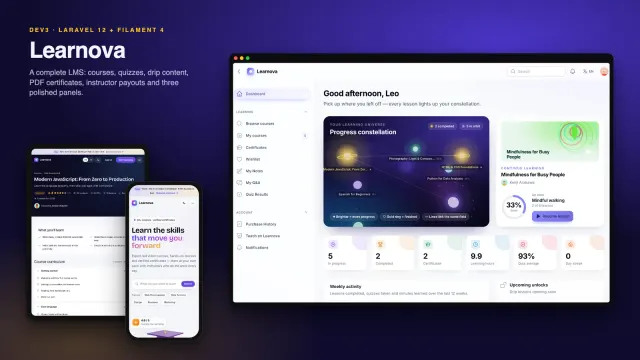
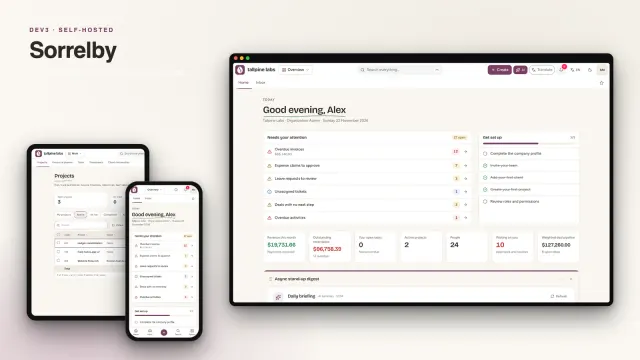
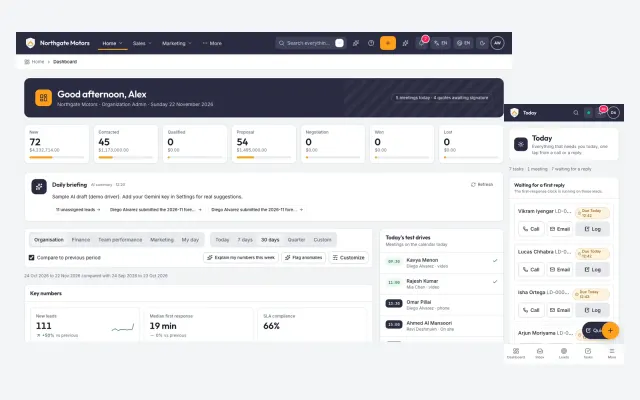
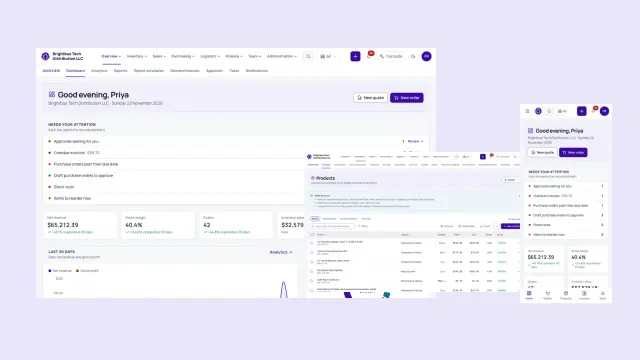
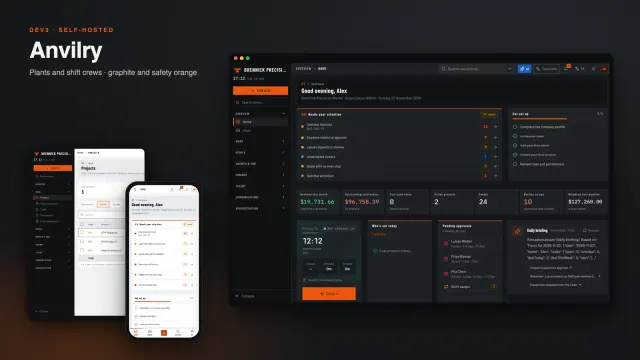
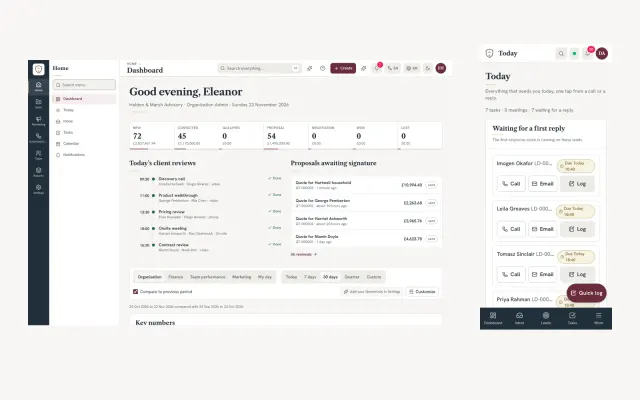
Attestry is a Next.js and MongoDB SaaS starter for teams building compliance, legal and regtech software, by DEV3 Technologies. It is built on Next.js 16, React 19, TypeScript, Tailwind 4 and MongoDB. You download the source, rename it, remove the example app with one command and build your own product on top of working sign-in, workspaces, roles, billing, an operator console and a public API. Out of the box it runs as a demo with three fictional companies, so you can see every feature working before you change anything. The demo data is fictional.
Built on the DEV3 SaaS platform engine.
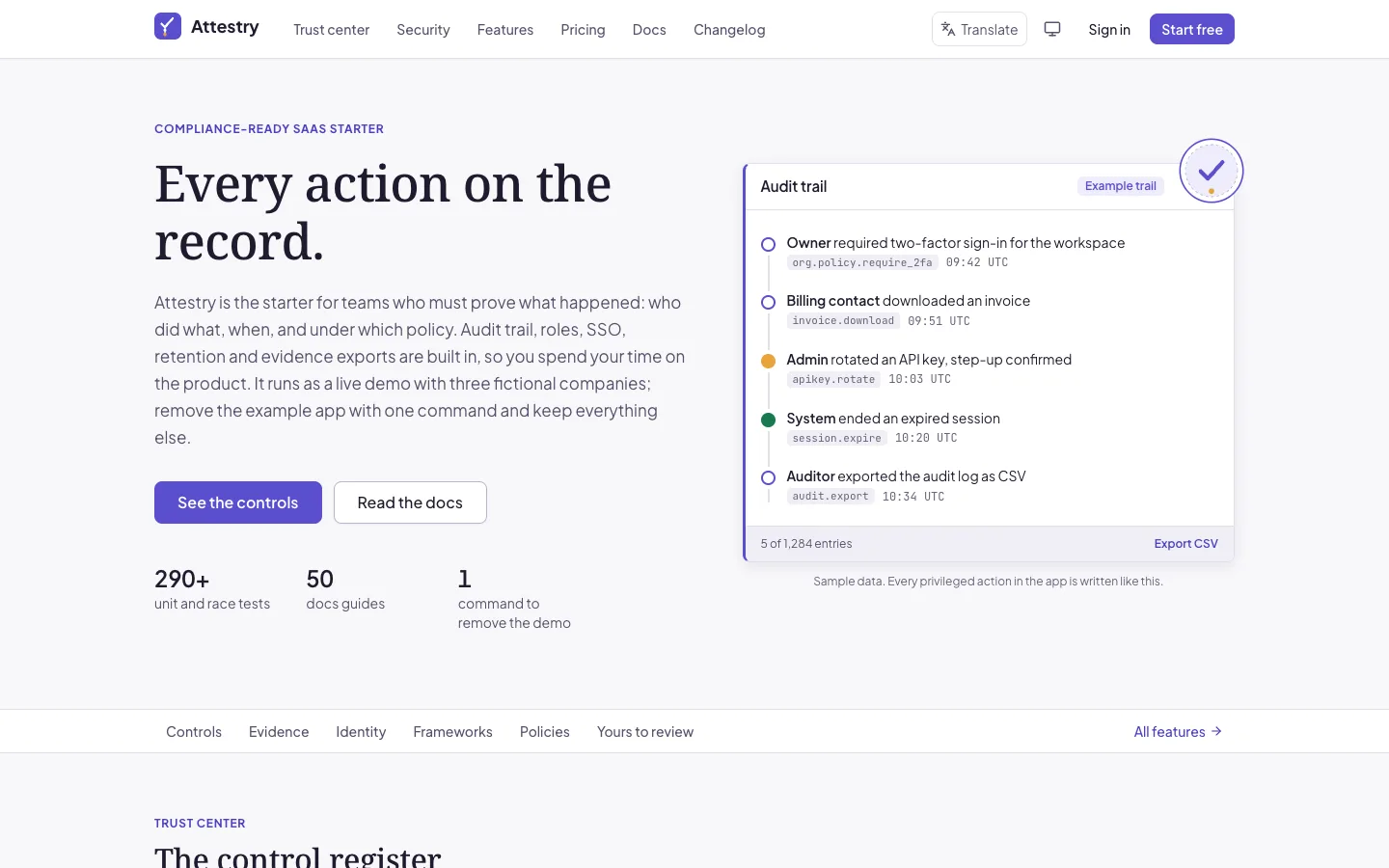
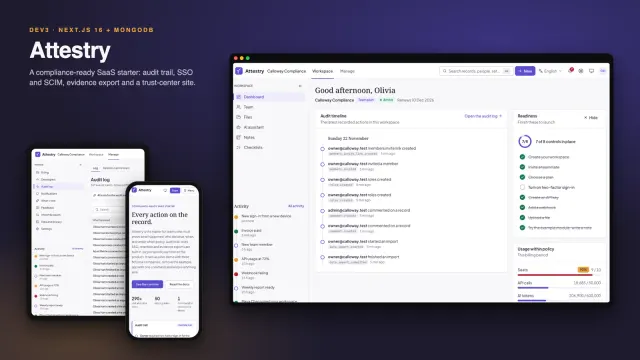
Every screen leads with the record. The admin is timeline-first: a top bar with section tabs and a left agenda column with an activity trail. The public site is a trust center: a control register, evidence you can export, identity and access, framework mappings, policies and a plain list of what stays yours to review. It never claims a certification or an audit report. Framework sections say "maps to" and "helps you evidence", and certification is the responsibility of the company that runs the product.
What is included
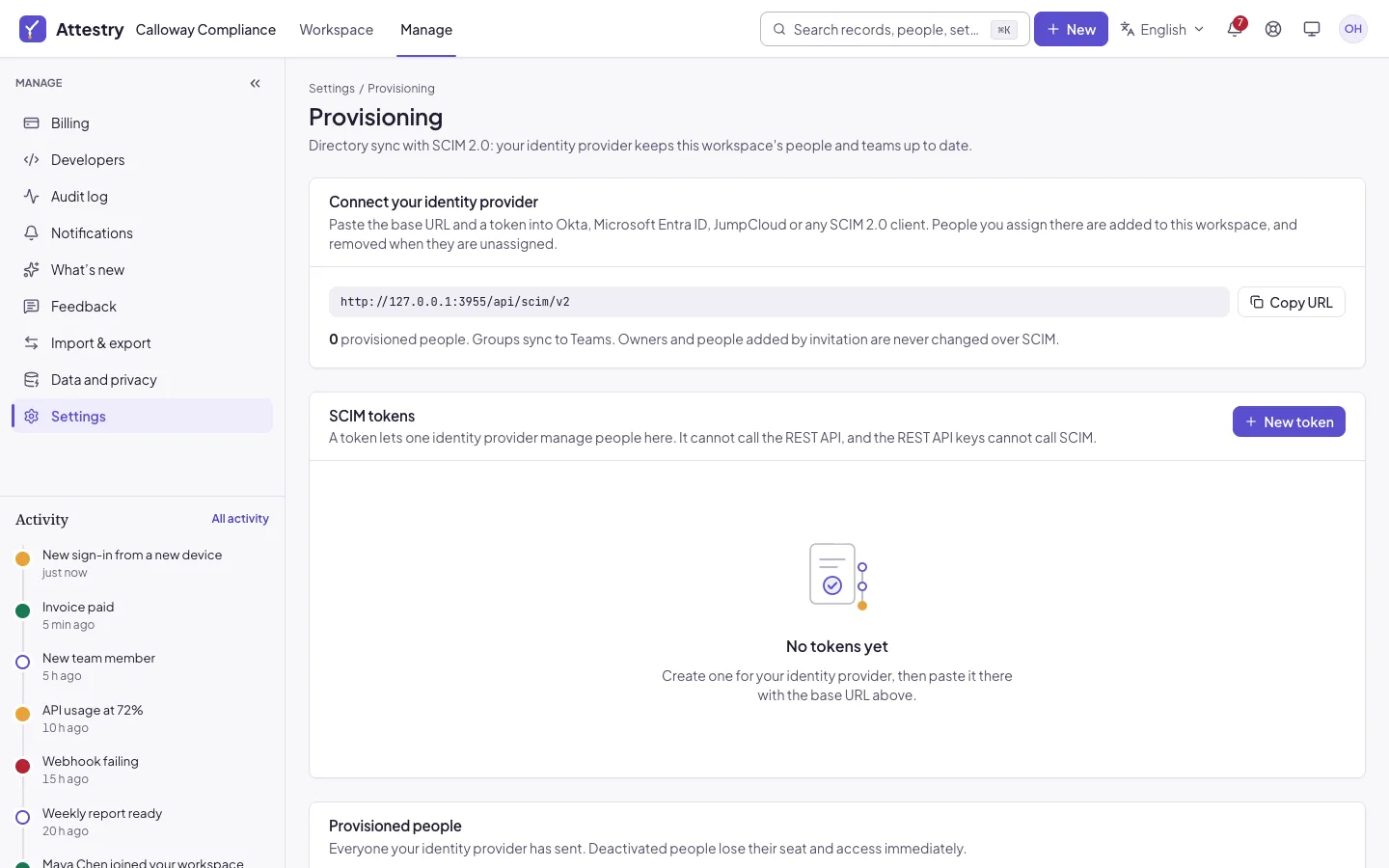
- Identity and access: email and password, magic links, authenticator-app two-factor with recovery codes, passkeys, single sign-on per workspace with verified domains, SCIM directory sync, session list with revoke, a workspace policy that requires two-factor, and step-up confirmation before risky changes.
- Workspaces and roles: organisations, teams, custom roles on a permission matrix, invitations bound to the invited email, ownership transfer, and tenant isolation that fails closed.
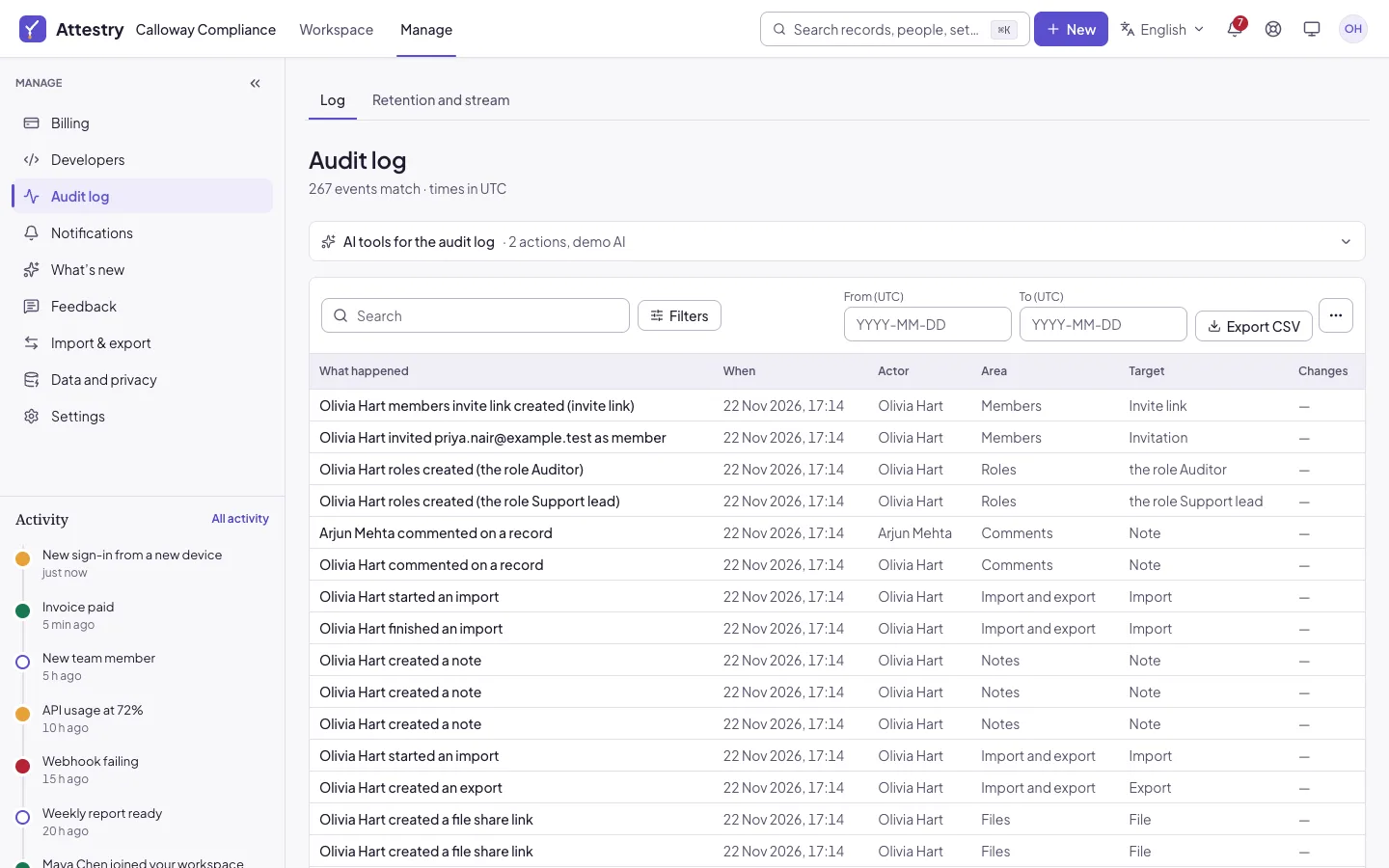
- Audit and evidence: an audit log with before and after diffs, filters, CSV export and retention rules; workspace data export and delete; cookie-consent records; an email outbox.
- Billing: plans, trials, coupons, proration with a preview, credit notes, tax, dunning, add-ons, per-seat and metered pricing with overage, and a simulated gateway for demos (Stripe and Razorpay drivers included).
- Operator console: MRR movements, ARR, churn, cohorts, customer 360 with health and notes, feature flags, console roles and safe impersonation.
- Developer platform: scoped API keys with expiry, IP allowlist and rotation, a request log, signed webhooks with replay, and an OpenAPI 3.1 reference generated from the routes.
- Build on it: a module generator, an example app you remove with one command, English, Spanish and Arabic with right-to-left layouts, dark mode, a setup wizard, and 70 guides.
- Gemini AI admin tools on most workspace and admin pages. The key ships blank: you add your own after purchase and Google bills it. Without a key the demo uses a simulated driver.
Good to know
- Payments, OAuth providers and AI run on simulated drivers in the demo and are switched off in production until you add real keys and allow live calls.
- It is a starter, not a finished business: your own regulated workflows are yours to build, and the shipped legal pages are templates, not legal advice.
- You need Node.js 20.9+, MongoDB 6+ (a single-node replica set works) and a cron or systemd timers for scheduled jobs.
What you get
The application source, a setup wizard, demo data, the module generator, scheduled-job scripts, tests, the buyer documentation, START-HERE.txt and the licence. Web application only: there are no mobile apps.
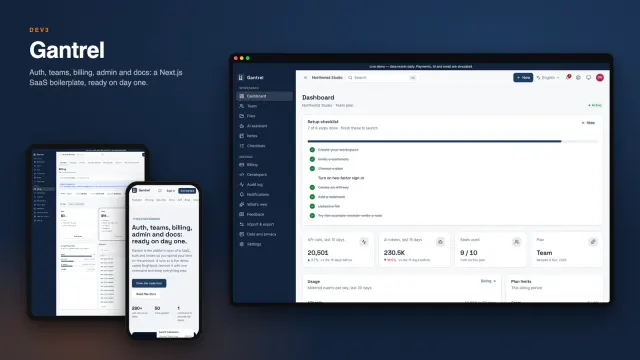
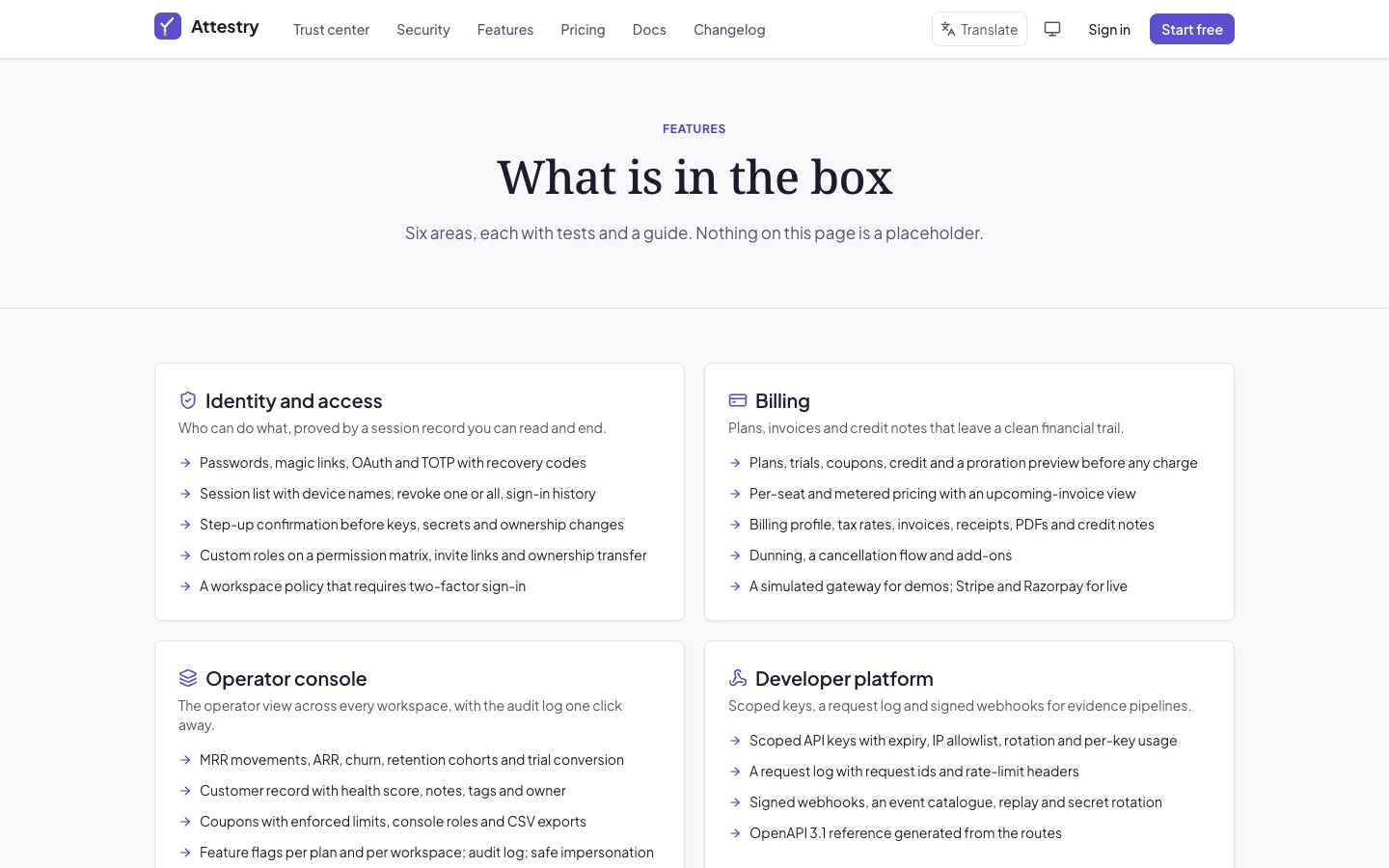 Features — every platform area with its guide: identity, billing, console, developer tools and compliance.